LIBER II · CAPUT 22
OF THE HARMONY OF THE STARS
Latine · Mayhoff 1906
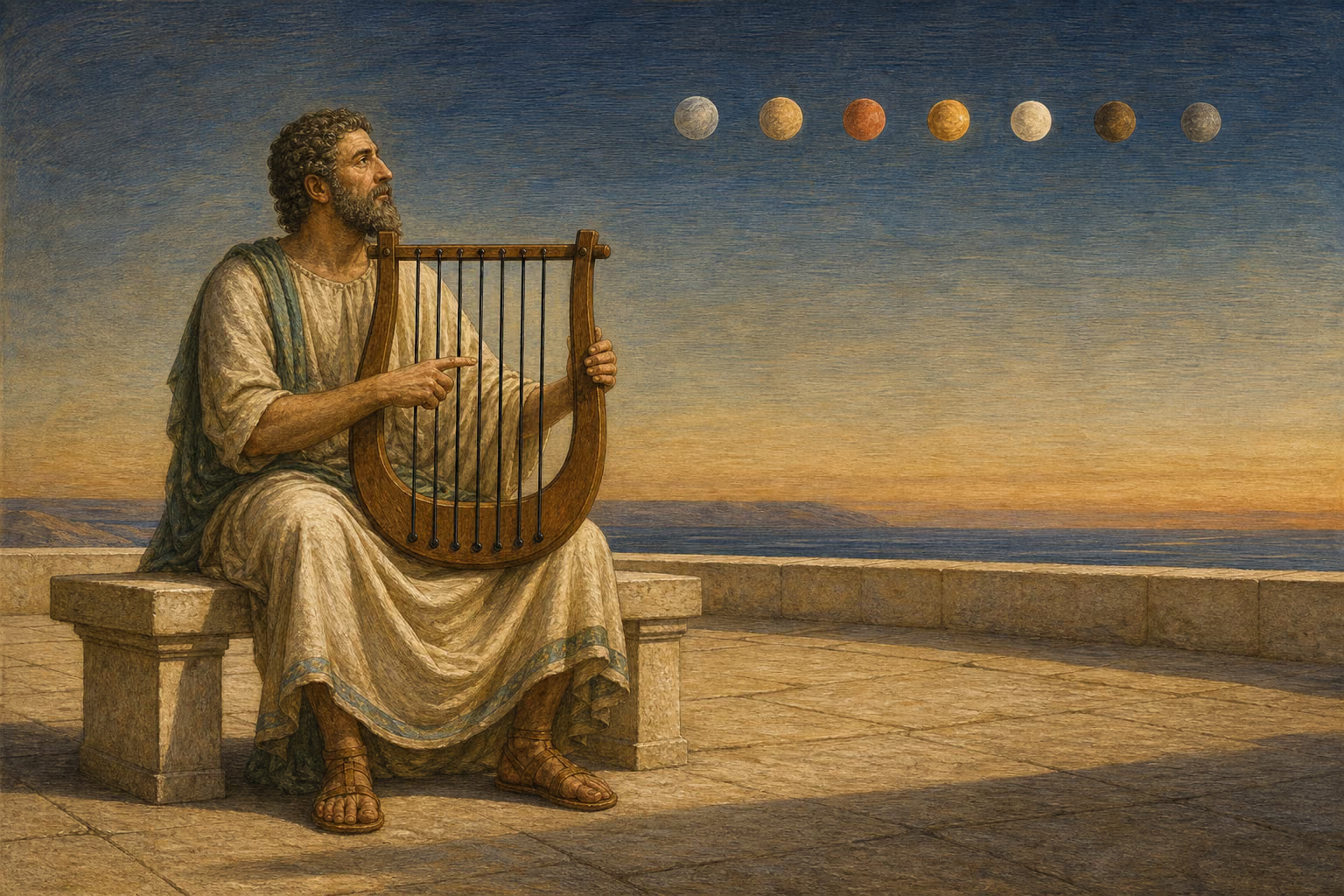
Sed Pythagoras interdum et musica ratione appellat tonum quantum absit a terra luna, ab ea ad Mercurium dimidium spatii et ab eo ad Veneris, a quo ad solem sescuplum, a sole ad Martem tonum [id est quantum ad lunam a terra], ab eo ad Iovem dimidium et ab eo ad Saturni, et inde sescuplum ad signiferum; ita septem tonis effici quam διὰ πασῶν ἁρμονίαϝ vocant, hoc est universitatem concentus; in ea Saturnum Dorio moveri phthongo, Iovem Phrygio et in reliquis similia, iucunda magis quam necessaria subtilitate.
English · Bostock & Riley 1855–57
Pythagoras, employing the terms that are used in music, sometimes names the distance between the Earth and the Moon a tone; from her to Mercury he supposes to be half this space, and about the same from him to Venus. From her to the Sun is a tone and a half; from the Sun to Mars is a tone, the same as from the Earth to the Moon; from him there is half a tone to Jupiter, from Jupiter to Saturn also half a tone, and thence a tone and a half to the zodiac. Hence there are seven tones, which he terms the diapason harmony, meaning the whole compass of the notes. In this, Saturn is said to move in the Doric time, Jupiter in the Phrygian, and so forth of the rest; but this is a refinement rather amusing than useful.