LIBER II · CAPUT 26
THE DOCTRINE OF HIPPARCHUS ABOUT THE STARS
Latine · Mayhoff 1906
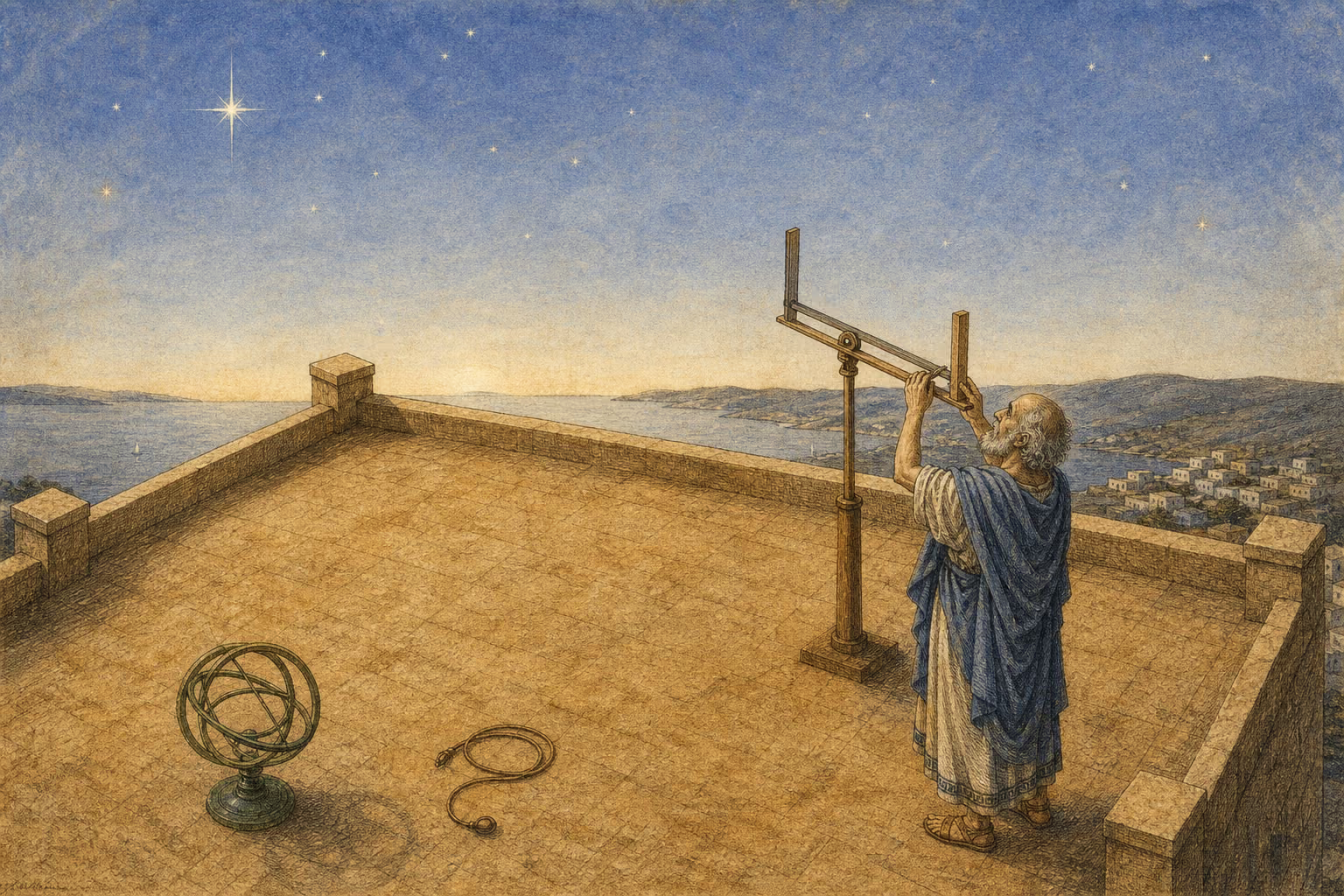
Idem Hipparchus numquam satis laudatus, ut quo nemo magis adprobaverit cognationem cum homine siderum animasque nostras partem esse caeli, novam stellam et aliam in aevo suo genitam deprehendit eiusque motu, qua fulsit, ad dubitationem est adductus, anne hoc saepius fieret moverenturque et eae, quas putamus adfixas, ideoque ausus rem etiam deo inprobam, adnumerare posteris stellas ac sidera ad nomen expungere organis excogitatis, per quae singularum loca atque magnitudines signaret, ut facile discerni posset ex eo non modo an obirent ac nascerentur, sed an omnino aliquae transirent moverenturque, item an crescerent minuerenturque, caelo in hereditate cunctis relicto, si quisquam, qui cretionem eam caperet, inventus esset.
Emicant et faces, non nisicum deeidunt visae, qualis Germanico Caesare gladiatorum spectaculum edente praeter ora populi meridiano transcucurrit. duo genera earum. lampadas vocant plane faces, alterum bolidas, quale Mutinensibus malis visum est. distant quod faces vestigia longa faciunt priore ardente parte, bolis vero perpetua ardens longiorem trahit limitem.
Emicant et trabes simili modo, quas δοκοὺς vocant, qualis cum Lacedaemonii classe victi imperium Graeciae amisere. fit et caeli ipsius hiatus, quod vocant chasma,
English · Bostock & Riley 1855–57
This same Hipparchus, who can never be sufficiently commended, as one who more especially proved the relation of the stars to man, and that our souls are a portion of heaven, discovered a new star that was produced in his own age, and, by observing its motions on the day in which it shone, he was led to doubt whether it does not often happen, that those stars have motion which we suppose to be fixed. And the same individual attempted, what might seem presumptuous even in a deity, viz. to number the stars for posterity and to express their relations by appropriate names; having previously devised instruments, by which he might mark the places and the magnitudes of each individual star. In this way it might be easily discovered, not only whether they were destroyed or produced, but whether they changed their relative positions, and likewise, whether they were increased or diminished; the heavens being thus left as an inheritance to any one, who might be found competent to complete his plan.
The faces shine brilliantly, but they are never seen excepting when they are falling; one of these darted across the heavens, in the sight of all the people, at noon-day, when Germanicus Cæsar was exhibiting a show of gladiators. There are two kinds of them; those which are called lampades and those which are called bolides, one of which latter was seen during the troubles at Mutina. They differ from each other in this respect, that the faces produce a long train of light, the fore-part only being on fire; while the bolides, being entirely in a state of combustion, leave a still longer track behind them.
The trabes also, which are named δοκοὶ, shine in the same manner; one of these was seen at the time when the Lacedæmonians, by being conquered at sea, lost their influence in Greece. An opening sometimes takes place in the firmament, which is named chasma.