LIBER II · CAPUT 3
OF ITS NATURE; WHENCE THE NAME IS DERIVED
Latine · Mayhoff 1906
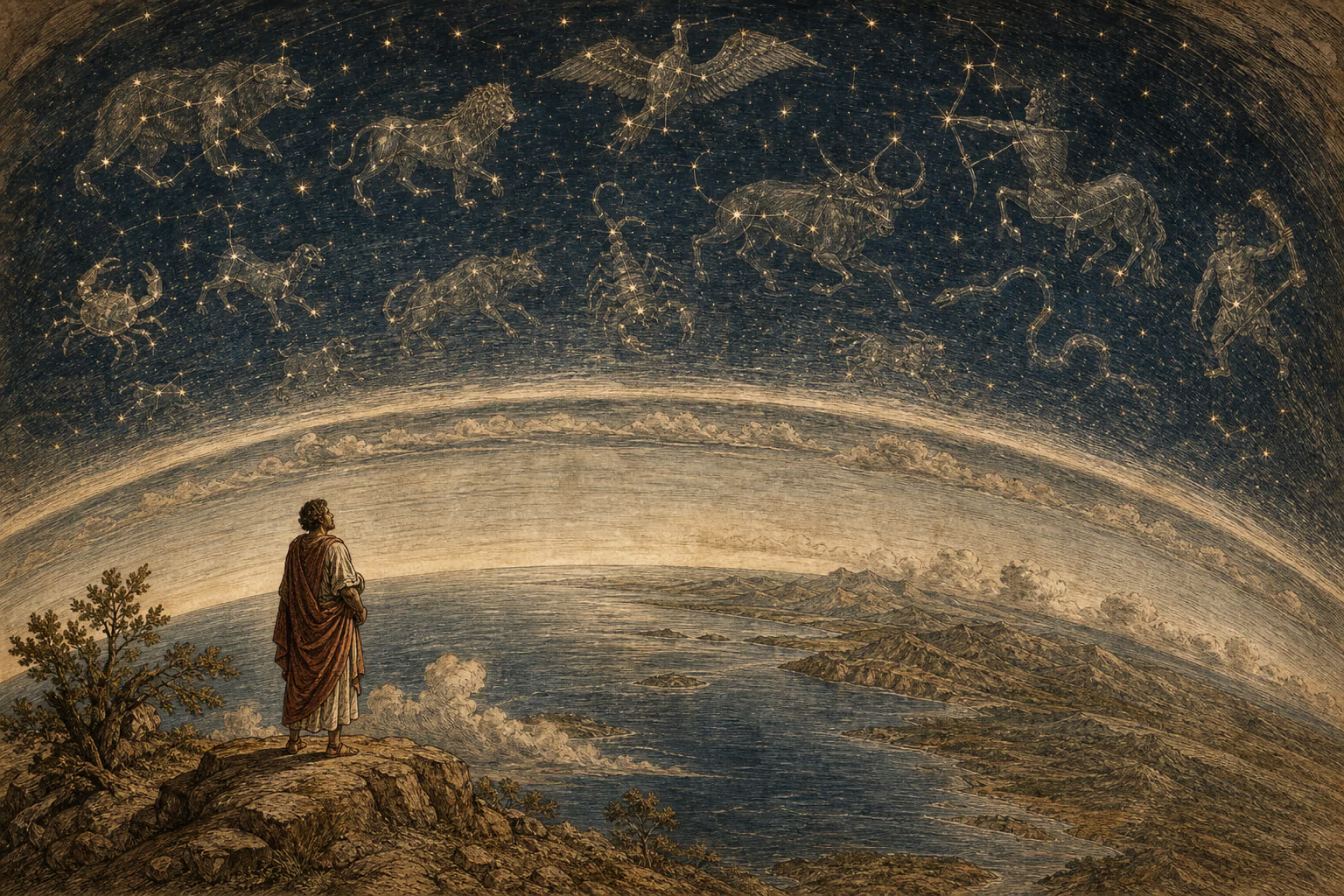
Hanc ergo formam eius aeterno et inrequieto ambitu, inenarrabili celeritate, viginti quattuor horarum spatio circumagi solis exortus et occasus haut dubium reliquere. an sit inmensus et ideo sensum aurium excedens tantae molis rotatae vertigine adsidua sonitus, non equidem facile dixerim, non, Hercule, magis quam circumactorum simul tinnitus siderum suosque volventium orbes an dulcis quidam et incredibili suavitate concentus. nobis qui intus agimus iuxta diebus noctibusque tacitus labitur mundus. esse innumeras ei effigies animalium rerumque cunctarum inpressas nec, ut in volucrum notamus ovis, levitate continua lubricum corpus, quod clarissimi auctores dixere, terrenorum argumentis indicatur, quoniam inde deciduis rerum omnium seminibus innumerae, in mari praecipue ac plerumque confusis monstrificae, gignantur effigies, praeterea visus probatione, alibi ursi, tauri alibi, alibi litterae figura, candidiore medio per verticem circulo.
English · Bostock & Riley 1855–57
The rising and the setting of the sun clearly prove, that this globe is carried round in the space of twenty-four hours, in an eternal and never-ceasing circuit, and with incredible swiftness. I am not able to say, whether the sound caused by the whirling about of so great a mass be excessive, and, therefore, far beyond what our ears can perceive, nor, indeed, whether the resounding of so many stars, all carried along at the same time and revolving in their orbits, may not produce a kind of delightful harmony of incredible sweetness. To us, who are in the interior, the world appears to glide silently along, both by day and by night.
Various circumstances in nature prove to us, that there are impressed on the heavens innumerable figures of animals and of all kinds of objects, and that its surface is not perfectly polished like the eggs of birds, as some celebrated authors assert. For we find that the seeds of all bodies fall down from it, principally into the ocean, and, being mixed together, that a variety of monstrous forms are in this way frequently produced. And, indeed, this is evident to the eye; for, in one part, we have the figure of a wain, in another of a bear, of a bull, and of a letter; while, in the middle of them, over our heads, there is a white circle.