LIBER II · CAPUT 2
OF THE FORM OF THE WORLD
Latine · Mayhoff 1906
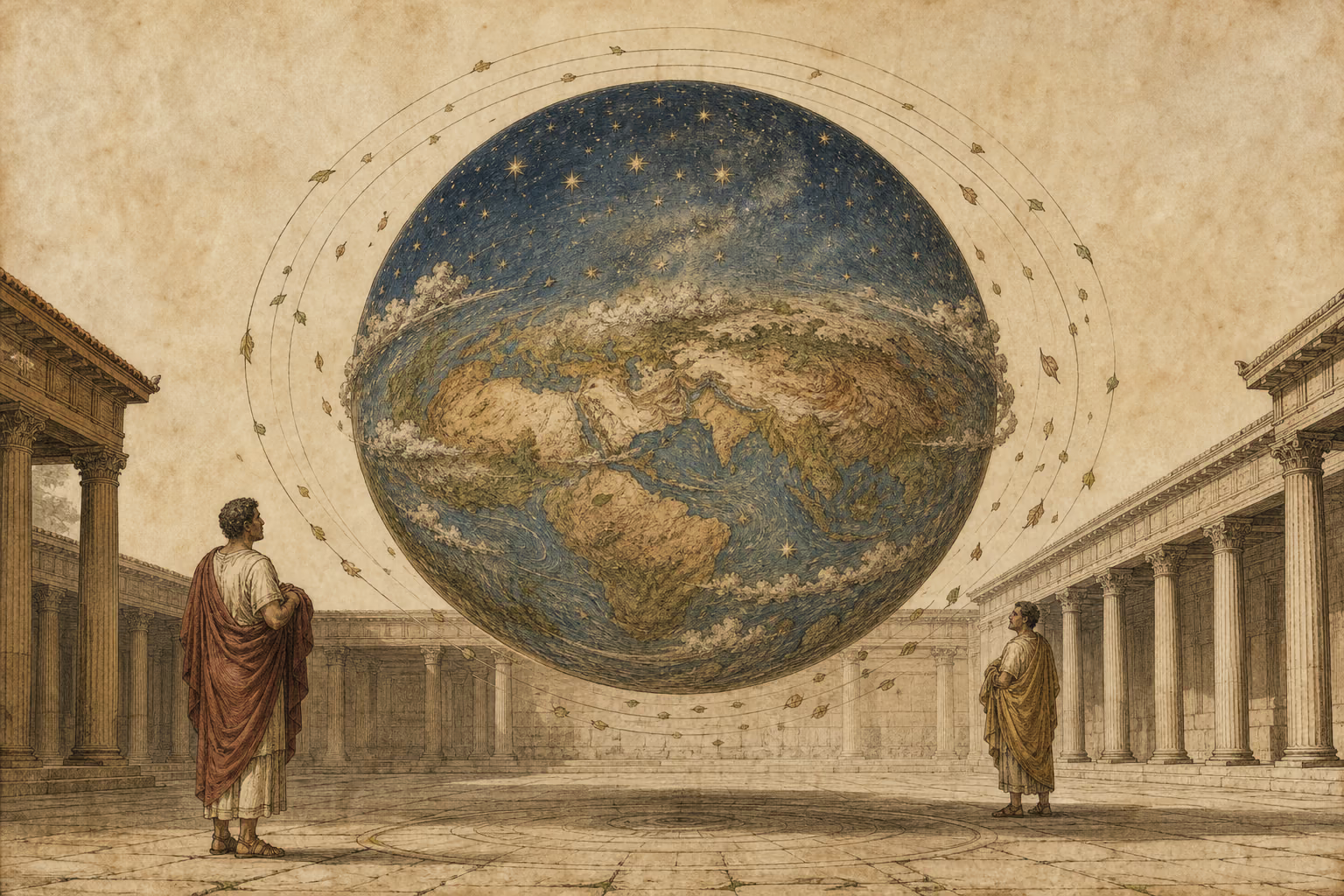
Formam eius in speciem orbis absoluti globatam esse nomen in primis et consensus in eo mortalium orbem appellantium, sed et argumenta rerum docent, non solum quia talis figura omnibus sui partibus vergit in sese ac sibi ipsa toleranda est seque includit et continet nullarum egens compagium nec finem aut initium ullis sui partibus sentiens, nec quia ad motum, quo subinde verti mox adparebit, talis aptissima est, sed oculorum quoque probatione, quod convexus mediusque quacumque cernatur, cum id accidere in alia non possit figura.
English · Bostock & Riley 1855–57
That it has the form of a perfect globe we learn from the name which has been uniformly given to it, as well as from numerous natural arguments. For not only does a figure of this kind return everywhere into itself and sustain itself, also including itself, requiring no adjustments, not sensible of either end or beginning in any of its parts, and is best fitted for that motion, with which, as will appear hereafter, it is continually turning round; but still more, because we perceive it, by the evidence of the sight, to be, in every part, convex and central, which could not be the case were it of any other figure.