LIBER II · CAPUT 1
WHETHER THE WORLD BE FINITE, AND WHETHER THERE BE MORE THAN ONE WORLD
Latine · Mayhoff 1906
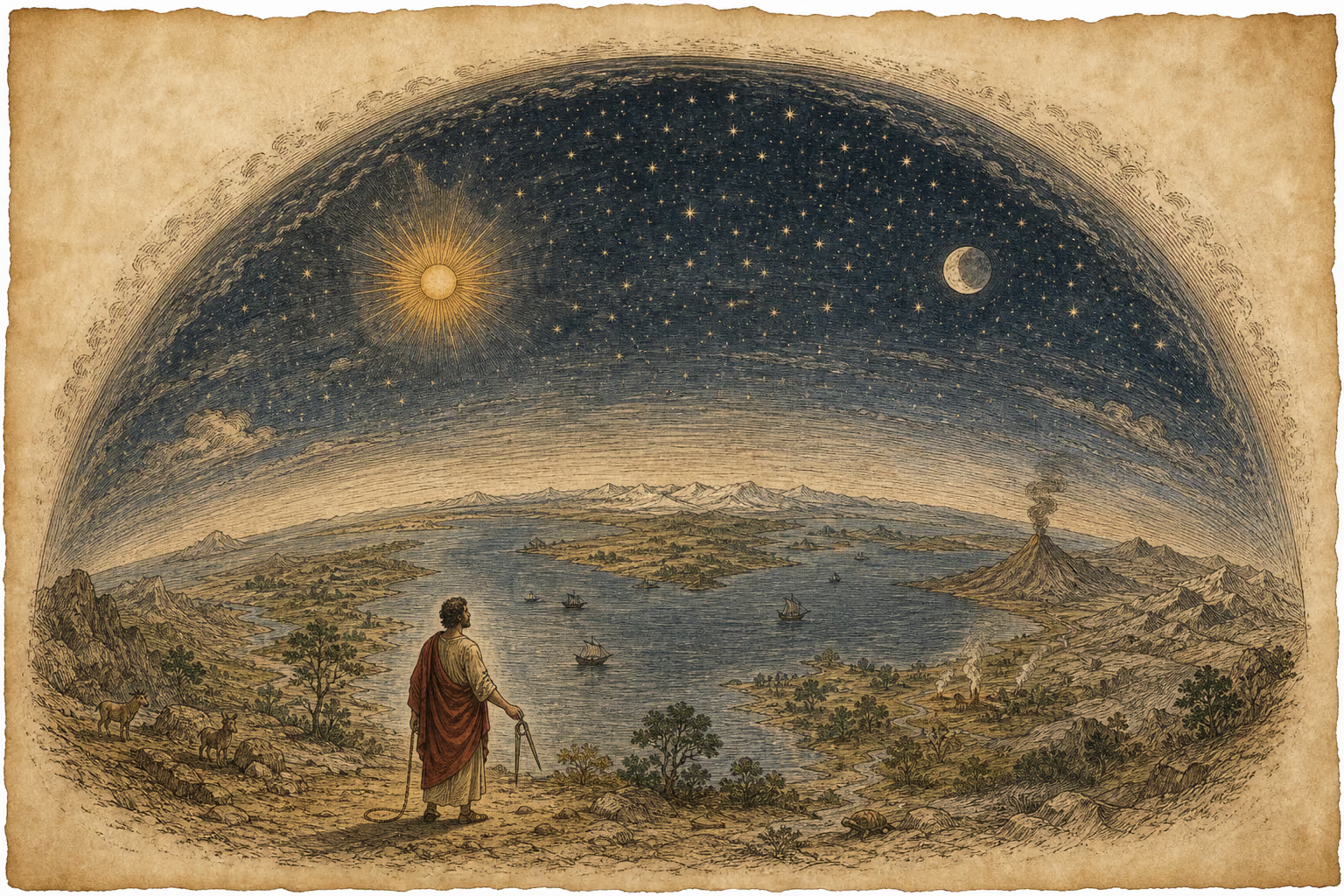
Mundum et hoc quodcumque nomine alio caelum appellare libuit, cuius circumflexu degunt cuncta, numen esse credi par est, aeternum, inmensum, neque genitum neque interiturum umquam. huius extera indagare nec interest hominum nec capit humanae coniectura mentis. sacer est, aeternus, immensus, totus in toto, immo vero ipse totum, infinitus ac finito similis, omnium rerum certus et similis incerto, extra intra cuncta conplexus in se, idemque rerum naturae opus et rerum ipsa natura. furor est mensuram eius animo quosdam agitasse atque prodere ausos, alios rursus occasione hinc sumpta aut hic data innumerabiles tradidisse mundos, ut totidem rerum naturas credi oporteret aut, si una omnes incubaret, totidem tamen soles totidemque lunas et cetera etiam in uno et inmensa et innumerabilia sidera, quasi non eaedem quaestiones semper in termino cogitationi sint occursurae desiderio finis alicuius aut, si haec infinitas naturae omnium artifici possit adsignari, non idem illud in uno facilius sit intellegi, tanto praesertim opere. furor est profecto, furor egredi ex eo et, tamquam interna eius cuncta plane iam nota sint, ita scrutari extera, quasi vero mensuram ullius rei possit agere qui sui nesciat, aut mens hominis videre quae mundus ipse non capiat.
English · Bostock & Riley 1855–57
The world, and whatever that be which we otherwise call the heavens, by the vault of which all things are enclosed, we must conceive to be a Deity, to be eternal, without bounds, neither created, nor subject, at any time, to destruction. To inquire what is beyond it is no concern of man, nor can the human mind form any conjecture respecting it. It is sacred, eternal, and without bounds, all in all; indeed including everything in itself; finite, yet like what is infinite; the most certain of all things, yet like what is uncertain, externally and internally embracing all things in itself; it is the work of nature, and itself constitutes nature.
It is madness to harass the mind, as some have done, with attempts to measure the world, and to publish these attempts; or, like others, to argue from what they have made out, that there are innumerable other worlds, and that we must believe there to be so many other natures, or that, if only one nature produced the whole, there will be so many suns and so many moons, and that each of them will have immense trains of other heavenly bodies. As if the same question would not recur at every step of our inquiry, anxious as we must be to arrive at some termination; or, as if this infinity, which we ascribe to nature, the former of all things, cannot be more easily comprehended by one single formation, especially when that is so extensive. It is madness, perfect madness, to go out of this world and to search for what is beyond it, as if one who is ignorant of his own dimensions could ascertain the measure of any thing else, or as if the human mind could see what the world itself cannot contain.