LIBER II · CAPUT 39
OF THE STATED SEASONS
Latine · Mayhoff 1906
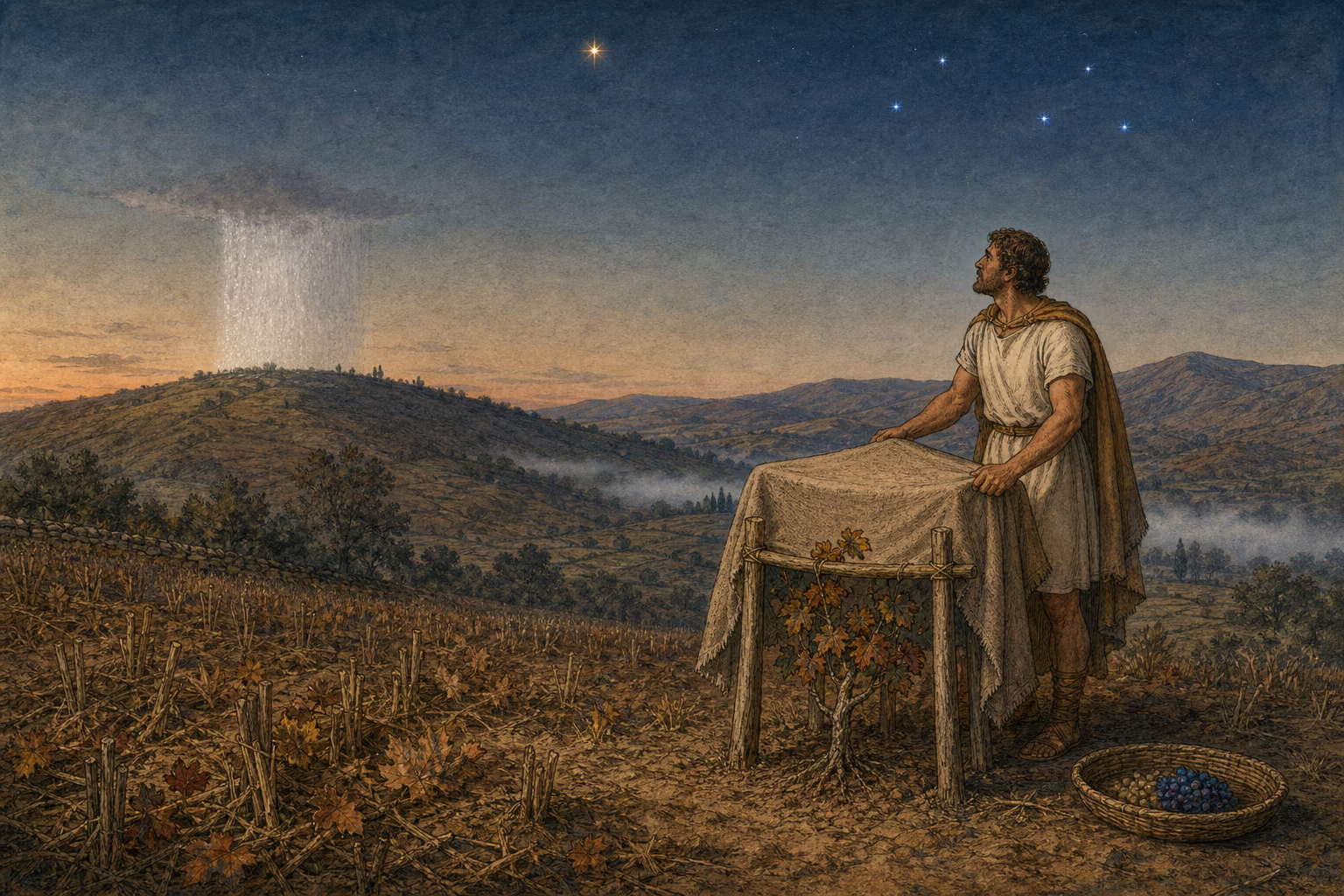
Tempestatum imbriumque quasdam statas esse causas, quasdam vero fortuitas aut adhuc rationis inconpertae, manifestum est. quis enim aestates et hiemes quaeque in temporibus annua vice intelleguntur siderum motu fieri dubitet? ergo ut solis natura temperando intellegitur anno, sic reliquorum quoque siderum propria est cuiusque vis et ad suam cuique naturam fertilis. alia sunt in liquorem soluti umoris fecunda, alia concreti in pruinas aut coacti in nives aut glaciati in grandines, alia flatus, teporis alia aut vaporis, alia roris, alia rigoris. nec vero haec tanta debent existimari, quanta cernuntur, cum esse eorum nullum minus luna tam inmensae altitudinis ratio declaret. igitur in suo quaeque motu naturam suam exercent, quod manifestum Saturni maxime transitus imbribus faciunt. nec meantium modo siderum haec vis est, sed multorum etiam adhaerentium caelo, quotiens errantium accessu inpulsa aut coniectu radiorum exstimulata sunt, qualiter in suculis sentimus accidere, quas Graeci ob id pluvio nomine appellant. quin et sua sponte quaedam statisque temporibus, ut haedorum exortus. arcturi vero sidus non ferme sine procellosa grandine emergit.
English · Bostock & Riley 1855–57
It is obvious that there are causes of the seasons and of other things which have been stated, while there are some things which are casual, or of which the reason has not yet been discovered. For who can doubt that summer and winter, and the annual revolution of the seasons are caused by the motion of the stars? As therefore the nature of the sun is understood to influence the temperature of the year, so each of the other stars has its specific power, which produces its appropriate effects. Some abound in a fluid retaining its liquid state, others, in the same fluid concreted into hoar frost, compressed into snow, or frozen into hail; some are prolific in winds, some in heat, some in vapours, some in dew, some in cold. But these bodies must not be supposed to be actually of the size which they appear, since the consideration of their immense height clearly proves, that none of them are less than the moon. Each of them exercises its influence over us by its own motions; this is particularly observable with respect to Saturn, which produces a great quantity of rain in its transits. Nor is this power confined to the stars which change their situations, but is found to exist in many of the fixed stars, whenever they are impelled by the force of any of the planets, or excited by the impulse of their rays; as we find to be the case with respect to the Suculæ, which the Greeks, in reference to their rainy nature, have termed the Hyades. There are also certain events which occur spontaneously, and at stated periods, as the rising of the Kids. The star Arcturus scarcely ever rises without storms of hail occurring.