LIBER II · CAPUT 38
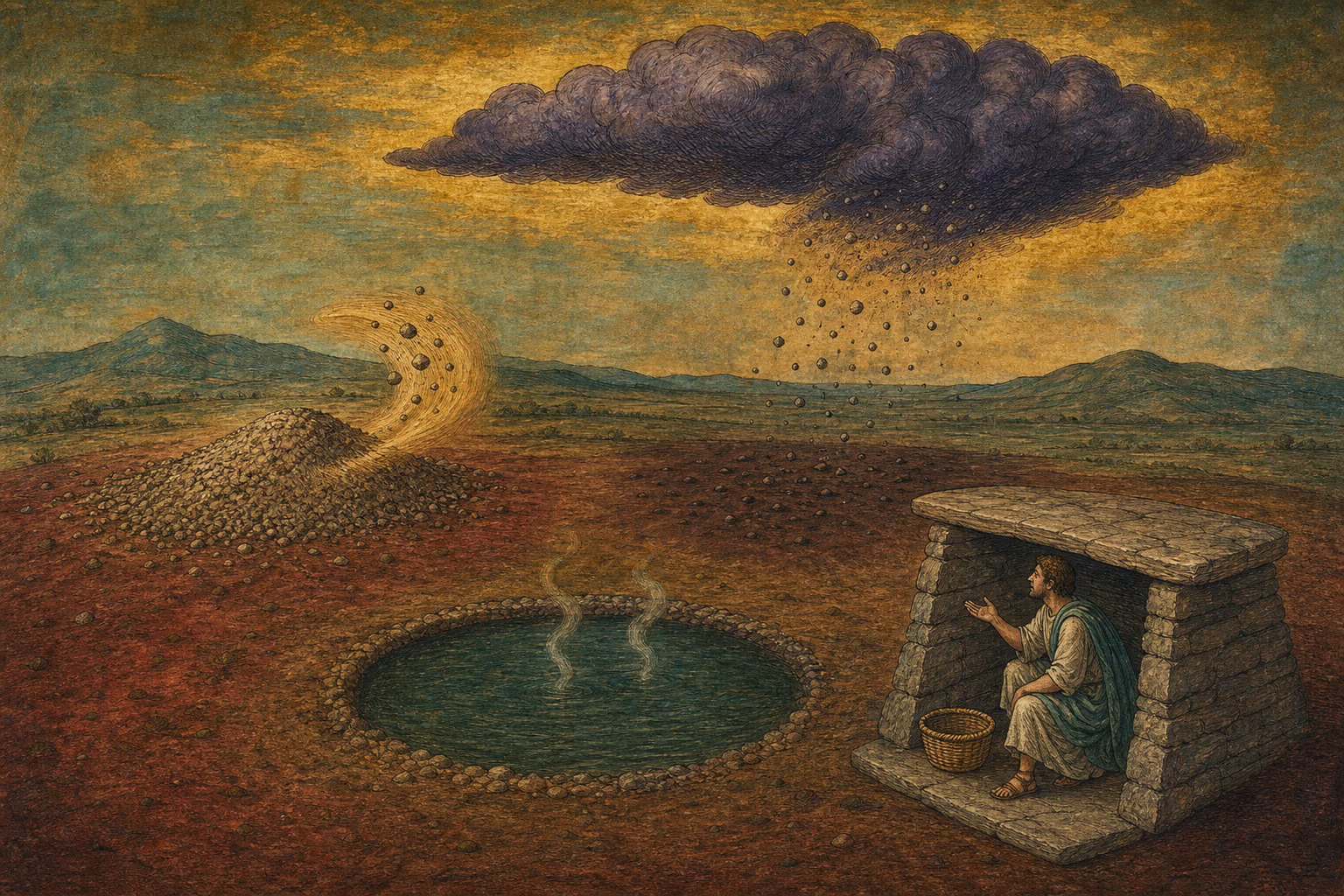
OF THE AIR AND ON THE CAUSE OF THE SHOWERS OF STONES
Latine · Mayhoff 1906
Hactenus de mundo ipso sideribusque: nune reliqua caeli memorabilia. namque et hoc caelum appellavere maiores quod alio nomine aëra, omne quod inani simile vitalem hunc spiritum fundit. infra lunam haec sedes multoque inferior, ut animadverto propemodum constare, infinitum ex superiore natura aëris, infinitum terreni halitus miscens utraque sorte confunditur. hinc nubila, tonitrua et alia fulmina, hinc grandines, pruinae, imbres, procellae, turbines, hinc plurima mortalium mala et rerum naturae pugna secum. terrena in caelum tendentia deprimit siderum vis eademque quae sponte non subeant ad se trahit. decidunt imbres, nebulae subeunt, siccantur amnes, ruunt grandines. torrent radii et terram in medium undique inpellunt, iidem infracti resiliunt et quae potuere auferunt secum. vapor ex alto cadit rursusque in altum redit. venti ingruunt inanes iidemque cum rapina remeant. tot animalium haustus spiritum e sublimi trahit, at ille contra nititur, tellusque ut inani caelo spiritum fundit. sic ultro citro commeante natura ut tormento aliquo mundi celeritate discordia accenditur. nec stare pugnae licet, sed adsidue rapta convolvitur et circa terram inmenso rerum causas globo ostendit, subinde per nubes caelum aliud obtexens. ventorum hoc regnum. itaque praecipua eorum natura ibi et ferme reliquas complexa eas causas, quoniam tonitruum et fulminum iactus horum violentiae plerique adsignant, quin et ideo lapidibus pluere interim, quia vento sint rapti, et multa similiter. quam ob rem simul plura dicenda sunt.
English · Bostock & Riley 1855–57
So far I have spoken of the world itself and of the stars. I must now give an account of the other remarkable phænomena of the heavens. For our ancestors have given the name of heavens, or, sometimes, another name, air, to all the seemingly void space, which diffuses around us this vital spirit. It is situated beneath the moon, indeed much lower, as is admitted by every one who has made observations on it, and is composed of a great quantity of air from the upper regions, mixed with a great quantity of terrestrial vapour, the two forming a compound. Hence proceed clouds, thunder and lightning of all kinds; hence also hail, frost, showers, storms and whirlwinds; hence proceed many of the evils incident to mortals, and the mutual contests of the various parts of nature. The force of the stars keeps down all terrestrial things which tend towards the heavens, and the same force attracts to itself those things which do not go there spontaneously. The showers fall, mists rise up, rivers are dried up, hail-storms rush down, the rays of the sun parch the earth, and impel it from all quarters towards the centre. The same rays, still unbroken, dart back again, and carry with them whatever they can take up. Vapour falls from on high and returns again to the same place. Winds arise which contain nothing, but which return loaded with spoils. The breathing of so many animals draws down the spirit from the higher regions; but this tends to go in a contrary direction, and the earth pours out its spirit into the void space of the heavens. Thus nature moving to and fro, as if impelled by some machine, discord is kindled by the rapid motion of the world. Nor is the contest allowed to cease, for she is continually whirled round and lays open the causes of all things, forming an immense globe about the earth, while she again, from time to time, covers this other firmament with clouds. This is the region of the winds. Here their nature principally originates, as well as the causes of almost all other things; since most persons ascribe the darting of thunder and lightning to their violence. And to the same cause are assigned the showers of stones, these having been previously taken up by the wind, as well as many other bodies in the same way. On this account we must enter more at large on this subject.