LIBER II · CAPUT 37
OF THE STARS WHICH ARE NAMED CASTOR AND POLLUX
Latine · Mayhoff 1906
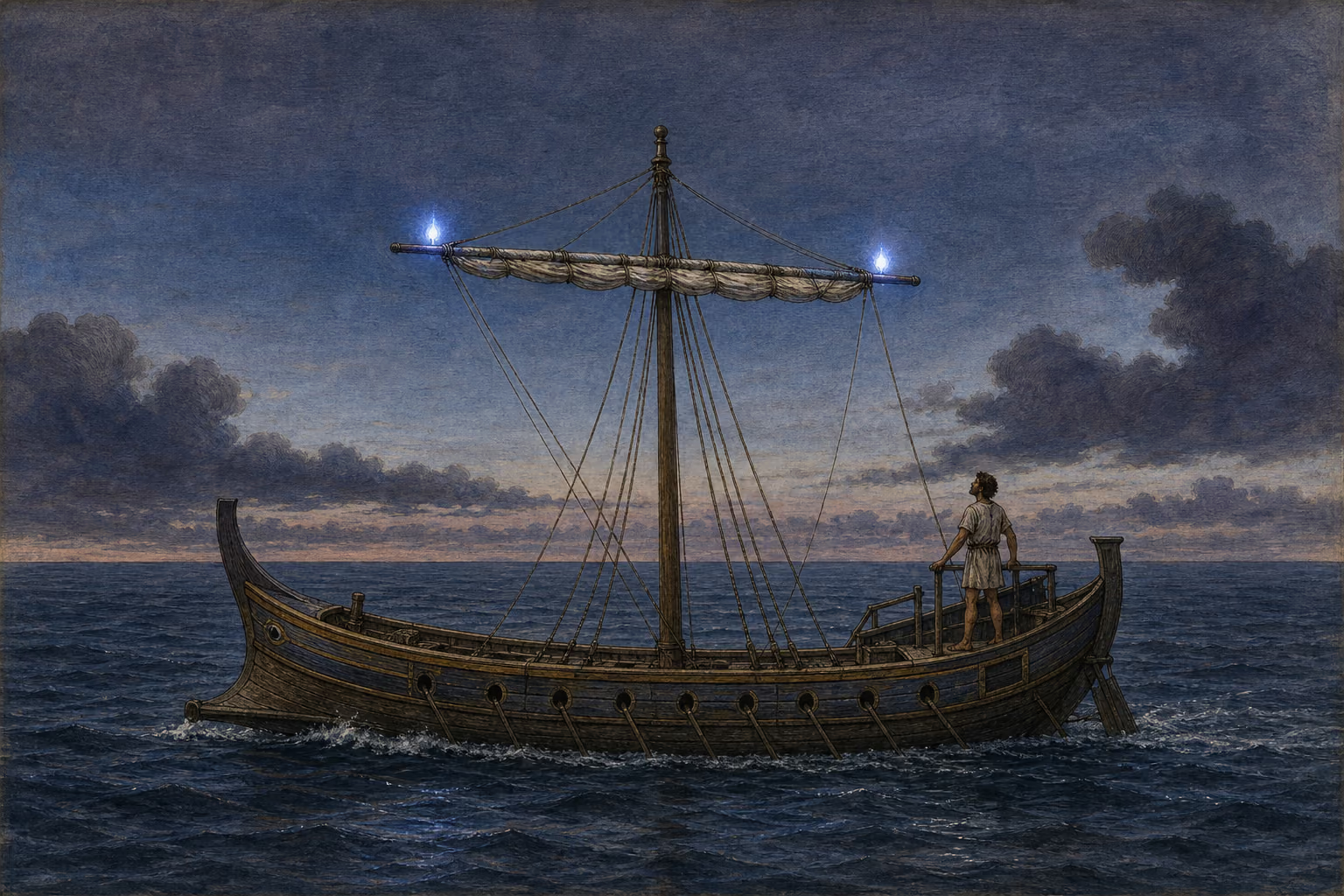
Existunt stellae et in mari terrisque. vidi nocturnis militum vigiliis inhaerere pilis pro vallo fulgorem effigie ea; et antemnis navigantium aliisque navium partibus ceu vocali quodam sono insistunt, ut volucres sedem ex sede mutantes, graves, cum solitariae venere, mergentesque navigia et, si in carinae ima deciderint, exurentes, geminae autem salutares et prosperi cursus nuntiae, quarum adventu fugari diram illam ac minacem appellatamque Helenam ferunt et ob id Polluci ac Castori id numen adsignant eosque in mari invocant. hominum quoque capita vespertinis magno praesagio circumfulgent. omnia incerta ratione et in naturae maiestate abdita.
English · Bostock & Riley 1855–57
These stars occur both at sea and at land. I have seen, during the night-watches of the soldiers, a luminous appearance, like a star, attached to the javelins on the ramparts. They also settle on the yard-arms and other parts of ships while sailing, producing a kind of vocal sound, like that of birds flitting about. When they occur singly they are mischievous, so as even to sink the vessels, and if they strike on the lower part of the keel, setting them on fire. When there are two of them they are considered auspicious, and are thought to predict a prosperous voyage, as it is said that they drive away that dreadful and terrific meteor named Helena. On this account their efficacy is ascribed to Castor and Pollux, and they are invoked as gods. They also occasionally shine round the heads of men in the evening, which is considered as predicting something very important. But there is great uncertainty respecting the cause of all these things, and they are concealed in the majesty of nature.