LIBER II · CAPUT 49
TORNADOES; BLASTING WINDS; WHIRLWINDS, AND OTHER WONDERFUL KINDS OF TEMPESTS
Latine · Mayhoff 1906
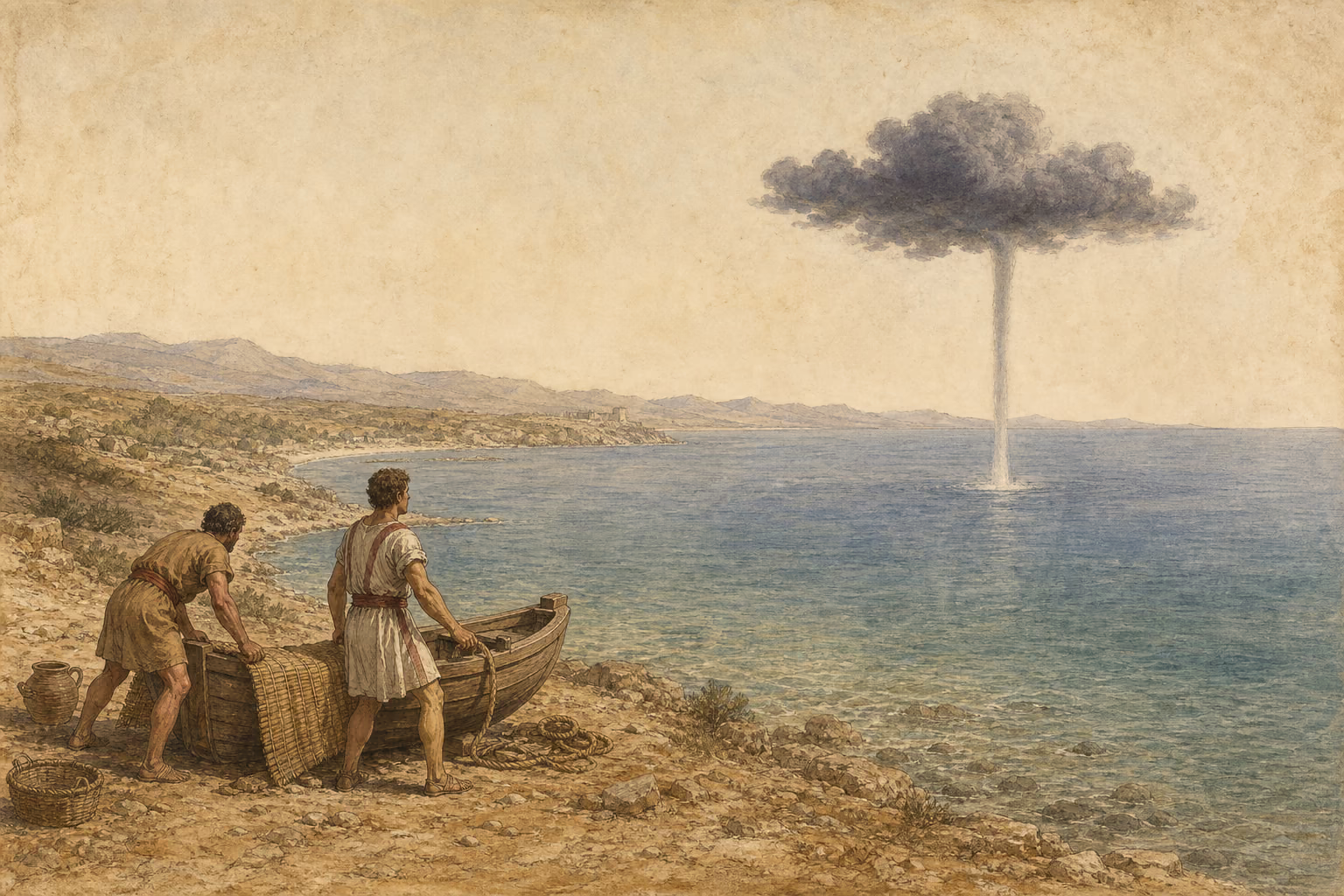
non fit autem aquilonius typhon, nec nivalis aut nive iacente ecnephias. quod si simul rupit nubem exarsitque et ignem habuit, non postea concepit, fulmen est. distat a prestere quo flamma ab igni. hic late funditur flatu, illud conglobatur impetu. vertex autem remeando distat a turbine et quo stridor a fragore, procella latitudine ab utroque, disiecta nube verius quam rupta. fit et caligo beluae similis in nube, dira navigantibus. vocatur et columna, cum spissatus umor rigensque ipse se sustinet, ex eodem genere et aulon, cum veluti fistula nubes aquam trahit.
English · Bostock & Riley 1855–57
Typhon never comes from the north, nor have we Ecnephias when it snows, or when there is snow on the ground. If it breaks the clouds, and, at the same time, catches fire or burns, and not after it has left the cloud, it forms a thunder-bolt. It differs from Prester as flame does from fire; the latter is diffused in the blast, the former is condensed by the violent impulse. The whirlwind, when it rebounds, differs from the tornado in the same manner as a loud noise does from a crash.
The squall differs from both of them in its extent, the clouds being more properly rent asunder than broken into pieces. A black cloud is formed, resembling a great animal, an appearance much dreaded by sailors. It is also called a pillar, when the moisture is so condensed and rigid as to be able to support itself. It is a cloud of the same kind, which, when drawn into a tube, sucks up the water.