LIBER II · CAPUT 50
OF THUNDER; IN WHAT COUNTRIES IT DOES NOT FALL, AND FOR WHAT REASON
Latine · Mayhoff 1906
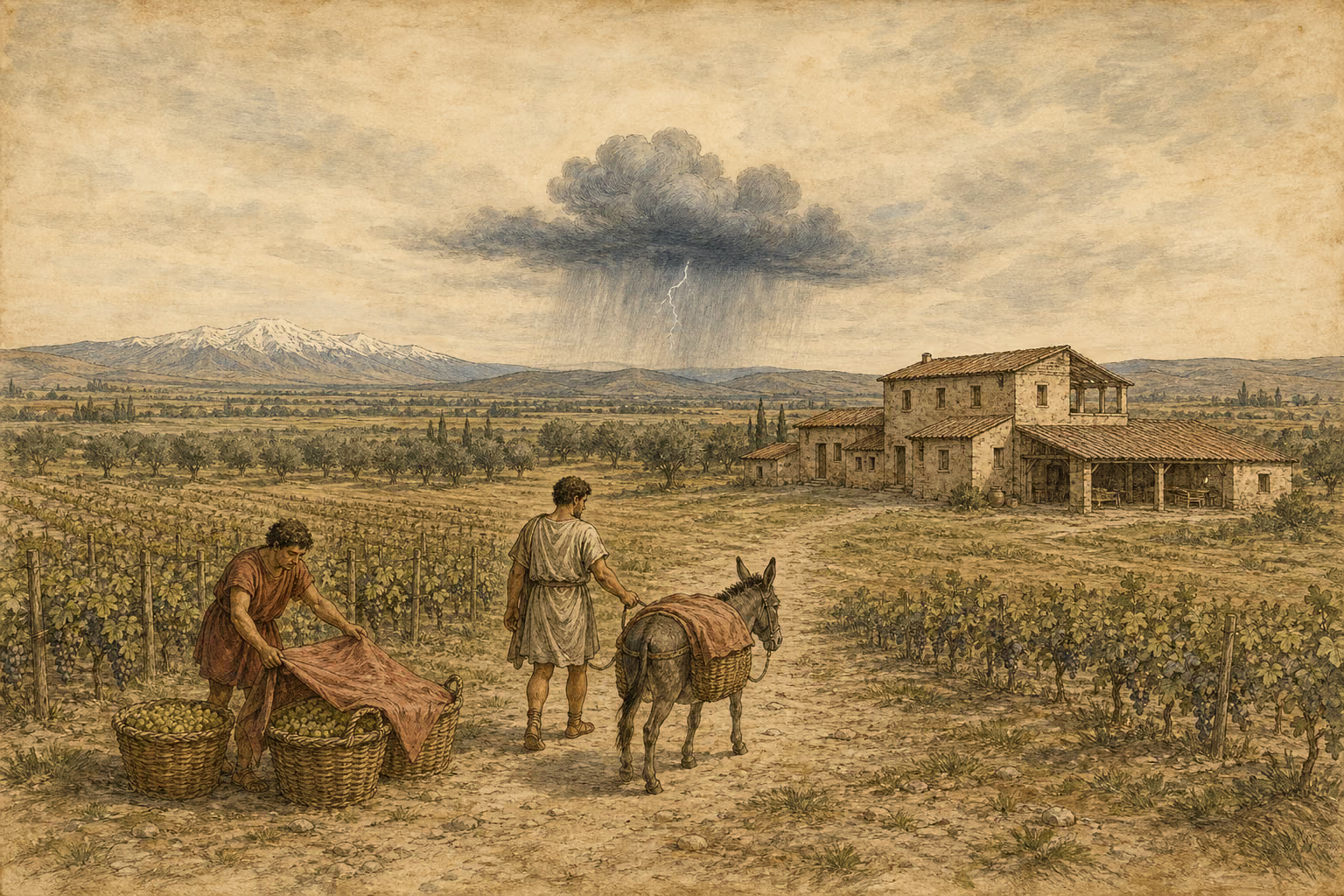
Hieme et aestate rara fulmina contrariis de causis, quoniam hieme densatus aër nubium crassiore corio spissatur, omnisque terrarum exhalatio rigens ac gelida quicquid accipit ignei vaporis exstinguit. quae ratio inmunem Scythiam et circa rigentia a fulminum casu praestat, e diverso nimius ardor Aegyptum, siquidem calidi siccique halitus terrae raro admodum tenuesque et infirmas densantur in nubes. vere autem et autumno crebriora fulmina, corruptis in utroque tempore aestatis hiemisque causis, qua ratione crebra in Italia, quia mobilior aer mitiore hieme et aestate nimbosa semper quodammodo vernat vel autumnat. Italiaeque partibus iis, quae a septentrione descendunt ad teporem, qualis est urbis et Campaniae tractus, iuxta hieme et aestate fulgurat, quod non in alio situ.
English · Bostock & Riley 1855–57
Thunder is rare both in winter and in summer, but from different causes; the air, which is condensed in the winter, is made still more dense by a thicker covering of clouds, while the exhalations from the earth, being all of them rigid and frozen, extinguish whatever fiery vapour it may receive. It is this cause which exempts Scythia and the cold districts round it from thunder. On the other hand, the excessive heat exempts Egypt; the warm and dry vapours of the earth being very seldom condensed, and that only into light clouds. But, in the spring and autumn, thunder is more frequent, the causes which produce summer and winter being, in each season, less efficient. From this cause thunder is more frequent in Italy, the air being more easily set in motion, in consequence of a milder winter and a showery summer, so that it may be said to be always spring or autumn. Also in those parts of Italy which recede from the north and lie towards the south, as in the district round our city, and in Campania, it lightens equally both in winter and in summer, which is not the case in other situations.