LIBER II · CAPUT 6
OF THE ELEMENTS AND THE PLANETS
Latine · Mayhoff 1906
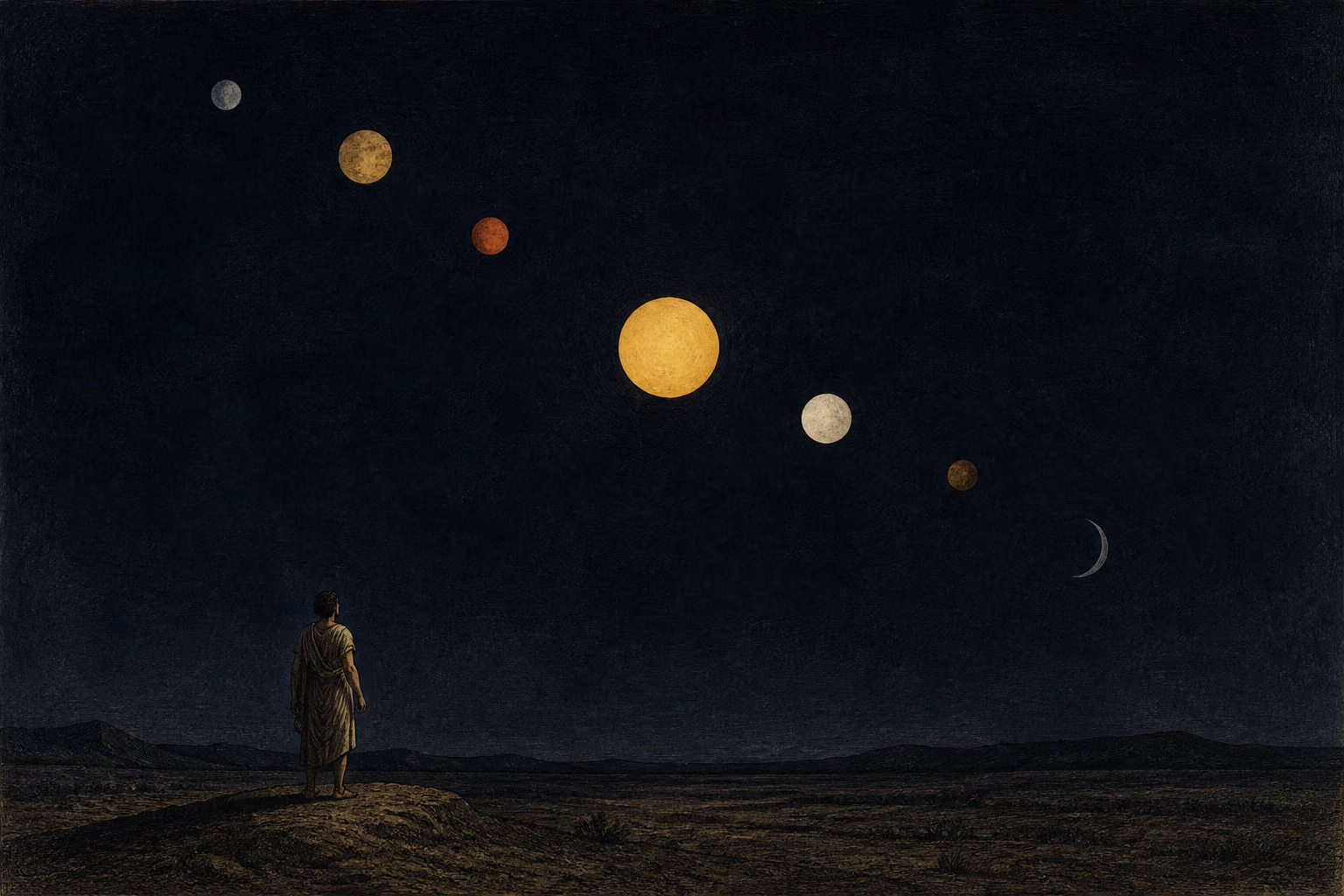
inter hanc caelumque eodem spiritu pendent certis discreta spatiis septem sidera, quae ab incessu vocamus errantia, cum errent nulla minus illis. eorum medius sol fertur, amplissima magnitudine ac potestate nec temporum modo terrarumque, sed siderum etiam ipsorum caelique rector. hunc esse mundi totius animum ac planius mentem, hunc principale naturae regimen ac numen credere decet opera eius aestimantes. hic lucem rebus ministrat aufertque tenebras, hic reliqua sidera occultat, inlustrat; hic vices temporum annumque semper renascentem ex usu naturae temperat; hic caeli tristitiam discutit atque etiam humani nubila animi serenat; hic suum lumen ceteris quoque sideribus fenerat, praeclarus, eximius, omnia intuens, omnia etiam exaudiens, ut principi litterarum Homero placuisse in uno eo video.
English · Bostock & Riley 1855–57
Between this body and the heavens there are suspended, in this aërial spirit, seven stars, separated by determinate spaces, which, on account of their motion, we call wandering, although, in reality, none are less so. The sun is carried along in the midst of these, a body of great size and power, the ruler, not only of the seasons and of the different climates, but also of the stars themselves and of the heavens. When we consider his operations, we must regard him as the life, or rather the mind of the universe, the chief regulator and the God of nature. He supplies light to the universe, and dispels all darkness; He both conceals and reveals the other stars. It is He that regulates the seasons, and, in the course of nature, governs the year as it ever springs anew into birth; it is He that dispels the gloom of the heavens, and sheds his light upon the clouds of the human mind. He, too, lends his brightness to the other stars. He is most brilliant and most excellent, beholding all things and hearing all things, which, I perceive, is ascribed to him exclusively by the prince of poets, Homer.