LIBER II · CAPUT 7
OF GOD
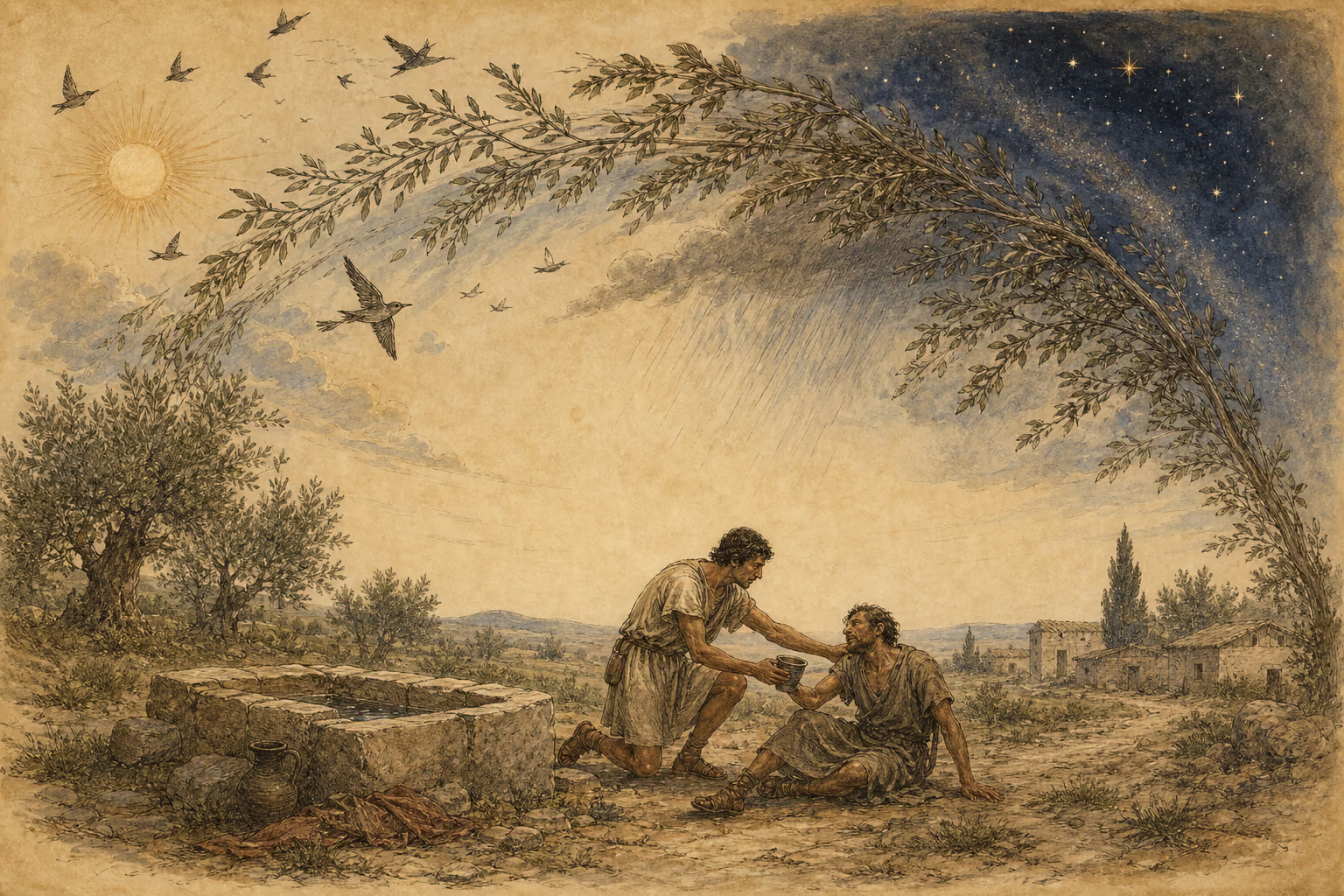
Latine · Mayhoff 1906
Quapropter effigiem dei formamque quaerere inbecillitatis humanae reor. quisquis est deus, si modo est alius, et quacumque in parte, totus est sensus, totus visus, totus auditus, totus animae, totus animi, totus sui. innumeros quidem credere atque etiam ex vitiis hominum, ut Pudicitiam, Concordiam, Mentem, Spem, Honorem, Clementiam, Fidem, aut, ut Democrito placuit, duos omnino, Poenam et Beneficium, maiorem ad socordiam accedit. fragilis et laboriosa mortalitas in partes ita digessit infirmitatis suae 15 memor, ut portionibus coleret quisque quo maxime indigeret. itaque nomina alia aliis gentibus et numina in iisdemn innumerabilia invenimus, inferis quoque in genera di- scriptis morbisque et multis etiam pestibus, dum esse placatas trepido metu cupimus. ideoque etiam publice Febris fanum in Palatio dicatum est, Orbonae ad aedem Larumn ara et Malae Fortunae Esquiliis. quam ob rem maior caelitum populus etiam quam hominum intellegi potest, cum singuli quoque ex semet ipsis totidem deos faciant Iunones Geniosque adoptando sibi, gentes vero quaedam animalia et aliqua etiam obscena pro dis habeant ac multa dictu magis pudenda, per fetidos cibos, alia et similia, iurantes. matrimonia quidem inter deos credi tantoque aevo ex iis neminem nasci et alios esse grandaevos semper canosque, alios iuvenes atque pueros, atri coloris, aligeros, claudos, ovo editos et alternis diebus viventes morientesque, puerilium prope deliramentorum est, sed super omnem inpudentiam, adulteria inter ipsos fingi, mox iurgia et odia, atque etiam furtorum esse et scelerum numina. deus est mortali iuvare mortalem, et haec ad aeternam gloriam via. hac proceres iere Romani, hac nunc caelesti passu cum liberis suis vadit maximus omnis aevi rector Vespasianus Augustus fessis rebus subveniens. hic est vetustissimus referendi bene merentibus gratiam mos, ut tales numinibus adscribant. quippe et aliorum nomina deorum et quae supra retuli siderum ex hominum nata sunt meritis. lovem quidem aut Mercurium aliterve alios inter se vocari et esse caelestem nomenclaturam, quis non interpretatione naturae fateatur inridendum? agere curam rerum humanarum illud, quicquid est, summum acvel tam tristi atque multiplici ministerio non pollui credamus dubitemusne? vix prodest iudicare, utrum magis conducat generi humano, quando aliis nullus est deorum respectus, aliis pudendus. externis famulantur sacris ac digitis deos gestant, monstra quoque colunt, damnant et excogitant cibos, imperia dira in ipsos, ne somno quidem quieto, inrogant. non matrimonia, non liberos, non denique quicquam aliud nisi iuvantibus sacris deligunt. alii in Capitolio fallunt ac fulminantem periurant lovem. et hos iuvant scelera, illos sacra sua poenis agunt.
Invenit tamen inter has utrasque sententias medium sibi ipsa mortalitas numen, quo minus etiam plana de deo coniectatio esset. toto quippe mundo et omnibus locis omnibusque horis omnium vocibus Fortuna sola invocatur ac nominatur, una accusatur, rea una agitur, una cogitatur, sola laudatur, sola arguitur et cum conviciis colitur, volubilis.... que, a plerisque vero et caeca existimata, vaga, inconstans, incerta, varia indignorumque fautrix. huic omnia expensa, huic feruntur accepta, et in tota ratione mortalium sola utramque paginam facit, adeoque obnoxiae sumus sortis, ut prorsus ipsa pro deo sit qua deus probatur incertus. pars alia et hanc pellit astroque suo eventus adsignat et nascendi legibus, semelque in omnes futuros umquam deo decretum, in reliquum vero otium datum. sedere coepit sententia haec, pariterque et eruditum vulgus et rude in eam cursu vadit. ecce fulgurum monitus, oraculorum praescita, haruspicum praedicta atque etiam parva dictu in auguriis sternumenta et offensiones pedum. Divus Augustus prodidit laevum sibi calceum praepostere inductum quo die seditione militari prope adflictus est. quae singula inprovidam mortalitatem involvunt, solum ut inter ista vel certum sit nihil esse certi nec quicquam miserius homine aut superbius. ceteris quippe animantium sola victus cura est, in quo sponte naturae benignitas sufficit, uno quidem vel praeferendo cunctis bonis, quod de gloria, de pecunia, ambitione superque de morte non cogitant.
Verum in his deos agere curam rerum humanarum credi ex usu vitae est poenasque maleficiis aliquando seras, occupato deo in tanta mole, numquam autem inritas esse nec ideo proximum illi genitum hominem, ut vilitate iuxta beluas esset. inperfectae vero in homine naturae praecipua solatia, ne deum quidem posse omnia—namque nec sibi potest mortem consciscere, si velit, quod homini dedit optimum in tantis vitae poenis, nec mortales aeternitate donare aut revocare defunctos nec facere ut qui vixit non vixerit, qui honores gessit non gesserit—nullumque habere in praeterita ius praeterquam oblivionis atque (ut facetis quoque argumentis societas haec cum deo copuletur) ut bis dena viginti non sint aut multa similiter efficere non 25 posse. per quae declaratur haut dubie naturae potentia idque esse quod deum vocemus. in haec divertisse non fuerit alienum, vulgataiam propter adsiduam quaestionem de deo.
English · Bostock & Riley 1855–57
I consider it, therefore, an indication of human weakness to inquire into the figure and form of God. For whatever God be, if there be any other God, and wherever he exists, he is all sense, all sight, all hearing, all life, all mind, and all within himself. To believe that there are a number of Gods, derived from the virtues and vices of man, as Chastity, Concord, Understanding, Hope, Honour, Clemency, and Fidelity; or, according to the opinion of Democritus, that there are only two, Punishment and Reward, indicates still greater folly. Human nature, weak and frail as it is, mindful of its own infirmity, has made these divisions, so that every one might have recourse to that which he supposed himself to stand more particularly in need of. Hence we find different names employed by different nations; the inferior deities are arranged in classes, and diseases and plagues are deified, in consequence of our anxious wish to propitiate them. It was from this cause that a temple was dedicated to Fever, at the public expense, on the Palatine Hill, and to Orbona, near the Temple of the Lares, and that an altar was erected to Evil Fortune on the Esquiline. Hence we may understand how it comes to pass that there is a greater population of the Celestials than of human beings, since each individual makes a separate God for himself, adopting his own Juno and his own Genius. And there are nations who make Gods of certain animals, and even certain obscene things, which are not to be spoken of, swearing by stinking meats and such like. To suppose that marriages are contracted between the Gods, and that, during so long a period, there should have been no issue from them, that some of them should be old and always grey-headed and others young and like children, some of a dark, complexion, winged, lame, produced from eggs, living and dying on alternate days, is sufficiently puerile and foolish. But it is the height of impudence to imagine, that adultery takes place between them, that they have contests and quarrels, and that there are Gods of theft and of various crimes. To assist man is to be a God; this is the path to eternal glory. This is the path which the Roman nobles formerly pursued, and this is the path which is now pursued by the greatest ruler of our age, Vespasian Augustus, he who has come to the relief of an exhausted empire, as well as by his sons. This was the ancient mode of remunerating those who deserved it, to regard them as Gods. For the names of all the Gods, as well as of the stars that I have mentioned above, have been derived from their services to mankind. And with respect to Jupiter and Mercury, and the rest of the celestial nomenclature, who does not admit that they have reference to certain natural phenomena?
But it is ridiculous to suppose, that the great head of all things, whatever it be, pays any regard to human affairs. Can we believe, or rather can there be any doubt, that it is not polluted by such a disagreeable and complicated office? It is not easy to determine which opinion would be most for the advantage of mankind, since we observe some who have no respect for the Gods, and others who carry it to a scandalous excess. They are slaves to foreign ceremonies; they carry on their fingers the Gods and the monsters whom they worship; they condemn and they lay great stress on certain kinds of food; they impose on themselves dreadful ordinances, not even sleeping quietly. They do not marry or adopt children, or indeed do anything else, without the sanction of their sacred rites. There are others, on the contrary, who will cheat in the very Capitol, and will forswear themselves even by Jupiter Tonans, and while these thrive in their crimes, the others torment themselves with their superstitions to no purpose.
Among these discordant opinions mankind have discovered for themselves a kind of intermediate deity, by which our conjectures concerning God become more vague still. For all over the world, in all places, and at all times, Fortune is the only god whom every one invokes; she alone is spoken of, she alone is accused and is supposed to be guilty; she alone is in our thoughts, is praised and blamed, and is loaded with reproaches; wavering as she is, conceived by the generality of mankind to be blind, wandering, inconstant, uncertain, variable, and often favouring the unworthy. To her are referred all our losses and all our gains, and in casting up the accounts of mortals she alone balances the two pages of our sheet. We are so much in the power of chance, that chance itself is considered as a God, whereby the very existence of a God is shewn to be uncertain.
But there are others who reject this principle and assign events to the influence of the stars, and to the laws of our nativity; they suppose that God, once for all, issues his decrees and never afterwards interferes. This opinion begins to gain ground, and both the learned and the unlearned vulgar are falling into it. Hence we have the admonitions of thunder, the warnings of oracles, the predictions of soothsayers, and things too trifling to be mentioned, as sneezing and stumbling with the feet reckoned among omens. The late Emperor Augustus relates, that he put the left shoe on the wrong foot, the day when he was near being assaulted by his soldiers. And such things as these so embarrass improvident mortals, that among all of them this alone is certain, that there is nothing certain, and that there is nothing more proud or more wretched than man. For other animals have no care but to provide for their subsistence, for which the spontaneous kindness of nature is all-sufficient; and this one circumstance renders their lot more especially preferable, that they never think about glory, or money, or ambition, and, above all, that they never reflect on death.
The belief, however, that on these points the Gods superintend human affairs is useful to us, as well as that the punishment of crimes, although sometimes tardy, from the Deity being occupied with such a mass of business, is never entirely remitted, and that the human race was not made the next in rank to himself, in order that they might be degraded like brutes. And indeed this constitutes the great comfort in this imperfect state of man, that even the Deity cannot do everything. For he cannot procure death for himself, even if he wished it, which, so numerous are the evils of life, has been granted to man as our chief good. Nor can he make mortals immortal, or recall to life those who are dead; nor can he effect, that he who has once lived shall not have lived, or that he who has enjoyed honours shall not have enjoyed them; nor has he any influence over past events but to cause them to be forgotten. And, if we illustrate the nature of our connexion with God by a less serious argument, he cannot make twice ten not to be twenty, and many other things of this kind. By these considerations the power of Nature is clearly proved, and is shown to be what we call God. It is not foreign to the subject to have digressed into these matters, familiar as they are to every one, from the continual discussions that take place respecting God.