LIBER II · CAPUT 60
THE NATURE OF HAIL, SNOW, HOAR, MIST, DEW; THE FORMS OF CLOUDS
Latine · Mayhoff 1906
grandinem conglaciato imbre gigni et nivem eodem umore mollius coacto, pruinam autem ex rore gelido; per hiemem nives cadere, non grandines, ipsasque grandines interdiu saepius quam noctu, et multo celerius resolvi quam nives; nebulas nec aestate nec maximo frigore exsistere, rores neque gelu neque ardoribus neque ventis nec nisi serena nocte; gelando liquorem minui, resolutaque glacie non eundem inveniri modum;
English · Bostock & Riley 1855–57
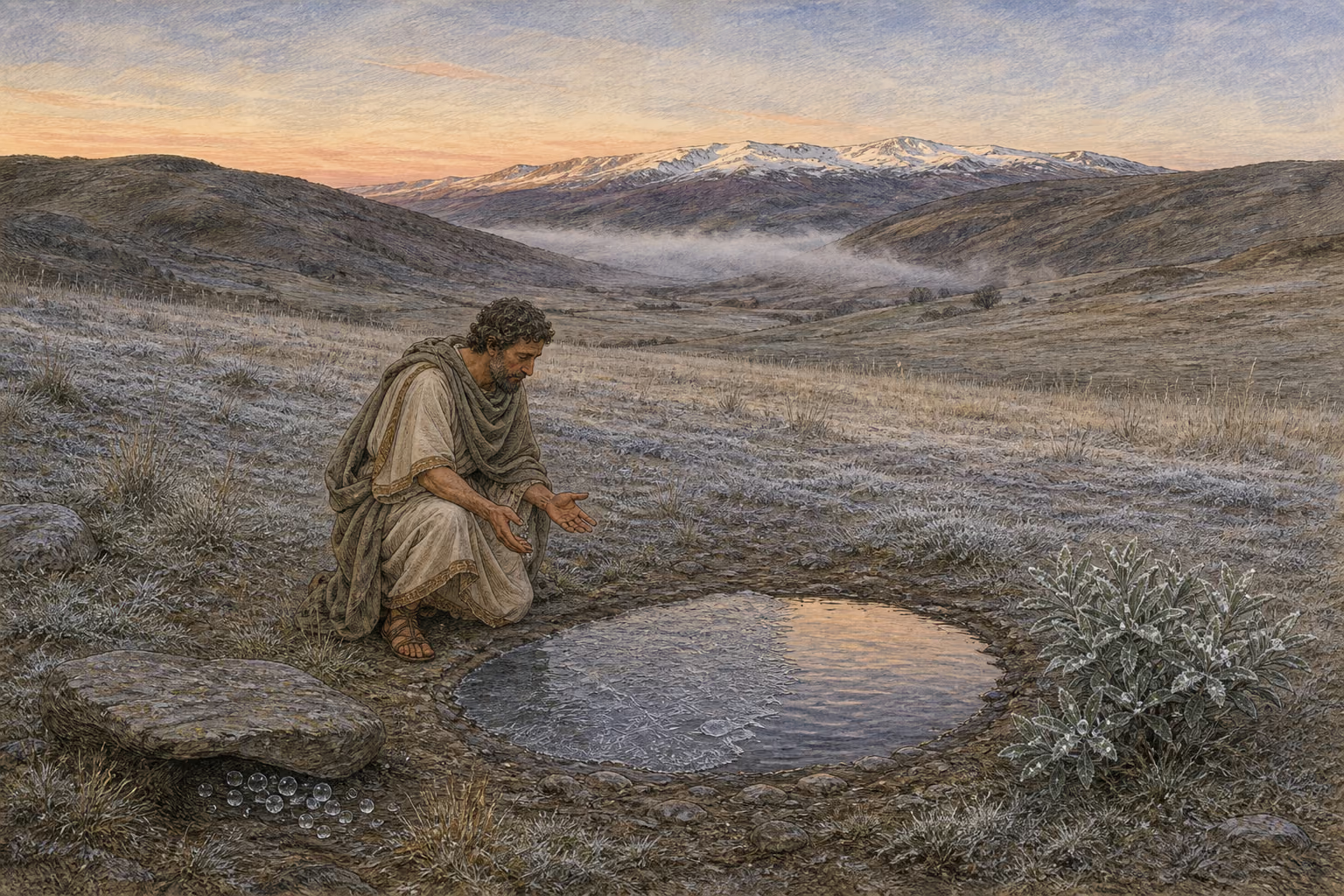
Hail is produced by frozen rain, and snow by the same fluid less firmly concreted, and hoar by frozen dew. During the winter snow falls, but not hail; hail itself falls more frequently during the day than the night, and is more quickly melted than snow. There are no mists either in the summer or during the greatest cold of winter. There is neither dew nor hoar formed during great heat or winds, nor unless the night be serene. Fluids are diminished in bulk by being frozen, and, when the ice is melted, we do not obtain the same quantity of fluid as at first.