LIBER II · CAPUT 64
OF THE FORM OF THE EARTH
Latine · Mayhoff 1906
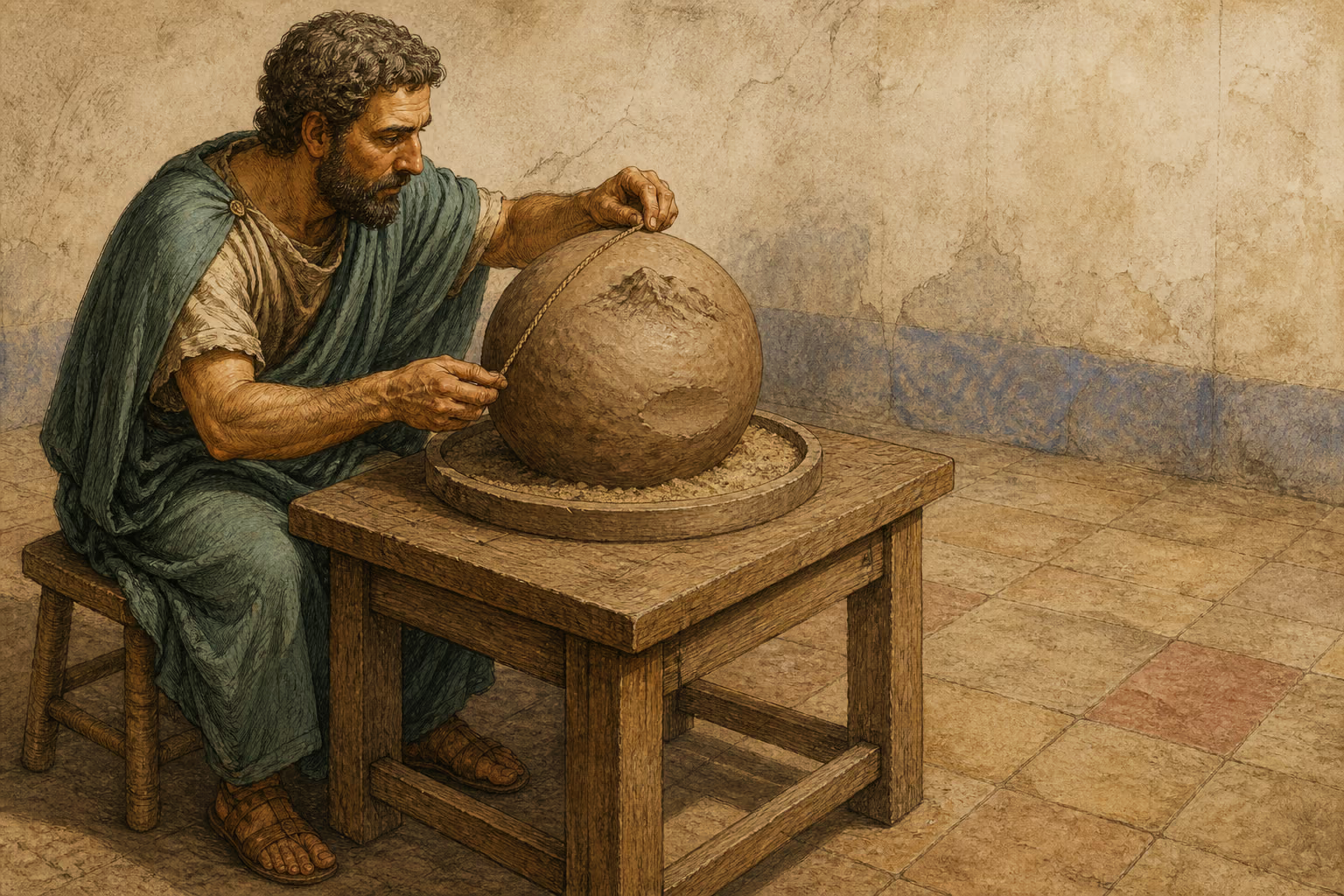
Inter crimina ingrati animi et hoc duxerim quod naturam eius ignoramus. est autem figura prima, de qua consensus iudicat. orbem certe dicimus terrae globumque verticibus includi fatemur. neque enim absoluti orbis est forma in tanta montium excelsitate, tanta camporum planitie, sed cuius amplexus, si cuncta liniarum conprehendantur ambitu, figuram absoluti orbis efficiat, id quod ipsa rerum natura cogit, non isdem causis, quas attulimus in caelo. namque in illo cava in se convexitas vergit et cardini suo, hoc est terrae, undique incumbit. haec ut solida ac conferta adsurgit intumescenti similis extraque protenditur. mundus in centrum vergit, at terra exit a centro, inmensum eius globum in formam orbis adsidua circa eam mundi volubilitate cogente.
English · Bostock & Riley 1855–57
Every one agrees that it has the most perfect figure. We always speak of the ball of the earth, and we admit it to be a globe bounded by the poles. It has not indeed the form of an absolute sphere, from the number of lofty mountains and flat plains; but if the termination of the lines be bounded by a curve, this would compose a perfect sphere. And this we learn from arguments drawn from the nature of things, although not from the same considerations which we made use of with respect to the heavens. For in these the hollow convexity everywhere bends on itself, and leans upon the earth as its centre. Whereas the earth rises up solid and dense, like something that swells up and is protruded outwards. The heavens bend towards the centre, while the earth goes from the centre, the continual rolling of the heavens about it forcing its immense globe into the form of a sphere.