LIBER II · CAPUT 71
WHAT REGULATES THE DAYLIGHT ON THE EARTH
Latine · Mayhoff 1906
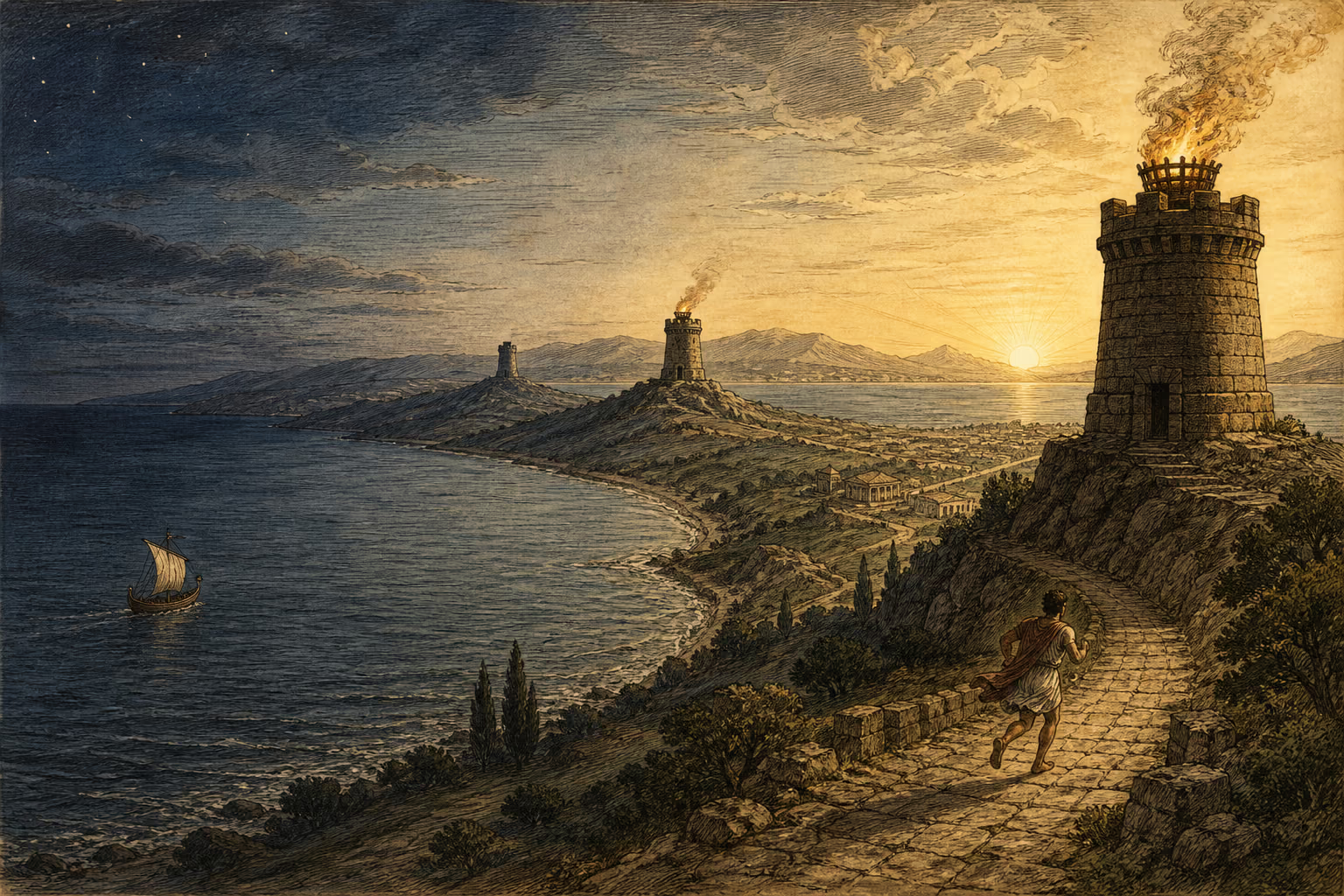
Ideo nec nox diesque, quamvis eadem, toto orbe simul est, oppositu globi noctem aut ambitu diem adferente. multis hoc cognitum experimentis, in Africa Hispaniaque turrium Hannibalis, in Asia vero propter piraticos terrores simili specularum praesidio excitato, in quis praenuntios ignes sexta hora diei accensos saepe conpertum est tertia noctis a tergo ultimis visos. eiusdem Alexandri cursor Philonides ex Sicyone Elin mille et ducenta stadia novem diei confecit horis indeque, quamvis declivi itinere, tertia noctis hora remensus est saepius. causa, quod eunti cum sole iter erat, eundem remeans obvium contrario praetervertebat occursu. qua de causa ad occasum navigantes, quamvis brevissimo die, vincunt spatia nocturnae navigationis, ut solem ipsum comitantes.
English · Bostock & Riley 1855–57
Hence it is that there is not any one night and day the same, in all parts of the earth, at the same time; the intervention of the globe producing night, and its turning round producing day. This is known by various observations. In Africa and in Spain it is made evident by the Towers of Hannibal, and in Asia by the beacons, which, in consequence of their dread of pirates, the people erected for their protection; for it has been frequently observed, that the signals, which were lighted at the sixth hour of the day, were seen at the third hour of the night by those who were the most remote. Philonides, a courier of the above-mentioned Alexander, went from Sicyon to Elis, a distance of 1200 stadia, in nine hours, while he seldom returned until the third hour of the night, although the road was down-hill. The reason is, that, in going, he followed the course of the sun, while on his return, in the opposite direction, he met the sun and left it behind him. For the same reason it is, that those who sail to the west, even on the shortest day, compensate for the difficulty of sailing in the night and go farther, because they sail in the same direction with the sun.