LIBER II · CAPUT 79
OF EARTHQUAKES
Latine · Mayhoff 1906
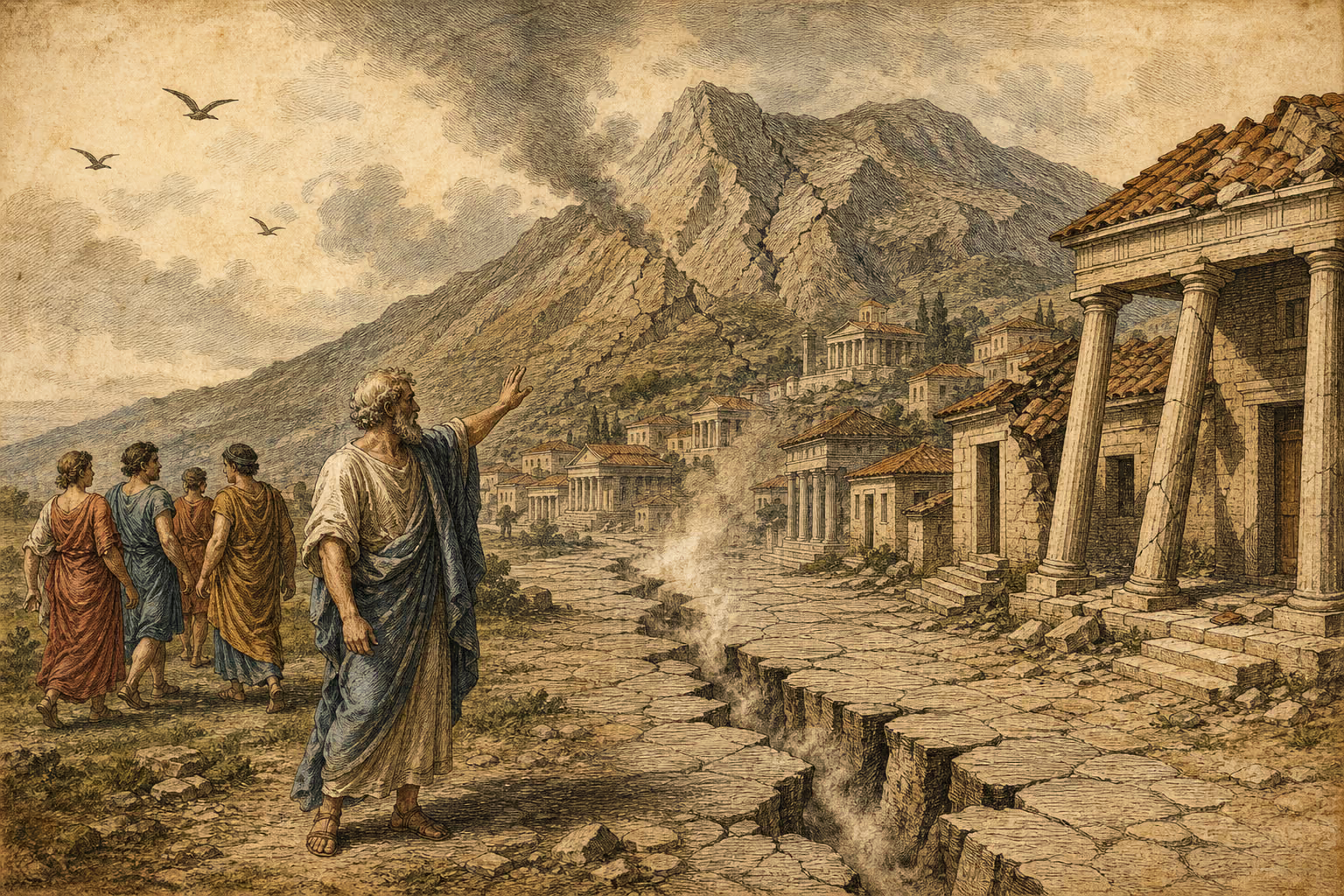
Babyloniorum placita et motus terrae hiatusque, qua cetera omnia, siderum vi existimant fieri, sed illorum trium, quibus fulmina adsignant, fieri autem meantium cum sole aut congruentium et maxime circa quadrata mundi. praeclara quaedam et inmortalis in eo, si credimus, divinitas perhibetur Anaximandro Milesio physico, quem ferunt Lacedaemoniis praedixisse ut urbem ac tecta custodirent, instare enim motum terrae, cum et urbs tota eorum corruit et Taygeti montis magna pars, ad formam puppis eminens, abrupta cladem eam insuper ruina pressit. perhibetur et Pherecydi, Pythagorae doctori, alia coniectatio, sed et illa divina, haustu aquae e puteo praesensisse ac praedixisse civibus terrae motum. quae si vera sunt, quantum a deo tandem videri possunt tales distare, dum vivant? et haec quidem arbitrio cuiusque existimanda relinquantur: ventos in causa esse non dubium reor. neque enim umquam intremiscunt terrae nisi sopito maria caeloque adeo tranquillo, ut volatus avium non pendeant, subtracto omni spiritu qui vehit, nec umquam nisi post ventos, condito scilicet in venas et cava eius occulta flatu. neque aliud est in terra tremor quam in nube tonitruum, nec hiatus aliud quam cum fulmen erumpit incluso spiritu luctante et ad libertatem exire nitente.
English · Bostock & Riley 1855–57
According to the doctrine of the Babylonians, earthquakes and clefts of the earth, and occurrences of this kind, are supposed to be produced by the influence of the stars, especially of the three to which they ascribe thunder; and to be caused by the stars moving with the sun, or being in conjunction with it, and, more particularly, when they are in the quartile aspect. If we are to credit the report, a most admirable and immortal spirit, as it were of a divine nature, should be ascribed to Anaximander the Milesian, who, they say, warned the Lacedæmonians to beware of their city and their houses. For he predicted that an earthquake was at hand, when both the whole of their city was destroyed and a large portion of Mount Taygetus, which projected in the form of a ship, was broken off, and added farther ruin to the previous destruction. Another prediction is ascribed to Pherecydes, the master of Pythagoras, and this was divine; by a draught of water from a well, he foresaw and predicted that there would be an earthquake in that place. And if these things be true, how nearly do these individuals approach to the Deity, even during their lifetime! But I leave every one to judge of these matters as he pleases. I certainly conceive the winds to be the cause of earthquakes; for the earth never trembles except when the sea is quite calm, and when the heavens are so tranquil that the birds cannot maintain their flight, all the air which should support them being withdrawn; nor does it ever happen until after great winds, the gust being pent up, as it were, in the fissures and concealed hollows. For the trembling of the earth resembles thunder in the clouds; nor does the yawning of the earth differ from the bursting of the lightning; the enclosed air struggling and striving to escape.