LIBER II · CAPUT 80
OF CLEFTS OF THE EARTH
Latine · Mayhoff 1906
Varie itaque quatitur, et mira eduntur opera, alibi prostratis moenibus, alibi hiatu profundo haustis, alibi egestis molibus, alibi emissis amnibus, nonnumquam etiam ignibus calidisve fontibus, alibi averso fluminum cursu. praecedit vero comitaturque terribilis sonus, alias murmuri similis, alias mugitibus aut clamori humano armorumve pulsantium fragori, pro qualitate materiae excipientis formaque vel cavernarum vel cuniculi, per quem meet, exilius grassante in angusto, eodem rauco in recurvis, resultante in duris, fervente in umidis, fluctuante in stagnantibus, furente contra solida. itaque et sine motu saepe editur sonus. nec simplici modo quatitur umquam, sed tremit vibratque. hiatus vero alias remanet ostendens quae sorbuit, alias occultat ore conpresso rursusque ita inducto solo, ut nulla vestigia exstent, urbibus plerumque devoratis agrorumque tractu hausto. maritima autem maxime quatiuntur, nec montuosa tali malo carent. exploratum mihi est Alpes Appenninumque saepius tremuisse. et autumno ac vere terrae crebrius moventur, sicut fulmina. ideo Galliae et Aegyptus minime quatiuntur, quoniam hic aestatis causa obstat, illic hiemis. item noctu saepius quam interdiu. maximi autem motus existunt matutini vespertinique, sed propinqua luce crebri, interdiu autem circa meridiem. fiunt et solis lunaeque defectu, quoniam tempestates tunc sopiuntur, praecipue vero cum sequitur imbres aestus imbresve aestum.
English · Bostock & Riley 1855–57
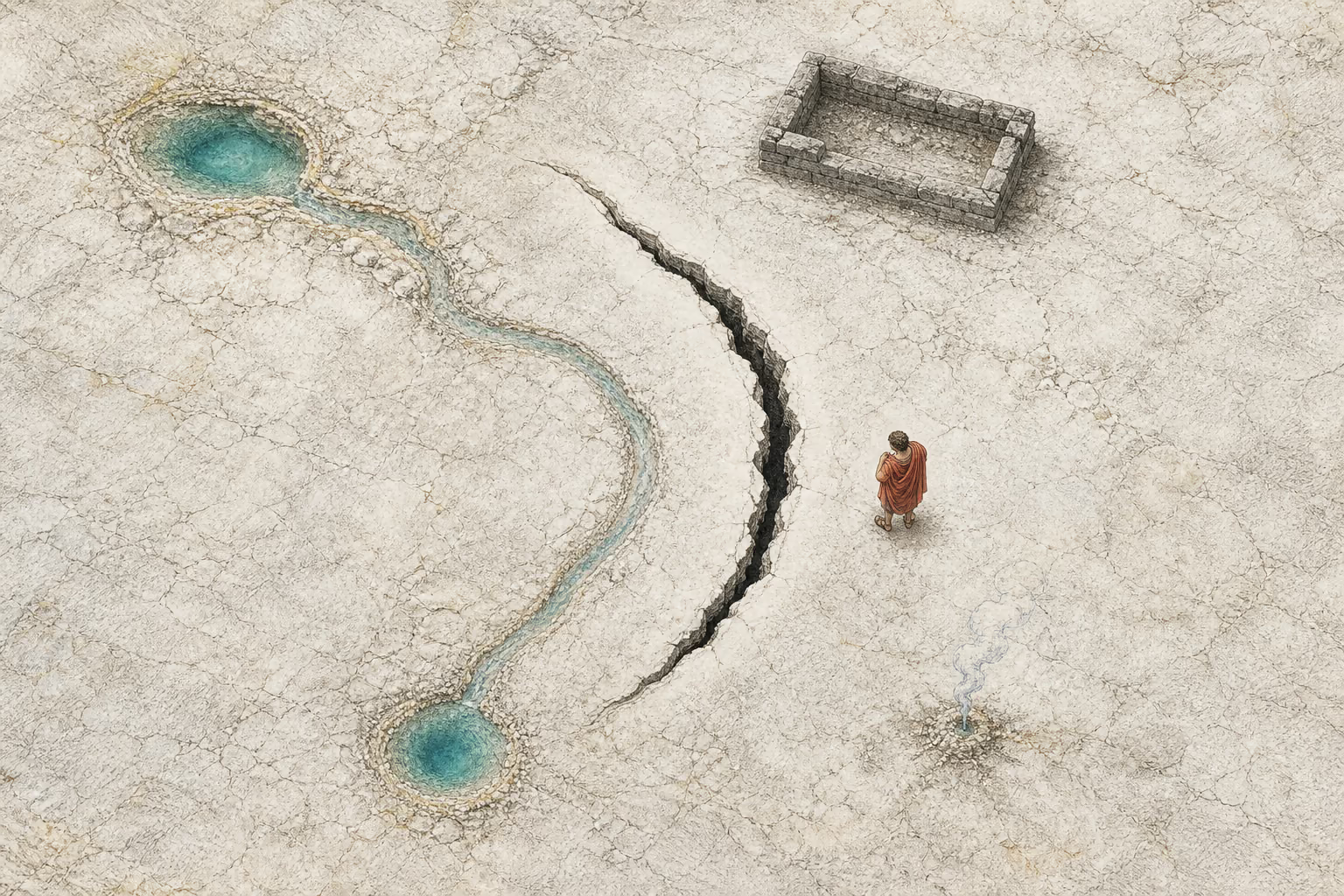
The earth is shaken in various ways, and wonderful effects are produced; in one place the walls of cities being thrown down, and in others swallowed up by a deep cleft; sometimes great masses of earth are heaped up, and rivers forced out, sometimes even flame and hot springs, and at others the course of rivers is turned. A terrible noise precedes and accompanies the shock; sometimes a murmuring, like the lowing of cattle, or like human voices, or the clashing of arms. This depends on the substance which receives the sound, and the shape of the caverns or crevices through which it issues; it being more shrill from a narrow opening, more hoarse from one that is curved, producing a loud reverberation from hard bodies, a sound like a boiling fluid from moist substances, fluctuating in stagnant water, and roaring when forced against solid bodies. There is, therefore, often the sound without any motion. Nor is it a simple motion, but one that is tremulous and vibratory. The cleft sometimes remains, displaying what it has swallowed up; sometimes concealing it, the mouth being closed and the soil being brought over it, so that no vestige is left; the city being, as it were, devoured, and the tract of country engulfed. Maritime districts are more especially subject to shocks. Nor are mountainous tracts exempt from them; I have found, by my inquiries, that the Alps and the Apennines are frequently shaken. The shocks happen more frequently in the autumn and in the spring, as is the case also with thunder. There are seldom shocks in Gaul and in Egypt; in the latter it depends on the prevalence of summer, in the former, of winter. They also happen more frequently in the night than in the day. The greatest shocks are in the morning and the evening; but they often take place at day-break, and sometimes at noon. They also take place during eclipses of the sun and of the moon, because at that time storms are lulled. They are most frequent when great heat succeeds to showers, or showers succeed to great heat.