LIBER II · CAPUT 95
OF CERTAIN LANDS WHICH ARE ALWAYS SHAKING, AND OF FLOATING ISLANDS
Latine · Mayhoff 1906
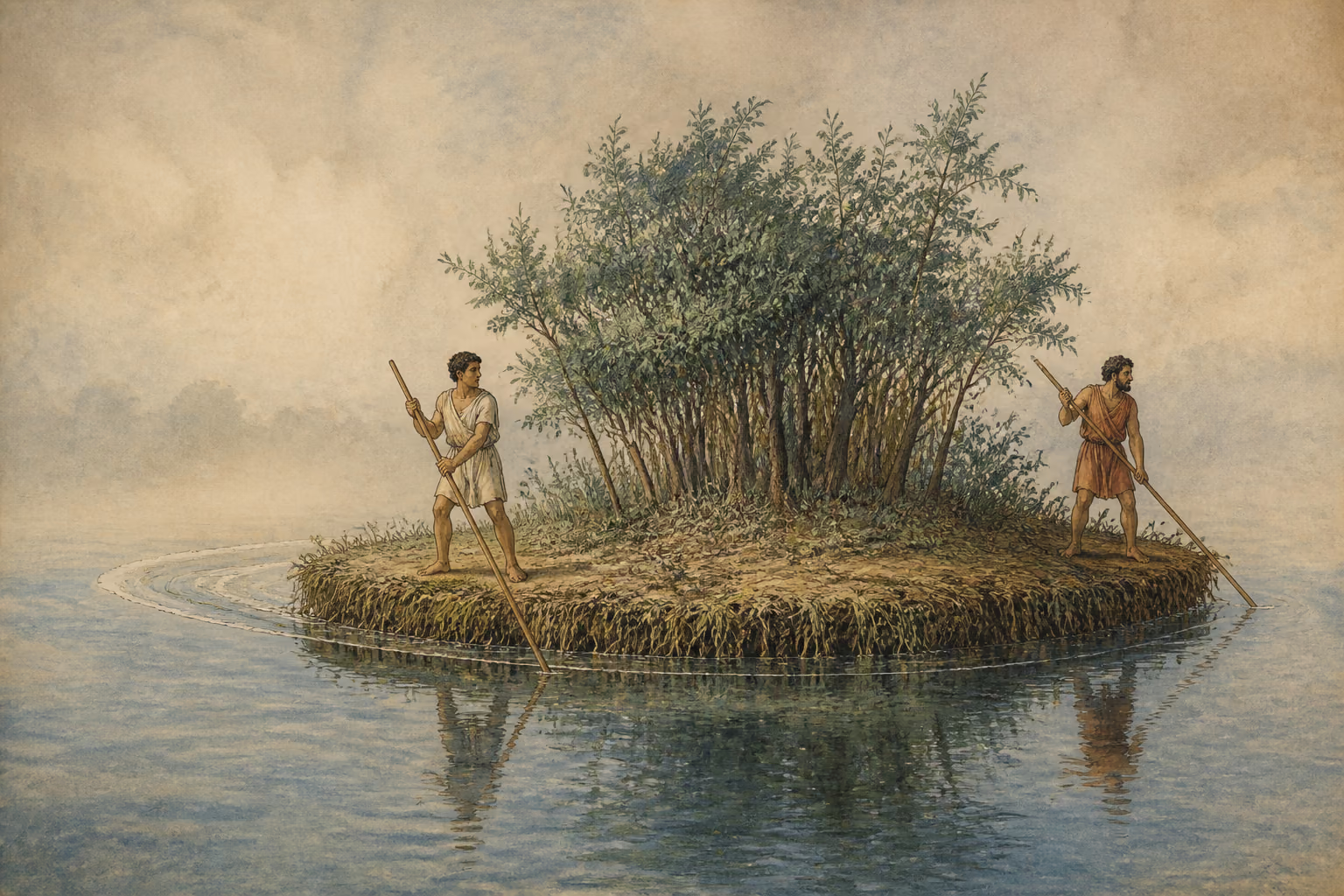
quaedam insulae semper fluctuantur, sicut in agro Caecubo et eodem Reatino, Mutinensi, Statoniensi, in Vadimonis lacu, ad Cutilias aquas opaca silva, quae numquam die ac nocte eodem loco visitur, in Lydia quae vocantur Calaminae, non ventis solum, sed etiam contis quo libeat inpulsae, multorum civium Mithridatico bello salus. sunt et in Nymphaeo parvae, Saliares dictae, quoniam in symphoniae cantu ad ictus modulantium pedum moventur. in Tarquiniensi lacu magno Italiae duae nemora circumferunt, nunc triquetram figuram edentes, nunc rotundam conplexu ventis inpellentibus, quadratam numquam.
English · Bostock & Riley 1855–57
There are certain islands which are always floating, as in the territory of the Cæcubum, and of the above-mentioned Reate, of Mutina, and of Statonia. In the lake of Vadimonis and the waters of Cutiliæ there is a dark wood, which is never seen in the same place for a day and a night together. In Lydia, the islands named Calaminæ are not only driven about by the wind, but may be even pushed at pleasure from place to place, by poles: many citizens saved themselves by this means in the Mithridatic war. There are some small islands in the Nymphæus, called the Dancers, because, when choruses are sung, they are moved by the motions of those who beat time. In the great Italian lake of Tarquinii, there are two islands with groves on them, which are driven about by the wind, so as at one time to exhibit the figure of a triangle and at another of a circle; but they never form a square.