LIBER II · CAPUT 96
PLACES IN WHICH IT NEVER RAINS
Latine · Mayhoff 1906
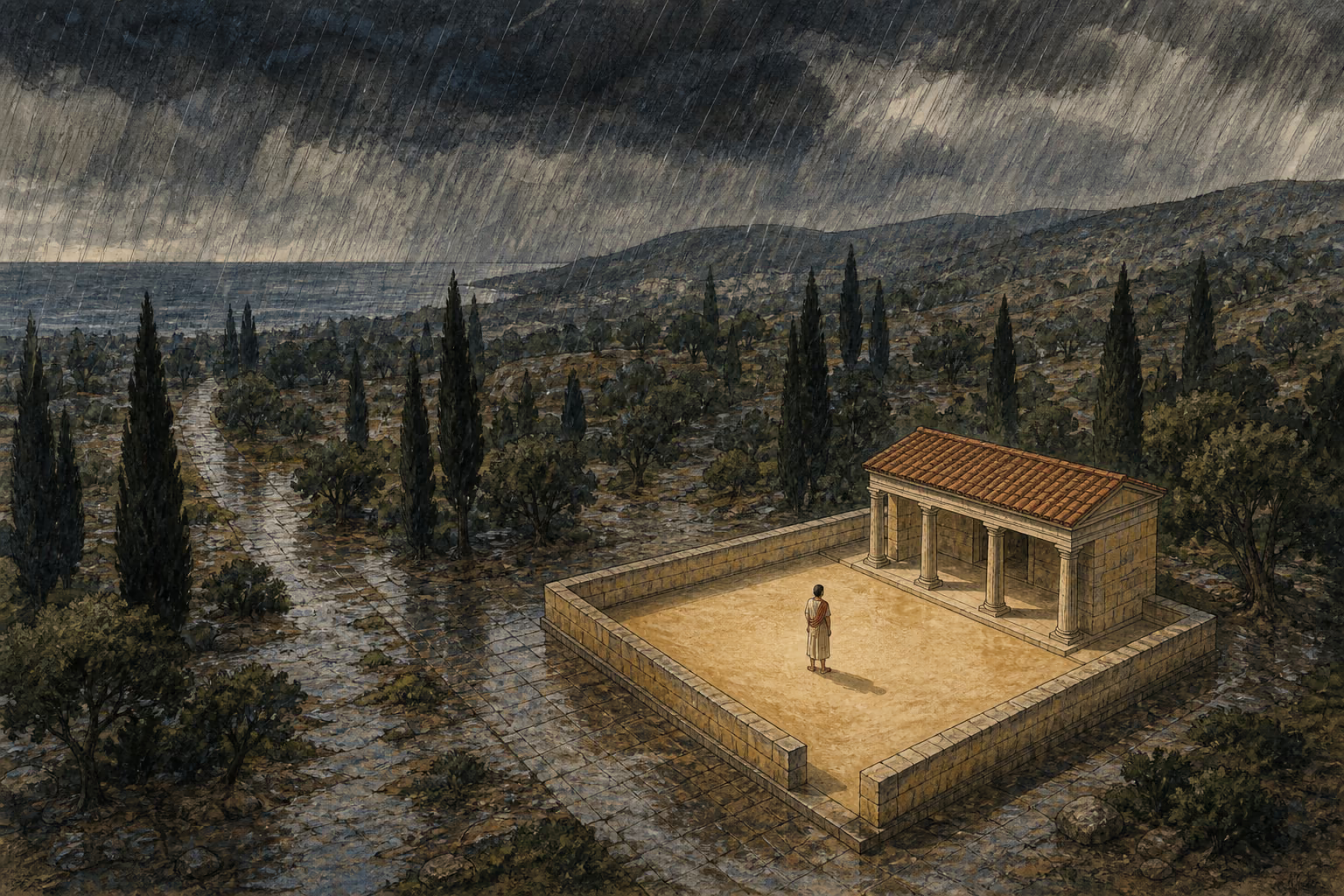
Celebre fanum habet Veneris Paphos, in cuius quandam aream non inpluit, item in Nea, oppido Troadis, circa simulacrum Minervae; in eodem et relicta sacrificia non putrescunt. iuxta Harpasa oppidum Asiae cautes stat horrenda, uno digito mobilis, eadem, si toto corpore inpellatur, resistens. in Taurorum paeninsula in civitate Parasino terra est, qua sanantur omnia vulnera. at circa Asson Troadis lapis nascitur, quo consumuntur omnia corpora; sarcophagus vocatur. duo sunt montes iuxta flumen Indum: alteri natura ut ferrum omne teneat, alteri ut respuat, itaque, si sint clavi in calciamento, vestigia evelli in altero non possint, in altero sisti. Locris et Crotone pestilentiam numquam fuisse nec in Ilio terrae motum adnotatum est, in Lycia vero semper a terrae motu quadraginta dies serenos esse. in agro Arpano frumentum satum non nascitur; ad aras Mucias in Veiente et apud Tusculanum et in silva Ciminia loca sunt, in quibus in terram depacta non extrahuntur. in Crustumino natum faenum ibi noxium, extra salubre est.
English · Bostock & Riley 1855–57
There is at Paphos a celebrated temple of Venus, in a certain court of which it never rains; also at Nea, a town of Troas, in the spot which surrounds the statue of Minerva: in this place also the remains of animals that are sacrificed never putrefy.
Near Harpasa, a town of Asia, there stands a terrific rock, which may be moved by a single finger; but if it be pushed by the force of the whole body, it resists. In the Tauric peninsula, in the state of the Parasini, there is a kind of earth which cures all wounds. About Assos, in Troas, a stone is found, by which all bodies are consumed; it is called Sarcophagus. There are two mountains near the river Indus; the nature of one is to attract iron, of the other to repel it: hence, if there be nails in the shoes, the feet cannot be drawn off the one, or set down on the other. It has been noticed, that at Locris and Crotona, there has never been a pestilence, nor have they ever suffered from an earthquake; in Lycia there are always forty calm days before an earthquake. In the territory of Argyripa the corn which is sown never springs up. At the altars of Mucius, in the country of the Veii, and about Tusculum, and in the Cimmerian Forest, there are places in which things that are pushed into the ground cannot be pulled out again. The hay which is grown in Crustuminium is noxious on the spot, but elsewhere it is wholesome.