LIBER XX · CAPUT 15
AMMI: TEN REMEDIES
Latine · Mayhoff 1906
... is Aethiopicum maxime in posca et in ecligmate cum melle. Africano privatim urinae incontinentiam cohiberi putant. sativum datur ad iocineris vitia tostum tritum in aceto, item ad vertiginem, iis vero, quos acrior urina mordeat, in dulci tritum, ad vulvarum vitia in vino praeterque inpositis vellere foliis, testium tumoribus tostum tritumque cum melle aut cum rosaceo et cera. silvestre ad omnia eadem efficacius, praeterea ad serpentes cum oleo, ad scorpiones, scolopendras. sistit et vomitionem nausiasque ex vino quantum adprehenderint tres digiti. propter colum quoque bibitur inliniturque in penicillo fervens, adprimitur fasciis. strangulationes vulvae potum in vino aperit tribus drachmis in tribus cyathis vini. auribus instillatur ad sonitus atque tinnitus cum sebo vitulino vel melle. suggillatis inlinitur cum melle et uva passa et aceto, lentigini nigrae ex aceto.
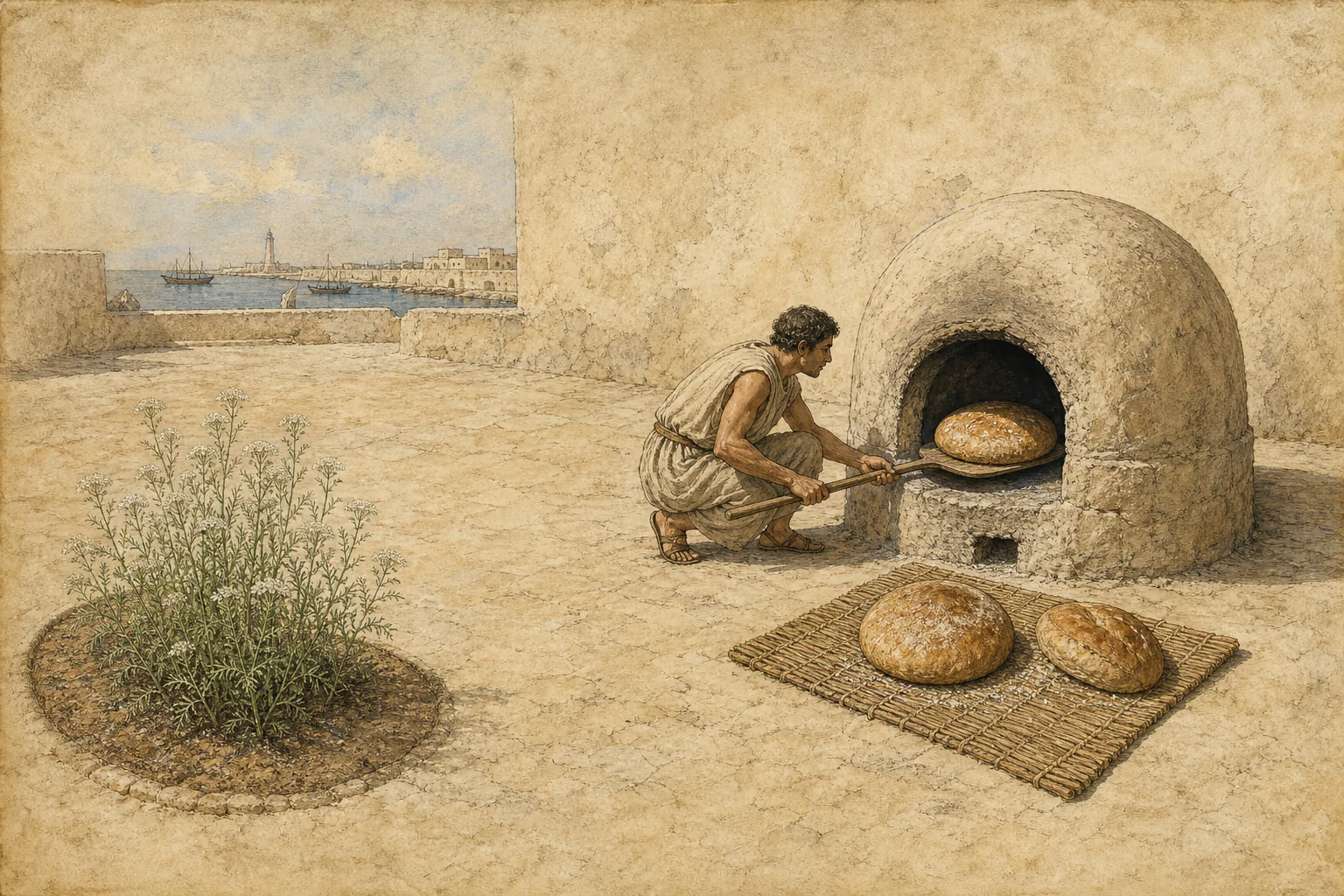
Est cumino simillimum quod Graeci vocant ami. quidam vero Aethiopicum cuminum id esse existimant. Hippocrates regium appellavit, videlicet quia efficacius Aegyptio iudicavit. plerique alterius naturae in totum putant, quoniam sit exilius et candidius. similis autem et huic usus. namque et panibus Alexandrinis subditur et condimentis interponitur. inflationes et tormina discutit, urinas et menstrua ciet, suggillata oculorum, epiphoras mitigat, cum lini semine scorpionum ictus in vino potum drachmis duabus privatimque cerastarum cum pari portione myrrae. colorem quoque bibentium similiter mutat in pallorem. suffitum cum uva passa aut resina vulvam purgat. tradunt facilius concipere eas, quae odorentur id per coitum.
De cappari satis diximus inter peregrinos frutices. non utendum transmarino, innocentius est Italicum. ferunt eos, qui cotidie id edint, paralysi non periclitari nec lienis doloribus. radix eius vitiligines albas tollit, si trita in sole fricentur. splenicis prodest in vino potus radicis cortex duabus drachmis, dempto balinearum usu, feruntque xxxv diebus per urinam et alvum totum lienem emitti. bibitur in lumborum doloribus ac paralysi. dentium dolores sedat tritum ex aceto vel semen decoctum vel manducata radix. infunditur et aurium dolori decoctum oleo. ulcera, quae phagedaenas vocant, folia et radix recens cum melle sanant. sic et strumas discutit radix, parotidas vermiculosque cocta in aqua. iocineris doloribus tusa cum farina hordeacia inponitur. vesicae quoque malis medetur. dant et ad taenias in aceto et melle. oris exulcerationes in aceto decocta tollit. stomacho inutile esse inter auctores convenit.
Ligusticum—aliqui panaces vocant—stomacho utile est, item convolsionibus, inflationibus. sunt qui et cunilam bubulam appellaverint, uti diximus, falso.
English · Bostock & Riley 1855–57
The cummin of Æthiopia, more particularly, is given in vinegar and water, or else as an electuary with honey. It is thought, too, that the cummin of Africa has the peculiar property of arresting incontinence of urine. The cultivated plant is given, parched and beaten up in vinegar, for affections of the liver, as also for vertigo. Beaten up in sweet wine, it is taken in cases, also, where the urine is too acrid; and for affections of the uterus, it is administered in wine, the leaves of it being employed topically as well, in layers of wool. Parched and beaten up with honey, it is used as an application for swellings of the testes, or else with rose oil and wax.
For all the purposes above-mentioned, wild cummin is more efficacious than cultivated; as also, in combination with oil, for the stings of serpents, scorpions, and scolopendræ. A pinch of it with three fingers, taken in wine, has the effect of arresting vomiting and nausea; it is used, too, both as a drink and a liniment for the colic, or else it is applied hot, in dossils of lint, to the part affected, bandages being employed to keep it in its place. Taken in wine, it dispels hysterical affections, the proportions being three drachmæ of cummin to three cyathi of wine. It is used as an injection, too, for the ears, when affected with tingling and singing, being mixed for the purpose with veal suet or honey. For contusions, it is applied as a liniment, with honey, raisins, and vinegar, and for dark freckles on the skin with vinegar.
There is another plant, which bears a very strong resemblance to cummin, known to the Greeks as “ammi;” some persons are of opinion, that it is the same as the Æthiopian cummin. Hippocrates gives it the epithet of “royal;” no doubt, because he looks upon it as possessed of greater virtues than Egyptian cummin. Many persons, however, consider it to be of a totally different nature from cummin, as it is so very much thinner, and of a much whiter colour. Still, it is employed for just the same purposes as cummin, for we find it used at Alexandria for putting under loaves of bread, and forming an ingredient in various sauces. It has the effect of dispelling flatulency and gripings of the bowels, and of promoting the secretion of the urine and the menstrual discharge. It is employed, also, for the cure of bruises, and to assuage defluxions of the eyes. Taken in wine with linseed, in doses of two drachmæ, it is a cure for the stings of scorpions; and, used with an equal proportion of myrrh, it is particularly good for the bite of the cerastes.
Like cummin, too, it imparts paleness of complexion to those who drink of it. Used as a fumigation, with raisins or with resin, it acts as a purgative upon the uterus. It is said, too, that if women smell at this plant during the sexual congress, the chances of conception will be greatly promoted thereby.
We have already spoken of the caper at sufficient length when treating of the exotic plants. The caper which comes from beyond sea should never be used; that of Italy is not so dangerous. It is said, that persons who eat this plant daily, are never attacked by paralysis or pains in the spleen. The root of it, pounded, removes white eruptions of the skin, if rubbed with it in the sun. The bark of the root, taken in wine, in doses of two drachmæ, is good for affections of the spleen; the patient, however, must forego the use of the bath. It is said, too, that in the course of thirty-five days the whole of the spleen may be discharged under this treatment, by urine and by stool. The caper is also taken in drink for lumbago and paralysis; and the seed of it boiled, and beaten up in vinegar, or the root chewed, has a soothing effect in tooth-ache. A decoction of it in oil is employed, also, as an injection for ear-ache.
The leaves and the root, fresh out of the ground, mixed with honey, are a cure for the ulcers known as phagedænic. In the same way, too, the root disperses scrofulous swellings; and a decoction of it in water removes imposthumes of the parotid glands, and worms. Beaten up and mixed with barley-meal, it is applied topically for pains in the liver; it is a cure, also, for diseases of the bladder. In combination with oxymel, it is prescribed for tapeworm, and a decoction of it in vinegar removes ulcerations of the mouth. It is generally agreed among writers that the caper is prejudicial to the stomach.
Ligusticum, by some persons known as “panax,” is good for the stomach, and is curative of convulsions and flatulency. There are persons who give this plant the name of “cunila bubula;” but, as we have already stated, they are in error in so doing.