LIBER XX · CAPUT 14
WILD MINT: TWENTY REMEDIES
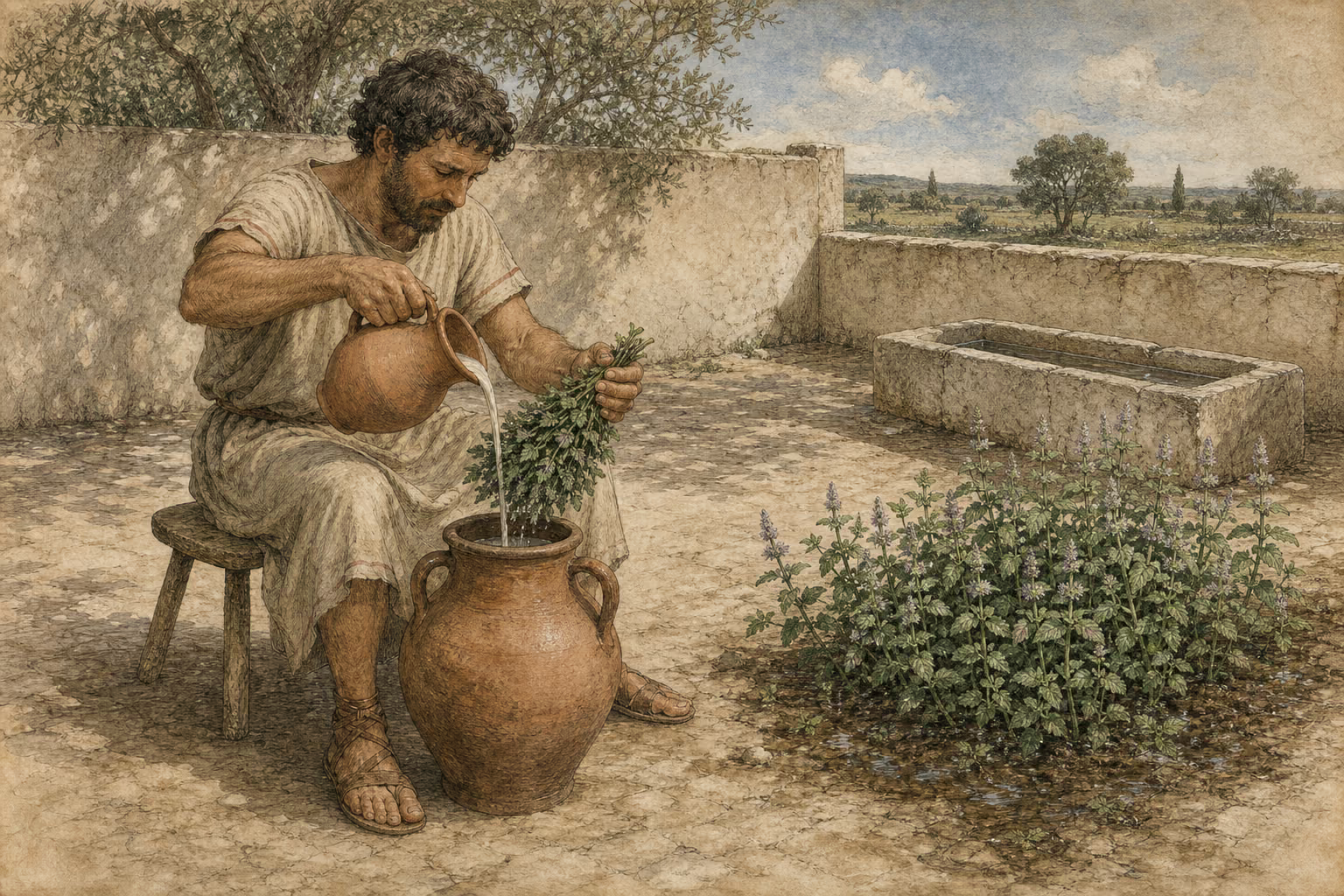
Latine · Mayhoff 1906
Mentastrum silvestris menta est, differens specie foliorum, quae stunt figura ocimi, pulei odore, propter quod quidam silvestre puleium vocant. his commanducatis et inpositis sanari elephantiasin Magni Pompei aetate fortuito cuiusdam experimento, propter pudorem facie inlita, conpertum est. eadem inlinuntur bibunturque adversus serpentium ictus drachmis duabus in vini cyathis duobus, adversus scorpionum cum sale, oleo, aceto, item adversus scolopendras ius decocti. adversus omnia venena servantur folia arida ad farinae modum. substratum vel accensum fugat etiam scorpiones. potum feminas purgat, sed partus necat. ruptis, convulsis, orthopnoicis, torminibus, choleris efficacissimum, item lumbis, podagris inpositum. sucus auribus verminosis instillatur. in regio morbo bibitur, strumis inlinitur, somnia veneris inhibet, taenias pellit ex aceto potum, contra porriginem ex aceto infunditur capiti in sole.
Mentae ipsius odor animum excitat et sapor aviditatem in cibis, ideo embammatum mixturae familiaris. ipsa acescere aut coire densarique lac non patitur; quare lactis potionibus additur, et his, qui coagulati potu strangulentur, data in aqua aut mulso. eadem vi resistere et generationi creditur cohibendo genitalia densari. aeque maribus ac feminis sistit sanguinem et purgationes feminarum inhibet, cum amylo ex aqua pota coeliacorum impetus. exulcerationem et vomicas vulvae curant illita, iocinerum vitia ternis obolis ex mulso datis, item sanguinem excreantibus in sorbitione. ulcera in capite infantium mire sanat, arterias umidas siccat, siccas adstringit, pituitas corruptas purgat in mulso et aqua. voci suco utilis, sub certamine dumtaxat, qui et gargarizatur uva tumente adiecta ruta et coriandro ex lacte; utilis et contra tonsillas cum alumine, linguae asperae cum melle et convulsis intus per se vitiisque pulmonis. singultus et vomitiones sistit cum suco granati, ut Democritus monstrat. recentis sucus narium vitia spiritu subductus emendat; ipsa trita choleras, in aceto quidem pota, sanguinis fluctiones intus, ileum etiam inposita cum polenta et si mammae tendantur. inlinitur et temporibus in capitis dolore, sumitur et contra scolopendras et scorpiones marinos et ad serpentes. epiphoris inlinitur et omnibus in capite eruptionibus, item sedis vitiis. intertrigines quoque, vel si teneatur tantum, prohibet. auribus instillatur cum mulso. aiunt et lieni mederi eam in horto gustatam ita, ne vellatur, si is, qui mordeat, dicat se lieni mederi, per dies VIII; aridae quoque farinam tribus digitis adprehensam et stomachi dolorem sedare in aqua et similiter aspersa potione ventris animalia expellere.
Magna societas cum hac ad recreandos defectos animo puleio, cum surculis suis in ampullas vitreas aceti utrisque deiectis. qua de causa dignior e puleio corona Varroni quam e rosa cubiculis nostris pronuntiata est; nam et capitis dolores inposita dicitur levare, quin et olfactu capita tueri contra frigorum aestusque iniuriam et ab siti traditur, neque aestuare eos, qui duos e puleio surculos inpositos auribus in sole habeant. inlinitur etiam in doloribus cum polenta et aceto, femina efficacius. est autem haec flore purpureo, mas candidum habet. item nausias cum sale et polenta in frigida aqua pota inhibet; sic et pectoris dolorem, stomachi autem ex aqua. item rosiones sistit et vomitiones cum aceto et polenta, alvum solvit ex sale et aceto et polenta. intestinorum vitia melle decocta et nitro sanat, urinam pellit ex vino et, si Ammineum sit, et calculos et interiores omnes dolores. ex melle et aceto sedat menstrua et secundas, vulvas conversas corrigit, defunctos partus eicit. semen obmutescentibus olfactu admovetur. comitialibus in aceto cyathi mensura datur. si aquae insalubres bibendae sint, tritum aspergitur. lassitudines corporis, si omnino tractetur, minuit, nervorum causa et in contractione cum sale et aceto, e melle infricatur in opisthotono. bibitur ad serpentium ictus decoctum, ad scorpionum in vino tritum, maxime quod in siccis nascitur. ad oris exulcerationes, ad tussim efficax habetur. flos recentis incensus pulices necat odore. Xenocrates pulei ramum lana involutum in tertianis ante accessionem olfactandum dari aut stragulis subici et ita collocari aegrum inter remedia tradit.
Silvestri ad eadem vis efficacior. simile est origano, minoribus foliis quam sativum, et a quibusdam dictamnos vocatur. gustatum a pecore caprisque balatum concitat, unde quidam Graeci ittera mutata blechonem vocaverunt. natura tam fervens est, ut inlitas partes exulceret. tuso in perfrictione fricari ante balinea convenit et ante accessionum horrorem. convolsis et torminibus, podagris mire prodest, spasticis cum melle et sale bibendum datur, pulmonum vitia excreabilia facit. ad lienem cum sale utile est et vesicae et suspiriis et inflationibus; decoctum suco aequaliter et vulvas corrigit et contra scolopendram terrestrem vel marinam, item scorpiones valet privatimque contra hominis morsum. radix contra increscentia ulcera recens potentissima, arida vero cicatricibus decorem adfert.
Item puleio est nepetaeque societas. decocta in aqua ad tertias discutiunt frigora [mulierumque menstruis prodest] et aestate sedant calores. nepeta quoque vires contra serpentes habet; fumum ex ea nidoremque fugiunt, quin et substernere in metu eo dormituris utile est. tusa aegilopis inponitur et capitis doloribus recens cum tertia parte panis temperata aceto inlinitur. sucus eius instillatus naribus supinis profluvium sanguinis sistit; item radix, quae cum myrti semine in passo tepido gargarizata anginis medetur.
Cuminum est et silvestre, praetenue, quaternis aut quinis foliis veluti serratis, sed ut sativo magnus usus, in stomachi praecipue remediis. discutit pituitas, inflationes tritum et cum pane sumptum vel potum ex aqua vinoque, tormina quoque et intestinorum dolores. verumtamen omne pallorem gignit bibentibus. ita certe ferunt Porci Latronis, clari inter magistros dicendi, adsectatores similitudinem coloris studiis contracti imitatos, et paulo ante Iulium Vindicem, adsertorem illum a Nerone libertatis, captationi testamenti sic lenocinatum. narium sanguinem pastillis inditum vel ex aceto recens sistit, et oculorum epiphoris per se inpositum, tumentibus cum melle prodest. infantibus inponi in ventre satis est. morbo regio in vino albo a balineis datur;
English · Bostock & Riley 1855–57
Mentastrum, or wild mint, differs from the other kind in the appearance of the leaves, which have the form of those of ocimum and the colour of pennyroyal; for which reason, some persons, in fact, give it the name of wild pennyroyal. The leaves of this plant, chewed and applied topically, are a cure for elephantiasis; a discovery which was accidentally made in the time of Pompeius Magnus, by a person affected with this malady covering his face with the leaves for the purpose of neutralizing the bad smell that arose therefrom. These leaves are employed also as a liniment, and in drink, with a mixture of salt, oil, and vinegar, for the stings of scorpions; and, in doses of two drachmæ to two cyathi of wine, for those of scolopendræ and serpents. A decoction, too, of the juice is given for the sting of the scolopendra. Leaves of wild mint are kept, dried and reduced to a fine powder, as a remedy for poisons of every description. Spread on the ground or burnt, this plant has the effect of driving away scorpions.
Taken in drink, wild mint carries off the lochia in females after parturition; but, if taken before, it is fatal to the fœtus, It is extremely efficacious in cases of rupture and convulsions, and, though in a somewhat less degree, for orthopnœa, gripings of the bowels, and cholera: it is good, too, as a topical application for lumbago and gout. The juice of it is injected into the ears for worms breeding there; it is taken also for jaundice, and is employed in liniments for scrofulous sores. It prevents the recurrence of lascivious dreams; and taken in vinegar, it expels tape-worm. For the cure of porrigo, it is put in vinegar, and the head is washed with the mixture in the sun.
The very smell of mint reanimates the spirits, and its flavour gives a remarkable zest to food: hence it is that it is so generally an ingredient in our sauces. It has the effect of preventing milk from turning sour, or curdling and thickening; hence it is that it is so generally put into milk used for drinking, to prevent any danger of persons being choked by it in a curdled state. It is administered also for this purpose in water or honied wine. It is generally thought, too, that it is in consequence of this property that it impedes generation, by preventing the seminal fluids from obtaining the requisite consistency. In males as well as females it arrests bleeding, and it has the property, with the latter, of suspending the menstrual discharge. Taken in water, with amylum, it prevents looseness in cœliac complaints. Syriation employed this plant for the cure of abscesses of the uterus, and, in doses of three oboli, with honied wine, for diseases of the liver: he prescribed it also, in pottage, for spitting of blood. It is an admirable remedy for ulcerations of the head in children, and has the effect equally of drying the trachea when too moist, and of bracing it when too dry. Taken in honied wine and water, it carries off purulent phlegm.
The juice of mint is good for the voice when a person is about to engage in a contest of eloquence, but only when taken just before. It is employed also with milk as a gargle for swelling of the uvula, with the addition of rue and coriander. With alum, too, it is good for the tonsils of the throat, and, mixed with honey, for roughness of the tongue. Employed by itself, it is a remedy for internal convulsions and affections of the lungs. Taken with pomegranate juice, as Democrites tells us, it arrests hiccup and vomiting. The juice of mint fresh gathered, inhaled, is a remedy for affections of the nostrils. Beaten up and taken in vinegar, mint is a cure for cholera, and for internal fluxes of blood: applied externally, with polenta, it is remedial for the iliac passion and tension of the mamillæ. It is applied, too, as a liniment to the temples for head-ache; and it is taken internally, as an antidote for the stings of scolopendræ, sea-scorpions, and serpents. As a liniment it is applied also for defluxions of the eyes, and all eruptions of the head, as well as maladies of the rectum.
Mint is an effectual preventive, too, of chafing of the skin, even if held in the hand only. In combination with honied wine, it is employed as an injection for the ears. It is said, too, that this plant will cure affections of the spleen, if tasted in the garden nine days consecutively, without plucking it, the person who bites it saying at the same moment that he does so for the benefit of the spleen: and that, if dried, and reduced to powder, a pinch of it with three fingers taken in water, will cure stomach-ache. Sprinkled in this form in drink, it is said to have the effect of expelling intestinal worms.
Pennyroyal partakes with mint, in a very considerable degree, the property of restoring consciousness in fainting fits; slips of both plants being kept for the purpose in glass bottles filled with vinegar. It is for this reason that Varro has declared that a wreath of pennyroyal is more worthy to grace our chambers than a chaplet of roses: indeed, it is said that, placed upon the head, it materially alleviates head-ache. It is generally stated, too, that the smell of it alone will protect the head against the injurious effects of cold or heat, and that it acts as a preventive of thirst; also, that persons exposed to the sun, if they carry a couple of sprigs of pennyroyal behind the ears, will never be incommoded by the heat. For various pains, too, it is employed topically, mixed with polenta and vinegar.
The female plant is the more efficacious of the two; it has a purple flower, that of the male being white. Taken in cold water with salt and polenta it arrests nausea, as well as pains of the chest and abdomen. Taken, too, in water, it prevents gnawing pains of the stomach, and, with vinegar and polenta, it arrests vomiting. In combination with salt and vinegar, and polenta, it loosens the bowels. Taken with boiled honey and nitre, it is a cure for intestinal complaints. Employed with wine it is a diuretic, and if the wine is the produce of the Aminean grape, it has the additional effect of dispersing calculi of the bladder and removing all internal pains. Taken in conjunction with honey and vinegar, it modifies the menstrual discharge, and brings away the after-birth, restores the uterus, when displaced, to its natural position, and expels the dead fœtus. The seed is given to persons to smell at, who have been suddenly struck dumb, and is prescribed for epileptic patients in doses of one cyathus, taken in vinegar. If water is found unwholesome for drinking, bruised pennyroyal should be sprinkled in it; taken with wine it modifies acridities of the body.
Mixed with salt, it is employed as a friction for the sinews, and with honey and vinegar, in cases of opisthotony. Decoctions of it are prescribed as a drink for persons stung by serpents; and, beaten up in wine, it is employed for the stings of scorpions, that which grows in a dry soil in particular. This plant is looked upon as efficacious also for ulcerations of the mouth, and for coughs. The blossom of it, fresh gathered, and burnt, kills fleas by its smell. Xenocrates, among the other remedies which he mentions, says that in tertian fevers, a sprig of pennyroyal, wrapped in wool, should be given to the patient to smell at, just before the fit comes on, or else it should be put under the bed-clothes and laid by the patient’s side.
For all the purposes already mentioned, wild pennyroyal has exactly the same properties, but in a still higher degree. It bears a strong resemblance to wild marjoram, and has a smaller leaf than the cultivated kind: by some persons it is known as “dictamnos.” When browsed upon by sheep and goats, it makes them bleat, for which reason, some of the Greeks, changing a single letter in its name, have called it “blechon,” [instead of “glechon.”]
This plant is naturally so heating as to blister the parts of the body to which it is applied. For a cough which results from a chill, it is a good plan for the patient to rub himself with it before taking the bath; it is similarly employed, too, in shivering fits, just before the attacks come on, and for convulsions and gripings of the stomach. It is also remarkably good for the gout.
To persons afflicted with spasms, this plant is administered in drink, in combination with honey and salt; and it renders expectoration easy in affections of the lungs. Taken with salt it is beneficial for the spleen and bladder, and is curative of asthma and flatulency. A decoction of it is equally as good as the juice: it restores the uterus when displaced, and is prescribed for the sting of either the land or the sea scolopendra, as well as the scorpion. It is particularly good, too, for bites inflicted by a human being. The root of it, newly taken up, is extremely efficacious for corroding ulcers, and in a dried state tends to efface the deformities produced by scars.
Nep has also some affinity in its effects with pennyroyal. Boiled down in water to one third, these plants dispel sudden chills: they promote the menstrual discharge also in females, and allay excessive heats in summer. Nep possesses certain virtues against the stings of serpents; at the very smoke and smell of it they will instantly take to flight, and persons who have to sleep in places where they are apprehensive of them, will do well to place it beneath them. Bruised, it is employed topically for lacrymal fistulas of the eye: fresh gathered and mixed in vinegar with one third part of bread, it is applied as a liniment for head-ache. The juice of it, injected into the nostrils, with the head thrown back, arrests bleeding at the nose, and the root has a similar effect. This last is employed also, with myrtle-seed, in warm raisin wine, as a gargle for the cure of quinsy.
Wild cummin is a remarkably slender plant, consisting of four or five leaves indented like a saw; like the cultivated kind, it is much employed in medicine, among the stomachic remedies more particularly. Bruised and taken with bread, or else drunk in wine and water, it dispels phlegm and flatulency, as well as gripings of the bowels and pains in the intestines. Both varieties have the effect, however, of producing paleness in those who drink these mixtures; at all events, it is generally stated that the disciples of Porcius Latro, so celebrated among the professors of eloquence, used to employ this drink for the purpose of imitating the paleness which had been contracted by their master, through the intensity of his studies: and that Julius Vindex, in more recent times, that assertor of our liberties against Nero, adopted this method of playing upon those who were looking out for a place in his will. Applied in the form of lozenges, or fresh with vinegar, cummin has the effect of arresting bleeding at the nose, and used by itself, it is good for defluxions of the eyes. Combined with honey, it is used also for swellings of the eyes. With children of tender age, it is sufficient to apply it to the abdomen. In cases of jaundice, it is administered in white wine, immediately after taking the bath.