LIBER XX · CAPUT 13
ROCKET: TWELVE REMEDIES
Latine · Mayhoff 1906
Silvestri ocimo vis efficacior ad eadem omnia, peculiaris ad vitia, quae vomitionibus crebris contrahuntur, vomicasque volvae, contra bestiarum morsus e vino radice efficacissima.
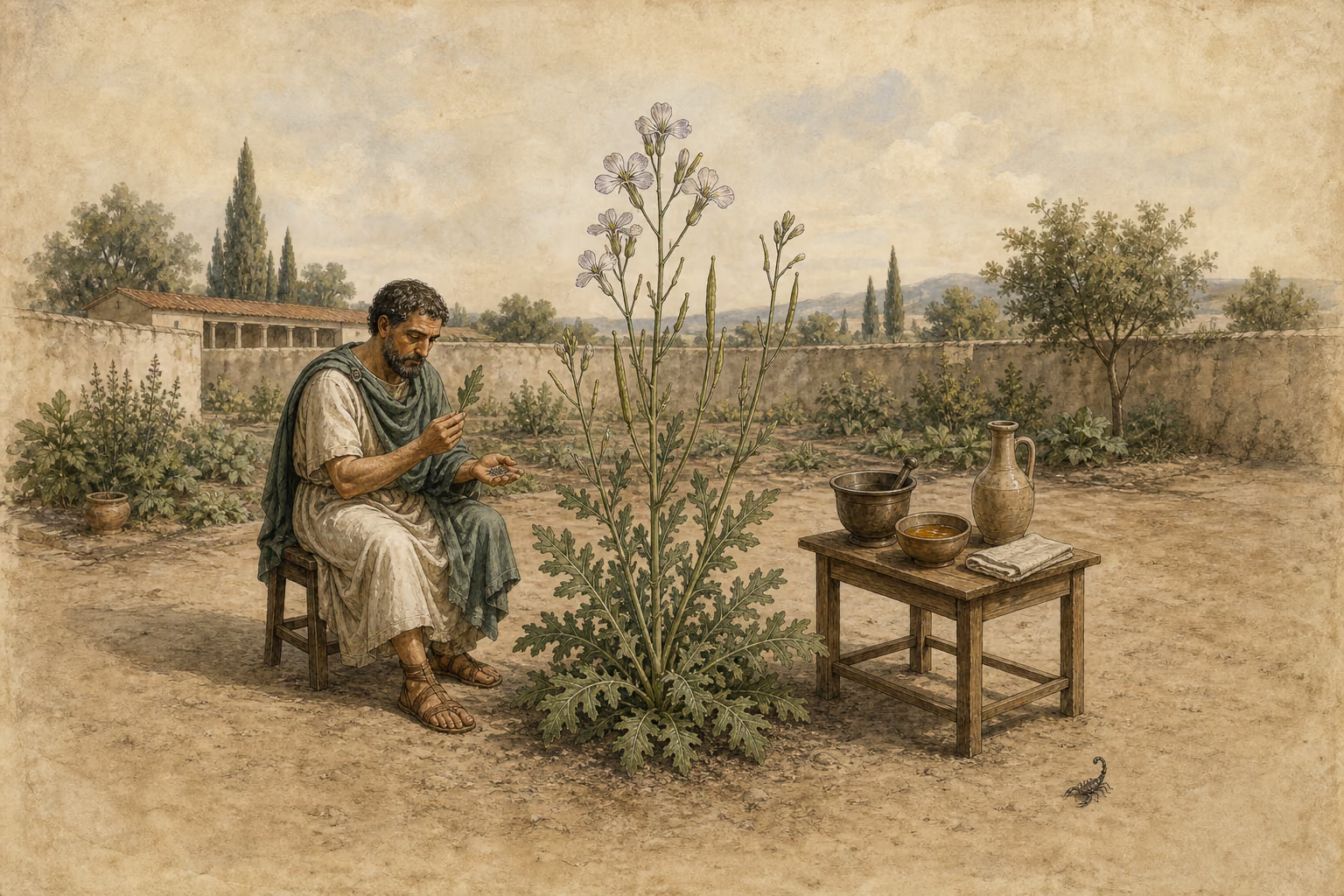
Erucae semen scorpionum venenis et muris aranei medetur, bestiolas omnes innascentes corpori arcet, vitia cutis in facie cum melle inlitum, lentigines ex aceto, cicatrices nigras reducit ad candorem cum felle bubulo. aiunt verbera subituris potum ex vino duritiam quandam contra ea sensus induere. in condiendis opsoniis tanta est suavitas, ut Graeci euzomon appellaverint. putant, subtrita eruca si foveantur oculi, claritatem restitui,... tussim infantium sedari. radix eius in aqua decocta fracta ossa extrahit...—nam de venere stimulanda diximus— tria folia silvestris erucae sinistra manu decerpta et trita in aqua mulsa si bibantur.
E contrario nasturtium venerem inhibet, animum exacuit, ut diximus. duo eius genera. alvum purgat, detrahit bilem potum X??? pondere in aquae VII, strumis cum lomento inlitum opertumque brassica praeclare medetur. alterum est nigrius, quod capitis vitia purgat [visum compurgat], commotas mentes sedat ex aceto sumptum, lienem ex vino potum vel cum fico sumptum, tussim, ex melle si cotidie ieiuni sumant. semen ex vino omnia intestinorum animalia pellit, efficacius addito mentastro. prodest et contra suspiria et tussim cum origano et vino dulci, pectoris doloribus decoctum in lacte caprino. panos discutit cum pice extrahitque corpori aculeos et maculas inlitum ex aceto; contra carcinomata adicitur ovorum album. et lienibus inlinitur ex aceto, infantibus vero e melle utilissime. Sextius adicit ustum serpentes fugare, scorpionibus resistere, capitis dolores contrito, alopecias emendari addito sinapi, gravitatem aurium trito inposito auribus cum fico, dentium dolores infuso in aures suco, porriginem et ulcera capitis cum adipe anserino. furunculos concoquit cum fermento. carbunculos ad suppurationem perducit et rumpit, phagedaenas ulcerum expurgat cum melle. coxendicibus et lumbis cum polenta ex aceto inlinitur, item licheni, unguibus scabris, quippe natura eius caustica est. optimum autem Babylonium; silvestri ad omnia ea effectus maior.
In praecipuis autem medicaminibus ruta est. latiora sativae folia, rami fruticosiores; silvestris horrida ad effectum est et ad omnia acrior. sucus exprimitur tunsae aspersa modice aqua et in pyxide Cypria adservatur. hic copiosior datus veneni noxiam obtinet, in Macedonia maxime iuxta flumen Aliacmonem; mirumque, cicutae suco extinguitur: adeo etiam venenorum venena sunt. cicutae sucus prodest et manibus colligentium rutam. cetero inter prima miscetur antidotis, praecipueque Galatica; quaecumque autem ruta et per se pro antidoto valet foliis tritis ex vino sumptis, contra aconitum maxime et viscum, item fungos sive in potu detur sive in cibo; simili modo contra serpentium ictus, utpote cum mustelae dimicaturae cum his rutam prius edendo muniant se. valent et contra scorpionum et contra araneorum, apium, crabronum, vesparum aculeos et cantharidas ac salamandras canisve rabiosi morsus. acetabuli mensura sucus e vino bibitur, et folia trita vel commanducata inponuntur cum melle ac sale vel cum aceto et pice decocta. suco perunctos, etiam habentes negant feriri ab his maleficis, serpentesque, si uratur ruta, nidorem fugere. efficacissima tamen est silvestris radix cum vino sumpta; eandem adiciunt efficaciorem esse sub diu potam.
Pythagoras et in hac marem minoribus herbaceique coloris foliis a femina discrevit, et eam laetioribus foliis et colore. idem oculis noxiam putavit; falsum, quoniam scalptores et pictores hoc cibo utuntur oculorum causa cum pane vel nasturtio, caprae quoque silvestres propter visum, ut aiunt. multi suco eius cum melle Attico inuncti discusserunt caligines vel cum lacte mulieris puerum enixae vel puro suco angulis oculorum tactis. epiphoras cum polenta inposita lenit; item capitis dolores pota cum vino aut cum aceto et rosaceo inlita, si vero sit cephalaea, cum farina hordeacia et aceto. eadem cruditates discutit, mox et inflationes, dolores stomachi veteres. vulvas aperit corrigitque conversas inlita in melle toto ventre et pectore; hydropicis cum fico et decocta ad dimidias partes potaque ex vino. sic bibitur et ad pectoris dolores laterumque et lumborum, tusses, suspiria, pulmonum, iocinerum, renium vitia, horrores frigidos, crapulae gravedines. decocuntur folia poturis; et in cibo vel cruda vel decoctaaut condita prodest; item torminibus in hysopo decocta et cum vino pota. sic et sanguinem sistit interiorem et narium indita iis; sic et conlutis dentibus prodest. auribus quoque in dolore sucus infunditur, custodito ut diximus, modo in silvestri, contra tarditatem vero sonitusque cum rosaceo vel cum laureo oleo aut cum vino et melle. sucus et phreneticis ex aceto tritae instillatur in tempora et cerebrum. adiecerunt aliqui et serpyllum et laurum, inlinentes capita et colla. dederunt et lethargicis ex aceto olfaciendum et comitialibus bibendum decoctae sucum in cyathis IIII; ante accessiones, quarum frigus intolerabile est, alsiosisque et crudam in cibo. urinam quoque vel cruentam pellit, feminarum etiam purgationes secundasque et iam emortuos partus, ut Hippocrati videtur, ex vino dulci nigro pota. itaque inlitam et vulvarum causa et suffire iubet. Diodes et cardiacis inponit ex aceto et melle cum farina hordeacia et contra ileum decocta farina in oleo velleribus collecta. multi vero et contra purulentas excreationes siccae drachmas duas, sulpuris unam et dimidiam sumi censent, et contra cruentas ramos III decoctos in vino. datur et dysintericis cum caseo in vino contrita. dederunt et cum bitumine infriatam potioni propter anhelitum, ex alto lapsis seminis III uncias olei libra vinique sextario. inlinitur cum oleo coctis foliis partibus, quas frigus adusserit. si urinam movet, ut Hippocrati videtur, mirum est, quosdam dare velut inhibentem potui contra incontinentiam urinae. psoras et lepras cum melle et alumine inlita emendat, item vitiligines, verrucas, strumas et similia cum trychno et adipe suillo ac taurino sebo, ignem sacrum ex aceto et oleo vel psimithio, carbunculum ex aceto; nonnulli laserpicium una inlini iubent, sine quo epinyctidas pusulas curant. inponunt et mammis turgentibus decoctam et pituitae eruptionibus cum cera, testium vero epiphoris cum ramis lauri teneris, adeo peculiari in visceribus his effectu, ut silvestri ruta cum axungia vetere inlitos ramices sanari prodant, fracta quoque membra semine trito cum cera inposito. radix rutae sanguinem oculis suffusum et toto corpore cicatrices aut maculas inlita emendat. ex reliquis, quae traduntur, mirum est, cum ferventem rutae naturam esse conveniat, fasciculum eius in rosaceo decoctum addita aloes uncia perunctis sudorem reprimere, itemque generationem inpediri hoc cibo. ideo in profluvio genitali datur et venerem crebro per somnia imaginantibus. praecavendum est gravidis abstineant hoc cibo, necari enim partus invenio. eadem ex omnibus satis quadripedum quoque morbis in maximo usu est, sive difficile spirantibus sive contra maleficorum animalium ictus, infusa per nares ex vino aut, si sanguisugam hauserint, ex aceto et quocumque in simili morborum genere, ut in homine, temperata.
English · Bostock & Riley 1855–57
Wild ocimum has exactly the same properties in every respect, though in a more active degree. It is particularly good, too, for the various affections produced by excessive vomiting, and for abscesses of the womb. The root, mixed with wine, is extremely efficacious for bites inflicted by wild beasts.
The seed of rocket is remedial for the venom of the scorpion and the shrew-mouse: it repels, too, all parasitical insects which breed on the human body, and applied to the face, as a liniment, with honey, removes spots upon the skin. Used with vinegar, too, it is a cure for freckles; and mixed with ox-gall it restores the livid marks left by wounds to their natural colour. It is said that if this plant is taken in wine by persons who are about to undergo a flogging, it will impart a certain degree of insensibility to the body. So agreeable is its flavour as a savouring for food, that the Greeks have given it the name of “euzomon.” It is generally thought that rocket, lightly bruised, and employed as a fomentation for the eyes, will restore the sight to its original goodness, and that it allays coughs in young infants. The root of it, boiled in water, has the property of extracting the splinters of broken bones.
As to the properties of rocket as an aphrodisiac, we have mentioned them already. Three leaves of wild rocket plucked with the left hand, beaten up in hydromel, and then taken in drink, are productive of a similar effect.
Nasturtium, on the other hand, is an antiaphrodisiac; it has the effect also of sharpening the senses, as already stated. There are two varieties of this plant: one of them is purgative, and, taken in doses of one denarius to seven of water, carries off the bilious secretions. Applied as a liniment to scrofulous sores, with bean-meal, and then covered with a cabbage-leaf, it is a most excellent remedy. The other kind, which is darker than the first, has the effect of carrying off vicious humours of the head, and sharpening the sight: taken in vinegar it calms the troubled spirits, and, drunk with wine or taken in a fig, it is good for affections of the spleen; taken in honey, too, fasting daily, it is good for a cough. The seed of it, taken in wine, expels all kinds of intestinal worms, and with the addition of wild mint, it acts more efficaciously still. It is good, too, for asthma and cough, in combination with wild marjoram and sweet wine; and a decoction of it in goats’ milk is used for pains in the chest. Mixed with pitch it disperses tumours, and extracts thorns from the body; and, employed as a liniment, with vinegar, it removes spots upon the body. When used for the cure of carcinoma, white of eggs is added to it. With vinegar it is employed also as a liniment for affections of the spleen, and with honey it is found to be very useful for the complaints of infants.
Sextius adds, that the smell of burnt nasturtium drives away serpents, neutralizes the venom of scorpions, and gives relief in head-ache; with the addition too, of mustard, he says, it is a cure for alopecy, and applied to the ears with a fig, it is a remedy for hardness of hearing. The juice of it, he says, if injected into the ears, will effect the cure of tooth-ache, and employed with goose-grease it is a remedy for porrigo and ulcerous sores of the head. Applied with leaven it brings boils to a head, and makes carbuncles suppurate and break: used with honey, too, it is good for cleansing phagedænic ulcers. Topical applications are made of it, combined with vinegar and polenta, in cases of sciatica and lumbago: it is similarly employed, too, for lichens and malformed nails, its qualities being naturally caustic. The best nasturtium of all is that of Babylonia; the wild variety possesses the same qualities as the cultivated in every respect, but in a more powerful degree.
One of the most active, however, of all the medicinal plants, is rue. The cultivated kind has broader leaves and more numerous branches than the other. Wild rue is more violent in its effects, and more active in every respect. The juice of it is extracted by beating it up, and moistening it moderately with water; after which it is kept for use in boxes of Cyprian copper. Given in large doses, this juice has all the baneful effects of poison, and that of Macedonia more particularly, which grows on the banks of the river Aliacmon. It is a truly wonderful thing, but the juice of hemlock has the property of neutralizing its effects. Thus do we find one thing acting as the poison of another poison, for the juice of hemlock is very beneficial, rubbed upon the hands and face of persons employed in gathering rue.
In other respects, rue is one of the principal ingredients employed in antidotes, that of Galatia more particularly. Every species of rue, employed by itself, has the effect also of an antidote, if the leaves are bruised and taken in wine. It is good more particularly in cases of poisoning by wolf’sbane and mistletoe, as well as by fungi, whether administered in the drink or the food. Employed in a similar manner, it is good for the stings of serpents; so much so, in fact, that weasels, when about to attack them, take the precaution first of protecting themselves by eating rue. Rue is good, too, for the injuries by scorpions and spiders, the stings of bees, hornets, and wasps, the noxious effects produced by cantharides and salamanders, and the bites of mad dogs. The juice is taken in doses of one acetabulum, in wine; and the leaves, beaten up or else chewed, are applied topically, with honey and salt, or boiled with vinegar and pitch. It is said that people rubbed with the juice of rue, or even having it on their person, are never attacked by these noxious creatures, and that serpents are driven away by the stench of burning rue. The most efficacious, however, of all, is the root of wild rue, taken with wine; this too, it is said, is more beneficial still, if drunk in the open air.
Pythagoras has distinguished this plant also into male and female, the former having smaller leaves than the other, and of a grass-green colour; the female plant, he says, has leaves of a larger size and a more vivid hue. The same author, too, has considered rue to be injurious to the eyes; but this is an error, for engravers and painters are in the habit of eating it with bread, or else nasturtium, for the benefit of the sight; wild goats, too, eat it for the sight, they say. Many persons have dispersed films on the eyes by rubbing them with a mixture of the juice of rue with Attic honey, or the milk of a woman just delivered of a male child: the same result has been produced also by touching the corners of the eyes with the pure juice of the plant. Applied topically, with polenta, rue carries off defluxions of the eyes; and, taken with wine, or applied topically with vinegar and rose oil, it is a cure for head-ache. If, however, the pain attacks the whole of the head, the rue should be applied with barley-meal and vinegar. This plant has the effect also of dispelling crudities, flatulency, and inveterate pains of the stomach; it opens the uterus, too, and restores it when displaced; for which purpose it is applied as a liniment, with honey, to the whole of the abdomen and chest. Mixed with figs, and boiled down to one half, it is administered in wine for dropsy; and it is taken in a similar manner for pains of the chest, sides, and loins, as well as for coughs, asthma, and affections of the lungs, liver, and kidneys, and for shivering fits. Persons about to indulge in wine, take a decoction of the leaves, to prevent head-ache and surfeit. Taken in food, too, it is wholesome, whether eaten raw or boiled, or used as a confection; boiled with hyssop, and taken with wine, it is good for gripings of the stomach. Employed in the same way, it arrests internal hæmorrhage, and, applied to the nostrils, bleeding at the nose: it is beneficial also to the teeth if rinsed with it. In cases of ear-ache, this juice is injected into the ears, care being taken to moderate the dose, as already stated, if wild rue is employed. For hardness of hearing, too, and singing in the ears, it is similarly employed in combination with oil of roses, or oil of laurel, or else cummin and honey.
Juice of rue pounded in vinegar, is applied also to the temples and the region of the brain in persons affected with phrenitis; some persons, however, have added to this mixture wild thyme and laurel leaves, rubbing the head and neck as well with the liniment. It has been given in vinegar to lethargic patients to smell at, and a decoction of it is administered for epilepsy, in doses of four cyathi, as also just before the attacks in fever of intolerable chills. It is likewise given raw to persons for shivering fits. Rue is a provocative of the urine to bleeding even: it promotes the menstrual discharge, also, and brings away the after-birth, as well as the dead fœtus even, according to Hippocrates, if taken in sweet red wine. The same author, also, recommends applications of it, as well as fumigations, for affections of the uterus.
For cardiac diseases, Diocles prescribes applications of rue, in combination with vinegar, honey, and barley-meal: and for the iliac passion, he says that it should be mixed with meal, boiled in oil, and spread upon the wool of a sheep’s fleece. Many persons recommend, for purulent expectorations, two drachmæ of dried rue to one and a half of sulphur; and, for spitting of blood, a decoction of three sprigs in wine. It is given also in dysentery, with cheese, the rue being first beaten up in wine; and it has been prescribed, pounded with bitumen, as a potion for habitual shortness of breath. For persons suffering from violent falls, three ounces of the seed is recommended. A pound of oil, in which rue leaves have been boiled, added to one sextarius of wine, forms a liniment for parts of the body which are frost-bitten. If rue really is a diuretic, as Hippocrates thinks, it is a singular thing that some persons should give it, as being an anti-diuretic, for the suppression of incontinence of urine.
Applied topically, with honey and alum, it cures itch-scabs, and leprous sores; and, in combination with nightshade and hogs’-lard, or beef-suet, it is good for morphew, warts, scrofula, and maladies of a similar nature. Used with vinegar and oil, or else white lead, it is good for erysipelas; and, applied with vinegar, for carbuncles. Some persons prescribe silphium also as an ingredient in the liniment; but it is not employed by them for the cure of the pustules known as epinyctis. Boiled rue is recommended, also, as a cataplasm for swellings of the mamillæ, and, combined with wax, for eruptions of pituitous matter. It is applied with tender sprigs of laurel, in cases of defluxion of the testes; and it exercises so peculiar an effect upon those organs, that old rue, it is said, employed in a liniment, with axle-grease, is a cure for hernia. The seed pounded, and applied with wax, is remedial also for broken limbs. The root of this plant, applied topically, is a cure for effusion of blood in the eyes, and, employed as a liniment, it removes scars or spots on all parts of the body.
Among the other properties which are attributed to rue, it is a singular fact, that, though it is universally agreed that it is hot by nature, a bunch of it, boiled in rose-oil, with the addition of an ounce of aloes, has the effect of checking the perspiration in those who rub themselves with it; and that, used as an aliment, it impedes the generative functions. Hence it is, that it is so often given in cases of spermatorrhœa, and where persons are subject to lascivious dreams. Every precaution should be taken by pregnant women to abstain from rue as an article of diet, for I find it stated that it is productive of fatal results to the fœtus.
Of all the plants that are grown, rue is the one that is most generally employed for the maladies of cattle, whether arising from difficulty of respiration, or from the stings of noxious creatures—in which cases it is injected with wine into the nostrils—or whether they may happen to have swallowed a horse-leech, under which circumstances it is administered in vinegar. In all other maladies of cattle, the rue is prepared just as for man in a similar case.