LIBER XX · CAPUT 12
PETROSELINON; ONE REMEDY. BUSELINON; ONE REMEDY
Latine · Mayhoff 1906
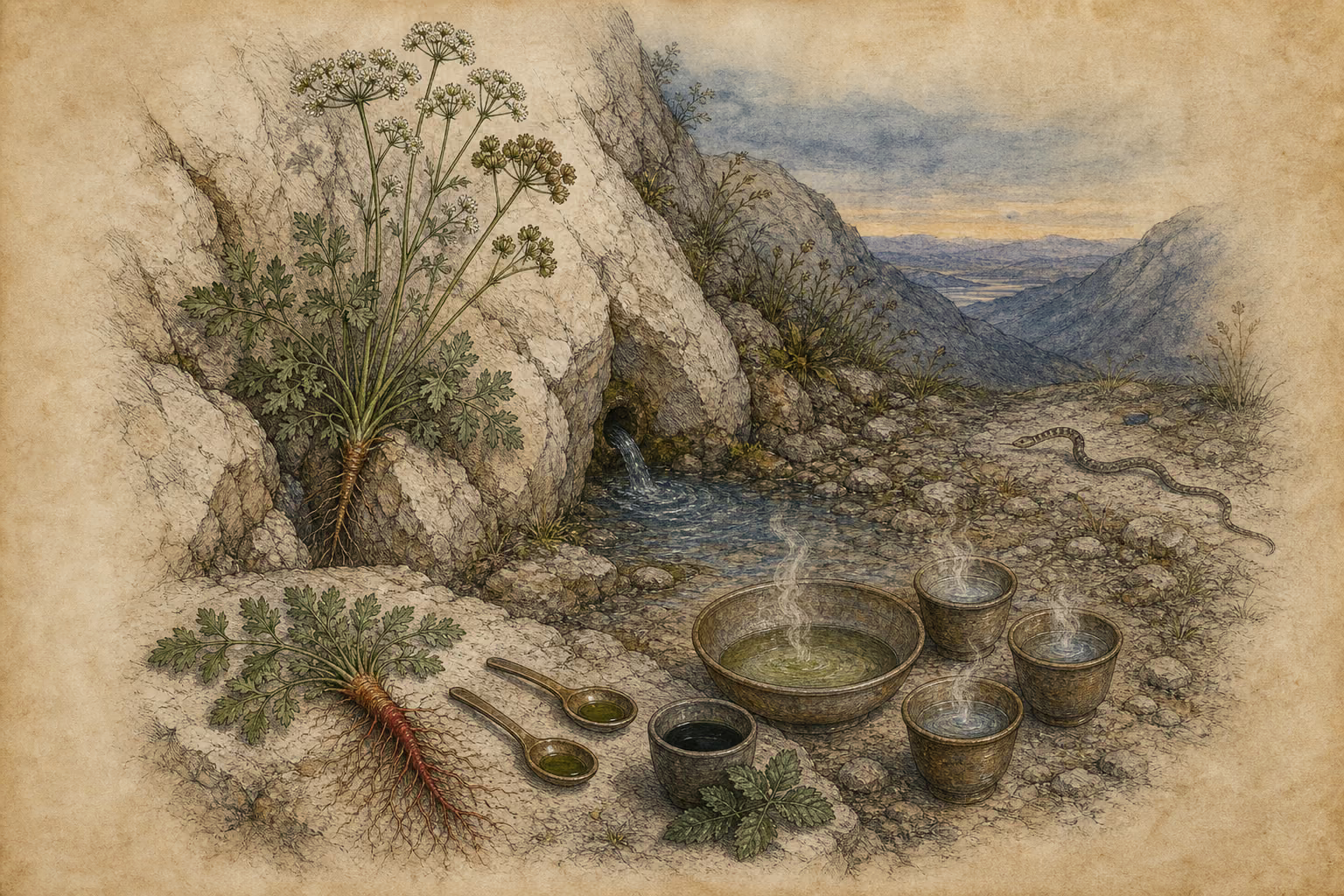
Alio genere petroselinum quidam appellant in saxis natum, praecipuum ad vomicas, coclearibus binis suci additis in cyathum marrubii suci atque ita calidae aquae tribus cyathis. adiecere quidam buselinum, differens brevitate caulis a sativo et radicis colore rufo, eiusdem effectus, praevalere contra serpentes potu et inlitu.
Ocimum quoque Chrysippus graviter increpuit inutile stomacho, urinae, oculorum quoque claritati, praeterea insaniam facere et lethargos et iocineris vitia, ideoque capras id aspernari, hominibus quoque fugiendum censens. addunt quidam tritum, si operiatur lapide, scorpionem gignere, commanducatum et in sole positum vermes; Afri vero, si eo die feriatur quispiam a scorpione, quo ederit ocimum, non posse servari. quin immo tradunt aliqui, manipulo ocimi cum cancris x marinis vel fluviatilibus trito convenire ad id scorpiones ex proximo omnes. Diodorus in empiricis etiam pediculos facere ocimi cibum. secuta aetas acriter defendit, nam id esse capras, nec cuiquam mentem motam, et scorpionum terrestrium ictibus marinorumque veneis mederi ex vino addito aceti exiguo. usu quoque conpertum deficientibus ex aceto odoratu salutare esse, item lethargicis et inflammatis refrigeration e, inlitum capitis doloribus cum rosaceo aut myrteo et aceto, item oculorum epiphoris inpositum ex vino. stomacho quoque utile, inflationes ructu dissolvere ex aceto sumptum, alvum sistere inpositum, urinam ciere; sic et morbo regio et hydropicis prodesse, etiam in choleris destillationes stomachi inhiberi. ergo etiam coeliacis Philistio dedit et coctum dysintericis, et contra.... Plistonicu s, aliqui et in tenesmo et sanguinem excreantibus in vino, duritia quoque praecordiorum. inlinitur mammis exinanitque lactis proventum. auribus utilissimum infantium, praecipue cum adipe anserino. semen tritum et haustum naribus sternumentacompescit et destillationes quoque capitis inlitum, vulvas purgat in cibo ex aceto. verrucas mixto atramento sutorio tollit. venerem stimulat, ideo etiam equis asinisque admissurae tempore ingeritur.
English · Bostock & Riley 1855–57
Another kind again, which grows in rocky places, is known by some persons as “petroselinon:” it is particularly good for abscesses, taken in doses of two spoonfuls of the juice to one cyathus of juice of horehound, mixed with three cyathi of warm water. Some writers have added buselinon to the list, which differs only from the cultivated kind in the shortness of the stalk and the red colour of the root, the medicinal properties being just the same. Taken in drink or applied topically, it is an excellent remedy for the stings of serpents.
Chrysippus has exclaimed as strongly, too, against ocimum as he has against parsley, declaring that it is prejudicial to the stomach and the free discharge of the urine, and is injurious to the sight; that it produces insanity, too, and lethargy, as well as diseases of the liver; and that it is for this reason that goats refuse to touch it. Hence he comes to the conclusion, that the use of it ought to be avoided by man. Some persons go so far as to say, that if beaten up, and then placed beneath a stone, a scorpion will breed there; and that if chewed, and then placed in the sun, worms will breed in it. The people of Africa maintain, too, that if a person is stung by a scorpion the same day on which he has eaten ocimum, his life cannot possibly be saved. Even more than this, there are some who assert, that if a handful of ocimum is beaten up with ten sea or river crabs, all the scorpions in the vicinity will be attracted to it. Diodotus, too, in his Book of Recipes, says, that ocimum, used as an article of food, breeds lice.
Succeeding ages, again, have warmly defended this plant; it has been maintained, for instance, that goats do eat it, that the mind of no one who has eaten of it is at all affected, and, that mixed with wine, with the addition of a little vinegar, it is a cure for the stings of land scorpions, and the venom of those found in the sea. Experience has proved, too, that the smell of this plant in vinegar is good for fainting fits and lethargy, as well as inflammations; that employed as a cooling liniment, with rose oil, myrtle oil, or vinegar, it is good for head-ache; and that applied topically with wine, it is beneficial for defluxions of the eyes. It has been found also, that it is good for the stomach; that taken with vinegar, it dispels flatulent eructations; that applications of it arrest fluxes of the bowels; that it acts as a diuretic, and that in this way it is good for jaundice and dropsy, as well as cholera and looseness of the bowels.
Hence it is that Philistio has prescribed it even for cœliac affections, and boiled, for dysentery. Some persons, too, though contrary to the opinion of Plistonicus, have given it in wine for tenesmus and spitting of blood, as also for obstructions of the viscera. It is employed, too, as a liniment for the mamillæ, and has the effect of arresting the secretion of the milk. It is very good also for the ears of infants, when applied with goose-grease more particularly. The seed of it, beaten up, and inhaled into the nostrils, is provocative of sneezing, and applied as a liniment to the head, of running at the nostrils: taken in the food, too, with vinegar, it purges the uterus. Mixed with copperas it removes warts. It acts, also, as an aphrodisiac, for which reason it is given to horses and asses at the season for covering.