LIBER XX · CAPUT 11
PARSLEY; SEVENTEEN REMEDIES
Latine · Mayhoff 1906
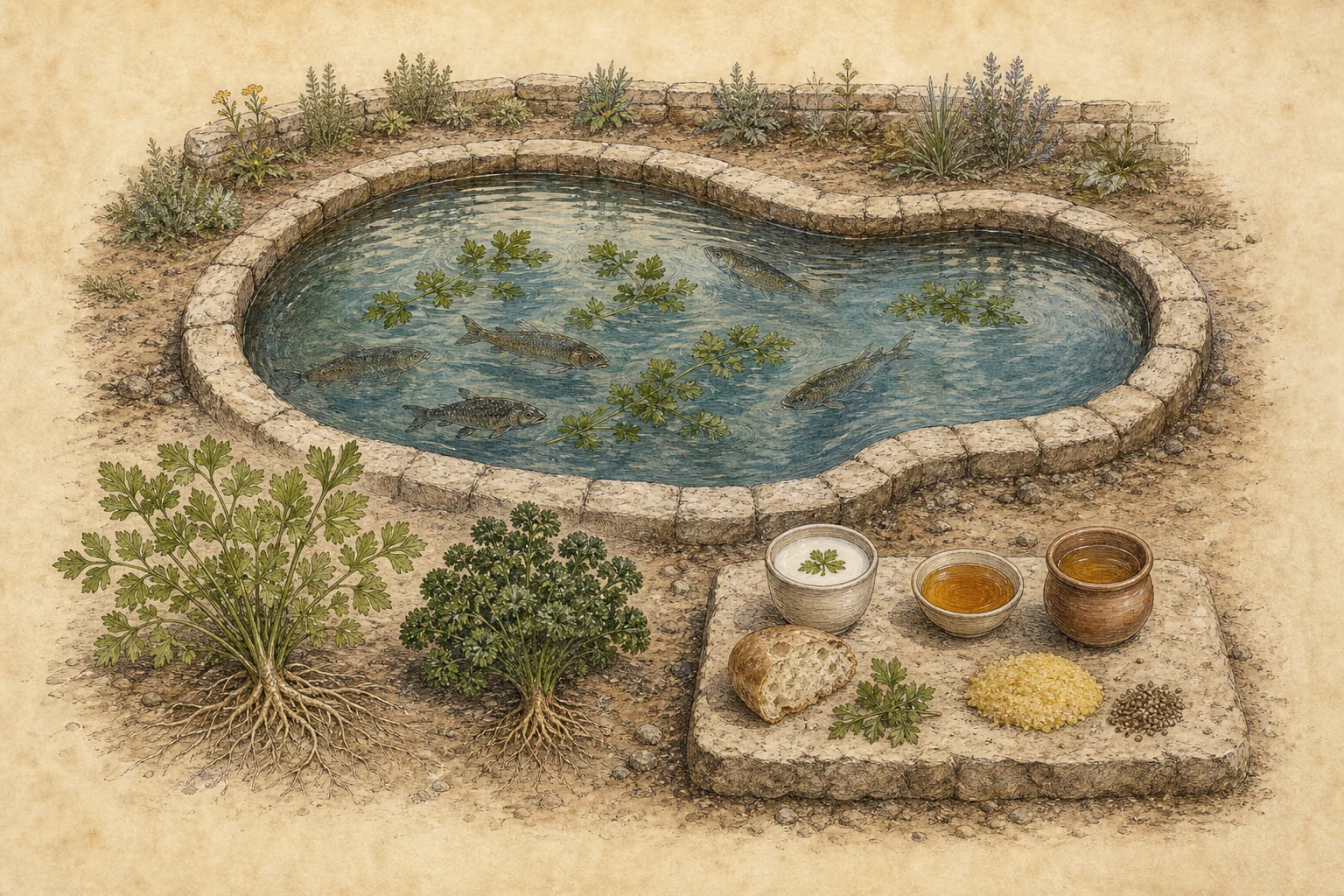
Apio gratia in volgo est. namque rami lactis potionibus per rura innatant et in condimentis peculiarem gratiam habent. praeterea oculis inlitum cum melle, ita ut subinde foveantur ferventi suco decocti, aliisque membrorum epiphoris per se tritum aut cum pane vel polenta inpositum mire auxiliatur. pisces quoque, si aegrotent in piscinis, apio viridi recreantur. verum apud eruditos non aliud erutum terra in maiore sententiarum varietate est. distinguitur sexu. Chrysippus feminam esse dicit crispioribus foliis et duris, crasso caule, sapore acri et fervido; Dionysius... nigriorem, brevem, radicis..., vermiculos gignentem; ambo neutrum ad cibos admittendum, immo omnino nefas, namque id defunctorum epulis feralibus dicatum esse—visus quoque claritati inimicum —[caule feminae vermiculos gigni] ideoque eos, qui ederint, sterilescere, mares feminasve; in puerperiis vero ab eo cibo comitiales fieri qui ubera hauriant; innocentiorem tamen esse marem. eaque causa est, ne inter nefastos frutex damnetur. mammarum duritiam inpositis foliis emollit. suaviores aquas potui incoctum praestat. suco maxime radicis cum vino lumborum dolores mitigat, eodem iure instillato gravitatem aurium. semine urinam ciet, menstrua ac secundas partus et si foveantur semine decocto. suggillata reddit colori cum ovi albo inlitum. at ex aqua coctum potumque renibus medetur, in frigida tritum oris ulceribus. semen cum vino vel radix cum vetere vino vesicae calculos frangunt. semen datur et arquatis ex vino albo.
Apiastrum Hyginus quidem melissophyllum appellat, sed in confessa damnatione est venenatum in Sardinia. contexenda enim sunt omnia ex eodem nomine apud Graecos pendentia.
Olusatrum, quod hipposelinum vocant, adversatur scorpionibus. poto semine torminibus et interaneis medetur; item difficultatibus urinae semen eius decoctum ex mulso potum. radix in vino decocta calculos pellit et lumborum ac lateris dolores. canis rabiosi morsibus potum et inlitum medetur. sucus eius algentes calefacit potus. quartum genus ex eodem aliqui faciunt oreoselinum, pal- mum alto frutice recto, semine cumino simili, urinae et menstruis efficax. heleoselino vis privata contra araneos; eo et oreoselino feminae purgantur e vino.
English · Bostock & Riley 1855–57
Parsley is held in universal esteem; for we find sprigs of it swimming in the draughts of milk given us to drink in country-places; and we know that as a seasoning for sauces, it is looked upon with peculiar favour. Applied to the eyes with honey, which must also be fomented from time to time with a warm decoction of it, it has a most marvellous efficacy in cases of defluxion of those organs or of other parts of the body; as also when beaten up and applied by itself, or in combination with bread or with polenta. Fish, too, when found to be in an ailing state in the preserves, are greatly refreshed by giving them green parsley. As to the opinions entertained upon it among the learned, there is not a single production dug out of the earth in reference to which a greater diversity exists.
Parsley is distinguished as male and female: according to Chrysippus, the female plant has a hard leaf and more curled than the other, a thick stem, and an acrid, hot taste. Dionysius says, that the female is darker than the other kind, has a shorter root, and engenders small worms. Both of these writers, however, agree in saying that neither kind of parsley should be admitted into the number of our aliments; indeed, they look upon it as nothing less than sacrilege to do so, seeing that parsley is consecrated to the funereal feasts in honour of the dead. They say, too, that it is injurious to the eyesight, that the stalk of the female plant engenders small worms, for which reason it is that those who eat of it become barren—males as well as females; and that children suckled by females who live on a parsley diet, are sure to be epileptic. They agree, however, in stating that the male plant is not so injurious in its effects as the female, and that it is for this reason that it is not absolutely condemned and classed among the forbidden plants. The leaves of it, employed as a cataplasm, are used for dispersing hard tumours in the mamillæ; and when boiled in water, it makes it more agreeable to drink. The juice of the root more particularly, mixed with wine, allays the pains of lumbago, and, injected into the ears, it diminishes hardness of hearing. The seed of it acts as a diuretic, promotes the menstrual discharge, and brings away the after-birth.
Bruises and livid spots, if fomented with a decoction of parsley-seed, will resume their natural colour. Applied topically, with the white of egg, or boiled in water, and then drunk, it is remedial for affections of the kidneys; and beaten up in cold water it is a cure for ulcers of the mouth. The seed, mixed with wine, or the root, taken with old wine, has the effect of breaking calculi in the bladder. The seed, too, is given in white wine, to persons afflicted with the jaundice.
Hyginus gave the name of “apiastrum” to melissophyllum: but that which grows in Sardinia is poisonous, and universally condemned. I speak here of this plant, because I feel it my duty to place before the reader every object which has been classified, among the Greeks, under the same name.
Olusatrum, usually known as hipposelinon, is particularly repulsive to scorpions. The seed of it, taken in drink, is a cure for gripings in the stomach and intestinal complaints, and a decoction of the seed, drunk in honied wine, is curative in cases of dysuria. The root of the plant, boiled in wine, expels calculi of the bladder, and is a cure for lumbago and pains in the sides. Taken in drink and applied topically, it is a cure for the bite of a mad dog, and the juice of it, when drunk, is warming for persons benumbed with cold.
Some persons make out oreoselinon to be a fourth species of parsley: it is a shrub about a palm in height, with an elongated seed, bearing a strong resemblance to that of cummin, and efficacious for the urine and the catamenia. Helioselinon is possessed of peculiar virtues against the bites of spiders: and oreoselinon is used with wine for promoting the menstrual discharge.