LIBER XX · CAPUT 10
GARDEN ASPARAGUS; WITH THE NEXT TWENTY-FOUR REMEDIES
Latine · Mayhoff 1906
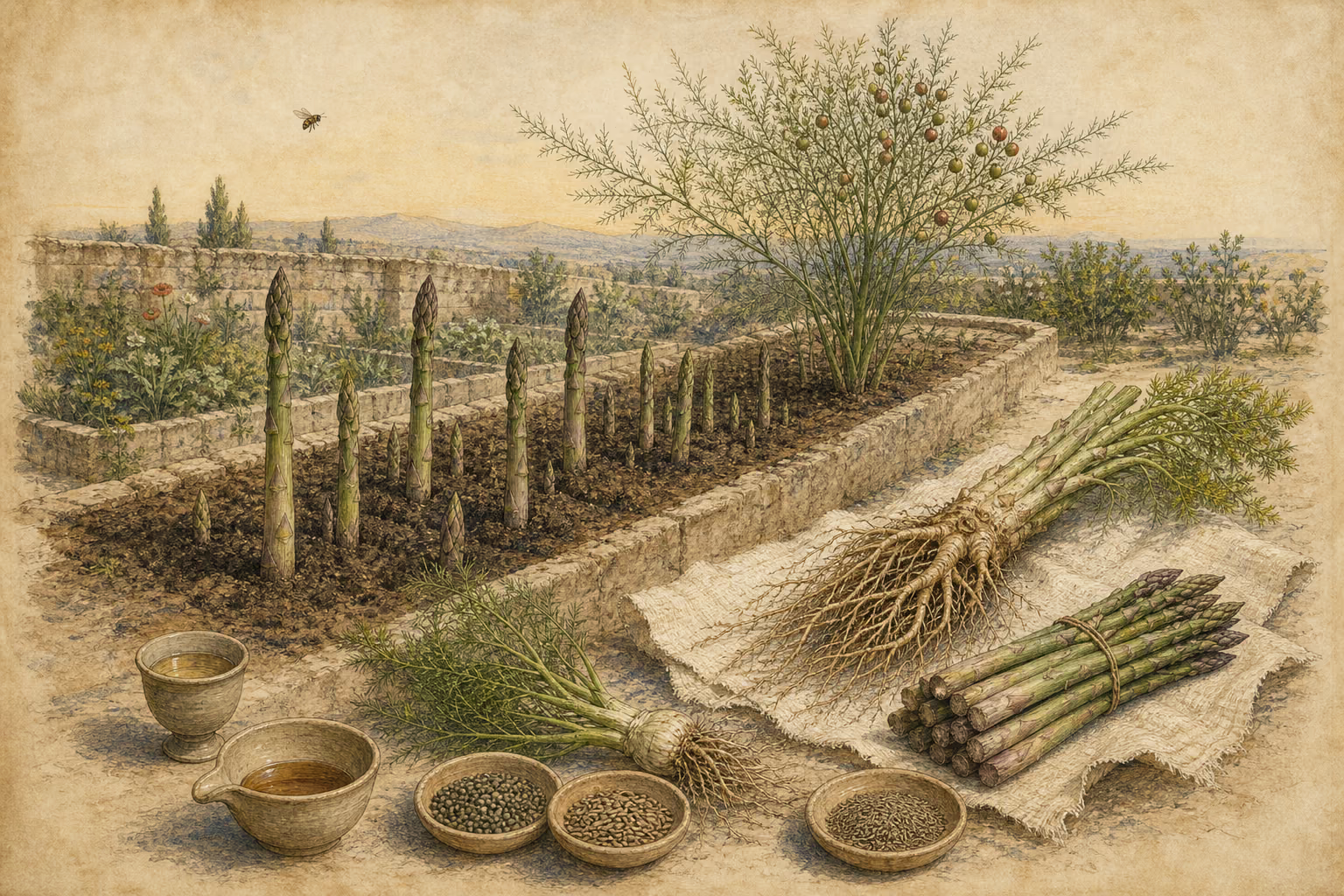
Inter utilissimos stomacho cibos asparagi traduntur. cumino quidem addito inflationes stomachi colique discutiunt, iidem oculis claritatem adferunt, ventrem leniter molliunt, pectoris et spinae doloribus intestinorumque vitiis prosunt, vino, cum coquuntur, addito. ad lumborum et renium dolores semen obolorum trium pondere, pari cumini bibitur. venerem stimulant, urinam cient utilissime, praeterquam vesica exulcerata, radice quoque plurimorum praedicatione. trita et in vino albo pota calculos quoque exturbat, lumborum et renium dolores sedat. quidam et ad vulvae dolorem radicem cum vino dulci propinant. eadem in aceto decocta contra elephantiasim proficit. asparago trito ex oleo perunctum pungi ab apibus negant.
Silvestrem asparagum aliqui Libycum vocant, Attici orminum. huius ad supra dicta omnia efficacior vis, et candidiori maior. morbum regium extenuant. veneris causa aquam eorum decoctam bibi iubent ad heminam. idem et semen valet cum aneto ternis utriusque obolis. datur et ad serpentium ictus sucus decoctus; radix miscetur radici marathri inter efficacissima auxilia. si sanguis per urinam reddatur, semen et asparagi et apii et cumini ternis obolis in vini cyathis duobus Chrysippus dari iubet. set id hydropicis contrarium esse, quamvis urinam moveat, docet, item veneri, vesicae quoque nisi decoctum; quae aqua si canibus detur, occidi eos. in vino decoctae radicis sucum, si ore contineatur, dentibus mederi.
English · Bostock & Riley 1855–57
Asparagus is said to be extremely wholesome as an aliment to the stomach. With the addition of cummin, it dispels flatulency of the stomach and colon; it sharpens the eyesight also, acts as a mild aperient upon the stomach, and, boiled with wine, is good for pains in the chest and spine, and diseases of the intestines. For pains in the loins and kidneys asparagus-seed is administered in doses of three oboli, taken with an equal proportion of cummin-seed. It acts as an aphrodisiac, and is an extremely useful diuretic, except that it has a tendency to ulcerate the bladder.
The root, also, pounded and taken in white wine, is highly extolled by some writers, as having the effect of disengaging calculi, and of soothing pains in the loins and kidneys; there are some persons, too, who administer this root with sweet wine for pains in the uterus. Boiled in vinegar the root is very beneficial in cases of elephantiasis. It is said that if a person is rubbed with asparagus beaten up in oil, he will never be stung by bees.
Wild asparagus is by some persons called “corruda,” by others “libycum,” and by the people of Attica “orminus.” For all the affections above enumerated it is more efficacious even than the cultivated kind, that which is white more particularly. This vegetable has the effect of dispelling the jaundice, and a decoction of it, in doses of one hemina, is recommended as an aphrodisiac; a similar effect is produced also by a mixture of asparagus seed and dill in doses of three oboli respectively. A decoction of asparagus juice is given also for the stings of serpents; and the root of it, mixed with that of marathrum, is reckoned in the number of the most valuable remedies we are acquainted with.
In cases of hæmaturia, Chrysippus recommends a mixture of asparagus, parsley, and cummin seed, to be given to the patient every five days, in doses of three oboli, mixed with two cyathi of wine. He says, however, that though employed this way, it is a good diuretic, it is bad for dropsy, and acts as an antaphrodisiac; and that it is injurious to the bladder, unless it is boiled first. He states also, that if the water in which it is boiled is given to dogs, it will kill them; and that the juice of the root boiled in wine, kept in the mouth, is an effectual cure for tooth-ache.