LIBER XX · CAPUT 17
PIPERITIS, OR SILIQUASTRUM: FIVE REMEDIES
Latine · Mayhoff 1906
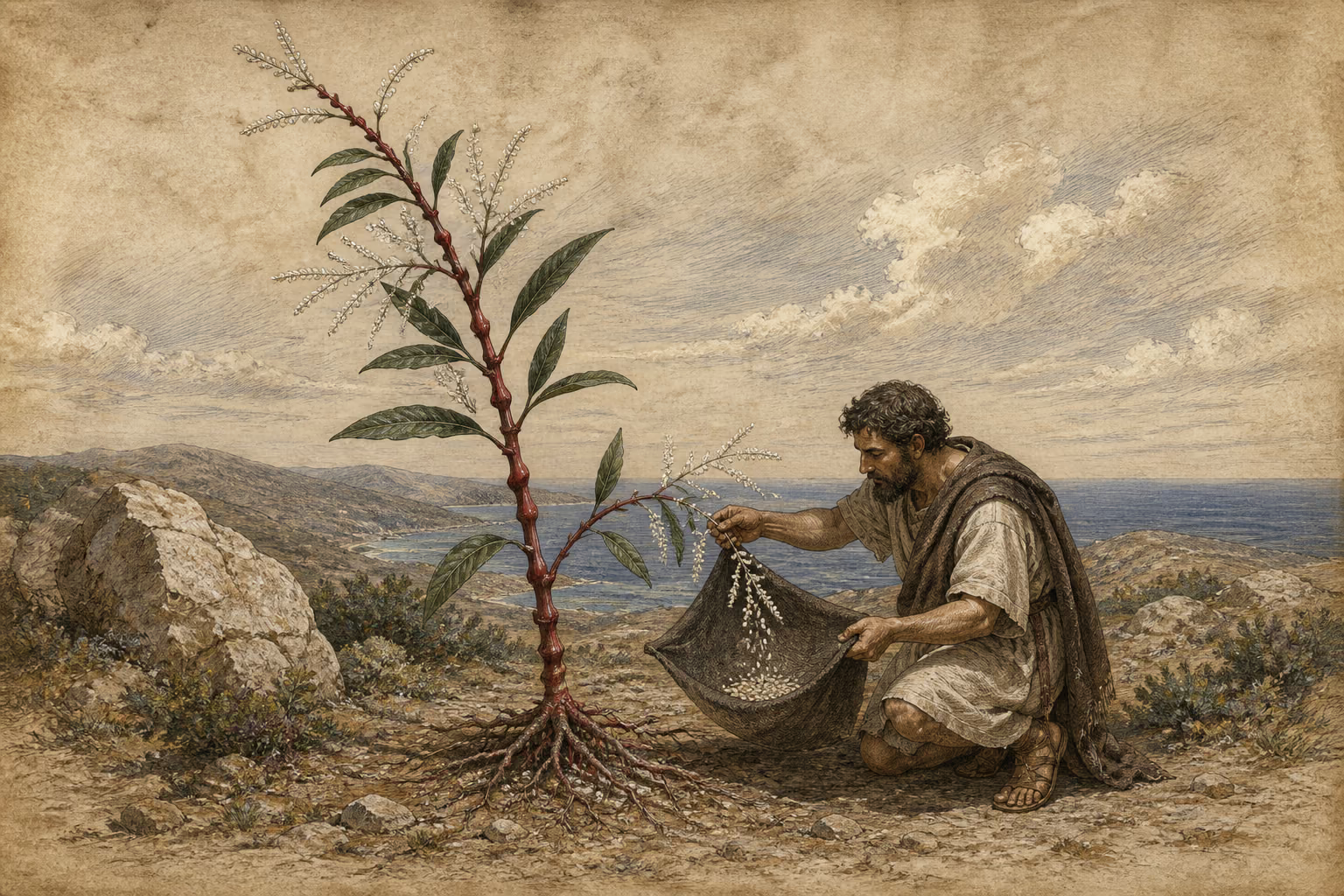
Piperitis, quam et siliquastrum appellavimus, contra morbos comitiales bibitur. Castor et aliter demonstrabat: caule rubro et longo, densis geniculis, foliis lauri, semine albo, tenui, gustu piperis, utilem gingivis, dentibus, oris suavitati et ructibus.
Origanum, quod vi saporem cunilae aemulatur, ut diximus, plura genera in medicina habet. onitin alii prasion appellant, non dissimile hysopo. privatim eius usus contra rosiones stomachi in tepida aqua et contra cruditates, araneos scorpionesque in vino albo, luxata et incussa in aceto et oleo et lana.
Tragoriganum similius est serpyllo silvestri. urinam ciet, tumores discutit, contra viscum potum viperaeque ictum efficacissimum, stomacho acida ructanti et praecordiis. tussientibus quoque cum melle datur et pleuriticis et peripneumonicis.
Heraclium quoque tria genera habet: nigrius latioribus foliis, glutinosum, alterum exilioribus, mollius, sampsucho non dissimile, quod aliqui prasion vocare malunt. tertium est inter haec medium, set minus quam cetera efficax. optimum autem Creticum, nam et iucunde olet, proximum Zmyrnaeum durius, Heracleoticum ad potum utilius, quod onitin vocant. communis autem usus serpentes fugare, percussis esui dari et decoctum potui, urinam ciere, ruptis, convolsis mederi cum panacis radice, hydropicis cum fico aut cum hysopo acetabuli mensuris decoctum ad sextam; item ad scabiem, pruriginem, psoras in descensione balinearum. sucus auribus infunditur cum lacte mulieris. tonsillis quoque et uvis medetur, capitis ulceribus. venena opii et gypsi extinguit decoctum, si cum cinere e vino bibatur. alvum mollit acetabuli mensura, suggillatis inlinitur, item dentium dolori, quibus et candorem facit, cum melle et nitro. sanguinem narium sistit. ad parotidas decoquitur cum hordeacia farina, ad arterias asperas cum galla et melle teritur, ad lienem folia cum melle et sale. crassiores pituitas et nigras extenuat coctum cum aceto et sale sumptum paulatim. regio morbo tritum cum oleo in nares infunditur. lassi perunguuntur ex eo ita, ne venter attingatur. epinyctidas cum pice sanat, furunculos aperit cum fico tosta, strumas cum oleo et aceto et farina hordeacia, lateris dolores cum fico inlitum, fluctiones sanguinis in genitalibus tusum ex aceto inlitum, reliquias purgationum a partu.
Lepidium inter urentia intellegitur. sic et in facie cutem emendat exulcerando, ut tamen cera et rosaceo facile sanetur. sic et lepras et psoras tollit semper facile et cicatricum ulcera. tradunt in dolore dentium adalligatum bracchio, qua doleat, convertere dolorem.
Git ex Graecis alii melanthium, alii melaspermon vocant. optimum quam excitatissimi odoris et quam nigerrimum. medetur serpentium plagis et scorpionum; inlini ex aceto ac melle reperio incensoque serpentes fugari. bibitur drachma una et contra araneos. destillationem narium discutit tusum in linteolo olefactum, capitis dolores inlitum ex aceto, et infusum naribus cum irino oculorum epiphoras et tumores, dentium dolores coctum cum aceto, ulcera oris tritum aut commanducatum; item lepras et lentigines ex aceto, difficultates spirandi addito nitro potum, duritias tumoresque veteres et suppurationes inlitum. lacte mulierum auget aliquot continuis diebus sumptur. colligitur sucus eius ut hyoscyami similiterque largior venenum est, quod miremur, cum semen gratissime panes etiam condiat. oculos quoque purgat, urinam et menses ciet. quin immo linteolo deligatis tantum granis xxx secundas trahi reperio. aiunt et clavis in pedibus mederi tritum in urina, culices suffitu necare, item muscas.
Et anesum adversus scorpiones ex vino habetur, Pythagorae inter pauca laudatum sive crudum sive decoctum; item viride aridumve omnibus, quae condiuntur quaeque intinguntur, desideratum, panis etiam crustis inferioribus subditum. saccis quoque additum cum amaris nucibus vina commendat. quin ipsum oris halitum iucundiorem facit faetoremque tollit manducatum matutinis cum zmyrnio et melle exiguo, mox vino collutum. vultum iuniorem praestat. insomnia levat suspensum in pulvino, ut dormientes olefaciant. adpetentiam ciborum praestat, quando id quoque inter artificia deliciae fecere, ex quo labor desiit cibos poscere. ob has causas quidam anicetum id vocavere.
Laudatissimum est Creticum, proximum Aegyptium. hoc ligustici vicem praestat in condimentis. dolores capitis levat suffitum naribus. epiphoris oculorum Euenor radicem eius tusam inponit, Iollas ipsum cum croco pari modo et vino, et per se cum polenta ad magnas fluctiones extrahendisque si qua in oculos inciderint. narium quoque carcinodes consumit inlitum ex aqua. sedat anginas cum hysopo ac melle ex aceto gargarizatum, auribus infunditur cum rosaceo, thoracis pituitas purgat tostum cum melle sumptum. melius cum acetabulo anesi nuces amaras L purgatas terere in melle ad tussim; facillime vero anesi drachmae tres, papaveris duae miscentur melle ad fabae magnitudinem et ternae diebus sumuntur. praecipuum autem est ad ructus; ideo stomachi inflationibus et intestinorum torminibus et coeliacis medetur. singultus et olfactum potumque decoctum inhibet. foliis decoctis digerit cruditates. sucus decocti cum apio olfactus sternumenta inhibet. potum somnos conciliat, calculos pellit, vomitiones cohibet et praecordiorum tumores, et pectorum vitiis, nervis quoque, quibus succinctum est corpus, utilissimum. prodest et capitis doloribus instillari sucum cum oleo decocti. non aliud utilius ventri et intestinis putant; ideo dysintericis et in tenesmo datur tostum. aliqui addunt et opium, pilulis in die ternis lupini magnitudine in vini cyatho dilutis. Dieuches et ad lumborum dolores suco usus est, semen hydropicis et coeliacis dedit tritum cum menta, Euenor radicem et ad renes. Dalion herbarius parturientibus ex eo cataplasma inposuit cum apio, item vulvarum dolori deditque bibendum cum aneto parturientibus. phreneticis quoque inlinunt vel recens cum polenta; sic et infantibus comitiale vitium aut contractiones sentientibus. Pythagoras quidem negat corripi vitio comitiali in manu habentes, ideo quam plurimum domi serendum; parere quoque facilius olfactantes, et statim a partu dandum potui polenta aspersa. Sosimenescontra omnes duritias ex aceto usus est eo et contra lassitudines in oleo decoquens addito nitro. semine eius poto lassitudinis auxilium viatoribus spopondit. Heraclides ad inflationes stomachi semen tribus digitis cum castorei obolis duobus ex mulso dedit, similiter ad ventris aut intestinorum inflationes et orthopnoicis quod ternis digitis prender et seminis, tantundem hyoscyami cum lacte asinino. multi vomituris acetabula eius et folia lauri decem trita in aqua bibenda inter cenam suadent. strangulatus vulvae, si manducetur et linatur calidum vel si bibatur cum castoreo in aceto et melle, sedat; vertigines a partu cum semine cucumeris et lini pari mensura ternum digitorum, vini albi tribus cyathis discutit. Tlepolemus ad quartanas ternis digitis seminis anesi et feniculi usus est in aceto et mellis cyatho uno. lenit articularios morbos cum amaris nucibus inlitum. sunt qui et aspidum venenis adversari naturam eius putent. urinam ciet, sitim cohibet, venerem stimulat, cum vino sudorem leniter praestat, vestes quoque a tineis defendit. efficacius semper recens et quo nigrius, stomacho tamen inutile est praeterquam inflato.
English · Bostock & Riley 1855–57
Piperitis, which we have already mentioned as being called “siliquastrum,” is taken in drink for epilepsy. Castor used to give a description of it to the following effect: “The stalk of it is long and red, with the knots lying close together; the leaves are similar to those of the laurel, and the seed is white and slender, like pepper in taste.” He described it also as being beneficial to the gums and teeth, imparting sweetness to the breath, and dispelling flatulency.
Origanum, which, as we have already stated, rivals cunila in flavour, includes many varieties employed in medicine. Onitis, or prasion, is the name given to one of these, which is not unlike hyssop in appearance: it is employed more particularly, with warm water, for gnawing pains at the stomach, and for indigestion. Taken in white wine it is good for the stings of spiders and scorpions; and, applied with vinegar and oil, in wool, it is a cure for sprains and bruises.
Tragoriganum bears a strong resemblance to wild thyme. It is diuretic, disperses tumours, and taken in drink is extremely efficacious in cases of poisoning by mistletoe and stings by serpents. It is very good for acid eructations from the stomach, and for the thoracic organs. It is given also for a cough, with honey, as well as for pleurisy and peripneumony.
Heraclium, again, comprehends three varieties; the first, which is the darkest, has broader leaves than the others, and is of a glutinous nature; the second, which has leaves of a more slender form, and not unlike sampsuchum in appearance, is by some persons called “prasion,” in preference: the third is of an intermediate nature between the other two, but is less efficacious for medicinal purposes than either. But the best kind of all is that of Crete, for it has a particularly agreeable smell; the next best being that of Smyrna, which has even a more powerful odour than the last. The Heracleotic origanum, however, known by the name of “onitis,” is the one that is the most esteemed for taking in drink.
Origanum, in general, is employed for repelling serpents; and it is given boiled to persons suffering from wounds. Taken in drink, it is diuretic; and mixed with root of panax, it is given for the cure of ruptures and convulsions. In combination with figs or hyssop, it is prescribed for dropsical patients in doses of one acetabulum, being reduced by boiling to one sixth. It is good also for the itch, prurigo, and leprosy, taken just before the bath. The juice of it is injected into the ears with milk; it being a cure, also, for affections of the tonsils and the uvula, and for ulcers of the head. A decoction of it, taken with the ashes in wine, neutralizes poison by opium or gypsum. Taken in doses of one acetabulum, it relaxes the bowels. It is applied as a liniment for bruises and for tooth-ache; and mixed with honey and nitre, it imparts whiteness to the teeth. It has the effect, also, of stopping bleeding at the nose.
A decoction of this plant, with barley-meal, is employed for imposthumes of the parotid glands; and, beaten up with nut-galls and honey, it is used for roughness of the trachea: the leaves of it, with honey and salt, are good, too, for the spleen. Boiled with vinegar and salt, and taken in small doses, it attenuates the phlegm, when very thick and black; and beaten up with oil, it is injected into the nostrils for jaundice. When persons are affected with lassitude, the body is well rubbed with it, care being taken not to touch the abdomen. Used with pitch, it is a cure for epinyctis, and, applied with a roasted fig, it brings boils to a head. Employed with oil and vinegar, and barley-meal, it is good for scrofulous swellings; and applied topically in a fig, it is a cure for pains in the sides. Beaten up, and applied with vinegar, it is employed as a liniment for bloody fluxes of the generative organs, and it accelerates the lochial discharge after child-birth.
Dittander is generally considered to rank among the caustic plants. It is owing to this property that it clears the skin of the face, not, however, without excoriating it; though, at the same time, the excoriations are easily healed by employing wax and rose oil. It is owing to this property, too, that it always removes, without difficulty, leprous sores and itch-scabs, as well as the scars left by ulcers. It is said, that in cases of tooth-ache, if this plant is attached to the arm on the suffering side, it will have the effect of drawing the pain to it.
Gith is by some Greek writers called “melanthion,” and by others “melaspermon.” That is looked upon as the best which has the most pungent odour and is the darkest in appearance. It is employed as a remedy for wounds made by serpents and scorpions: I find that for this purpose it is applied topically with vinegar and honey, and that by burning it serpents are kept at a distance. It is taken, also, in doses of one drachma for the bites of spiders. Beaten up, and smelt at in a piece of linen cloth, it is a cure for running at the nostrils; and, applied as a liniment with vinegar and injected into the nostrils, it dispels head-ache. With oil of iris it is good for defluxions and tumours of the eyes, and a decoction of it with vinegar is a cure for tooth-ache. Beaten up and applied topically, or else chewed, it is used for ulcers of the mouth, and combined with vinegar, it is good for leprous sores and freckles on the skin. Taken in drink, with the addition of nitre, it is good for hardness of breathing, and, employed as a liniment, for indurations, tumours of long standing, and suppurations. Taken several days in succession, it augments the milk in women who are nursing.
The juice of this plant is collected in the same manner as that of henbane; and, like it, if taken in too large doses, it acts as a poison, a surprising fact, seeing that the seed is held in esteem as a most agreeable seasoning for bread. The seed cleanses the eyes also, acts as a diuretic, and promotes the menstrual discharge; and not only this, but I find it stated also, that if thirty grains only are attached to the body, in a linen cloth, it will have the effect of accelerating the after-birth. It is stated, also, that beaten up in urine, it is a cure for corns on the feet; and that when burnt it kills gnats and flies with the smell.
Anise, too, one of the comparatively small number of plants that have been commended by Pythagoras, is taken in wine, either raw or boiled, for the stings of scorpions. Both green and dried, it is held in high repute, as an ingredient in all seasonings and sauces, and we find it placed beneath the under-crust of bread. Put with bitter-almonds into the cloth strainers for filtering wine, it imparts an agreeable flavour to the wine: it has the effect, also, of sweetening the breath, and removing all bad odours from the mouth, if chewed in the morning with smyrnion and a little honey, the mouth being then rinsed with wine.
This plant imparts a youthful look to the features; and if suspended to the pillow, so as to be smelt by a person when asleep, it will prevent all disagreeable dreams. It has the effect of promoting the appetite, also—for this, too, has been made by luxury one of the objects of art, ever since labour has ceased to stimulate it. It is for these various reasons that it has received the name of “anicetum,” given to it by some.
The most esteemed anise is that of Crete, and, next to it, that of Egypt. This plant is employed in seasonings to supply the place of lovage; and the perfume of it, when burnt and inhaled, alleviates headache. Evenor prescribes an application of the root, pounded, for defluxions of the eyes; and Iollas employs it in a similar manner, in combination with saffron and wine, or else beaten up by itself and mixed with polenta, for violent defluxions and the extraction of such objects as have got into the eyes: applied, too, as a liniment in water, it arrests cancer of the nose. Mixed with hyssop and oxymel, and employed as a gargle, it is a cure for quinsy; and, in combination with rose oil, it is used as an injection for the ears. Parched anise purges off phlegm from the chest, and, if taken with honey, it is better still.
For a cough, beat up fifty bitter almonds, shelled, in honey, with one acetabulum of anise. Another very easy remedy, too, is to mix three drachmæ of anise with two of poppies and some honey, a piece the size of a bean being taken three times a-day. Its main excellence, however, is as a carminative; hence it is that it is so good for flatulency of the stomach, griping pains of the intestines, and cœliac affections. A decoction of it, smelt at and drunk, arrests hiccup, and a decoction of the leaves removes indigestion. A decoction of it with parsley, if applied to the nostrils, will arrest sneezing. Taken in drink, anise promotes sleep, disperses calculi of the bladder, arrests vomiting and swelling of the viscera, and acts as an excellent pectoral for affections of the chest, and of the diaphragm, where the body is tightly laced. It is beneficial, also, to pour a decoction of it, in oil, upon the head for head-ache.
It is generally thought that there is nothing in existence more beneficial to the abdomen and intestines than anise; for which reason it is given, parched, for dysentery and tenesmus. Some persons add opium to these ingredients, and prescribe three pills a-day, the size of a bean, with one cyathus of wine. Dieuches has employed the juice of this plant for lumbago, and prescribes the seed of it, pounded with mint, for dropsy and cœliac affections: Evenor recommends the root, also, for affections of the kidneys. Dalion, the herbalist, employed it, with parsley, as a cataplasm for women in labour, as also for pains of the uterus; and, for women in labour, he prescribes a decoction of anise and dill to be taken in drink. It is used as a liniment also in cases of phrenitis, or else applied fresh gathered and mixed with polenta; in which form it is used also for infants attacked with epilepsy or convulsions. Pythagoras, indeed, assures us that persons, so long as they hold this plant in the hand, will never be attacked with epilepsy, for which reason, as much of it as possible should be planted near the house; he says, too, that women who inhale the odour of it have a more easy delivery, it being his advice also, that, immediately after they are delivered, it should be given them to drink, with a sprinkling of polenta.
Sosimenes employed this plant, in combination with vinegar, for all kinds of indurations, and for lassitude he prescribes a decoction of it in oil, with the addition of nitre. The same writer pledges his word to all wayfarers, that, if they take aniseed in their drink, they will be comparatively exempt from fatigue on their journey. Heraclides prescribes a pinch of aniseed with three fingers, for inflations of the stomach, to be taken with two oboli of castoreum in honied wine; and he recommends a similar preparation for inflations of the abdomen and intestines. In cases of orthopnœa, he recommends a pinch of aniseed with three fingers, and the same quantity of henbane, to be mixed in asses’-milk. It is the advice of many to those who are liable to vomit, to take, at dinner, one acetabulum of aniseed and ten laurel-leaves, the whole to be beaten up and drunk in water.
Anise, chewed and applied warm, or else taken with castoreum in oxymel, allays suffocations of the uterus. It also dispels vertigo after child-birth, taken with a pinch of cucumber seed in three fingers and the same quantity of linseed, in three cyathi of white wine. Tlepolemus has employed a pinch of aniseed and fennel in three fingers, mixed with vinegar and one cyathus of honey, for the cure of quartan fever. Applied topically with bitter almonds, aniseed is beneficial for maladies of the joints. There are some persons who look upon it as, by nature, an antidote to the venom of the asp. It is a diuretic, assuages thirst, and acts as an aphrodisiac. Taken in wine, it promotes a gentle perspiration, and it has the property of protecting cloth from the ravages of moths. The more recently it has been gathered, and the darker its colour, the greater are its virtues: still, however, it is injurious to the stomach, except when suffering from flatulency.