LIBER XXI · CAPUT 1
THE NATURE OF FLOWERS AND GARLANDS
Latine · Mayhoff 1906
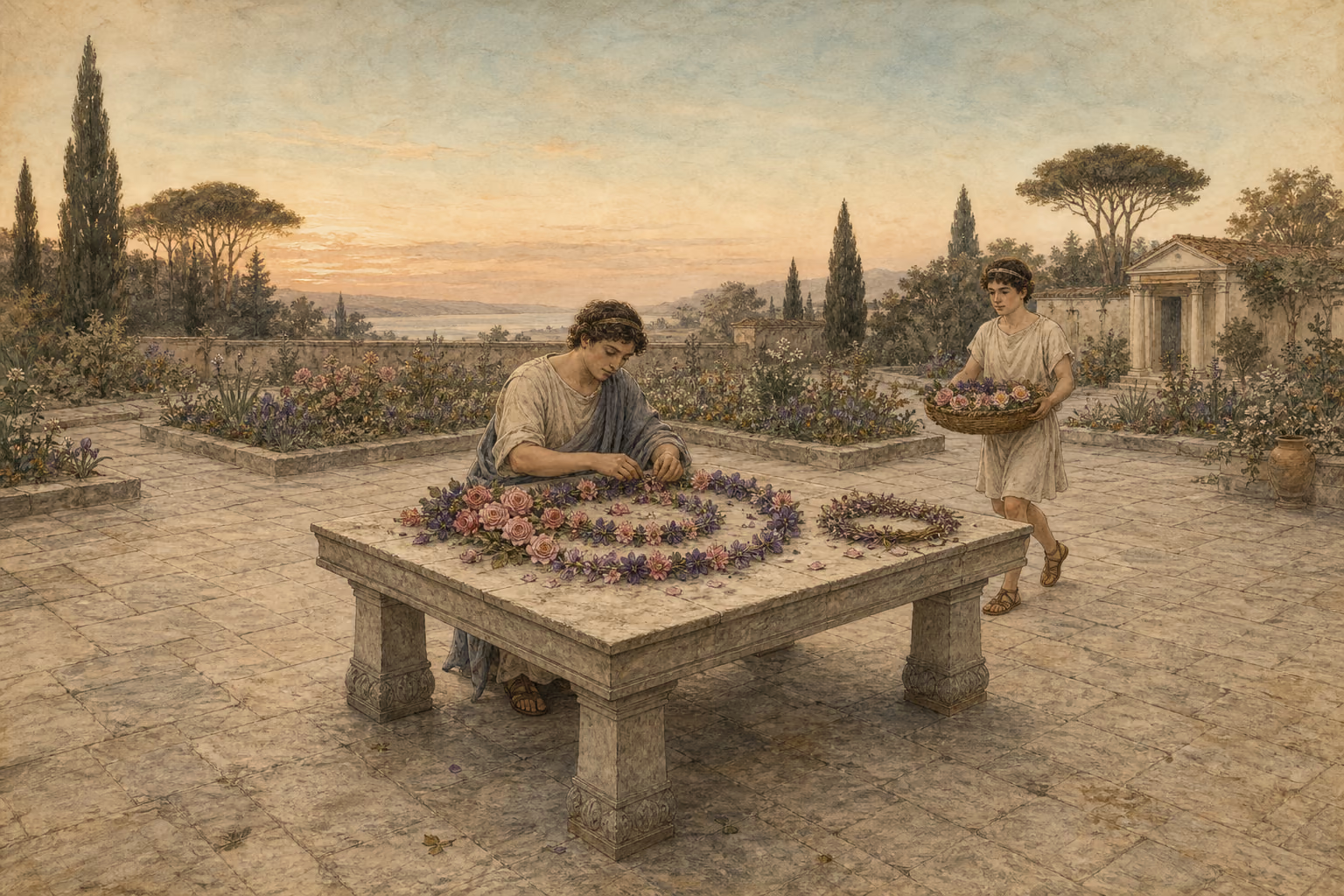
In hortis seri et coronamenta iussit Cato, inenarrabili florum maxime subtilitate, quando nulli potest facilius esse loqui quam rerum naturae pingere, lascivienti praesertim et in magno gaudio fertilitatis tam varie ludenti. quippe reliqua usus alimentique gratia genuit, ideoque saecula annosque tribuit iis, flores vero odoresque in diem gignit, magna, ut palam est, admonitione hominum, quae spectatissime floreant, celerrime marcescere. sed ne pictura quidem sufficiet imagini colorum reddendae mixturarumque varietati, sive alteruni atque multiplices inter se nectantur, sive privatis generum ftniculis in orbem, in oblicum, in ambitum quaedam coronae per coronas currant.
English · Bostock & Riley 1855–57
Cato has recommended that flowers for making chaplets should also be cultivated in the garden; varieties remarkable for a delicacy which it is quite impossible to express, inasmuch as no individual can find such facilities for describing them as Nature does for bestowing on them their numerous tints—Nature, who here in especial shows herself in a sportive mood, and takes a delight in the prolific display of her varied productions. The other plants she has produced for our use and our nutriment, and to them accordingly she has granted years and even ages of duration: but as for the flowers and their perfumes, she has given them birth for but a day—a mighty lesson to man, we see, to teach him that that which in its career is the most beauteous and the most attractive to the eye, is the very first to fade and die.
Even the limner’s art itself possesses no resources for reproducing the colours of the flowers in all their varied tints and combinations, whether we view them in groups alternately blending their hues, or whether arranged in festoons, each variety by itself, now assuming a circular form, now running obliquely, and now disposed in a spiral pattern; or whether, as we see sometimes, one wreath is interwoven within another.