LIBER XXI · CAPUT 2
GARLANDS AND CHAPLETS
Latine · Mayhoff 1906
Tenuioribus utebantur antiqui, stroppos appellantes, unde nata strophiola. quin et vocabulum ipsum tarde communicatum est, inter sacra tantum et bellicos honores coronis suum nomen vindicantibus. cum vero e floribus fierent, serta a serendo serieve appellabantur, quod apud Graecos quoque non adeo antiquitus placuit.
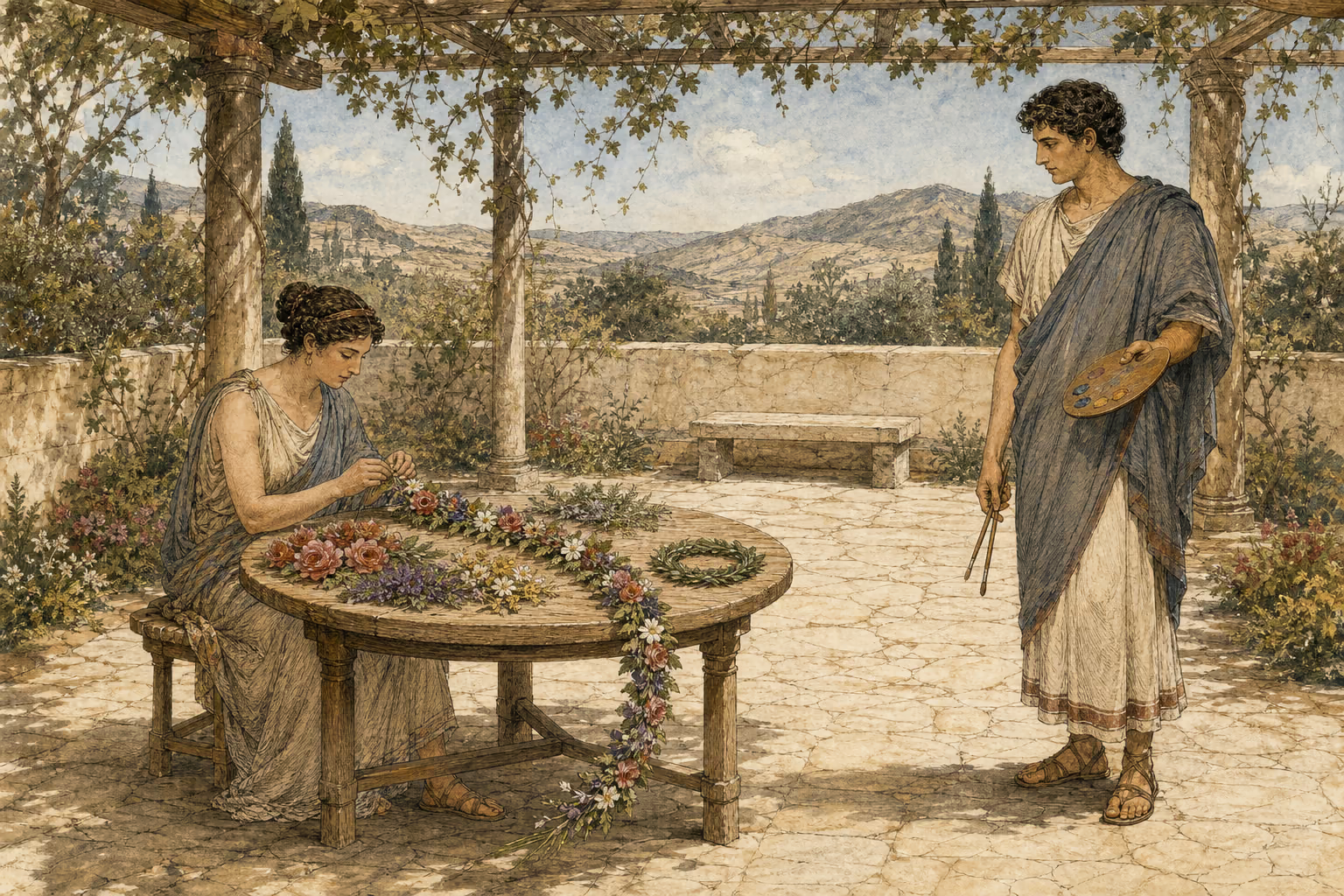
Arborum enim ramis coronari in sacris certaminibus erat primum. postea variari coeptum mixtura versicolori florum, quae invicem odores coloresque accenderet, Sicyone ingenio Pausiae pictoris atque Glycerae coronariae dilectae admodum illi, cum opera eius pictura imitaretur, illa provocans variaret, essetque certamen artis ac naturae, quales etiam nunc extant artificis illius tabellae atque in primis appellata stephaneplocos, qua pinxit ipsam. idque factum est post Olympiada c. sic coronis e floribus receptis paulo mox subiere, quae vocantur Aegyptiae, ac deinde hibernae, cum terra flores negat, ramento e cornibus tincto. paulatimque et Romae subrepsit appellatio corollis inter initia propter gracilitatem nominatis, mox et corollariis, postquam e lamina tenui aerea inaurata aut inargentata dabantur.
English · Bostock & Riley 1855–57
The ancients used chaplets of diminutive size, called “struppi;” from which comes our name for a chaplet, “strophiolum.” Indeed, it was only by very slow degrees that this last word became generalized, as the chaplets that were used at sacrifices, or were granted as the reward of military valour, asserted their exclusive right to the name of “corona.” As for garlands, when they came to be made of flowers, they received the name of “serta,” from the verb “sero,” or else from our word “series.” The use of flowers for garlands is not so very ancient, among the Greeks even.
For in early times it was the usage to crown the victors in the sacred contests with branches of trees: and it was only at a later period, that they began to vary their tints by the combination of flowers, to heighten the effect in turn by their colour and their smell—an invention due to the ingenuity of the painter Pausias, at Sicyon, and the garland-maker Glycera, a female to whom he was greatly attached, and whose handiwork was imitated by him in colours. Challenging him to a trial of skill, she would repeatedly vary her designs, and thus it was in reality a contest between art and Nature; a fact which we find attested by pictures of that artist even still in existence, more particularly the one known as the “Stephaneplocos,” in which he has given a likeness of Glycera herself. This invention, therefore, is only to be traced to later than the Hundredth Olympiad.
Chaplets of flowers being now the fashion, it was not long before those came into vogue which are known to us as Egyptian chaplets; and then the winter chaplets, made for the time at which Earth refuses her flowers, of thin laminæ of horn stained various colours. By slow degrees, too, the name was introduced at Rome, these garlands being known there at first as “corollæ,” a designation given them to express the remarkable delicacy of their texture. In more recent times, again, when the chaplets presented were made of thin plates of copper, gilt or silvered, they assumed the name of “corollaria.”