LIBER XXI · CAPUT 10
TWO VARIETIES OF THYME. PLANTS PRODUCED FROM BLOSSOMS AND NOT FROM SEED
Latine · Mayhoff 1906
totidem et origani in coronamentis species, alterius enim nullum semen; id, cui odor est, Creticum vocatur.
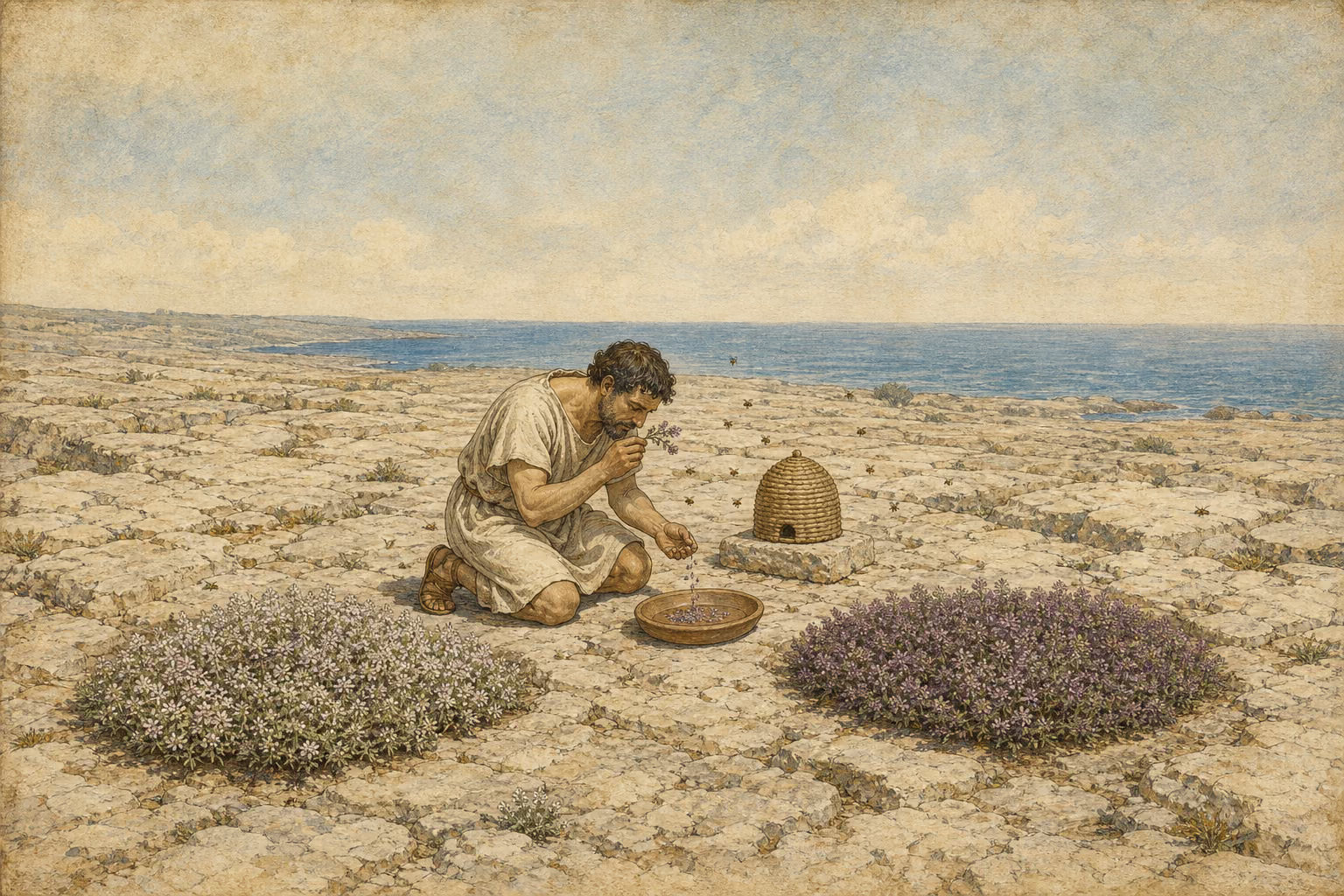
Totidem et thymi, candidum ac nigricans. floret autem circa solstitia; tum et apes decerpunt, ut augurium mellis sit; proventum enim sperant apiarii large florescente eo. laeditur imbribus amittitque florem. semen thymi non potest deprehendi, cum origani, perquam minutum, non tamen fallat. sed quid interest occultasse id naturam? in flore ipso intellegitur satoque eo nascitur. quid non temptavere homines? mellis Attici in toto orbe summa laus existimatur; ergo translatum est ex Attica thymum et vix flore, uti docemur, satum. sed alia ratio naturae obstitit, non durante Attico thymo nisi in adflatu maris. erat quidem haec opinio antiqua in omni thymo, ideoque non nasci in Arcadia, cum oleam non putarent gigni nisi intra CCC stadia a mari. thymo quidem nunc etiam lapideos campos in provincia Narbonensi refertos scimus, hoc paene solo reditu, e longinquis regionibus pecudum milibus convenientibus, ut thymo vescantur.
Et conyzae duo genera in coronamentis, mas ac femina. differentia in folio: tenuius feminae et constrictius angustiusque, imbricatum. mas et ramosior. flos quoque magis splendet eius, serotinus utrique post arcturum. mas odore gravior, femina acutior et ideo contra bestiarum morsus aptior. folia feminae mellis odorem habent, masculae radix a quibusdam libanotis appellatur, de qua diximus.
Etiamnum folio coronant lovis flos, amaracum, hemerocalles, habrotonum, Helenium, sisymbrium, serpullum, omnia surculosa rosae modo. colore tantum placet Iovis flos, odor abest, sicut et illi, qui Graece phlox vocatur. et ramis autem et folio odorata sunt excepto serpull. Helenium e lacrimis Helenae dicitur natum, et ideo in Helene insula laudatissimum; est autem frutex humi se spargens dodrantalibus ramulis, serpullo simili folio.
Habrotonum odore iucunde gravi floret aestate; flos est aurei coloris. vacuum sponte provenit, cacumine suo se propagat. seritur autem semine melius quam radice aut surculo, semine quoque non sine negotio; plantaria transferuntur—sic et Adonium—, utrumque aestate. alsiosa enim admodum sunt, ut sole tamen nimio laedantur. sed ubi convaluere, rutae vice fruticant. habrotono simile odore leucanthemum est, flore albo, foliosum.
English · Bostock & Riley 1855–57
There are the same number of varieties, also, of origanum employed in making chaplets, one of which is destitute of seed, the other, which is also odoriferous, being known as the Cretan origanum.
There are also as many varieties of thyme employed, the one white, the other dark: it flowers about the summer solstice, when the bees cull from it. From this plant a sort of augury is derived, as to how the honey is likely to turn out: for the bee-keepers have reason to look for a large crop when the thyme blossoms in considerable abundance. Thyme receives great injury from showers of rain, and is very apt to shed its blossom. The seed of thyme is so minute as to be imperceptible, and yet that of origanum, which is also extremely minute, does not escape the sight. But what matters it that Nature has thus concealed it from our view? For we have reason to conclude that it exists in the flower itself; which, when sown in the ground, gives birth to the plant—what is there, in fact, that the industry of man has left untried?
The honey of Attica is generally looked upon as the best in all the world; for which reason it is that the thyme of that country has been transplanted, being reproduced, as already stated, with the greatest difficulty, from the blossom. But there is also another peculiarity in the nature of the thyme of Attica, which has greatly tended to frustrate these attempts—it will never live except in the vicinity of breezes from the sea. In former times, it was the general belief that this is the case with all kinds of thyme, and that this is the reason why it does not grow in Arcadia: at a period when it was universally supposed, too, that the olive never grows beyond three hundred stadia from the sea. But, at the present day, we know for certain that in the province of Gallia Narbonensis the Stony Plains are quite overgrown with thyme; this being, in fact, the only source of revenue to those parts, thousands of sheep being brought thither from distant countries to browse upon the plant.
There are two varieties of conyza, also, employed in making chaplets, the male plant and the female. The difference consists in the leaves, those of the female plant being thinner, more tapering, and narrower, and those of the male being of an imbricated shape, the plant having a greater number of branches. The blossom, too, of the male plant is more vivid than that of the female: in both kinds it is late in making its appearance, not till after the rising of Arcturus.
The smell of the male conyza is more powerful than that of the female plant: the latter, however, is of a more penetrating nature, for which reason it is that the female plant is held in higher esteem for the treatment of the bites of animals. The leaves of the female plant have exactly the smell of honey; and the root of the male has received the name of “libanotis” from some: we have already made mention of it on a previous occasion.
Of the following plants, too, it is only the leaves that are employed for chaplets—the flower of Jove, the amaracus, the hemerocalles, the abrotonum, the helenium, sisymbrium, and wild thyme, all of them ligneous plants, growing in a manner similar to the rose. The flower of Jove is pleasing only for its colours, being quite inodorous; which is the case also with the plant known by the Greek name of “phlox.” All the plants, too, which we have just mentioned are odoriferous, both in the branches and the leaves, with the sole exception of wild thyme. The helenium is said to have had its origin in the tears of Helen, and hence it is that the kind grown in the island of Helena is so highly esteemed. It is a shrub which throws out its tiny branches along the ground, some nine inches in length, with a leaf very similar to that of wild thyme.
The flower of the abrotonum, which makes its appearance in summer, has a powerful but agreeable smell; it is of a bright golden colour. Left to range at large, it reproduces itself by layers from the tops of the branches: but when it is propagated by the hand of man, it is better to grow it from the seed than from the roots or slips, though even from the seed it is not grown without considerable trouble. The young plants are transplanted in summer, which is the case also with the adonium. They are both of them plants of a very chilly nature, though, at the same time, they are apt to receive injury if too much exposed to the sun: when, however, they have gained sufficient strength, they throw out branches like those of rue.
The leucanthemum has a similar smell to that of the abrotonum: it is a foliated plant, with a white flower.