LIBER XXI · CAPUT 19
TWENTY-ONE REMEDIES DERIVED FROM THE LILY
Latine · Mayhoff 1906
vinum quomodo fieret e rosa, diximus inter genera vini. usus suci ad aures, oris ulcera, gingivas, tonsillas gargarizati, stomachum, vulvas, sedis vitia, capitis dolores—in febri per se vel cum aceto—, somnos, nausias. folia uruntur in calliblepharum, et siccis femina adsperguntur. epiphoras quoque arida leniunt. flos somnum facit, inhibet fluctiones mulierum, maxime albas, in posca potus et sanguinis excreationes, stomachi quoque dolores, quantum.... in vini cyathis tribus. seminis optimum crocinum nec anniculo vetustius et in umbra siccatum; nigrum inutile. dentium dolori inlinitur, urinam ciet, stomacho inponitur, item igni sacro non veteri. naribus subductum caput purgat. capita pota ventrem et sanguinem sistunt. ungues rosae epiphoris salubres sunt; ulcera enim oculorum rosa sordescunt, praeterquam initiis epiphorae ita, ut arida cum pane inponatur. folia quidem intus stomachi rosionibus et [intus] ventris aut intestinorum utilissima et praecordiis, vel inlita. cibo quoque lapathi modo condiuntur. cavendus in his situs celeriter insidens. et aridis aut expressis aliquis usus. diapasmata inde fiunt ad sudores coercendos ita, ut a balineis inarescant corpori, dein frigida abluantur. silvestris pilulae cum adipe ursino alopecias emendant.
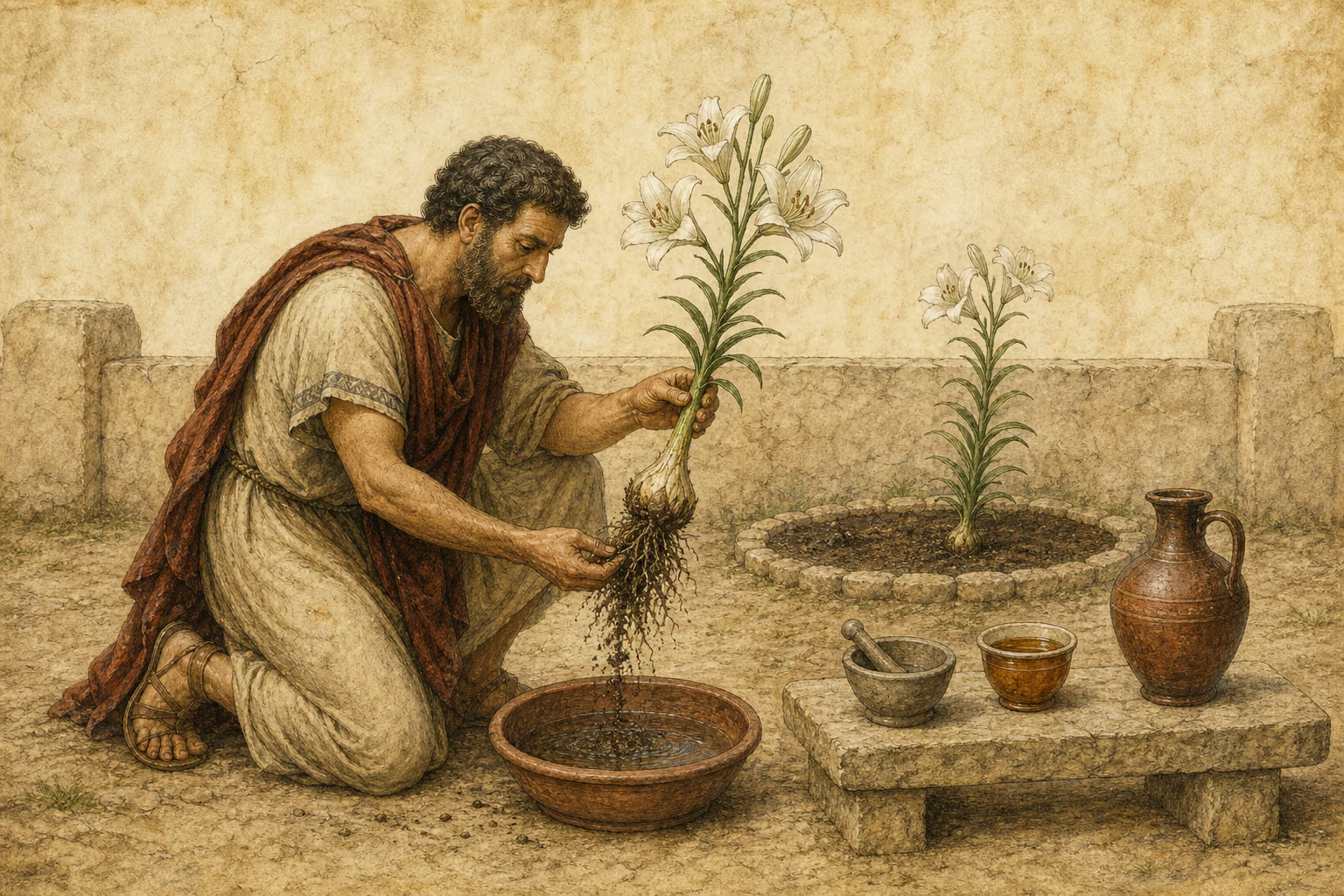
Lilii radices multis modis florem suum nobilitant, contra serpentium ictus ex vino potae et contra fungorum venena. propter clavos pedum in vino decoquuntur triduoque non solvuntur. cum adipe aut oleo decoctae pilos quoque adustis reddunt. e mulso potae inutilem sanguinem cum alvo trahunt, lienique et ruptis, vulsis prosunt et mensibus feminarum, in vino vero decoctae inpositaeque cum melle nervis praecisis. medenttr contra lichenas et lepras, et furfures in facie emendant, erugant corpora, cutem. folia in aceto cocta vulneribus inponuntur, si testium, melius cum hyoscyamo et farina tritici.semen inlinitur igni sacro, flos et folia ulcerum vetustati, sucus qui flore expressus est—ab aliis mel vocatur, ab aliis syrium—ad emolliendas vulvas sudoresque faciendos et suppurationes concoquendas.
Narcissi duo genera in usum medici recipiunt, purpureo flore et alterum herbaceum, hunc stomacho inutilem et ideo vomitorium alvosque solventem, nervis inimicum, caput gravantem et a narce narcissum dictum, non a fabuloso puero. utriusque radix mulsei saporis est. ambustis prodest exiguo e melle, sic et vulneribus et luxatis; panis vero cum melle et aerina farina, sic et infixa corpori extrahit. in polenta tritus oleoque contusis medetur et lapide percussis. purgat vulnera permixtus farinae, nigras vitiligines emaculat. ex hoc flore fit narcissinum oleum ad emolliendas duritias, calfacienda quae alserint, auribus utilissimum, sed et capitis dolores facit.
Violae silvestres et sativae. purpureae refrigerant. contra inflammationes inlinuntur stomacho, ardenti inponuntur et capiti in fronte, oculorum privatim epiphoris et sede procidente volvave et contra suppurationes. crapulam et gravedines capitis inpositis coronis olfactuque discutiunt, anginas ex aqua potae. id, quod purpureum est ex his, comitialibus medetur, maxime pueris, in aqua potum. semen violae scorpionibus adversatur. contra flos albae suppurata aperit, ipsa discutit. et alba autem et lutea extenuat menses, urinam ciet. minor vis est recentibus, ideoque aridis post annum utendum. lutea dimidio cyatho in aquae tribus menses trahit. radices eius cum aceto inlitae sedant lienem, item podagram, oculorum autem inflammationes cum murra et croco. folia cum melle purgant capitis ulcera, cum cerato rimas sedis et quae in umidis sunt, ex aceto vero collectiones sanant.
Baccar in medicinae usu aliqui ex nostris perpressam vocant. auxiliatur contra serpentes, capitis dolores fervoresque, item epiphoras. inponitur mammis tumentibus a partu et aegilopiis incipientibus ignibusque sacris. odor somnum gignit. radicem decoctam bibere spasticis, eversis, convulsis, suspiriosis salutare est et in tussi vetere. rami eius tres quattuorve decocuntur ad tertias partes; haec potio mulieres ex abortu purgat. laterum punctiones tollit et vesicae calculos. tundituret utiliter in diapasmata. vestibus odoris gratia inseritur. combretum, quod simile ei diximus, tritum cum axungia vulnera mire sanat.
Asarum iocinerum vitiis salutare esse traditur uncia sumpta in hemina mulsi mixti. alvum purgat ellebori modo, hydropicis prodest et praecordiis vulvisque ac morbo regio. in mustum si addatur, facit vinum urinis ciendis. effoditur cum folia mittit, siccatur et conditur. in umbra situm celerrime sentit.
English · Bostock & Riley 1855–57
We have already stated, when speaking of the various kinds of wines, how rose wine is made. Rose juice is much used in injections for the ears, and as a gargle for ulcerations of the mouth, and for the gums and tonsils; it is employed also for the stomach, maladies of the uterus, diseases of the rectum, and for head-ache. In fevers, it is used, either by itself or in combination with vinegar, as a remedy for sleeplessness and nausea. The petals, charred, are used as a cosmetic for the eyebrows; and the thighs, when chafed, are rubbed with them dried; reduced to powder, too, they are soothing for defluxions of the eyes. The flower of the rose is soporific, and taken in oxycrate it arrests fluxes in females, the white flux in particular; also spitting of blood, and pains in the stomach, if taken in three cyathi of wine, in sufficient quantity to flavour it.
As to the seed of the rose, the best is that which is of a saffron colour, and not more than a year old; it should be dried, too, in the shade. The black seed is worthless. In cases of tooth-ache, the seed is employed in the form of a liniment; it acts also as a diuretic, and is used as a topical application for the stomach, as also in cases of erysipelas which are not inveterate: inhaled at the nostrils, it has the effect of clearing the brain. The heads of roses, taken in drink, arrest looseness of the bowels and hæmorrhage. The unglets of the rose are wholesome in cases of defluxion of the eyes; but the rose is very apt to taint all ulcerous sores of the eyes, if it is not applied at the very beginning of the defluxion, dried, and in combination with bread. The petals, too, taken internally, are extremely wholesome for gnawing pains of the stomach, and for maladies of the abdomen or intestines; as also for the thoracic organs, if applied externally even: they are preserved, too, for eating, in a similar manner to lapathum. Great care must be taken in drying rose-leaves, as they are apt to turn mouldy very quickly.
The petals, too, from which the juice has been extracted, may be put to some use when dried: powders, for instance, may be made from them, for the purpose of checking the perspiration. These powders are sprinkled on the body, upon leaving the bath, and are left to dry on it, after which they are washed off with cold water. The little excrescences of the wild rose, mixed with bears’-grease, are a good remedy for alopecy.
The roots of the lily ennoble that flower in manifold ways by their utility in a medicinal point of view. Taken in wine, they are good for the stings of serpents, and in cases of poisoning by fungi. For corns on the feet, they are applied boiled in wine, not being taken off before the end of three days. A decoction of them with grease or oil, has the effect of making the hair grow again upon burns. Taken with honied wine, they carry off corrupt blood by stool; they are good, also, for the spleen and for hernia, and act as an emmenagogue. Boiled in wine and applied with honey, they are curative of wounds of the sinews. They are good, too, for lichens, leprous sores, and scurf upon the face, and they efface wrinkles of the body.
The petals of the lily are boiled in vinegar, and applied, in combination with polium, to wounds; if it should happen, however, to be a wound of the testes, it is the best plan to apply the other ingredients with henbane and wheat-meal. Lily-seed is applied in cases of erysipelas, and the flowers and leaves are used as a cataplasm for inveterate ulcers. The juice which is extracted from the flower is called “honey” by some persons, and “syrium” by others; it is employed as an emollient for the uterus, and is also used for the purpose of promoting perspirations, and for bringing suppurations to a head.
Two varieties of the narcissus are employed in medicine, the one with a purple flower, and the herbaceous narcissus. This last is injurious to the stomach, and hence it is that it acts both as an emetic and as a purgative: it is prejudicial, also, to the sinews, and produces dull, heavy pains in the head: hence it is that it has received its name, from “narce,” and not from the youth Narcissus, mentioned in fable. The roots of both kinds of narcissus have a flavour resembling that of wine mixed with honey. This plant is very useful, applied to burns with a little honey, as also to other kinds of wounds, and sprains. Applied topically, too, with honey and oatmeal, it is good for tumours, and it is similarly employed for the extraction of foreign substances from the body.
Beaten up in polenta and oil it effects the cure of contusions and blows inflicted by stones; and, mixed with meal, it effectually cleanses wounds, and speedily removes black morphews from the skin. Of this flower oil of narcissus is made, good for softening indurations of the skin, and for warming parts of the body that have been frost-bitten. It is very beneficial, also, for the ears, but is very apt to produce head-ache.
There are both wild and cultivated violets. The purple violet is of a cooling nature: for inflammations they are applied to the stomach in the burning heats, and for pains in the head they are applied to the forehead. Violets, in particular, are used for defluxions of the eyes, prolapsus of the fundament and uterus, and suppurations. Worn in chaplets upon the head, or even smelt at, they dispel the fumes of wine and head-ache; and, taken in water, they are a cure for quinsy. The purple violet, taken in water, is a remedy for epilepsy, in children more particularly: violet seed is good for the stings of scorpions.
On the other hand, the flower of the white violet opens suppurations, and the plant itself disperses them. Both the white and the yellow violet check the menstrual discharge, and act as diuretics. When fresh gathered, they have less virtue, and hence it is that they are mostly used dry, after being kept a year. The yellow violet, taken in doses of half a cyathus to three cyathi of water, promotes the catamenia; and the roots of it, applied with vinegar, assuage affections of the spleen, as also the gout. Mixed with myrrh and saffron, they are good for inflammation of the eyes. The leaves, applied with honey, cleanse ulcerous sores of the head, and, combined with cerate, they are good for chaps of the fundament and other moist parts of the body. Employed with vinegar, they effect the cure of abscesses.
The bacchar that is used in medicine is by some of our writers called the “perpressa.” It is very useful for the stings of serpents, head-ache and burning heats in the head, and for defluxions of the eyes. It is applied topically for swellings of the mamillæ after delivery, as also incipient fistulas of the eyes, and erysipelas; the smell of it induces sleep. It is found very beneficial to administer a decoction of the root for spasms, falls with violence, convulsions, and asthma. For an inveterate cough, three or four roots of this plant are boiled down to one-third; this decoction acting also as a purgative for women after miscarriage, and removing stitch in the side, and calculi of the bladder. Drying powders for perspiration are prepared also from this plant; and it is laid among garments for the smell. The combretum which we have spoken of as resembling the bacchar, beaten up with axle-grease, is a marvellous cure for wounds.
It is generally stated that asarum is good for affections of the liver, taken in doses of one ounce to a semisextarius of honied wine mixed with water. It purges the bowels like hellebore, and is good for dropsy and affections of the thoracic organs and uterus, as also for jaundice. When mixed with must, it makes a wine with strongly diuretic qualities. It is taken up as soon as it begins to put forth its leaves, and is dried in the shade. It is apt however to turn mouldy very speedily.