LIBER XXI · CAPUT 25
ELEVEN REMEDIES DERIVED FROM THE HELICHRYSOS
Latine · Mayhoff 1906
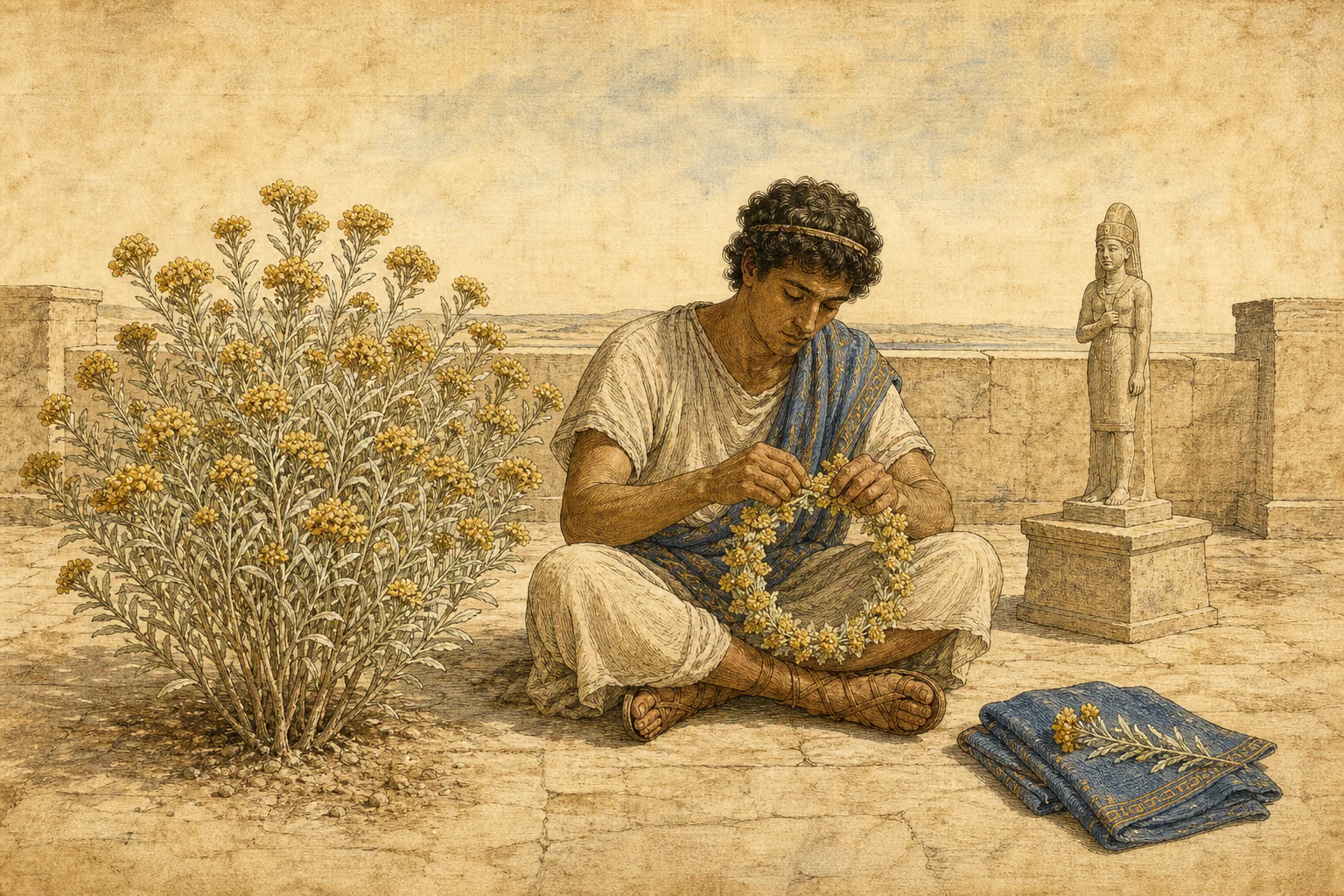
Heliochrysum alii chrysanthemon vocant, ramulos habet candidos, folia subalbida, habrotono similia, ad solis repercussum aureae lucis in orbem veluti corymbis dependentibus, qui numquam marcescunt; qua de causa deos coronant illo, quod diligentissime servavit Ptolemaeus Aegypti rex. nascitur in frutectis. ciet urinas e vino pota et menses. duritias et inflammationes discutit, ambustis cum melle inponitur. contra serpentium ictus et lumborum vitia bibitur. sanguinem concretum ventris aut vesicae absumit cum mulso. folia eius trita trium obolorum pondere sistunt profluvia mulierum in vino albo. vestes tuetur odore non ineleganti.
English · Bostock & Riley 1855–57
The helichrysos is by some persons called the “chrysanthemon.” It has small, white branches, with leaves of a whitish colour, similar to those of the abrotonum. The clusters, disposed around it, and glistening like gold in the rays of the sun, are never known to fade; hence it is that they make chaplets of it for the gods, a custom which was most faithfully observed by Ptolemæus, the king of Egypt. This plant grows in shrubberies: taken in wine, it acts as a diuretic and emmenagogue, and, in combination with honey, it is employed topically for burns. It is taken also in potions for the stings of serpents, and for pains in the loins; and, with honied wine, it removes coagulated blood in the abdominal regions and the bladder. The leaves of it, beaten up and taken in doses of three oboli, in white wine, arrest the menstrual discharge when in excess.
The smell of this plant is far from disagreeable, and hence it is kept with clothes, to protect them from the attacks of vermin.