LIBER XXI · CAPUT 26
EIGHT REMEDIES DERIVED FROM THE HYACINTH
Latine · Mayhoff 1906
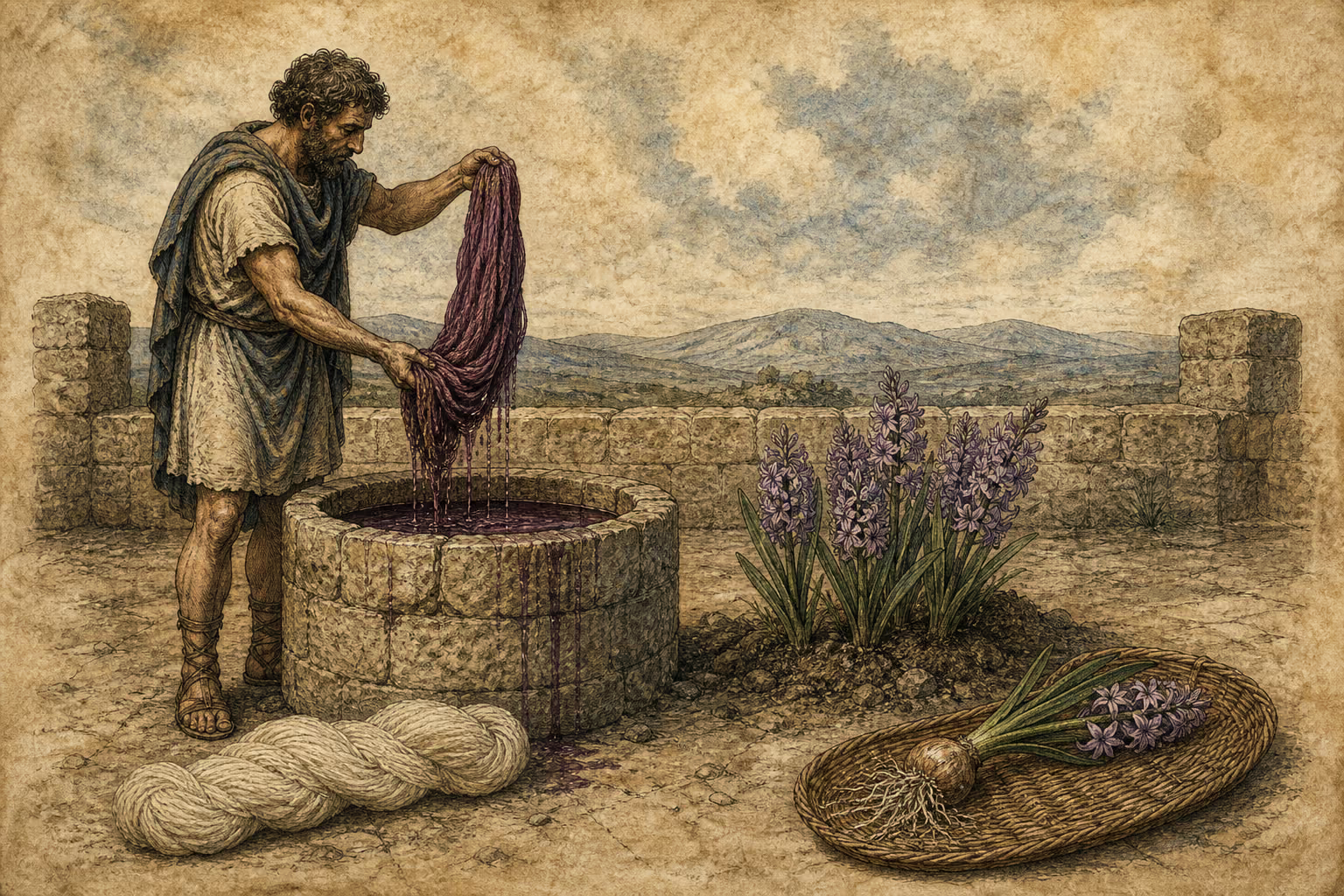
Hyacinthus in Gallia maxime provenit. hoc ibi fuco hysginum tingunt. radix est bulbacea, mangonicis venaliciis pulchre nota, quae e vino dulci inlita pubertatem coercet et non patitur erumpere. torminibus et araneorum morsibus resistit. urinam impellit. contra serpentes et scorpiones morbumque regium semen eius cum habrotono datur.
Lychnis quoque flammea illa adversus serpentes et scorpiones et crabrones similiaque bibitur e vino semine trito. silvestris eadem stomacho inutilis. alvum solvit, ad detrahendam bilem efficacissima duabus drachmnis, scorpionibus tam contraria, ut omnino visa ea torpescant. radicem eius Asiani boliten vocant, qua adalligata oculo albugines tolli dicuntur.
English · Bostock & Riley 1855–57
The hyacinth grows in Gaul more particularly, where it is employed for the dye called “hysginum.” The root of it is bulbous, and is well known among the dealers in slaves: applied to the body, with sweet wine, it retards the signs of puberty, and prevents them from developing themselves. It is curative, also, of gripings of the stomach, and of the bites of spiders, and it acts as a diuretic. The seed is administered, with abrotonum, for the stings of serpents and scorpions, and for jaundice.
The seed of the lychnis, too, which is just the colour of fire, is beaten up and taken in drink for the stings of serpents, scorpions, hornets, and other insects of similar nature: the wild variety, however, is prejudicial to the stomach. It acts as a laxative to the bowels; and, taken in doses of two drachmæ, is remarkably efficacious for carrying off the bile. So extremely baneful is it to scorpions, that if they so much as see it, they are struck with torpor. The people of Asia call the root of it “bolites,” and they say that if it is attached to the body it will effectually disperse albugo.