LIBER XXI · CAPUT 34
AN EXPLANATION OF GREEK TERMS RELATIVE TO WEIGHTS AND MEASURES
Latine · Mayhoff 1906
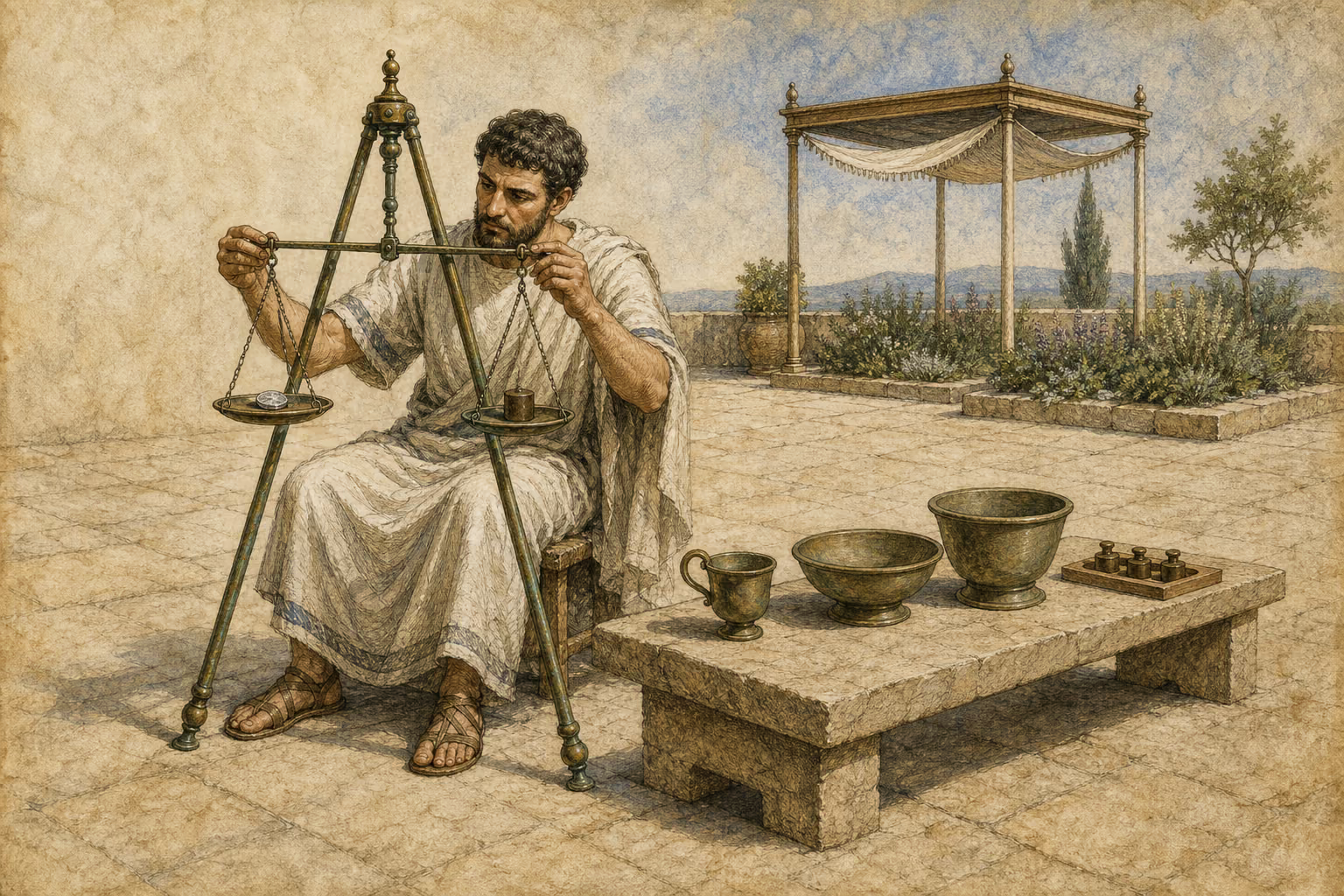
Et quoniam in mensuris quoque ac ponderibus crebro Graecis nominibus utendum est, interpretationem eorum semel hoc in loco ponemus: drachma Attica—fere enim Attica observatione medici utuntur— denarii argentei habet pondus, eademque vi obolos pondere efficit, obolus x chalcos. cyathus pendet per se drachmas x; cum acetabuli mensura dicitur, significat heminae quartam, id est drachmas xv. mna, quam nostri minam vocant, pendet drachmas Atticas C.
English · Bostock & Riley 1855–57
As we have occasion to make use of Greek names very frequently when speaking of weights and measures, I shall here subjoin, once for all, some explanation of them.
The Attic drachma—for it is generally the Attic reckoning that medical men employ—is much the same in weight as the silver denarius, and is equivalent to six oboli, the obolus being ten chalci; the cyathus is equal in weight to ten drachmæ. When the measure of an acetabulum is spoken of, it is the same as one fourth part of a hemina, or fifteen drachmæ in weight. The Greek mna, or, as we more generally call it, “mina,” equals one hundred Attic drachmæ in weight.