LIBER XXII · CAPUT 2
EMPLOYMENT OF PLANTS FOR DYEING. EXPLANATION OF THE TERMS SAGMEN, VERBENA, AND CLARIGATIO
Latine · Mayhoff 1906
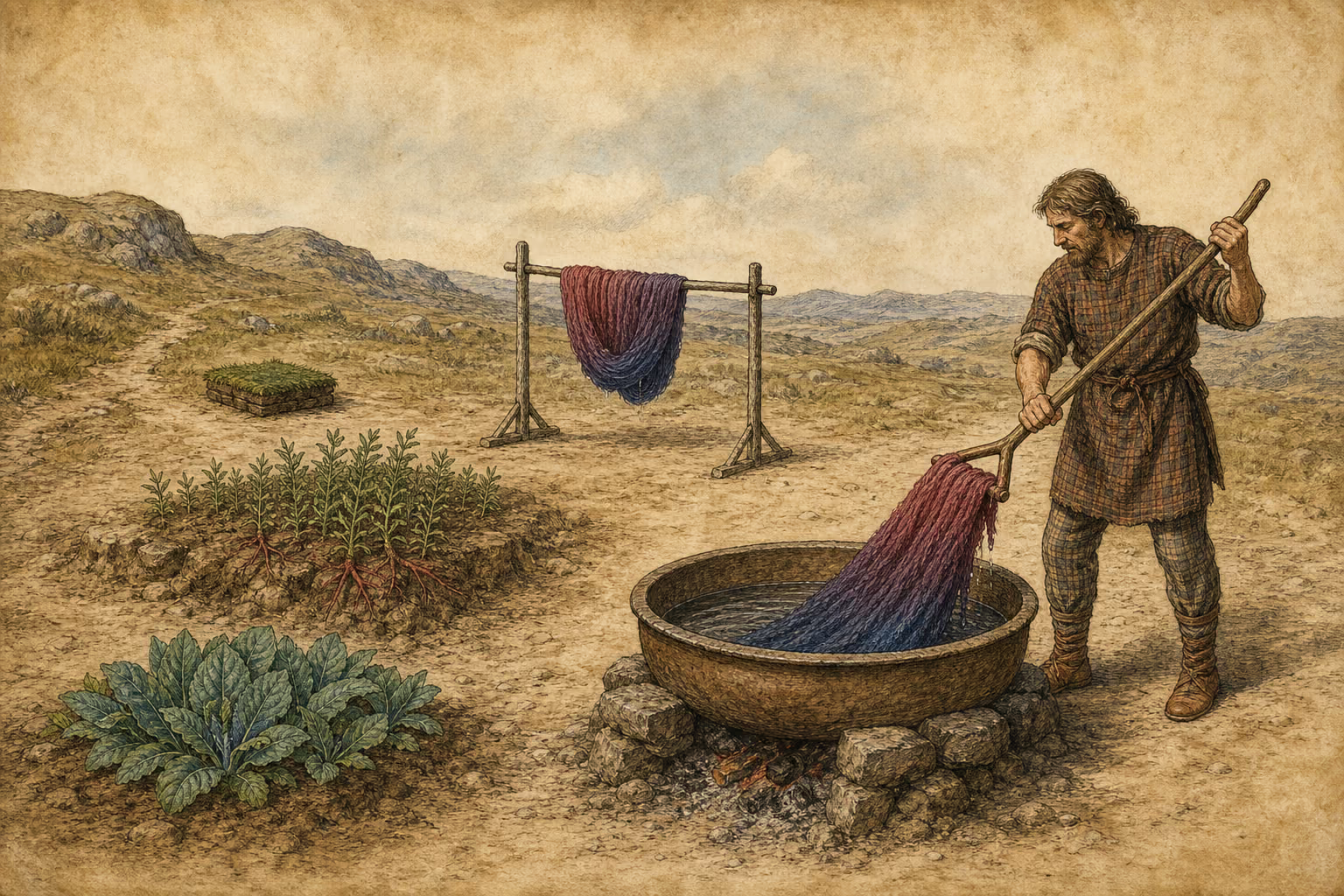
iam vero infici vestes scimus admirabili fuco, atque, ut sileamus Galatiae, Africae, Lusitaniae grani coccum imperatoriis dicatum paludamentis, transalpina Gallia herbis Tyria atque conchylia tinguit et omnes alios colores. nec quaerit in profundis murices seque obiciendo escam, dum praeripit, beluis marinis intacta etiam ancoris scrutatur vada, ut inveniat per quod facilius matrona adultero placeat, corruptor insidietur nuptae: stans et in sicco carpit, quo frugem modo. sed culpant ablui usu; alioqui fulgentius instrui poterat luxuria, certe innocentius.
Non est nunc propositum ista consectari, nec committemus, ut subiciendo viliora luxuriam utilitate circumscribamus, dicturi et alias herbis tingui parietes nec pingi lapide. nec tinguendi tamen rationem omisissemus, si umquam ea liberalium artium fuisset. interim fortius agetur, auctoritasque, quanta debet, etiam surdis, hoc est ignobilibus, herbis perhibebitur, siquidem auctores imperii Romani conditoresque immensum quiddam et hinc sumpsere, quoniam non aliunde sagmina in remediis publicis fuere et in sacris legationibusque verbenae. certe utroque nomine idem significatur, hoc est gramen ex arce cum sua terra evolsum, ac semper e legatis, cum ad hostes clarigatumque mitterentur, id est res raptas dare repetitum, unus utique verbenarius vocabatur.
English · Bostock & Riley 1855–57
We know, too, that from plants are extracted admirable colours for dyeing; and, not to mention the berries of Galatia, Africa, and Lusitania, which furnish the coccus, a dye reserved for the military costume of our generals, the people of Gaul beyond the Alps produce the Tyrian colours, the conchyliated, and all the other hues, by the agency of plants alone. They have not there to seek the murex at the bottom of the sea, or to expose themselves to be the prey of the monsters of the deep, while tearing it from their jaws, nor have they to go searching in depths to which no anchor has penetrated—and all this for the purpose of finding the means whereby some mother of a family may appear more charming in the eyes of her paramour, or the seducer may make himself more captivating to the wife of another man. Standing on dry land, the people there gather in their dyes just as we do our crops of corn—though one great fault in them is, that they wash out; were it not for which, luxury would have the means of bedecking itself with far greater magnificence, or, at all events, at the price of far less danger.
It is not my purpose, however, here to enter further into these details, nor shall I make the attempt, by substituting resources attended with fewer risks, to circumscribe luxury within the limits of frugality; though, at the same time, I shall have to speak on another occasion how that vegetable productions are employed for staining stone and imparting their colours to walls. Still, however, I should not have omitted to enlarge upon the art of dyeing, had I found that it had ever been looked upon as forming one of our liberal arts. Meantime, I shall be actuated by higher considerations, and shall proceed to show in what esteem we are bound to hold the mute plants even, or in other words, the plants of little note. For, indeed, the authors and founders of the Roman sway have derived from these very plants even almost boundless results; as it was these same plants, and no others, that afforded them the “sagmen,” employed in seasons of public calamity, and the “verbena” of our sacred rites and embassies. These two names, no doubt, originally signified the same thing,—a green turf torn up from the citadel with the earth attached to it; and hence, when envoys were dispatched to the enemy for the purpose of clarigation, or, in other words, with the object of clearly demanding restitution of property that had been carried off, one of these officers was always known as the “verbenarius.”