LIBER XXII · CAPUT 20
THE ANCHUSA: FOURTEEN REMEDIES
Latine · Mayhoff 1906
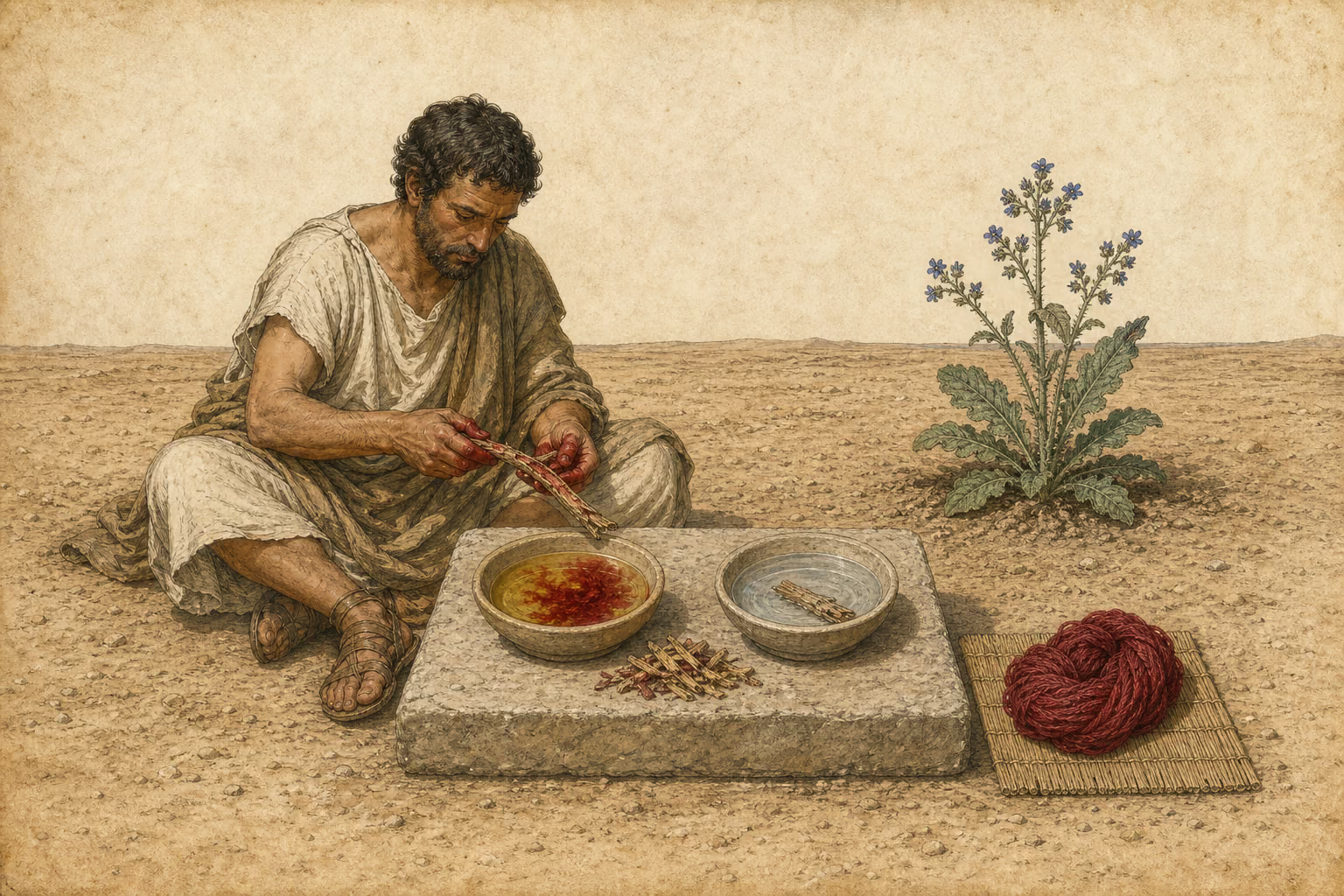
Et anchusae radix in usu est, digitali crassitudine. finditur papyri modo manusque inficit sanguineo colore, praeparat lanas pretiosis coloribus. sanat ulcera in cerato, praecipue senum, item adusta. liquari non potest in aqua, oleo dissolvitur; idque sincerae experimentum est. datur et ad renium dolores drachma eius potui in vino aut, si febris sit, in decocto balani; item iocinerum vitiis et lienis et bile subfusis. lepris et lentigini inlinitur ex aceto. folia trita cum melle et farina luxatis inponuntur, et pota drachmis duabus in mulso alvum sistunt. pulices necare radix in aqua decocta traditur.
Est et alia similis pseudoanchusa ob id appellata, a quibusdam vero echis aut doris et multis aliis nominibus, lanuginosior et minus pinguis, tenuioribus foliis, languidioribus. radix in oleo non fundit rubentem sucum, et hoc ab anchusa discernitur. contra serpentes efficacissima potu foliorum vel seminis. folia ictibus inponuntur. virus serpentes fugat. bibitur et propter spinam. folium eius sinistra decerpi iubent Magi et, cuius causa sumatur, dici tertianisque febribus adalligari.
English · Bostock & Riley 1855–57
The root of the anchusa, too, is made use of, a plant a finger in thickness. It is split into leaves like the papyrus, and when touched it stains the hands the colour of blood; it is used for imparting rich colours to wool. Applied with cerate it heals ulcerous sores, those of aged people in particular: it is employed also for the cure of burns. It is insoluble in water, but dissolves in oil, this being, in fact, the test of its genuineness. It is administered also, in doses of one drachma, in wine, for nephretic pains, or else, if there is fever, in a decoction of balanus; it is employed in a similar manner, also, for affections of the liver and spleen, and for enlarged secretions of the bile. Applied with vinegar, it is used for the cure of leprosy and the removal of freckles. The leaves, beaten up with honey and meal, are applied topically for sprains; and taken in honied wine, in doses of two drachmæ, they arrest looseness of the bowels. A decoction of the root in water, it is said, kills fleas.
There is another plant, similar to the preceding one, and hence known as the “pseudoanchusa,” though by some it is called “echis,” or “doris,” as well as by many other names. It is more downy than the other plant, however, and not so substantial; the leaves, too, are thinner, and more drooping. The root of it, treated with oil, does not give out any red juice, a sign by which it is distinguished from the genuine anchusa. The leaves of this plant, or the seed, taken in drink, are extremely efficacious for the stings of serpents; the leaves, too, are applied topically to the wound; and the powerful smell of them will keep serpents at a distance. A preparation of this plant is taken, also, as a potion, for affections of the vertebræ. The Magi recommend that the leaves of it should be plucked with the left hand, it being mentioned at the same time for whom they are being gathered: after which, they are to be worn as an amulet, attached to the person, for the cure of tertian fevers.