LIBER XXII · CAPUT 21
THE ONOCHILON, ARCHEBION, ONOCHELIS, RHEXIA, OR ENCHRYSA: THIRTY REMEDIES
Latine · Mayhoff 1906
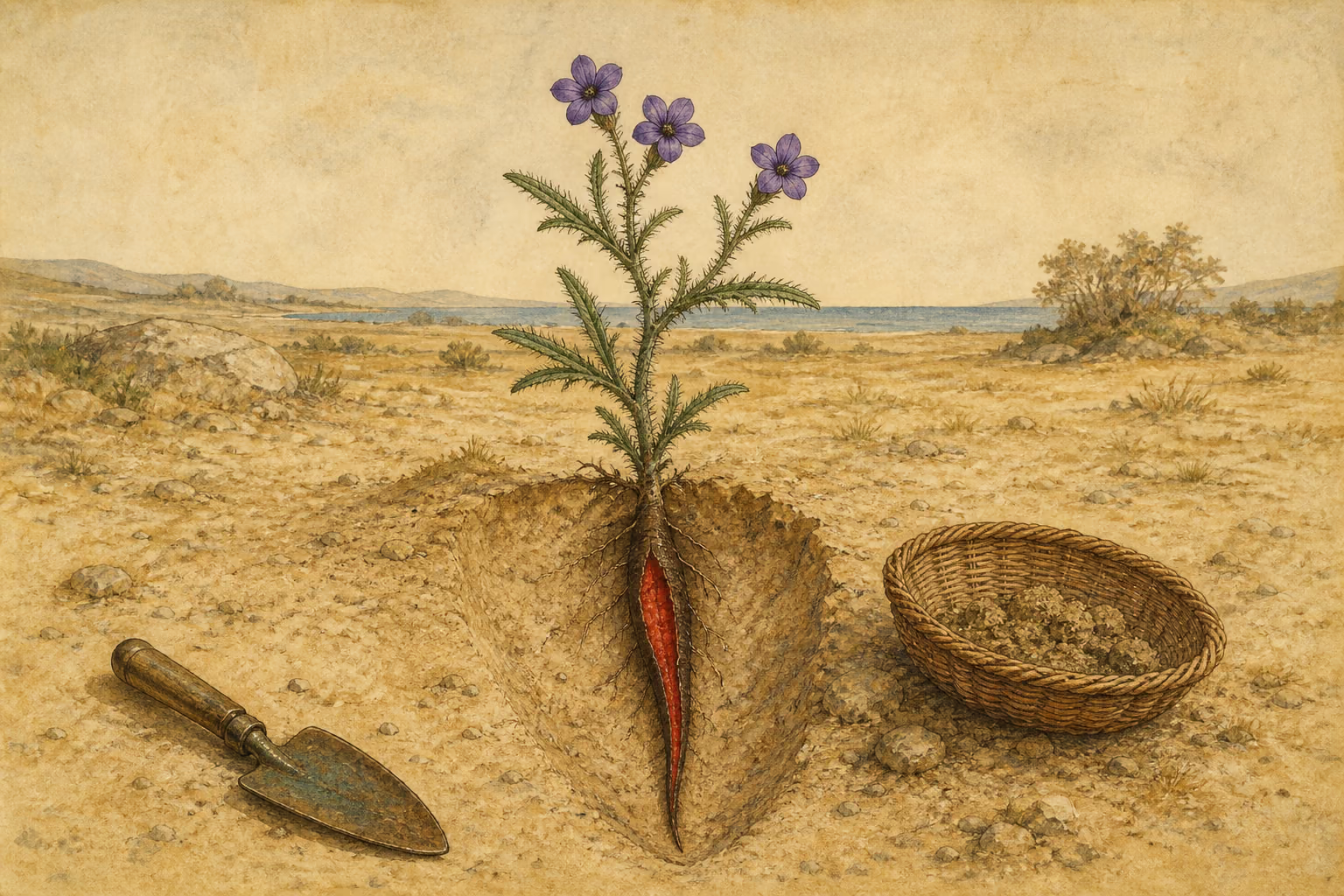
Est et alia herba proprio nomine onochilon, quam aliqui anchusam vocant, alii archebion, alii onochelim, aliqui rhexiam, multi enchrysam, parvo frutice, flore purpureo, asperis foliis et ramis, radice messibus sanguinea, cetero nigra, in sabulosis nascens, efficax contra serpentes maximeque viperas et radice et foliis, aeque cibo ac potu. vires habet messibus. folia trita odorem cucumeris reddunt. datur in cyathis tribus vulva procidente. pellit et taenias cum hysopo, et in dolore renium aut iocineris ex aqua mulsa, si febris sit, sin aliter, e vino bibitur. lentigini ac lepris radix inlinitur. habentes eam a serpentibus feriri negantur. est et alia huic similis flore rubro, minor, et ipsa ad eosdem usus, traduntque, conmanducata ea si inspuatur, mori serpentem.
Anthemis magnis laudibus celebratur ab Asclepiade. aliqui leucanthemida vocant, alii leucanthemum, alii eranthemida, quoniam vere floreat; alii chamaemelon, quoniam odorem mali habeat. nonnulli melanthion vocant. genera eius tria fronde tantum distant, palmum non excedentia, parvis foliis..... rutae candidis aut malinis aut purpureis. in macro solo aut iuxta semitas colligitur vere et in coronamenta reponitur. eodem tempore et medici folia tusa in pastillos digerunt, item florem et radicem. dantur omnia mixta drachmae unius pondere contra serpentium omnium ictus. pellunt mortuos partus, item menstrua in potu et urinam calculosque, inlita inflationes, iocinerum vitia, bilem subfusam, aegilopia, conmanducata ulcerum eruptiones manantes sanant. ex omnibus his generibus ad calculos efficacissima est quae florem purpureum habet, cuius et foliorum et fruticis amplitudo maiuscula est. hanc proprie quidam eranthemim vocant.
Loton qui arborem putant tantum esse, vel Homero auctore coargui possunt. is enim inter herbas subnascentes deorum voluptati loton primam nominavit. folia eius cum melle oculorum cicatrices, argema, nubeculas discutiunt.
Est et lotometra, quae fit ex loto sata, ex cuius semine simili milio putri fiunt panes in Aegypto a pastoribus, maxime aqua vel lacte subacti. negatur quicquam illo pane salubrius esse aut levius, dum caleat. refrigeratus difficilius concoquitur fitque ponderosus. constat eos, qui illo vivant, nec dysinteria nec tenesmo neque aliis morbis ventris infestari. itaque inter remedia eorum habetur.
Heliotropii miraculum saepius diximus cum sole sese circumagentis etiam nubilo die; tantus sideris amor est. noctu velut desiderio contrahit caeruleum florem. genera eius duo, tricoccum et helioscopium. hoc altius, quamquam utrumque semipedalem altitudinem non excedit, ab ima radice ramosum. semen in folliculo messibus colligitur. nascitur nonnisi in pingui solo cultoque maxime, tricoccum ubique. si decoquatur, invenio cibis placere et in lacte iucundius alvum molliri et, si decocti sucus bibatur, efficacissime exinaniri. maioris sucus excipitur aestate hora sexta, miscetur cum vino, sic firmior. capitis dolores sedat rosaceo admixto. verrucas cum sale tollit sucus e folio, unde nostri verrucariam herbam appellavere, aliis cognominari effectibus digniorem. namque et serpentibus et scorpionibus resistit ex vino aut aqua mulsa, ut Apollophanes et Apollodorus tradunt. folia infantium destillationibus, quod siriasim vocant, inlita medentur, item contractionibus, etiam si id comitialiler accidat. decocto quoque foveri os saluberrimum est. potum id pellit taenias et renium harenas. si cuminum adiciatur, calculos frangit. decoqui cum radice oportet, quae cum foliis et hircino sebo podagris inlinitur. alterum genus, quod tricoccum appellavimus et alio nomine scorpiuron vocatur, foliis non solum minoribus, sed etiam in terram vergentibus. semen ei est effigie scorpionis caudae, quare nomen. vis ad omnia venenata et phalangia, sed contra scorpiones praecipue inlita. non feriuntur habentes, et si terram surculo heliotropii circumscribat aliquis, negant scorpionem egredi, inposita vero herba aut uda omnino respersum protinus mori. seminis grana quattuor pota quartanis prodesse dicuntur, tria vero tertianis, vel si herba ipsa ter circumlata subiciatur capiti. semen et venerem stimulat, cum melle panos discutit. verrucas hoc utique heliotropium radicitus extrahit et excrescentia in sedibus. spinae quoque ac lumborum sanguinem corruptum trahit inlitum semen et potum in iure gallinacei decoctum aut cum beta et lente. cortex seminis liventibus colorem reddit. Magi heliotropium in quartanis quater, in tertianis ter adligari iubent ab ipso aegro precarique eum, soluturum se nodos liberatum, et iacere non exempta herba.
Aliud adianto miraculum: aestate viret, bruma non marcescit, aquas respuit, perfusum mersumve sicco simile est—tanta dissociatio deprehenditur—, unde et nomen a Graecis alioqui frutici topiario. quidam callitrichon vocant, alii polytrichon, utrumque ab effectu. tinguit enim capillum et ad hoc decoquitur in vino cum semine apii adiecto oleo copioso, ut crispum densumque faciat; et defluere autem prohibet. duo genera eius: candidius et nigrum breviusque. id, quod maius est, polytrichon, aliqui trichomanes vocant. utrique ramuli nigro colore nitent, foliis felicis, ex quibus inferiora aspera ac fusca sunt, omnia autem contrariis pediculis, densa ex adverso inter se, radix nulla. umbrosas petras parietumque aspergines ac fontium maxime specus sequitur et saxa manantia, quod miremur, cum aquas non sentiat. calculos e corpore mire pellit frangitque, utique nigrum, qua de causa potius quam quod in saxis nasceretur a nostris saxifragum appellatum crediderim. bibitur e vino quantum terni decerpsere digiti. urinam cient, serpentium et araneorum venenis resistunt, in vino decocti alvum sistunt. capitis dolores corona ex his sedat. contra scolopendrae morsus inlinuntur, crebro auferendi, ne perurant; hoc et in alopeciis. strumas discutiunt furfuresque in facie et capitis manantia ulcera. decoctum ex his prodest suspiriosis et iocineri et lieni et felle subfusis et hydropicis. stranguriae inlinuntur et renibus cum absinthio. secundas cient et menstrua. sanguinem sistunt ex aceto aut rubi suco poti. infantes quoque exulcerati perunguntur ex iis cum rosaceo et vino.—(Virus foliiin urina pueri inpubis tritum quidem cum aphronitro et inlitum ventri mulierum, ne rugosus fiat, praestare dicitur.) - perdices et gallinaceos pugnaciores fieri putant in cibum eorum additis, pecorique esse utilissimos.
English · Bostock & Riley 1855–57
There is another plant, too, the proper name of which is “onochilon,” but which some people call “anchusa,” others “archebion,” and others, again, “onochelis,” or “rhexia,” and, more universally, “enchrysa.” This plant has a diminutive stem, a purple flower, rough leaves and branches, and a root the colour of blood at harvest-time, though dark and swarthy at other times. It grows in sandy soils, and is extremely efficacious for the stings of serpents, vipers in particular, the roots or leaves of it being taken indifferently with the food, or in the drink. It developes its virtues at harvest-time, more especially: the leaves of it, when bruised, have just the smell of a cucumber. This plant is prescribed, in doses of three cyathi, for prolapsus of the uterus, and, taken with hyssop, it expels tape-worms. For pains in the liver or kidneys, it is taken in hydromel, if the patient shows symptoms of fever, but if not, in wine. With the root of it a liniment is made, for the removal of freckles and leprous sores; and it is asserted that persons who carry this root about them will never be attacked by serpents.
There is another plant, again, very similar to this, with a red flower, and somewhat smaller. It is applied to the same uses as the other; it is asserted, too, that if it is chewed, and then spit out upon a serpent, it will cause its instantaneous death.
The anthemis has been highly extolled by Asclepiades. Some persons call it “leucanthemis,” some leucanthemum, others, again, “eranthemis,” from its flowering in spring, and others “chamæmelon,” because it has a smell like that of an apple: sometimes, too, it is called “melanthion.” There are three varieties of this plant, which only differ from one another in the flower; they do not exceed a palm in height, and they bear small blossoms like those of rue, white, yellow, or purple.
This plant is mostly found in thin, poor soils, or growing near foot-paths. It is usually gathered in spring, and put by for the purpose of making chaplets. At the same season, too, medical men pound the leaves, and make them up into lozenges, the same being done with the flowers also, and the root. All the parts of this plant are administered together, in doses of one drachma, for the stings of serpents of all kinds. Taken in drink, too, they bring away the dead fœtus, act as an emmenagogue and diuretic, and disperse calculi of the bladder. The anthemis is employed, also, for the cure of flatulency, affections of the liver, excessive secretions of the bile, and fistulas of the eye; chewed, it heals running sores. Of all the different varieties, the one that is most efficacious for the treatment of calculi is that with the purple flower, the leaves and stem of which are somewhat larger than those of the other kinds. Some persons, and with strict propriety, give to this last the name of “eranthemis.”
Those who think that the lotus is nothing but a tree only, can easily be refuted, if upon the authority of Homer only; for that poet names the lotus first of all among the herbs which grow to administer to the pleasures of the gods. The leaves of this plant, mixed with honey, disperse the marks of sores, argema, and films upon the eyes.
The lotometra is a cultivated lotus; with the seed of it, which resembles millet, the shepherds in Egypt make a coarse bread, which they mostly knead with water or milk. It is said, however, that there is nothing lighter or more wholesome than this bread, so long as it is eaten warm; but that when it gets cold, it becomes heavy and more difficult of digestion. It is a well-known fact, that persons who use it as a diet are never attacked by dysentery, tenesmus, or other affections of the bowels; hence it is, that this plant is reckoned among the remedies for that class of diseases.
We have spoken more than once of the marvels of the heliotropium, which turns with the sun, in cloudy weather even, so great is its sympathy with that luminary. At night, as though in regret, it closes its blue flower.
There are two species of heliotropium, the tricoccum and the helioscopium, the latter being the taller of the two, though they neither of them exceed half a foot in height. The helioscopium throws out branches from the root, and the seed of it, enclosed in follicules, is gathered at harvest-time. It grows nowhere but in a rich soil, a highly-cultivated one more particularly; the tricoccum, on the other hand, is to be found growing everywhere. I find it stated, that the helioscopium, boiled, is considered an agreeable food, and that taken in milk, it is gently laxative to the bowels; while, again, a decoction of it, taken as a potion, acts as a most effectual purgative. The juice of this plant is collected in summer, at the sixth hour of the day; it is usually mixed with wine, which makes it keep all the better. Combined with rose-oil, it alleviates head-ache. The juice extracted from the leaves, combined with salt, removes warts; from which circumstance our people have given this plant the name of “verrucaria,” although, from its various properties, it fully merits a better name. For, taken in wine or hydromel, it is an antidote to the venom of serpents and scorpions, as Apollophanes and Apollodorus state. The leaves, too, employed topically, are a cure for the cerebral affections of infants, known as “siriasis,” as also for convulsions, even when they are epileptic. It is very wholesome, too, to gargle the mouth with a decoction of this plant. Taken in drink, it expels tapeworm and gravel, and, with the addition of cummin, it will disperse calculi. A decoction of the plant with the root, mixed with the leaves and some suet of a he-goat, is applied topically for the cure of gout.
The other kind, which we have spoken of as being called the “tricoccum,” and which also bears the name of “scorpiuron,” has leaves that are not only smaller than those of the other kind, but droop downwards towards the ground: the seed of it resembles a scorpion’s tail, to which, in fact, it owes its latter appellation. It is of great efficacy for injuries received from all kinds of venomous insects and the spider known as the “phalangium,” but more particularly for the stings of scorpions, if applied topically. Those who carry it about their person are never stung by a scorpion, and it is said that if a circle is traced on the ground around a scorpion with a sprig of this plant, the animal will never move out of it, and that if a scorpion is covered with it, or even sprinkled with the water in which it has been steeped, it will die that instant. Four grains of the seed, taken in drink, are said to be a cure for the quartan fever, and three for the tertian; a similar effect being produced by carrying the plant three times round the patient, and then laying it under his head. The seed, too, acts as an aphrodisiac, and, applied with honey, it disperses inflamed tumours. This kind of heliotropium, as well as the other, extracts warts radically, and excrescences of the anus. Applied topically, the seed draws off corrupt blood from the vertebræ and loins; and a similar effect is produced by taking a decoction of it in chicken broth, or with beet and lentils. The husks of the seed restore the natural colour to lividities of the skin. According to the Magi, the patient himself should make four knots in the heliotropium for a quartan, and three for a tertian fever, at the same time offering a prayer that he may recover to untie them, the plant being left in the ground meanwhile.
Equally marvellous, too, in other respects, is the adiantum; it is green in summer, never dies in the winter, manifests an aversion to water, and, when sprinkled with water or dipped in it, has all the appearance of having been dried, so great is its antipathy to moisture; a circumstance to which it owes the name of “adiantum,” given to it by the Greeks. In other respects, it is a shrub which might be well employed in ornamental gardening. Some persons give it the name of “callitrichos,” and others of “polytrichos,” both of them bearing reference to its property of imparting colour to the hair. For this purpose, a decoction of it is made in wine with parsley-seed, large quantities of oil being added, if it is desired to make the hair thick and curly as well: it has also the property of preventing the hair from coming off.
There are two kinds of this plant, one being whiter than the other, which last is swarthy and more stunted. It is the larger kind that is known as the “polytrichos,” or, as some call it, the “trichomanes.” Both plants have tiny branches of a bright black colour, and leaves like those of fern, the lower ones being rough and tawny, and all of them lying close together and attached to footstalks arranged on either side of the stem: of root, so to say, there is nothing. This plant frequents umbrageous rocks, walls sprinkled with the spray of running water, grottoes of fountains more particularly, and crags surrounded with streamlets, a fact that is all the more remarkable in a plant which derives no benefit from water.
The adiantum is of singular efficacy in expelling and breaking calculi of the bladder, the dark kind in particular; and it is for this reason, in my opinion, rather than because it grows upon stones, that it has received from the people of our country its name of “saxifragum.” It is taken in wine, the usual dose being a pinch of it in three fingers. Both these plants are diuretics, and act as an antidote to the venom of serpents and spiders: a decoction of them in wine arrests looseness of the bowels. A wreath of them, worn on the head, alleviates head-ache. For the bite of the scolopendra they are applied topically, but they must be removed every now and then, to prevent them from cauterizing the flesh: they are employed in a similar manner also for alopecy. They disperse scrofulous sores, scurf on the face, and running ulcers of the head. A decoction of them is useful also for asthma, affections of the liver and spleen, enlarged secretions of the gall, and dropsy. In combination with wormwood, they form a liniment for strangury and affections of the kidneys; they have the effect also of bringing away the after-birth, and act as an emmenagogue. Taken with vinegar or juice of bramble-berries, they arrest hæmorrhage. Combined with rose-oil they are employed as a liniment for excoriations on infants, the parts affected being first fomented with wine. The leaves, steeped in the urine of a youth who has not arrived at puberty, and beaten up with saltpetre, compose a liniment which, it is said, prevents wrinkles from forming on the abdomen in females. It is a general belief that partridges and cocks are rendered more pugnacious if this plant is mixed with their food; and it is looked upon as particularly beneficial for cattle.