LIBER XXII · CAPUT 22
THE PICRIS; ONE REMEDY. THE THESION; ONE REMEDY
Latine · Mayhoff 1906
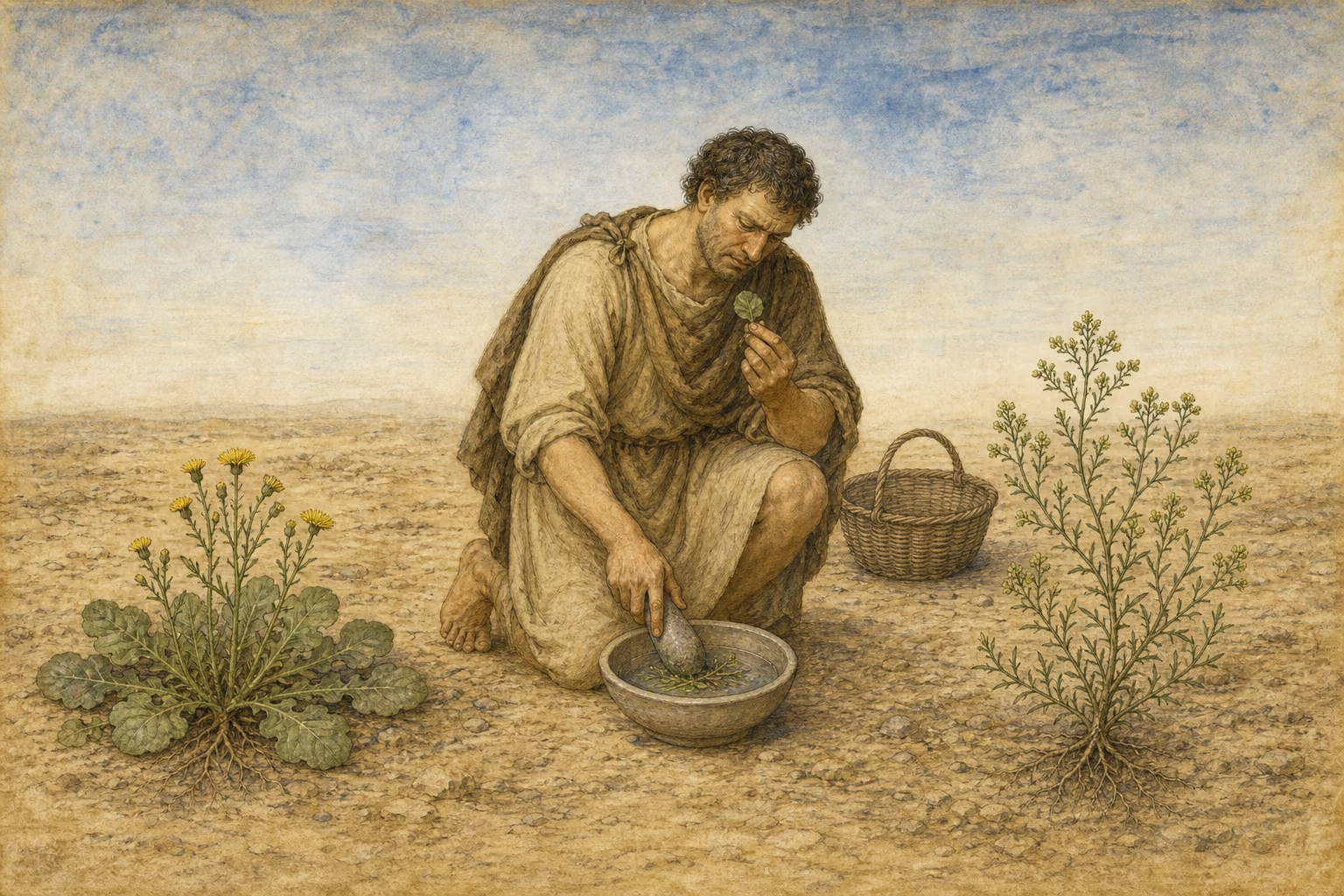
Picris ab insigni amaritudine cognominatur, ut diximus, folio rotundo. tollit eximie verrucas. thesium quoque non dissimili amaritudine est, sed purgat alvum, in quem usum teritur ex aqua.
Asphodelum de clarissimis herbarum, ut quod heroion aliqui appellaverint, Hesiodus et in silvis nasci dixit, Dionysius marem ac feminam esse. defectis corporibus et phthisicis constat bulbos eius cum tisana decoctos aptissime dari, panemque ex his cum farina subactis saluberrimum esse. Nicander et contra serpentes ac scorpiones vel caulem, quem anthericum vocavimus, vel semen vel bulbos dedit in vino tribus drachmis substravitque somno contra hos metus. datur et contra venenata marina et contra scolopendras terrestres. cocleae mire in Campania caulem eum persequuntur et sugendo arefaciunt. folia quoque inlinuntur venenatorum vulneribus ex vino. bulbi nervis articulisque cum polenta tunsi inlinuntur. prodest et concisis ex aceto lichenas fricare, item ulceribus putrescentibus ex aqua inponere, mammarum quoque et testium inflanmationibus. decocti in faece vini oculorum epiphoris supposito linteolo medentur. fere in quocumque morbo magis decoctis utuntur, item ad tibiarum taetra ulcera rimasque corporum quacumque in parte farina arefactorum. autumno autem colliguntur, cum plurimum valent. sucus quoque ex tusis expressus aut decoctis utilis fit corporis dolori cum melle, idem odorem corporis iucundum affectantibus cum iri arida et salis exiguo. folia et supra dictis medentur et strumis, panis, ulceribus in facie decocta in vino. cinis e radice alopecias emendat et rimas pedumsedisque, decoctae radicis in oleo sucus perniones et amlbusta et gravitatem aurium; infunditur a contraria aure in dolore dentium. prodest et urinae pota modice radix et menstruis et lateris doloribus, item ruptis, convulsis, tussibus, drachmae pondere in vino pota. eadem et vomitiones adiuvatcommanducata. semine sumpto turbatur venter. Chrysermus et parotidas in vino decocta radice curavit, item strumas admixta cachry ex vino. quidam aiunt, si inposita radice pars eius in fumo suspendatur quartoque die solvatur, una cum radice arescere strumam. Diocles ad podagras utroque modo, cocta crudaque, usus est, ad perniones decocta ex oleo; dedit et suffusis felle in vino et hydropicis. venerem quoque concitari cum vino et melle perunctis aut bibentibus tradidere. Xenocrates et lichenas, psoras, lepras radice in aceto decocta tolli dicit, item suco cum hyoscyamo et pice liquida alarum quoque et feminum vitia; et capillum crispiorem fieri, raso prius capite, si radice ea fricetur, Simos lapides renium in vino decocta potaque eximi. Hippocrates semine ad impetus lienis dari censet. iumentorum quoque ulcera ac scabiem radix inlita aut decoctae sucus ad pilum reducit. mures eadem fugantur, caverna praeclusa moriuntur.
Asphodelum ab Hesiodo quidam halimon appellari existimavere, quod falsum arbitror; est enim suo nomine halimon, non parvi et ipsum erroris inter auctores. alii enim fruticem esse dicunt densum, candidum, sine spina, foliis oleae, sed mollioribus; coqui haec ciborum gratia, radice tormina discuti drachmae pondere in aqua mulsa pota, item rupta, convulsa. alii olus maritimum esse dixere salsum et inde nomen, foliis in rotunditatem longis, laudatum in cibis. duorum praeterea generum, silvestre et mitius, utrumque prodesse dysintericis etiamn exulceratis cum pane, stomacho vero ex aceto. ulceribus vetustis inlini crudum et vulnerum recentium impetus lenire et luxatorum pedum ac vesicae dolores. silvestri tenuiora folia, sed in iisdem remediis effectus maiores et in sananda hominum ac pecorum scabie. praeterea nitorem corpori fieri dentibusque candorem, si fricentur radice ea, semine linguae subdito sitim non sentiri. hoc quoque mandi et utraque etiam condiri. Crateuas tertium quoque genus tradidit longioribus foliis et hirsutioribus, odore cupressi, nasci sub hedera maxime, prodesse opisthotonis, contractionibus nervorum tribus obolis in sextarium aquae.
Acanthi, topiariae et urbanae herbae lato longoque folio crepidines marginum adsurgentiumque pulvinorum toros vestientis, duo genera sunt: aculeatum et crispum, quod brevius, alterum leve, quod aliqui paederota vocant, alii melamphyllum. huius radices ustis luxatisque mire prosunt, item ruptis, convulsis, et phthisin metuentibus, id coctae cibo, maxime tisana. podagris quoque inlinuntur tritae et calefactae, e sale calidis.
Bupleuron in sponte nascentium olerum numero Graeci habent, caule cubitali, foliis multis longisque, capite aneti, laudatum in cibis ab Hippocrate, in medicina Glaucone et Nicandro. semen contra serpentes valet. folia ad secundas feminarum vel sucum ex vino inlinunt, et strumis folia cum sale et vino. radix contra serpentes datur in vino et urinae ciendae.
Buprestim magna inconstantia Graeci in laudibus ciborum etiam habuere, iidemque remedia tamquam contra venenum prodiderunt. et ipsum nomen indicio est bourn certe venenum esse, quos dissilire degustata fatentur. quapropter nec de hac plura dicemus. est vero causa, quare venena monstremus inter gramineas coronas! nisi libidinis causa expetenda alicui videtur, quam non aliter magis accendi putant quam pota ea.
Elaphoboscon ferulaceum est, geniculatum digiti crassitudine, semine corymbis dependentibus silis effigie, set non amaris, foliis olusatri. et hoc laudatum in cibis —quippe etiam conditum prorogatur—, ad urinam ciendam, lateris dolores sedandos, rupta, convulsa sananda, inflationes discutiendas colique tormenta, contra serpentium omniumque aculeatorum ictus, quippe fama est, hoc pabulo cervos resistere serpentibus. fistulas quoque radix nitro addito inlita sanat, siccanda autem in eo usu prius est, ne suco suo madeat, qui contra serpentium ictus non facit deteriorem eam.
Scandix quoque in olere silvestri a Graecis ponitur, ut Ophion et Erasistratus tradunt. item decocta alvum sistit, semine singultus confestim ex aceto sedat. inlinitur ambustis, urinas ciet. decoctae sucus prodest stomacho, iocineri, renibus, vesicae. haec est quam Aristophanes Euripidi poetae obicit ioculariter: matrem eius ne olus quidem legitimum venditasse, sed scandicem. eadem erat enthryscum, si teneriora folia et odoratiora haberet. peculiaris laus eius, quod fatigato venere corpori succurrit marcentesque iam senio coitus excitat. sistit profluvia alba feminarum.
Et iasine olus silvestre habetur, in terra repens, cum lacte multo, florem fert candidum; conchylium vocant. et huius eadem commendatio ad stimulandos coitus. cruda ex aceto in cibis et mulieribus lactis ubertatem praestat. Salutaryis est phthisin sentientibus. infantium capiti inlita nutrit capillum tenacioremque eius cutem efficit.
Estur et caucalis feniculo similis, brevi caule, flore candido, cordi utilis. sucus quoque eius bibitur, stomacho perquam commendatus et urinae calculisque et harenis pellendis et vesicae pruritibus. extenuat et lienis, iocineris reniumque pituitas. semen menses feminarum adiuvat bilemque a partu siccat. datur et contra profluvia geniturae viris. Chrysippus et conceptionibus earn putat conferre multum. bibitur in vino ieiunis. inlinitur et contra venena marinorum, sicut Petrichus in carmine suo significat.
His adnumerant et sium latius apio, in aqua nascens, pinguius nigriusque, copiosum semine, sapore nasturtii. prodest urinis, renibus, lienibus mulierumque mensibus, sive ipsum in cibo sumptum sive ius decocti sive semine in vino drachmis duabus. calculos rumpit aquisque, quae gignunt eos, resistit. dysintericis prodest infusum, item inlitum lentigini et mulierum vitiis in facie noctu inlitum, lomentoque cutem emendat et ramices lenit, equorum etiam scabiem.
Sillybum chamaeleonti albo similem, aeque spinosam, ne in Cilicia quidem aut Syria aut Phoenice, ubi nascitur, coquere tanti est. ita operosa eius culina traditur. in medicina nullum usum habet.
Scolymum quoque in cibos recipit oriens et alio nomine limoniam appellat. frutex est numquam cubitali altior tristisque foliorum aculeis, radice nigra, sed dulci, Eratostheni quoque laudata in pauperis cena. urinam ciere praecipue traditur, sanare lichenas et lepras ex aceto, venerem stimulare in vino Hesiodo et Alcaeo testibus, qui florente ea cicadas acerriini cantus esse et mulieres libidinis avidissimas virosque in coitum pigerrimos scripsere, velut providentia naturae hoc adiumento tunc valentissimo. item graveolentiam alarum emendat radicis emedullatae uncia, in vini Falerni heminis tribus decocta ad tertias et a balineo ieiuno itemque post cibum cyathis singulis pota. mirum est, quod Xenocrates promittit experimento, vitium id ex alis per urinam effluere.
Estur et soncos—ut quem Theseo apud Callimachum adponat Hecale—uterque, albus et niger. lactucae similes ambo, nisi spinosi essent, caule cubitali, anguloso, intus cavo, sed qui fractus copioso lacte manet. albus, cui e lacte nitor, utilis orthopnoicis lactucarum modo ex embammate. Erasistratus calculos per urinam pelli eo monstrat et oris graveolentiam commanducato corrigi. sucus trium cyathorum mensura in vino albo et oleo calefactus adiuvat partus ita, ut a potu ambulent gravidae. datur et in sorbitione. ipse caulis decoctus facit lactis abundantiam nutricibus coloremque meliorem infantium, utilissimus his, quae lac sibi coire sentiant. instillatur auribus sucus, calidusque in stranguria bibitur cyathi mensura et in stomachi rosionibus cum semine cucumeris nucleisque pineis. inlinitur et sedis collectionibus. bibitur contra serpentes scorpionesque, radix vero inlinitur. eadem decocta in oleo et punici mali calyce, aurium morbis praesidium est. haec omnia ex albo. Cleemporus nigro prohibet vesci ut morbos faciente, de albo consentiens. Agathocles etiam contra sanguinem tauri demonstrat sucum eius, refrigeratoriam tamen vim esse convenit nigro et hac causa inponendum cum polenta. Zenon radicem albi in stranguria suadet.
Condrion sive condrille folia habet intubi, circumrosis similia, caulem minus pedalem, suco madentem amaro, radice fabae simili, aliquando numerosa. habet proximam terrae mastichen tuberculo fabae, quae adposita feminarum menses trahere dicitur. tusa cum radicibus tota dividitur in pastillos contra serpentes, argumento probabili, siquidem mures agrestes laesi ab his hanc esse dicuntur. sucus ex vino coctae alvum sistit. eadem palpebrarum pilos inordinatissimos pro cummi efficacissime regit. Dorotheus stomacho et concoctionibus utilem carminibus suis pronuntiavit. alioqui feminis et oculis generationique virorum contrariam putavere.
Inter ea, quae temere manduntur, et boletos merito posuerim, opimi quidem hos cibi, sed inmenso exemplo in crimen adductos, veneno Tiberio Claudio principi per hanc occasionem ab coniuge Agrippina dato, quo facto illa terris venenum alterum sibique ante omnes Neronem suum dedit. quorundam ex iis facile noscuntur venena diluto rubore, rancido aspectu, livido intus colore, rimosa stria, pallido per ambitum labro. non sunt haec in quibusdam, siccique et veris similes, veluti guttas in vertice albas ex tunica sua gerunt. vulvam enim terra ob hoc prius gignit, ipsum postea in vulva, ceu in ovo est luteum. nec tunicae minor gratia in cibo infantis boleti. rumpitur haec primo nascente, mox increscente in pediculi corpus absumitur, rarumque ut geminus ex uno pede. origo prima causaque e limo et acescente suco madentis terrae ant radicis fere glandiferae, initioque spuma lentior, dein corpus membranae simile, mox partus, ut diximus. illa pernicialia quot probandi alia allis signa! si caligaris clavus ferrive aliqua robigo aut panni marcor adfuerit nascenti, omnem ilico sucum alienum saporemque in venenum concoqui deprehendisse qui nisi agrestes possunt atque qui colligunt ipsi? alia vitia ne hi quidem, si serpentis caverna iuxta fuerit, si patescentem primo adhalaverit, capaci venenorum cognatione ad virus accipiendum. itaque caveri conveniat prius, quam se condant serpentes. signa erunt tot herbae, tot arbores fruticesque ab emersu earum ad latebram usque vernantes et vel fraxini tantum folia nec postea nascentia nec ante decidentia. et boletis quidem ortus occasusque omnis intra dies septem est.
English · Bostock & Riley 1855–57
The picris derives its name from its intense bitterness, as we have previously stated. The leaf of it is round; it is remarkably efficacious for the removal of warts.
The thesium, too, has a bitterness not unlike it: it is a powerful purgative, for which purpose it is employed bruised in water.
The asphodel is one of the most celebrated of all the plants, so much so, indeed, that by some persons it has been called “heroum.” Hesiod has mentioned the fact of its growing in rivers, and Dionysius distinguishes it into male and female. It has been observed that the bulbs of it, boiled with a ptisan, are remarkably good for consumption and phthisis, and that bread in which they have been kneaded up with the meal, is extremely wholesome. Nicander recommends also, for the stings of serpents and scorpions, either the stalk, which we have already spoken of under the name of “anthericus,” or else the seed or bulbs, to be taken in wine, in doses of three drachmæ; and he says that these should be strewed beneath the bed, if there is any apprehension of their presence. The asphodel is prescribed also for wounds inflicted by marine animals of a venomous nature, and the bite of the land scolopendra. It is quite wonderful how the snails, in Campania, seek the stalk of this plant, and dry it by extracting the inside. The leaves, too, are applied with wine to wounds made by venomous animals, and the bulbs are beaten up with polenta and similarly used for affections of the sinews and joints. It is also a very good plan to rub lichens with them chopped up and mixed with vinegar, and to apply them in water to putrid sores, as also to inflammations of the testes or mamillæ. Boiled in lees of wine, and applied in a linen pledget, they are used for the cure of defluxions of the eyes.
Whatever the malady may happen to be, it is generally in a boiled state that the bulbs are employed; but for foul ulcers of the legs and for chaps upon any part of the body, they are dried and reduced to powder. The bulbs are usually gathered in autumn, a period when their medicinal properties are most fully developed. The juice extracted from them pounded, or else a decoction of them, is good, mixed with honey, for pains in the body: it is employed also with dried iris and a little salt by those who wish to impart an agreeable odour to the person. The leaves are used for the cure of the various maladies above mentioned, as also, boiled in wine, for scrofulous sores, inflamed tumours, and ulcers of the face. The ashes of the root are a remedy for alopecy and chaps on the feet; and an extract of the root, boiled in oil, is good for burns and chilblains. It is injected also into the ears for deafness, and, for tooth-ache, it is poured into the ear opposite to the part affected. A moderate dose of the root, taken in drink, acts as a diuretic and emmenagogue; it is good also for pains in the sides, ruptures, convulsions, and coughs, in doses of one drachma, taken in wine. Chewed, the root promotes vomiting, but the seed, taken internally, disorders the bowels.
Chrysermus used to employ a decoction of the root, in wine, for imposthumes of the parotid glands; and he has prescribed it, in combination with cachrys, in wine, for the cure of scrofulous sores. Some persons say that if, after applying the root to the sores, a part of it is hung up in the smoke to dry, and not taken down till the end of four days, the sores will gradually dry up with this portion of the root. Sophocles used to employ it both ways, boiled and raw, for the cure of gout; and he prescribes it, boiled in oil, for chilblains, and, in vinegar, for jaundice and dropsy. It has been stated, also, that, used as a friction with wine and honey, or taken in drink, it acts as an aphrodisiac. Xenocrates assures us, too, that a decoction of the root in vinegar removes lichens, itch-scabs, and leprous sores; and that a decoction of it, with henbane and tar, has a similar effect, and is good also for the removal of bad odours of the armpits and thighs: he states, also, that if the head is well rubbed with the root, being first shaved, the hair will curl all the better for it. Simus prescribes a decoction of it, in wine, to be taken for calculi in the kidneys; and Hippocrates recommends the seed for obstructions of the spleen. The root, or else a decoction of it, applied topically, restores the hair in beasts of burden, where it has been lost by ulcerations or scab. It has the effect, too, of driving away rats and mice, and of exterminating them, if placed before their holes.
Some authors have thought that it is the asphodel that is called “halimon” by Hesiod, an opinion which appears to me ill-founded; halimon being the name of a distinct plant, which has been the occasion of no few mistakes committed by writers. According to some, it is a tufted shrub, white, destitute of thorns, and with leaves like those of the olive, only softer; which eaten boiled, are an agreeable food. The root, they say, taken in doses of one drachma in hydromel, allays gripings of the bowels, and is a cure for ruptures and convulsions. Others, again, pronounce it to be a vegetable growing near the sea-shore, of a salt taste—to which, in fact, it owes its name—with leaves somewhat round but elongated, and much esteemed as an article of food. They say, too, that there are two species of it, the wild and the cultivated, and that, mixed with bread, they are good, both of them, for dysentery, even if ulceration should have supervened, and are useful for stomachic affections, in combination with vinegar. They state, also, that this plant is applied raw to ulcers of long standing, and that it modifies the inflammation of recent wounds, and the pain attendant upon sprains of the feet and affections of the bladder. The wild halimon, they tell us, has thinner leaves than the other, but is more effectual as a medicament in all the above cases, as also for the cure of itch, whether in man or beast. The root, too, according to them, employed as a friction, renders the skin more clear, and the teeth whiter; and they assert that if the seed of it is put beneath the tongue, no thirst will be experienced. They state, also, that this kind is eaten as well as the other, and that they are, both of them, preserved.
Crateuas has spoken of a third kind also, with longer leaves than the others, and more hairy: it has the smell of the cypress, he says, and grows beneath the ivy more particularly. He states that this plant is extremely good for opisthotony and contractions of the sinews, taken in doses of three oboli to one sextarius of water.
The acanthus is a plant that grows in cities, and is used in ornamental gardening. It has a broad, long leaf, and is used as a covering for the margins of ornamental waters and of parterres in gardens. There are two varieties of it; the one that is thorny and crisped is the shorter of the two; the other, which is smooth, is by some persons called “pæderos,” and by others “melamphyllos.” The root of this last is remarkably good for burns and sprains; and, boiled with the food, a ptisan more particularly, it is equally good for ruptures, spasms, and patients who are in apprehension of phthisis. The root is also beaten up and applied warm for hot gout.
The bupleuron is reckoned by the Greeks in the number of the leguminous plants which grow spontaneously. The stem of it is a cubit in height, the leaves are long and numerous, and the head resembles that of dill. It has been extolled as an aliment by Hippocrates, and for its medicinal properties by Glaucon and Nicander. The seed of it is good for the stings of serpents; and the leaves, or else the juice, applied as a liniment with wine, bring away the after-birth. The leaves, also, in combination with salt and wine, are applied to scrofulous sores. The root is prescribed in wine for the stings of serpents, and as a diuretic.
With a remarkable degree of inconsistency, the Greek writers, while praising the buprestis as an aliment, point out certain antidotes to it, as though it were a poison. The very name, however, proves to a certainty that it is poisonous to cattle, and it is generally admitted that, on tasting it, they burst asunder: we shall, therefore, say no more about it. Is there any reason, in fact, why, when we are speaking of the materials employed in making our grass crowns, we should describe a poison? or really ought we to enlarge upon it only to please the libidinous fancies of those who imagine that there is not a more powerful aphrodisiac in existence than this, when taken in drink?
The elaphoboscon is a ferulaceous plant, articulated, and about a finger in thickness. The seed of it is like that of dill, hanging in umbels resembling those of hart-wort in appearance, but not bitter. The leaves are very like those of olusatrum. This plant, too, is highly spoken of as an article of food; in addition to which, it is preserved and kept as a diuretic and for the purpose of assuaging pains in the sides, curing ruptures and convulsions, and dispelling flatulency and colic. It is used, too, for the cure of wounds inflicted by serpents and all kinds of animals that sting; so much so, indeed, that, as the story goes, stags, by eating of it, fortify themselves against the attacks of serpents. The root, too, applied topically, with the addition of nitre, is a cure for fistula, but, when wanted for this purpose, it must be dried first, so as to retain none of the juice; though, on the other hand, this juice does not at all impair its efficacy as an antidote to the poison of serpents.
The scandix, too, is reckoned by the Greeks in the number of the wild vegetables, as we learn from Opion and Erasistratus. Boiled, it arrests looseness of the bowels; and the seed of it, administered with vinegar, immediately stops hiccup. It is employed topically for burns, and acts as a diuretic; a decoction of it is good, too, for affections of the stomach, liver, kidneys, and bladder. It is this plant that furnished Aristophanes with his joke against the poet Euripides, that his mother used to sell not real vegetables, but only scandix.
The anthriscum would be exactly the same plant as the scandix, if its leaves were somewhat thinner and more odoriferous. Its principal virtue is that it reinvigorates the body when exhausted by sexual excesses, and acts as a stimulant upon the enfeebled powers of old age. It arrests leucorrhœa in females.
The iasione, which is also looked upon as a wild vegetable, is a creeping plant, full of a milky juice: it bears a white flower, the name given to which is “concilium.” The chief recommendation of this plant, too, is that it acts as an aphrodisiac. Eaten with the food, raw, in vinegar, it promotes the secretion of the milk in nursing women. It is salutary also for patients who are apprehensive of phthisis; and, applied to the head of infants, it makes the hair grow, and renders the scalp more firm.
The caucalis, too, is an edible plant. It resembles fennel in appearance, and has a short stem with a white flower; it is usually considered a good cordial. The juice, too, of this plant is taken as a potion, being particularly recommended as a stomachic, a diuretic, an expellent of calculi and gravel, and for the cure of irritations of the bladder. It has the effect, also, of attenuating morbid secretions of the spleen, liver, and kidneys. The seed of it acts as an emmenagogue, and dispels the bilious secretions after child-birth: it is prescribed also, for males, in cases of seminal weakness. Chrysippus is of opinion that this plant promotes conception; for which purpose it is taken by women in wine, fasting. It is employed in the form of a liniment, for wounds inflicted by marine animals of a venomous nature, at least we find it so stated by Petrichus in his poem.
Among these plants there is reckoned also the sium: it grows in the water, has a leaf broader than that of parsley, thicker, and of a more swarthy colour, bears a considerable quantity of seed, and has the taste of nasturtium. It is an active diuretic, is very good for the kidneys and spleen, and acts as an emmenagogue, either eaten by itself as an aliment, or taken in the form of a decoction; the seed of it is taken in wine, in doses of two drachmæ. It disperses calculi in the bladder, and neutralizes the action of water which tends to their formation. Used in the form of an injection, it is good for dysentery, and applied topically, for the removal of freckles. It is applied by females, at night, for the removal of spots on the face, a result which it produces almost instantaneously. It has the effect also of assuaging hernia, and is good for the scab in horses.
The sillybum resembles the white chamæleon, and is a plant quite as prickly. In Cilicia, Syria, and Phœnicia, the countries where it grows, it is not thought worth while to boil it, the cooking of it being so extremely troublesome, it is said. It is of no use whatever in medicine.
The scolymos, too, is used as an aliment in the East, where it has also the name of “limonia.” This is a shrub-like plant, which never exceeds a cubit in height, with tufted leaves and a black root, but sweet. Eratosthenes speaks highly of it as a diet used by the poor. It is said to possess diuretic properties in a very high degree, and to heal lichens and leprous sores, applied with vinegar. Taken in wine it acts as an aphrodisiac, according to the testimony of Hesiod and Alcæus; who have stated in their writings, that while it is in blossom, the song of the grasshopper is louder than at other times, women more inflamed with desire, and men less inclined to amorous intercourse; and that it is by a kind of foresight on the part of Nature that this powerful stimulant is then in its greatest perfection. The root, too, used without the pith, corrects the noisome odour of the armpits, in doses of one ounce to two heminæ of Falernian wine; the mixture being boiled down to one third, and taken fasting after the bath, as also after meals, a cyathus at a time. It is a remarkable thing, but Xenocrates assures us that he has ascertained it experimentally, that these bad odours are carried off by the urine.
The sonchos, too, is edible—at least, it was this that, according to Callimachus, Hecale set before Theseus. There are two kinds, the white and the black: they are, both of them, similar to the lettuce, except that they are prickly, with a stem a cubit in height, angular, and hollow within; when broken, the stem gives out an abundance of milky juice. The white kind, which derives its colour from the milk it contains, is good for hardness of breathing, if eaten dressed with seasoning like the lettuce. Erasistratus says that it carries off calculi by the urine, and that, chewed, it is a corrective of bad breath. The juice of it, taken warm in doses of three cyathi, with white wine and oil, facilitates delivery, but the patient must be careful to walk about immediately after drinking it: it is also given in broth.
A decoction of the stalk renders the milk more abundant in nursing women, and improves the complexion of the infants suckled by them; it is also remarkably beneficial for females when the milk coagulates. The juice of it is used as an injection for the ears, and is taken warm in doses of one cyathus, for strangury, as also for gnawing pains of the stomach, with cucumber seed and pine nuts. It is employed topically for abscesses of the rectum, and is taken in drink for the stings of serpents and scorpions, the root also being applied to the wounds. The root, boiled in oil, with the rind of a pomegranate, is a remedy for diseases of the ears—all these remedies, however, be it remembered, are derived from the white kind.
As to the black sonchos, Cleemporus forbids it to be eaten, as being productive of diseases, but at the same time he approves of the use of the white. Agathocles, however, goes so far as to assert that the juice of the black kind is an antidote for poisoning by bulls’ blood; and, indeed, it is generally agreed that the black sonchos has certain refreshing properties; for which reason cataplasms of it may be advantageously applied with polenta. Zeno recommends the root of the white kind for strangury.
The condrion, or chondrylla, has leaves, eaten away, as it were, at the edges, and similar to those of endive, a stalk less than a foot in length and full of a bitter juice, and a root resembling that of the bean, and occasionally very ramified. It produces, near the surface of the earth, a sort of mastich, in a tubercular form, the size of a bean; this mastich, it is said, employed as a pessary, promotes the menstrual discharge. This plant, pounded whole with the roots, is divided into lozenges, which are employed for the stings of serpents, and probably with good effect; for field mice, it is said, when injured by those reptiles, are in the habit of eating this plant. A decoction of it in wine arrests looseness of the bowels, and makes a most excellent substitute for gum, as a bandoline for the eye-lashes, even when the hairs are most stubborn. Dorotheus says, in his poems, that it is extremely good for the stomach and the digestive organs. Some persons, however, have been of opinion that it is unwholesome for females, bad for the eyesight, and productive of impotence in the male sex.
Among those vegetable productions which are eaten with risk, I shall, with good reason, include mushrooms; a very dainty food, it is true, but deservedly held in disesteem since the notorious crime committed by Agrippina, who, through their agency, poisoned her husband, the Emperor Claudius, and at the same moment, in the person of his son Nero, inflicted another poisonous curse upon the whole world, herself in particular.
Some of the poisonous mushrooms are easily known, being of a rank, unwholesome look, light red without and livid within, with the clefts considerably enlarged, and a pale, sickly margin to the head. These characteristics, however, are not presented by others of the poisonous kinds; but being dry to all appearance and strongly resembling the genuine ones, they present white spots upon the head, on the surface of the outer coat. The earth, in fact, first produces the uterus or receptacle for the mushroom, and then the mushroom within, like the yolk in the egg. Nor is this envelope less conducive to the nutrition of the young mushroom [than is the albumen of the egg to that of the chicken.] Bursting forth from the envelope at the moment of its first appearance, as it gradually increases it becomes transformed into a substantial stalk; it is but very rarely, too, that we find two growing from a single foot-stalk. The generative principle of the mushroom is in the slime and the fermenting juices of the damp earth, or of the roots of most of the glandiferous trees. It appears at first in the shape of a sort of viscous foam, and then assumes a more substantial but membranous form, after which, as already stated, the young mushroom appears.
In general, these plants are of a pernicious nature, and the use of them should be altogether rejected; for if by chance they should happen to grow near a hob-nail, a piece of rusty iron, or a bit of rotten cloth, they will immediately imbibe all these foreign emanations and flavours, and transform them into poison. Who, in fact, is able to distinguish them, except those who dwell in the country, or the persons that are in the habit of gathering them? There are other circumstances, too, which render them noxious; if they grow near the hole of a serpent, for instance, or if they should happen to have been breathed upon by one when just beginning to open; being all the more disposed to imbibe the venom from their natural affinity to poisonous substances.
It will therefore be as well to be on our guard during the season at which the serpents have not as yet retired to their holes for the winter. The best sign to know this by is a multitude of herbs, of trees, and of shrubs, which remain green from the time that these reptiles leave their holes till their return; indeed, the ash alone will be quite sufficient for the purpose, the leaves of it never coming out after the serpents have made their appearance, or beginning to fall before they have retired to their holes. The entire existence of the mushroom, from its birth to its death, is never more than seven days.