LIBER XXII · CAPUT 23
FUNGI; SIGNS BY WHICH THE VENOMOUS KINDS MAY BE RECOGNIZED: NINE REMEDIES
Latine · Mayhoff 1906
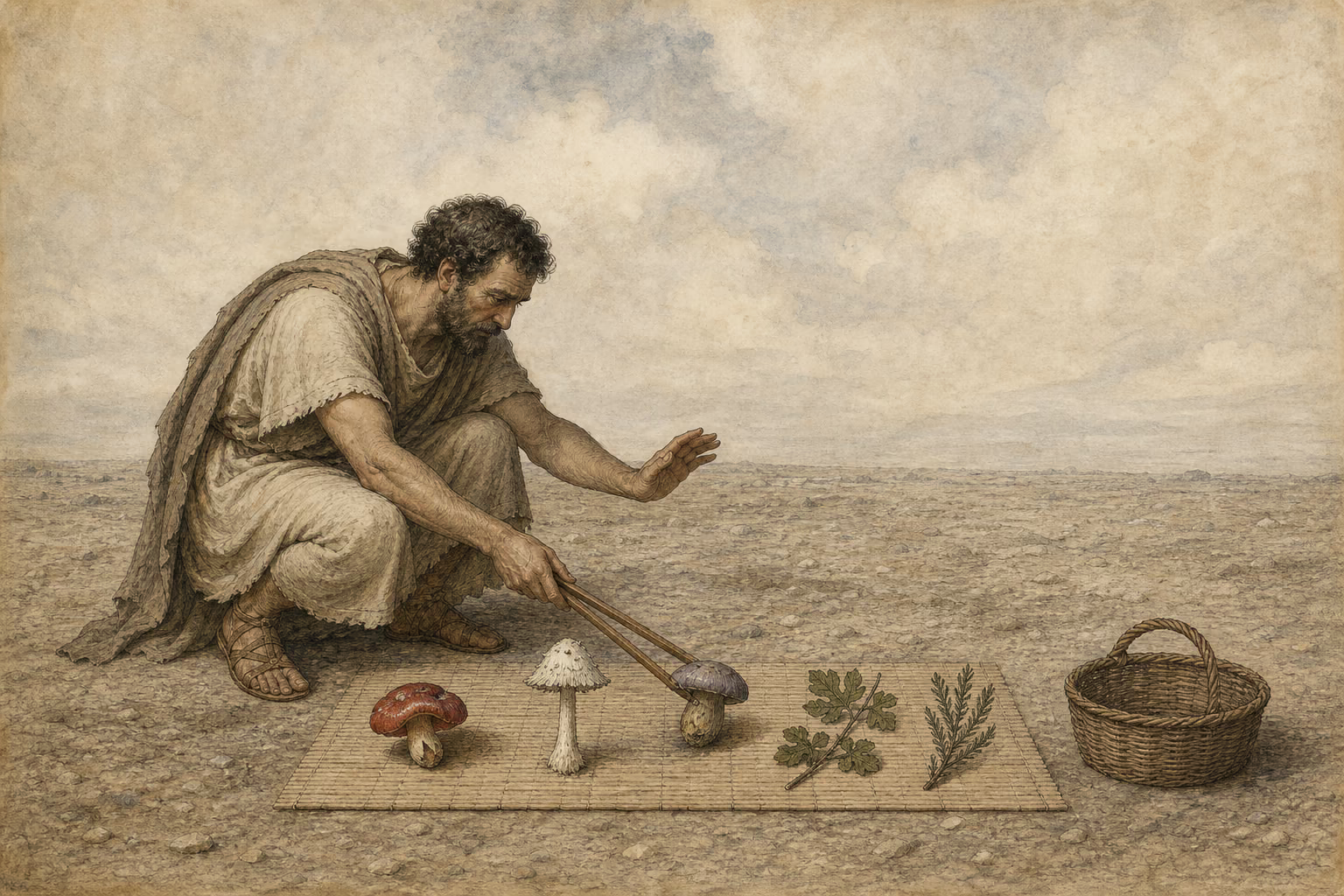
Fungorum lentior natura et numerosa genera, sed origo non nisi ex pituita arborum. tutissimi qui rubent callo, minus diluto rubore quam boleti; mox candidi, velut apice flaminis insignibus pediculis; tertium genus suilli, venenis accommodatissimi. familias nuper interemere et tota convivia, Annaeum Serenum, praefectum Neronis vigilum, et tribunos centurionesque. quae voluptas tam ancipitis cibi? quidam discrevere arborum generibus, fico ferulave et cummim ferentibus, non item taxo aut robore, cupresso, ut diximus. sed ista quis spondet in venalibus? omnium colos lividus; hic habebit veneni argumentum, quo similior fuerit arborum cortici. adversus haec diximus remedia dicemusque; interim sunt aliqua et in iis. Glaucias stomacho utiles putat boletos. siccantur pendentes suilli, iunco transfixi, quales e Bithynia veniunt. hi fluctionibus alvi, quas rheumatismos vocant, medentur excrescentibusque in sede carnibus; minuunt enim eas et tempore absumunt, item lentiginem et mulierum in facie vitia. lavantur etiam, ut plumbum, in oculorum medicamenta. sordidis ulceribus et capitis eruptionibus, canum morsibus ex aqua inlinuntur. libet et coquendi dare aliquas communes in omni eo genere observationes, quando ipsae suis manibus deliciae praeparant hunc cibum solum et cogitatione ante pascuntur sucinis novaculis aut argenteo apparatu comitante. noxii erunt fungi, qui in coquendo duriores fient; innocentiores, qui nitro addito coquentur, utique si percoquantur. tutiores fiunt cum carne cocti aut cum pediculo piri; prosunt et pira confestim sumpta. debellat eos et aceti natura contraria iis.
Imbribus proveniunt omnia haec, imbre et silphium venit primo, ut dictum est. ex Syria nunc hoc maxime inportatur, deterius Parthico, sed Medico melius, extincto omni Cyrenaico, ut diximus. usus silphii in medicina foliorum ad purgandas vulvas pellendosque emortuos partus; decocuntur in vino albo et odorato, ut bibatur mensura acetabuli a balineis. radix prodest arteriis exasperatis, collectionibus sanguinis inlinitur. sed in cibis concoquitur aegre, inflationes facit et ructus. urinae quoque noxia est, suggillatis cum vino et oleo amicissima et cum cera strumis. verrucae sedis crebriore eius suffitu cadunt.
Laser e silphio profluens quo diximus modo inter eximia naturae dona numeratum plurimis compositionibus inseritur, per se autem algores excalfacit, potum nervorum vitia extenuat. feminis datur in vino et lanis mollibus admovetur vulvae ad menses ciendos. pedum o clavos circumscariphatos ferro mixtum cerae extrahit. urinam ciet ciceris magnitudine dilutum. Andreas spondet copiosius sumptum nec inflationes facere et concoctioni plurimum conferre senibus et feminis, item hieme quam aestate utilius, et tum aquam bibentibus. cavendum, ne qua sit exulceratio intus. ab aegritudine recreationi efficax in cibo; tempestive enim datum cauterii vim optinet, adsuetis etiam utilius quam expertibus. extera corporum indubitatas confessiones habent: venena telorum et serpentium extinguit potum; ex aqua vulneribus his circumlinitur, scorpionum tantum plagis ex oleo, ulceribus vero non maturescentibus cum farina hordeacia vel fico sicca, carbunculis cum ruta vel cum melle vel per se visco superlitum, ut haereat; sic et ad canis morsus; excrescentibus circa sedem cum tegmine punici mali ex aceto decoctum, clavis, qui volgo morticini appellantur, nitro mixto. alopecias nitro ante subactas replet cum vino et croco aut pipere ac murium fimo et aceto. perniones ex vino fovet et ex oleo coctum; inponitur sic et callo, clavis pedum superrasis; praecipuae utilitatis contra aquas malas, pestilentes tractus vel dies; in tussi, uva; fellis veteri suffusioni, hydropicis, raucitatibus; confestim enim purgat fauces vocemque reddit. podagras in spongea dilutum posca lenit. pleuriticis in sorbitione vinum poturis datur, contractionibus, opisthotonicis ciceris magnitudine cera to circumlitum. in angina gargarizatur. anhelatoribus et in tussi vetusta cum porro ex aceto datur; at ex aceto his, qui coagulum lactis sorbuerint, praecordiorum vitiis syntecticis, comitialibus cum vino, in aqua mulsa linguae paralysi. coxendicibus et lumborum doloribus cum decocto melle inlinitur. non censuerim, quod auctores suadent, cavernis dentium in dolore inditum cera includi, magno experimento hominis, qui se ea de causa praecipitavit ex alto. quippe tauros inflammat naribus inlitis, serpentes avidissimas vini admixtum rumpit; ideo nec inungui suaserim, cum Attico licet melle praecipiant. quas habeat utilitates admixtum aliis, inmensum est referre, et nos simplicia tractamus, quoniam in his naturam esse apparet, in illis coniecturam saepius fallacem, nulli satis custodita in mixturis concordia naturae ac repugnantia. qua de re mox plura.
English · Bostock & Riley 1855–57
Fungi are of a more humid nature than the last, and are divided into numerous kinds, all of which are derived solely from the pituitous humours of trees. The safest are those, the flesh of which is red, the colour being more pronounced than that of the mushroom. The next best are the white ones, the stems of which have a head very similar to the apex worn by the Flamens; and a third kind are the suilli, very conveniently adapted for poisoning. Indeed, it is but very recently that they have carried off whole families, and all the guests at a banquet; Annæus Serenus, for instance, the prefect of Nero’s guard, together with all the tribunes and centurions. What great pleasure, then, can there be in partaking of a dish of so doubtful a character as this? Some persons have classified these fungi according to the trees to which they are indebted for their formation, the fig, for instance, the fennel-giant, and the gummiferous trees; those belonging to the beech, the robur, and the cypress, not being edible, as already mentioned. But who is there to give us a guarantee when they come to market, that these distinctions have been observed?
All the poisonous fungi are of a livid colour; and the degree of similarity borne by the sap of the tree itself to that of the fig will afford an additional indication whether they are venomous or not. We have already mentioned various remedies for the poison of fungi, and shall have occasion to make mention of others; but in the mean time, it will be as well to observe that they themselves also have some medicinal uses. Glaucias is of opinion that mushrooms are good for the stomach. The suilli are dried and strung upon a rush, as we see done with those brought from Bithynia. They are employed as a remedy for the fluxes known as “rheumatismi,” and for excrescences of the fundament, which they diminish and gradually consume. They are used, also, for freckles and spots on women’s faces. A wash, too, is made of them, as is done with lead, for maladies of the eyes. Steeped in water, they are applied topically to foul ulcers, eruptions of the head, and bites inflicted by dogs.
I would here also give some general directions for the cooking of mushrooms, as this is the only article of food that the voluptuaries of the present day are in the habit of dressing with their own hands, and so feeding upon it in anticipation, being provided with amber-handled knives and silver plates and dishes for the purpose. Those fungi may be looked upon as bad which become hard in cooking; while those, on the other hand, are comparatively innoxious, which admit of being thoroughly boiled, with the addition of some nitre. They will be all the safer if they are boiled with some meat or the stalks of pears: it is a very good plan, too, to eat pears directly after them. Vinegar, too, being of a nature diametrically opposed to them, neutralizes their dangerous qualities.
All these productions owe their origin to rain, and by rain is silphium produced. It originally came from Cyrenæ, as already stated: at the present day, it is mostly imported from Syria, the produce of which country, though better than that of Media, is inferior to the Parthian kind. As already observed, the silphium of Cyrenæ no longer exists. It is of considerable use in medicine, the leaves of it being employed to purge the uterus, and as an expellent of the dead fœtus; for which purposes a decoction of them is made in white aromatic wine, and taken in doses of one acetabulum, immediately after the bath. The root of it is good for irritations of the trachea, and is employed topically for extravasated blood; but, used as an aliment, it is difficult of digestion, being productive of flatulency and eructations: it is injurious, also, to the urinary secretions. Combined with wine and oil, it is extremely good for bruises, and, with wax, for the cure of scrofulous sores. Repeated fumigations with the root cause excrescences of the anus to subside.
Laser, a juice which distils from silphium, as we have already stated, and reckoned among the most precious gifts presented to us by Nature, is made use of in numerous medicinal preparations. Employed by itself, it warms and revives persons benumbed with cold, and, taken in drink, it alleviates affections of the sinews. It is given to females in wine, and is used with soft wool as a pessary to promote the menstrual discharge. Mixed with wax, it extracts corns on the feet, after they have been first loosened with the knife: a piece of it, the size of a chick-pea, melted in water, acts as a diuretic. Andreas assures us that, taken in considerable doses even, it is never productive of flatulency, and that it greatly promotes the digestion, both in aged people and females; he says, too, that it is better used in winter than in summer, and that even then, it is best suited for those whose beverage is water: but due care must be taken that there is no internal ulceration. Taken with the food, it is very refreshing for patients just recovering from an illness; indeed, if it is used at the proper time, it has all the virtues of a desiccatory, though it is more wholesome for persons who are in the habit of using it than for those who do not ordinarily employ it.
As to external maladies, the undoubted virtues of this medicament are universally acknowledged: taken in drink, it has the effect, also, of neutralizing the venom of serpents and of poisoned weapons, and, applied with water, it is in general use for the cure of wounds. In combination with oil, it is only used as a liniment for the stings of scorpions, and with barley-meal or dried figs, for the cure of ulcers that have not come to a head. It is applied topically, also, to carbuncles, with rue or honey, or else by itself, with some viscous substance to make it adhere; for the bites of dogs, also, it is similarly employed. A decoction of it in vinegar, with pomegranate rind, is used for excrescences of the fundament, and, mixed with nitre, for the corns commonly known as “morticini.” In cases of alopecy which have been first treated with nitre, it makes the hair grow again, applied with wine and saffron, or else pepper or mouse-dung and vinegar. For chilblains, fomentations are made of it with wine, or liniments with oil; as also for callosities and indurations. For corns on the feet, if pared first, it is particularly useful, as also as a preservative against the effects of bad water, and of unhealthy climates or weather. It is prescribed for cough, too, affections of the uvula, jaundice of long standing, dropsy, and hoarseness, having the effect of instantly clearing the throat and restoring the voice. Diluted in oxycrate, and applied with a sponge, it assuages the pains in gout.
It is given also in broth to patients suffering from pleurisy, when about to take wine; and it is prescribed for convulsions and opisthotony, in pills about as large as a chick-pea, coated with wax. For quinsy, it is used as a gargle, and to patients troubled with asthma or inveterate cough, it is given with leeks in vinegar; it is prescribed, also, with vinegar, after drinking butter-milk. It is recommended with wine for consumptive affections of the viscera and epilepsy, and with hydromel for paralysis of the tongue; with a decoction of honey, it forms a liniment for sciatica and lumbago.
For my own part, I should not recommend, what some authors advise, to insert a pill of laser, covered with wax, in a hollow tooth, for tooth-ache; being warned to the contrary by a remarkable case of a man, who, after doing so, threw himself headlong from the top of a house. Besides, it is a well-known fact, that if it is rubbed on the muzzle of a bull, it irritates him to an extraordinary degree; and that if it is mixed with wine, it will cause serpents to burst—those reptiles being extremely fond of wine. In addition to this, I should not advise any one to rub the gums with Attic honey, although that practice is recommended by some.
It would be an endless task to enumerate all the uses to which laser is put, in combination with other substances; and the more so, as it is only our object to treat of simple remedies, it being these in which Nature displays her resources. In the compound remedies, too, we often find our judgment deceived, and quite at fault, from our comparative inattention to the sympathy or antipathy which naturally exists between the ingredients employed—on this subject, however, we shall have to enlarge on a future occasion.