LIBER XXII · CAPUT 8
THE ERYNGIUM, CALLED CENTUM CAPITA: THIRTY REMEDIES
Latine · Mayhoff 1906
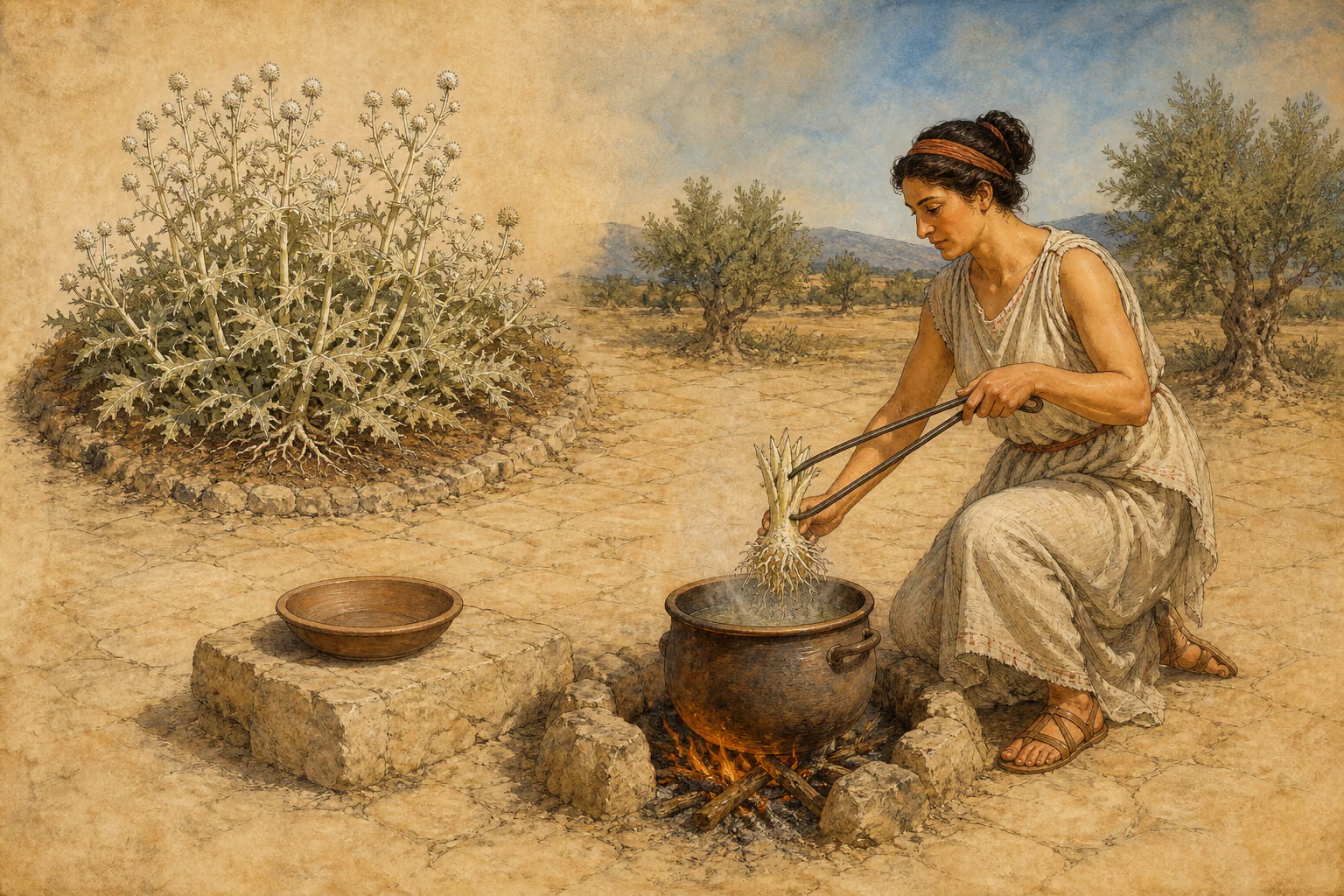
Ex his candidam nostri centum capita vocant. omnes eiusdem effectus, caule et radice in cibos Graecorum receptis utroque modo, sive coquere libeat sive cruda vesci. portentosum est, quod de ea traditur, radicem eius alterutrius sexus similitudinem referre, raro invento, set si viris contigerit mas, amabiles fieri; ob hoc et Phaonem Lesbium dilectum a Sappho, multa circa hoc non Magorum solum vanitate, sed etiam Pythagoricorum. sed in medico usu praeter supra dicta auxiliatur inflationibus, torminibus, cordis vitiis, stomacho, iocineri, praecordiis in aqua mulsa, lieni in posca, item ex mulsa renibus, stranguriae, opisthotonis, spasmis, lumbis, hydropicis, comitialibus, mulierum mensibus, sive subsidant sive abundent, vulvarumque omnibus vitiis. extrahit infixa corpori cum melle. strumas, parotidas, panos, recedentes ab ossibus carnes sanat cum axungia salsa et cerato, item fracturas. crapulam praesumpta arcet, alvum sistit. aliqui e nostris sub solstitio colligi eam iussere, ex aqua caelesti inponi omnibus cervicis vitiis. oculorum quoque albugines sanare adalligatam aliqui tradiderunt.
English · Bostock & Riley 1855–57
The white variety of the eryngium is known in our language as the “centum capita.” It has all the properties above-mentioned, and the Greeks employ both the stalk and the root as an article of food, either boiled or raw. There are some marvellous facts related in connexion with this plant; the root of it, it is said, bears a strong resemblance to the organs of either sex; it is but rarely found, but if a root resembling the male organs should happen to fall in the way of a man, it will ensure him woman’s love; hence it is that Phaon the Lesbian was so passionately beloved by Sappho. Upon this subject, too, there have been numerous other reveries, not only on the part of the Magi, but of Pythagorean philosophers even as well.
So far as its medicinal properties are concerned, in addition to those already mentioned, this plant, taken in hydromel, is good for flatulency, gripings of the bowels, diseases of the heart, stomach, liver, and thoracic organs, and, taken in oxycrate, for affections of the spleen. Mixed with hydromel, it is recommended also for diseases of the kidneys, strangury, opisthotony, spasms, lumbago, dropsy, epilepsy, suppression or excess of the catamenia, and all maladies of the uterus. Applied with honey, it extracts foreign substances from the body, and, with salted axle-grease and cerate, it disperses scrofulous sores, imposthumes of the parotid glands, inflamed tumours, denudations of the bones, and fractures. Taken before drinking, it prevents the fumes of wine from rising to the head, and it arrests looseness of the bowels. Some of our authors have recommended that this plant should be gathered at the period of the summer solstice, and that it should be applied, in combination with rain water, for all kinds of maladies of the neck. They say too, that, attached as an amulet to the person, it is a cure for albugo.