LIBER XXII · CAPUT 7
THE ERYNGE OR ERYNGIUM
Latine · Mayhoff 1906
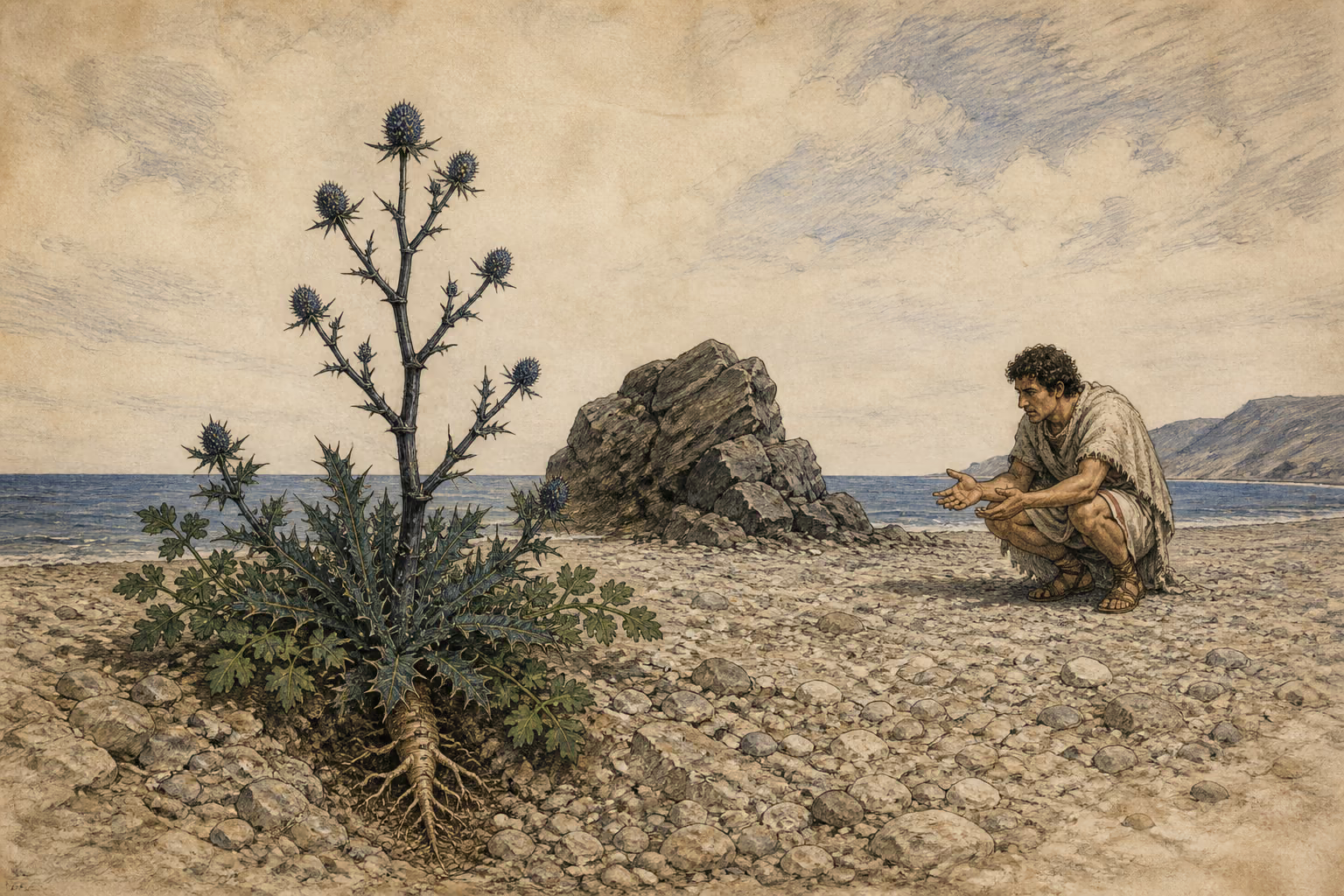
Clara in primis aculeatarum erynge est sive eryngion contra serpentes et venena omnia nascens. adversus ictus morsusque radix eius bibitur drachmae pondere in vino aut, si plerumque tales iniurias comitetur et febris, ex aqua. inlinitur plagis, peculiariter efficax contra chersydros ac ranas. omnibus vero contra toxica et aconita efficaciorem Heraclides medicus in iure anseris decoctam arbitratur. Apollodorus adversus toxica cum rana decoquit, ceteri in aqua. ipsa dura, fruticosa, spinosis foliis, caule geniculato, cubitali et maiore aliquando, alia albicans, alia nigra, radice odorata. et sativa quidem est et sponte nascitur in asperis, saxosis, set in litoribus maris durior nigriorque, folio apii.
English · Bostock & Riley 1855–57
In the first rank of the plants armed with prickles, the erynge or eryngion stands pre-eminent, a vegetable production held in high esteem as an antidote formed for the poison of serpents and all venomous substances. For stings and bites of this nature, the root is taken in wine in doses of one drachma, or if, as generally is the case, the wound is attended with fever, in water. It is employed also, in the form of a liniment, for wounds, and is found to be particularly efficacious for those inflicted by water-snakes or frogs. The physician Heraclides states it as his opinion that, boiled in goose-broth, it is a more valuable remedy than any other known, for aconite and other poisons. Apollodorus recommends that, in cases of poisoning, it should be boiled with a frog, and other authorities, in water only. It is a hardy plant, having much the appearance of a shrub, with prickly leaves and a jointed stem; it grows a cubit or more in height. Sometimes it is found of a whitish colour, and sometimes black, the root of it being odoriferous. It is cultivated in gardens, but it is frequently to be found growing spontaneously in rugged and craggy localities. It grows, too, on the sea-shore, in which case it is tougher and darker than usual, the leaf resembling that of parsley.