LIBER XXIII · CAPUT 1
INTRODUCTION
Latine · Mayhoff 1906
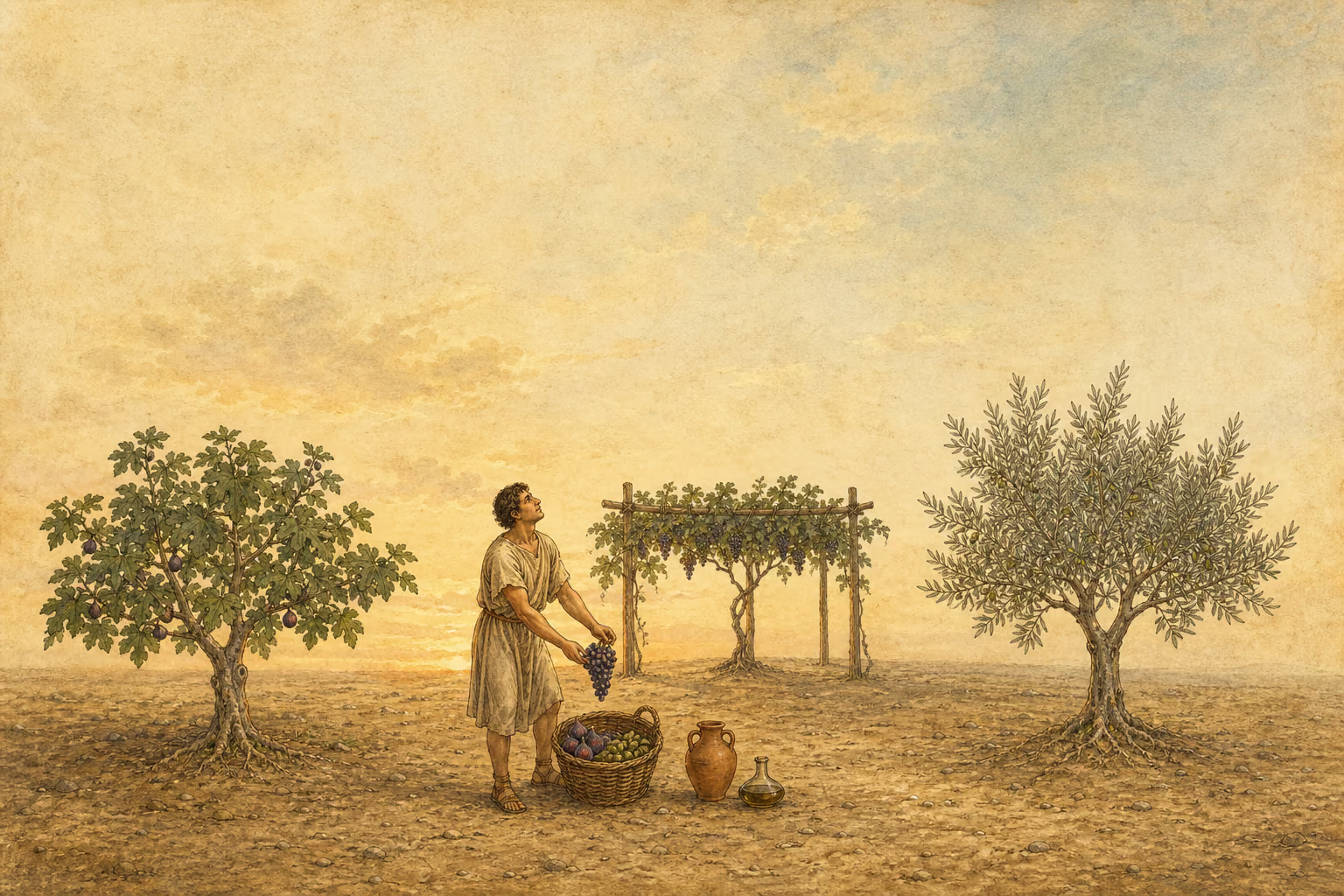
Peracta cerealium in medendo quoque natura est omniumque, quae ciborum aut florum odorumve gratia proveniunt supina tellure. non cessit iis Pomona partesque medicas et pendentibus dedit, non contenta protegere arborumque umbra alere quae diximus, immo velut indignata plus auxili inesse his, quae longius a caelo abessent quaeque postea coepissent; primum enim homini cibum fuisse inde, et sic inducto caelum spectare, pascique et nunc ex se posse sine frugibus. ergo, Hercule, artes in primis dedit vitibus, non contenta delicias etiam et odores atque unguenta omphacio et oenanthe ac massari, quae suis locis diximus, nobiliter instruxisse. 'Plurimum, inquit, homini voluptatis ex me est. ego sucum vini, liquorem olei gigno, ego palmas et poma totque varietates, neque, ut Tellus, omnia per labores, aranda tauris, terenda areis, deinde saxis, ut quando quantove opere cibi fiant? at ex me parata omnia nec cura laboranda, sed sese porrigentia ultro et, si pigeat attingere, etiam cadentia'. certavit ipsa secum plusque utilitatis causa genuit etiam quam voluptatis.
Folia vitium et pampini capitis dolores inflammationesque corporum mitigant cum polenta, folia per se ardores stomachi ex aqua frigida, cum farina vero hordei articularios morbos. pampini triti et inpositi tumorem omnem siccant, sucus eorum dysintericis infusus medetur. lacrima vitium, quae veluti cummis est, lepras et lichenas et psoras nitro ante praeparatas sanat. eadem cum oleo saepius pilis inlitis psilotri effectum habet, maximeque quam virides accensae vites exudant, qua et verrucae tolluntur. pampini sanguinem excreantibus et mulierum a conceptu defectioni diluti potu prosunt. cortex vitium et folia arida vulnerum sanguinem sistunt ipsumque vulnus conglutinant. vitis albae, viridis tusae, suco inpetigines tolluntur. cinis sarmentorum vitium et vinaceorum condylomatis et sedis vitiis medetur ex aceto, item luxatis et ambustis et lienis tumori cum rosaceo et ruta et aceto. item igni sacro ex vino citra oleum aspergitur et intertrigini. et pilos absumit. dant et bibendum cinerem sarmentorum ad lienis remedia aceto conspersum ita, ut bini cyathi in tepida aqua bibantur utque qui biberit in lienem iaceat. claviculae ipsae, quibus repunt vites, tritae ex aqua potae sistunt vomitionum consuetudinem. cinis vitium cum axungia vetere contra tumores proficit, fistulas purgat, mox et persanat, nervorum dolores frigore ortos contractionesque, contusas vero partes vel cum oleo, carnes excrescentes in ossibus cum aceto et nitro, scorpionum et canum plagas cum oleo. corticis per se cinis conbustis pilos reddit.
Omphacium qua fieret ratione incipientis uvae pubertate, in unguentorum loco docuimus. nunc ad medicinam de eo pertinentia indicabimus. sanat ea quae in umore sint ulcera, ut oris, tonsillarum, genitalium. oculorum claritati plurimum confert, scabritiae genarum ulceribusque angulorum, nubeculis, ulceribus quacumque in parte manantibus, cicatricibus marcidis, ossibus purulente limosis. mitigatur vehementia eius melle aut passo. prodest et dysintericis, sanguinem excreantibus, anginis.
Omphacio cohaeret oenanthe, quam vites silvestres ferunt, dicta nobis in unguenti ratione. laudatissima in Syria, maxime circa Antiochiae et Laodiceae montes et ex alba vite. refrigerat, astringit, vulneribus inspergitur, stomacho inlinitur, utilis urinae, iocineris, capitis doloribus, dysintericis, coeliacis, cholericis, contra fastidia obolo ex aceto pota. siccat manantes capitis eruptiones, efficacissima ad vitia, quae sint in umidis, ideo et oris ulceribus et verendis ac sedi cum melle et croco. alvum sistit, genarum scabritiem emendat oculorumque lacrimationes, ex vino stomachi dissolutionem, ex aqua frigida pota sanguinis excreationes. cinis eius ad collyria et ad ulcera purganda et paronychia et pterygia probatur. uritur in furno, done panis percoquatur.—Massaris odoribus tantum gignitur, omniaque ea aviditas humani ingeni nobilitavit rapere festinando.
Maturescentium autem uvae vehementiores nigrae —ideo vinum ex his minus iucundum -, suaviores albae, quoniam e tralucido facilius accipitur aër. recentes stomachum et spiritus inflatione alvum turbant. itaque in febri damnantur, utique largiores; gravedinem enim capiti morbumque lethargum faciunt. innocentiores quae decerptae diu pependere, qua ventilatione etiam utiles fiunt stomacho aegrisque, nam et refrigerant leviter et fastidium auferunt.
* Proximae a pensilibus in palea servatae; nam et in vinaceis servatae et caput et vesicam et stomachum infestant, sistunt tamen alvum, sanguinem excreantibus utilissimae. *quae in vino aut in dulci conditae fuere, caput temptant *; quae vero in musto fuere, peiorem vim etiamnum habent quam quae in vinaceis. sapa quoque inutiles stomacho facit. saluberrimas putant medici in caelesti aqua servatas, etiamsi minime iucundas, sed voluptatem earum in stomachi ardore sentiri et in amaritudine iecoris fellisque vomitionibus et in choleris, hydropicis cum ardore febrium aegrotantibus..at in ollis servatae et os et stomachum et aviditatem excitant, paulo tamen graviores existimantur fieri vinaceorum halitu.—Uvae florem in cibo si edere gallinacei, uvas non attingunt.—
Sarmenta earum, in quibus acini fuere, adstringendi vim habent, efficaciora ex ollis.
Nuclei acinorum eandem vim optinent. hi sunt qui in vino capiti dolorem faciant. tosti tritique stomacho utiles sunt. inspergitur farina eorum polentae modo potioni et dysintericis et coeliacis et dissoluto stomacho. decocto etiam eorum fovere psoras et pruritum utile est.
Vinacei per se minus capiti aut vesicae nocent quam nuclei, mammarum inflammationi utiles cum sale triti. decoctum eorum veteres dysintericos et coeliacos iuvat et potione et fotu.
Uva theriace, de qua suo loco diximus, contra 14, serpentium ictus estur. pampinos quoque eius edendos censent inponendosque. et vinum et acetum ex his factum auxiliarem contra eadem vim habet.
Uva passa, quam astaphida vocant, stomachum, ventrem et interanea temptaret, nisi pro remedio in ipsis acinis nuclei essent. iis exemptis vesicae utilis habetur et tussi—alba utilior—, utilis et arteriae et renibus, sicut ex his passum privatim e serpentibus contra haemorrhoida potens. testium inflammationi cum farina cumini aut coriandri inponuntur, item carbunculis, articulariis morbis sine nucleis tritae cum ruta. fovere ante vino ulcera oportet. sanant epinyctidas et ceria et dysinteriam cum suis nucleis. et in oleo coctae gangraenis inlinuntur cum cortice raphani et melle, podagris et unguium mobilibus cum panace. et per se ad purgandum os caputque cum pipere conmanducantur.
Astaphis agria sive staphis, quam uvam taminiam aliqui vocant falso—suum enim genus habet—, cauliculis nigris, rectis, foliis labruscae, fert folliculos verius quam acinos, virides, similes ciceri, in his nucleum triangulum. maturescit cum vindemia nigrescitque, cum taminiae rubentes norimus acinos sciamusque illam in apricis nasci, hanc non nisi in opacis. his nucleis ad purgationem uti non censuerim propter ancipitem strangulationem, neque ad pituitam oris siccandam, quia fauces laedunt. phthiriasi caput et reliquum corpus triti liberant, facilius admixta sandaraca, item pruritu et psoris. ad dentium dolores decocuntur in aceto, ad aurium vitia, rheumatismos cicatricum, ulcerum manantia. flos tritus in vino contra serpentes bibitur; semen enim abdicaverim propter nimiam vim ardoris. quidam eam pituitariam vocant. plagis serpentium utique inlinunt.
Labrusca quoque oenanthen fert satis dictam. quae, a Graecis ampelos agria appellata, spissis et candicantibus foliis, geniculata, rimoso cortice, fert uvas rubentes cocci modo, quae cutem in facie mulierum purgant et varos, coxendicum et lumborum vitiis tusae cum foliis et suco prosunt. radix decocta in aqua pota in vini Coi cyathis II umorem alvi ciet et ideo hydropicis datur. hanc potius crediderim esse quam vulgus uvam taminiam vocat. utuntur ea pro amuleto et ad expuitionem sanguinis quoque adhibent, non ultra gargarizationes et ne quid devoretur, addito sale, thymo, aceto mulso. ideo et purgationibus ancipitem putant.
Est huic similis, sed in salictis nascens; ideo distinguitur nomine, cum eosdem usus habeat, et salicastrum vocatur. scabiem et pruriginem hominum quadripedumque aceto mulso trita haec efficacius tollit.
Vitis alba est quam Graeci ampelon leucen, alii staphylen, alii melothron, alii psilotrum, alii archezostim, alii cedrostin, alii madon appellant. huius sarmenta longis et exilibus internodiis geniculata scandunt. folia pampinosa ad magnitudinem hederae dividuntur ut vitium. radix alba, grandis, raphano similis initio. ex ea caules asparagi similitudine exeunt. hi decocti in cibo alvum et urinam cient. folia et caules exulcerant corpus, utique ulcerum phagedaenis et gangraenis tibiarumque taedio cum sale inlinuntur. semen in uva raris acinis dependet, suco rubente, postea crocino. novere id qui coria perficiunt; illo enim utuntur. psoris et lepris inlinitur, lactis abundantiam facit coctum cum tritico potumque. radix, numerosis utilitatibus nobilis, contra serpentium ictus trita drachmis II bibitur. vitia cutis in facie varosque et lentigines et suggillata emendat et cicatrices, eademque praestat in oleo decocta. datur et comitialibus potus, item mente conmotis aut vertigine laborantibus, drachmae pondere cotidie anno toto. et ipsa autem largior aliquando sensus turbat. illa vis praeclara, quod ossa infracta extrahit in aqua inposita ut bryonia; quare quidam hanc albam bryoniam vocant, aliam vero nigram. efficacior in eodem usu cum melle et ture. suppurationes incipientes discutit, veteres maturat et purgat. ciet menses et urinam. ecligma ex ea fit suspiriosis et contra lateris dolores, ruptis, convulsis. splenem ternis obolis pota xxx diebus consumit. inlinitur eadem cum fico et pterygiis digitorum. ex vino secundas feminarum adposita trahit et pituitam drachma pota in aqua mulsa. sucus radicis colligi debet ante seminis maturitatem. qui inlitus per se et cum ervo laetiore quodam colore et cutis teneritate mangonicat corpora, serpentes fugat. tunditur ipsa radix cum fico pingui erugatque corpus, si statim bina stadia ambulentur, alias uret et nisi frigida abluatur. iucundius hoc idem praestat nigra vitis, quoniam alba pruritum adfert.
Est ergo et nigra, quam proprie bryoniam vocant, alii Chironiam, alii gynaecanthen aut aproniam, similem priori, praeterquam colore; huius enim nigrum esse diximus. asparagos eius Diocles praetulit veris asparagis in cibo urinae ciendae lienique minuendo. in frutectis et haraundinetis maxume nascitur. radix foris nigra, intus buxeo colore. ossa infracta vel efficacius extrahit quam supra dicta, cetera eadem. peculiare quod iumentorum cervicibus unice medetur. aiunt, si quis villam eacinxerit, fugere accipitres tutasque fieri villares. alites eadem in iumento homineque flemina aut sanguinem, qui se ad talos deiecerit, circumligata sanat. et hactenus de vitium generibus.
Musta differentias habent naturales has, quod sunt candida aut nigra aut inter utrumque, alia ex quibus vinum fiat, alia ex quibus passum. cura differentias innumerabiles facit; in plenum ergo haec dixisse conveniat: mustum omne stomacho inutile, venis iucundum. a balneis raptim et sine interspiratione potum necat. cantharidum naturae adversatur, item serpentibus, maxime haemorrhoidi et salamandrae. capitis dolores facit et gutturi inutile, prodest renibus, iocineri et interaneis, vesicae; conlevat enim ea. privatim contra buprestim valet, contra meconium, lactis coagulationem, cicutam, toxica, dorycnium, ex oleo potum redditumque vomitionibus. ad omnia infirmius album, iucundius passi mustum et quod minorem capitis dolorem adferat.
Vini genera differentiasque perquam multas exposuimus et fere cuiusque proprietates. neque est ulla pars difficilior tractatu aut numerosior, quippe cum sit arduum dictu, pluribus prosit an noceat. praeterea quam ancipiti eventu potum statim auxilium fit aut venenum! etenim de natura ad remedia tantum pertinente nunc loquimur. unum de dando eo volumen Asclepiades condidit, ab eo cognominatis qui postea uno de volumine illo disseruere innumera. nos ista Romana gravitate artiumque liberalium adpetentia non ut medici, sed ut indices salutis humanae diligenter distinguemus.
De generibus singulis disserere inmensum et inexplicabile est, discordibus medicorum sententiis. Surrentinum veteres maxime probavere, sequens aetas Albanum aut Falernum, et deinde alia alii iniquissimo genere decreti, quod cuique gratissimum, ceteris omnibus pronuntiando. quod ut constarent sententiae, quota portio tamen mortalium his generibus posset uti? iam vero nec proceres usquam sinceris. eo venere mores, ut nomina modo cellarum veneant, statim in lacibus vindemiae adulterentur. ergo, Hercules, mirum dictu, innocentius iam est quodcumque et ignobilius. haec tamen fere constantissimae videntur sententiae, quorum mentionem fecimus. si quis hoc quoque discrimen exiget, Falernum nec in novitate nec in nimia vetustate corpori salubre est; media eius aetas a xv annis incipit.frigido potu stomacho utile, non item in calida. diutinae tussi sorbetur merum utiliter a ieiunis, item in quartanis. nullo aeque venae excitantur. alvum sistit, corpus alit. creditum est obscuritatem visus facere nec prodesse nervis aut vesicae. Albana nervis utiliora; stomacho minus quae sunt dulcia; austera vel Falerno utiliora. concoctionem minus adiuvant, stomachum modice inplent; at Surrentina nullo modo, nec caput temptant, stomachi et intestinorum rheumatismos cohibent. Caecuba iam non gignuntur. et, quae supersunt, Setina concoqui cibos cogunt; virium plus Surrentino, austeritatis Albano, vehementiae minus Falerno habent. ab his Statana non longo intervallo afuerint. alvo citae Signinum maxime conducere indubitatum est. reliqua in commune dicentur.
Vino aluntur vires, sanguis colosque hominum. hoc distat orbis medius et mitior plaga circumiectis. quantum illis feritas facit roboris, tantum nobis hic sucus. lactis potus ossa alit, frugum nervos, aqua carnes; ideo minus ruboris est in corporibus illis et minus roboris contraque labores patientiae. vino modico nervi iuvantur, copiosiore laeduntur; sic et oculi. stomachus recreatur et adpetentia ciborum invitatur; tristitia, cura hebetatur, urina et algor expellitur, somnus conciliatur. praeterea vomitiones sistit, collectiones extra lanis umidis inpositis mitigat. Asclepiades utilitatem vini aequari vix deorum potentia posse pronuntiavit. vetus copiosiore aqua miscetur; quo magis urinam expellit, minus siti resistit. dulce minus inebriat, sed stomacho innatat; austerum facilius concoquitur. levissimum est quod celerrime inveteratur. minus infestat nervos quod vetustate dulcescit. stomacho minus utile est pingue, nigrum, sed corpora magis alit. tenue et austerum minus alit, magis stomachum nutrit, celerius per urinam transit; tanto magis capita temptat, hoc et in omni alio suco semel dictum sit. vinum diutin o fumo inveteratum insaluberrimum. mangones ita in apothecis excogitavere, iam et patresfamilias, aetatem addi. atqui per se cariem traxere. quo certe vocabulo satis consilii dedere prisci, quoniam et in materiis cariem fumus erodit; at nos e diverso fumi amaritudine vetustatem indui persuasum habemus. quae sunt admodum exalbida, haec vetustate insalubria fiunt. quo generosius vinum est, hoc magis vetustate crassescit et in amaritudinem corpori minime utilem coit. condire eo aliud minus annosum insalubre est; sua cuique vino saliva innocentissima est, sua cuique aetas gratissima, hoc est media.
Corpus augere volentibus aut mollire alvum conducit inter cibos bibere, contra minuentibus alvumque cohibentibus sitire in edendo, postea parum bibere. vinum ieiunos bibere novicio invento inutilissimum est curiosis vigoremque animi ad procinctum tendentibus; somno vero ac securitatibus iamdudum hoc fuit, quod Homerica illa Helena ante cibum ministravit. sic quoque in proverbium cessit sapientiam vino obumbrari. vino demus homines, quod soli animalium non sitientes bibimus. aquae potum interponere utilissimum itemque iugi superbibere. ebrietatem quidem frigidae potus extemplo discutit. meracis potionibus per xx dies ante canis ortum totidemque postea suadet Hesiodus uti. merum quidem remedio est contra cicutas, coriandrum, aconita, viscum, meconium, argentum vivum, apes, vespas, crabrones, phalangia, serpentium scorpionumque ictus contraque omnia, quae refrigerando nocent, privatim contra haemorrhoidas, presteras, fungos, item contra inflationes rosionesque praecordiorum et quorum stomachus in vomitiones effunditur, et si venter aut interanea rheumatismum sentiant, dysintericis, sudatoribus e longa tussi, in epiphoris meracum. cardiacis in mamma laeva merum in spongea inponi prodest, ad omnia autem maxime album inveterascens. utiliter et fovetur vino calido virilitas. iumentis infusum cornu lassitudinem aufert. simias quadripedesque, quibus digiti sunt, negant crescere adsuetas meri potu.
Nunc circa aegritudines sermo de vinis erit. saluberrimum liberaliter genitis Campaniae quodcumque tenuissimum, vulgo vero quod quemque maxime iuverit validum. utilissimum omnibus sacco viribus fractis. meminerimus sucum esse, qui fervendo vires e musto sibi fecerit. misceri plura genera omnibus inutile. saluberrimum cui nihil in musta additum est, meliusque, si nec vasis pix adfuit. marmore enim et gypso aut calce condita quis non et validus expaverit? in primis igitur vinum marina aqua factum inutile est stomacho, nervis, vesicae. resina condita frigidis stomachis utilia existimantur, non expedire vomitionibus, sicut neque mustum neque sapa neque passum. novicium resinatum nulli conducit; capitis dolorem et vertigines facit. ab hoc dicta crapula est. tussientibus et in rheumatismo nominata prosunt, item coeliacis et dysintericis, mulierum mensibus. in hoc genere rubrum nigrumve magis constringit magisque calefacit. innocentius pice sola conditum. sed et picem meminisse debemus non aliud esse quam conbustae resinae fluxum. hoc genus vini excalfacit, concoquit, purgat. pectori, ventri utile, item vulvarum dolori, si sine febri sint, veteri rheumatismo, exulcerationi, ruptis, convulsis, vomicis, nervorum infirmitati, inflationibus, tussi, anhelationibus, luxatis in sucida lana inpositum. ad omnia haec utilius id, quod sponte naturae suae picem resipit picatumque appellatur Helvicoin pago, quo tamen nimio caput temptari convenit. quod ad febrium valitudines attinet, certum est, non dandum in febri nisi veteribus aegris nec nisi declinante morbo; in acutis vero periculis nullis nisi qui manifestas remissiones habeant, et has noctu potius—dimidia pars periculi est noctu, hoc est spe somni, bibentibus—, nec a partu abortuve nec a libidine aegrotantibus, nec in capitis doloribus, nec quorum accessiones cum frigore extremitatum fient, nec in febri tussientibus, nec in tremore nervorumve doloribus vel faucium aut si vis morbi circa ilia intellegatur, nec in duritia praecordiorum, venarum vehementia, neque in opisthotono, tetano, nec singultientibus nec si cum febri dyspnoea sit; minime vero oculis rigentibus, e genis stantibus aut defectis, gravibus nec quorum coniventium perlucebunt oculi palpebrisve non coeuntibus vel si dormientibus hoc idem eveniet aut si cruore suffundentur oculi vel si lemae in oculis erunt; minime lingua fungosa vel gravi et subinde inperfecta loquentibus; nec si urina difficile reddetur, neque expavescentibus repente, nec spasticis aut rursus torpentibus, nec si per somnos genitura effundetur.
Cardiacorum morbo unicam spem hanc e vino esse certum est. sed id dandum non nisi in accessione censent, alii in remissione, illi, ut sudorem coerceant, hi, quia tutius putant minuente se morbo, quam plurium sententiam esse video. dari utique non nisi in cibo debet nec a somno nec praecedente alio potu, hoc est utique sitienti, nec nisi in desperatione suprema, et viro facilius quam feminae, seni quam iuveni, iuveni quam puero, hieme quam aestate, adsuetis potius quam expertibus. modus dandi pro vehementia vini, item mixtura aquae. vulgo satis putant unum cyathum II aquae misceri, si dissolutio sit stomachi dandum; si cibus non descendat, iterum.
Vini genera, quae fingi docuimus, nec fieri iam arbitror et supervacuum eorum usum, cum ipsis rebus, ex quibus finguntur, doceamus uti. et alias modum excesserat medicorum in his ostentatio, veluti e napis vinum utile esse ab armorum equitandive lassitudine praecipientium atque, ut reliqua omittamus, etiam e iunipiro. et quis satius censeat apsinthite vino utendum potius quam apsinthio ipso? in reliquis omittatur et palmeum, capiti noxium ventrique tantum molliendo et sanguinem excreantibus non inutile. ficticium non potest videri quod bion appellavimus, cum sit in eo sola pro arte festinatio. prodest stomacho dissolute aut cibos non perficienti, praegnantibus defectis, paralyticis, tremulis, vertigini, torminibus, ischiadicis. in pestilentia quoque ac peregrinationibus vim magnam auxiliandi habere dicitur.
Vini etiam vitium transit in remedia aceto. summa vis ei in refrigerando, non tamen minor in discutiendo; ita fit, ut infuso terra spumet. dictum est saepius diceturque, quotiens cum aliis prosit. per se haustum fastidia discutit, singultus cohibet, sternumenta olfactatum. in balineis aestus arcet, si contineatur ore. quin et cum aqua bibitur multorum stomacho utiliter, gargarizatur cum eadem convalescentium, et a solis ardoribus oculis quoque illo modo saluberrimum fotu. medetur pota hirudine, item lepris, furfuribus, ulceribus manantibus, canis morsibus, scorpionum ictibus, scolopendrarum, muris aranei contraque omnium aculeatorum venena et pruritus, item contra multipedae morsum calidum in spongea adiecto aut sulphuris sextante sextariis III aut hysopi fasciculo. medetur et sedis vitiis, in sanguinis fluctione post excisos calculos et omni alia foris in spongea inpositum, intus potum cyathis binis quam acerrimum. conglobatum utique sanguinem discutit. contra lichenem et bibitur et inponitur. sistit alvum et rheumatismos interaneorum infusum, item procidentias sedis vulvaeque. tussim veterem inhibet et gutturis rheumatismos, orthopnoeam, dentium labefactationem. vesicae nocet nervorumque infirmitatibus. nesciere medici, quantum contra aspidas polleret. nuper ab aspide calcata percussus utrem aceti ferens, quotiens deposuisset, sentiebat ictum, alias inlaeso similis. intellectum ibi remedium est potuque succursum. neque aliter os conluunt venena exsugentes. in totum domitrix vis haec non ciborum modo est, verum et rerum plurimarum. saxa rumpit infusum, quae non ruperit ignis antecedens. cibos quidem et sapores non alius magis sucus commendat aut excitat, in quo usu mitigatur usto pane aut cumino vel accenditur pipere ac lasere, utique sale conpescitur. non est praetereundum in eo exemplum ingens, siquidem M. Agrippa supremis suis annis conflictatus gravi morbo pedum, cum dolorem eum perpeti nequiret, unius medicorum portentosa scientia ignorante divo Augusto tanti putavit usu pedum sensuque omni carere, dummodo et dolore illo careret, demersis in acetum calidum cruribus in acerrimo impetu morbi.
English · Bostock & Riley 1855–57
We have now set forth the various properties, medicinal or otherwise, as well of the cereals as of the other productions which lie upon the surface of the earth, for the purpose either of serving us for food, or for the gratification of our senses with their flowers or perfumes. In the trees, however, Pomona has entered the lists with them, and has imparted certain medicinal properties to the fruits as they hang. Not content with protecting and nourishing, under the shadow of the trees, the various plants which we have already described, she would even appear to be indignant, as it were, at the thought that we should derive more succour from those productions which are further removed from the canopy of heaven, and which have only come into use in times comparatively recent. For she bids man bear in mind that it was the fruits of the trees which formed his first nourishment, and that it was these which first led him to look upwards towards the heavens: and not only this, but she reminds him, too, that even still it is quite possible for him to derive his aliment from the trees, without being indebted to grain for his subsistence.
But, by Hercules! it is the vine more particularly to which she has accorded these medicinal properties, as though she were not contented with her generosity in providing it with such delicious flavours, and perfumes, and essences, in its omphacium, its œnanthe, and its massaris, preparations upon which we have already enlarged. “It is to me,” she says, “that man is indebted for the greater part of his enjoyments, it is I that produce for him the flowing wine and the trickling oil, it is I that ripen the date and other fruits in numbers so varied; and all this, not insisting, like the earth, on their purchase at the cost of fatigues and labours. No necessity do I create for ploughing with the aid of oxen, for beating out upon the threshing-floor, or for bruising under the millstone, and all in order that man may earn his food at some indefinite time by this vast expenditure of toil. As for me, all my gifts are presented to him ready prepared: for no anxieties or fatigues do they call, but, on the contrary, they offer themselves spontaneously, and even fall to the ground, if man should be too indolent to reach them as they hang.” Vying even with herself, Pomona has done still more for our practical advantage than for the mere gratification of our pleasures and caprices.
The leaves and shoots of the vine, employed with polenta, allay head-ache and reduce inflammations: the leaves, too, applied by themselves with cold water, are good for burning pains in the stomach; and, used with barley-meal, are excellent applications for diseases of the joints. The shoots, beaten up and applied, have the property of drying up all kinds of running tumours, and the juice extracted from them is used as an injection for the cure of dysentery. The tears of the vine, which would appear to be a sort of gum, will heal leprous sores, lichens, and itch-scabs, if treated first with nitre: used with oil, and applied frequently to superfluous hairs, they act as a depilatory, those more particularly which exude from the vine when burnt in a green state: this last liquid has the effect, too, of removing warts. An infusion of the shoots in water, taken in drink, is good for persons troubled with spitting of blood, and for the fainting fits which sometimes ensue upon conception.
The bark of the vine and the dried leaves arrest the flowing of blood from wounds, and make the sores cicatrize more rapidly. The juice of the white vine, extracted from it while green, effectually removes cutaneous eruptions. The ashes of the cuttings of vines, and of the husks of the grapes, applied with vinegar, are curative of condylomata and diseases of the fundament; as also of sprains, burns, and swellings of the spleen, applied with rose-oil, rue, and vinegar. Used with wine, but without oil, they make a fomentation for erysipelas and parts of the body which are chafed; they act as a depilatory also. For affections of the spleen the ashes of vine-cuttings, moistened with vinegar, are administered in drink, being taken in doses of two cyathi in warm water; after which the patient must take due care to lie upon the side in which the spleen is situate.
The tendrils, too, which the vine throws out as it climbs, beaten up in water and drunk, have the effect of arresting habitual vomiting. The ashes of the vine, used with stale axle-grease, are good for tumours, act as a detergent upon fistulas, and speedily effect a radical cure; the same, too, with pains and contractions of the sinews, occasioned by cold. Applied with oil, they are useful for contusions, and with vinegar and nitre, for fleshy excrescences upon the bones: in combination with oil, they are good, too, for wounds inflicted by scorpions and dogs. The ashes of the bark, employed by themselves, restore the hair to such parts of the body as have suffered from the action of fire.
We have already mentioned, when speaking of the composition of unguents, how omphacium is made from the grape, when it is just beginning to form: we shall now proceed to speak of its medicinal properties. Omphacium heals ulcerations of the humid parts of the body, such as the mouth, tonsillary glands, and generative organs, for example; it is very good, too, for the sight, for rough spots upon the eyelids, ulcers at the corners of the eyes, films upon the eyes, running sores on all parts of the body, cicatrizations slow in forming, and purulent discharges from the ears. The powerful action of omphacium is modified by the admixture of honey or raisin wine. It is very useful, too, for dysentery, spitting of blood, and quinsy.
Next to omphacium comes œnanthe, a product of the wild vine, described by us already when treating of the unguents. The most esteemed kind is that of Syria, the produce of the white vine in the vicinity of the mountains of Antiochia and Laodicea in particular. Being of a cooling, astringent nature, it is used for sprinkling upon sores, and is employed as a topical application for diseases of the stomach. It acts also as a diuretic, and is good for maladies of the liver, head-ache, dysentery, cœliac affections, and attacks of cholera: for nausea, it is taken in doses of one obolus in vinegar. It acts as a desiccative upon running eruptions of the head, and is extremely efficacious for maladies of the humid parts of the body; hence it is that it is employed, with honey and saffron, for ulcers of the mouth, and for diseases of the generative organs and the fundament. It arrests looseness of the bowels, and heals eruptions of the eyelids and runnings at the eyes: taken with wine, it cures derangements of the stomach, and with cold water, spitting of blood.
The ashes of œnanthe are highly esteemed as an ingredient in eye-salves, and as a detergent for ulcers, whitlows, and hang-nails; to obtain these ashes, it is put into an oven, and left there till the bread is thoroughly baked.
As to massaris, it is used as a perfume only. The renown attached to all these preparations is due solely to the innate greediness of mankind, which has racked its invention to gather the productions of the earth before they have arrived at maturity.
As to grapes when allowed to gain maturity, the black ones have more marked properties than the others; and hence it is, that the wine made from them is not so agreeable. The white grapes, on the other hand, are sweeter, for, being transparent, the air penetrates them with greater facility.
Grapes fresh gathered are productive of flatulency, and disturb the stomach and bowels; hence it is that they are avoided in fevers, in large quantities more particularly. Indeed, they are very apt to produce oppression of the head, and to bring on the malady known as lethargy. Grapes which have been gathered, and left to hang for some time, are much less injurious, the exposure to the air rendering them beneficial even to the stomach, and refreshing to the patient, as they are slightly cooling, and tend to remove nausea and qualmishness.
Grapes which have been preserved in wine or in must are trying to the head. Next to the grapes which have been left to hang in the air, are those which have been kept in chaff; but as to those which have been preserved among grape husks, they are injurious to the head, the bladder, and the stomach, though at the same time they arrest looseness of the bowels, and are extremely good for patients troubled with spitting of blood. When preserved in must, they are worse even in their effects than when kept among husks; boiled must, too, renders them injurious to the stomach. It is the opinion of medical writers, that grapes kept in rain-water are the most wholesome of all, even though they are by no means agreeable eating; for the benefit of them is particularly experienced in burning pains of the stomach, biliousness arising from a disordered liver, vomiting of bile, and attacks of cholera, as also dropsy and burning fevers.
Grapes kept in earthen pots sharpen the taste, the stomach, and the appetite; it is thought, however, that they are rendered a little heavy by the exhalations from the husks with which they are covered. If vine-blossoms are given to poultry, mixed with their food, they will never touch the grapes.
Such cuttings of the vine as have borne grapes, have an astringent effect, when they are preserved in earthen pots, more particularly.
Grape-stones, also, have a similar property; it is through them that wine is so apt to produce head-ache. Parched and then pounded, they are beneficial for the stomach; and this powder is sprinkled, like polenta, in the beverage of patients suffering from dysentery, cœliac affections, and derangements of the stomach. A decoction of them is useful, also, as a fomentation for itch-scabs and prurigo.
Grape-husks, used by themselves, are less injurious to the head and bladder than grape-stones are: beaten up with salt, they form an excellent liniment for inflammations of the mamillæ. A decoction of them, taken in drink, or employed as a fomentation, is good for inveterate dysentery, and cœliac affections.
The grape of the theriaca, of which we have already made mention on the appropriate occasion, is eaten by way of antidote to the stings of serpents. It is recommended, too, to eat the young shoots of this tree, and to apply them topically. The wine and vinegar made from these grapes are productive of a similar salutary effect.
Raisins, the name given to which is “astaphis,” would be injurious to the stomach, abdomen, and intestines, were it not for the stones within them, which act as a corrective. When the stones are removed, raisins, it is thought, are beneficial to the bladder, and good for cough: in the last case, the raisin of the white grape is considered the best. Raisins are good also for the trachea and the kidneys, and the wine made from them is particularly efficacious for the sting of the serpent called hæmorrhoïs. In combination with meal of cummin or coriander, they are employed topically for inflammations of the testes. For carbuncles and diseases of the joints, the stones are removed, and the raisins are pounded with rue; if used for ulcers, the sores must be first fomented with wine.
Used with the stones, raisins are a cure for epinyctis, honeycomb ulcers, and dysentery; and for gangrenes they are applied topically with radish rind and honey, being first boiled in oil. They are used with panax, for gout and loose nails; and they are sometimes eaten by themselves, in combination with pepper, for the purpose of cleansing the mouth and clearing the brain.
The wild astaphis, otherwise called staphis, is by some persons erroneously called “uva taminia;” for it is altogether a distinct plant from the other. It has a black, upright stem, with leaves resembling those of the labrusca, and bears what we may call a pod, rather than a grape, green, similar to a chick-pea in appearance, and enclosing a kernel of triangular form. The fruit of it ripens with the vintage and turns black, while the berries of the taminia, as is well known, are red; this last, too, as we are aware, grows only in shaded spots, while the wild astaphis, on the other hand, loves a site that is exposed to the sun.
I would not recommend any one to use the kernels of the wild astaphis as a purgative, as it is very doubtful whether they might not choke the patient; nor would I advise them to be employed for the purpose of attenuating the phlegm, as they are extremely irritating to the throat. Beaten up, however, and applied topically, they kill vermin in the head and other parts of the body, more particularly if they are used with sandarach; they are very useful, too, for itch-scabs and prurigo. A decoction of the kernels is made with vinegar, for the cure of tooth-ache, diseases of the ears, cicatrices that are slow in healing, and running sores.
The blossoms of the plant are beaten up and taken in wine for stings inflicted by serpents; but, as to the seed, I would strongly recommend its rejection, on account of its extremely pungent properties. Some persons give to this plant the name of “pituitaria,” and use it as a common application for stings inflicted by serpents.
The labrusca, too, produces an œnanthe, which has been described at sufficient length already: by the Greeks the labrusca is known as the wild vine. The leaves of it are thick and of a whitish colour, the stem is jointed, and the bark full of fissures: it bears grapes of a scarlet hue, like the coccus, which are made use of by females for the purpose of improving the complexion, and removing spots upon the face. Pounded with the leaves and the juice extracted from the tree, these grapes are usefully employed for the treatment of lumbago and sciatica. A decoction of the root in water, taken in two cyathi of Coan wine, promotes an alvine evacuation of aqueous secretions; for which reason it is prescribed for dropsy.
I am inclined to think that this is the plant that is commonly known as the “uva taminia;” it is in great request as an amulet, and is employed, though as a gargle only, in cases of spitting blood; for which purpose, salt, thyme, and oxymel are added to it, care being taken not to swallow any of the mixture. It is generally looked upon as unsafe to employ it as a purgative.
There is another plant, similar to the labrusca, but found growing in willow-beds; for which reason it is known by a distinct name, though the uses to which it is applied are just the same. The name given to it is “salicastrum;” beaten up with oxymel, it displays marvellous efficacy in the removal of itch-scab and prurigo in men and cattle.
The white vine is known to the Greeks by the various names of ampeloleuce, staphyle, melothron, psilotrum, archezostis, cedrostis, and madon. The twigs of this tree are jointed, thin, and climbing, with considerable interstices between the knots. The leaves, attached to the numerous shoots, and about the size of an ivy leaf, are jagged at the edges, like that of the vine. The root of it is large and white, and very like a radish at first; from it issue several stems, similar to asparagus in appearance. These stems, eaten boiled, are both purgative and diuretic. The leaves, too, as well as the stems, are possessed of caustic properties; for which reason they are employed topically with salt, for phagedænic sores, gangrenes, and putrid ulcers of the legs. The fruit of the tree is in the form of grapes thinly scattered, the juice of which is red at first, and afterwards of a saffron colour. This fruit is well known to curriers, who are in the habit of using it in preparing leather. It is employed also in the form of a liniment for itch-scabs and leprous spots; and a decoction of it with wheat, taken in drink, increases the milk in women when nursing. The root of this tree, so renowned for the numerous medicinal purposes to which it is applied, is pounded and taken in wine, in doses of two drachmæ, for the cure of stings inflicted by serpents: it has the effect, also, of removing spots upon the face, moles and freckles, as well as scars and bruises: a decoction of it in oil is productive of a similar effect. A decoction of it is given to drink for epilepsy, and to persons troubled with a disordered mind or suffering from vertigo, the dose being one drachma daily, for a whole year: taken in larger quantities, it is apt sometimes to disorder the senses. It is possessed, also, of one very remarkable property, applied with water in the same manner as bryonia, of extracting splintered bones, for which reason it is known to some persons by the name of white bryonia: the other kind, however, which is black, is found to answer the purpose better, in combination with honey and frankincense.
The white vine disperses incipient suppurations, ripens them when they are inveterate, and acts as a detergent: it operates also as an emmenagogue and diuretic. An electuary is prepared from it for asthma and pains in the sides, as also for convulsions and ruptures. Taken in drink for thirty days together, in doses of three oboli, it has the effect of reducing the spleen; and it is used, in combination with figs, for the cure of hangnails on the fingers. Applied with wine, it brings away the after-birth, and, taken in hydromel, in doses of one drachma, it carries off phlegm. The juice of the root should be extracted before the fruit ripens; applied either by itself or with meal of fitches, it imparts an improved complexion and a certain degree of suppleness to the skin: it has the effect also of repelling serpents. The root itself, too, beaten up with a pulpy fig, will remove wrinkles on the body, if the person using it takes care to walk a couple of stadia immediately after the application; otherwise it would leave marks upon the skin, unless, indeed, it were washed off immediately with cold water. The black vine, too, is better for this purpose than the white one, as the latter is very apt to be productive of itching.
For there is also a black vine, properly known as the “bryonia,” though by some persons it is called the “chironia,” and by others the “gynæcanthe,” or “apronia.” It differs only from the one previously mentioned in its colour, which, as already stated, is black. The shoots of this tree, which resemble asparagus in appearance, are preferred by Diocles for eating to real asparagus, as a diuretic and for its property of reducing the spleen. It is found growing in shrubberies or reed-beds more particularly. The root of it, which is black outside, and of the colour of box within, is even more efficacious for the extraction of splintered bones than the plant last mentioned; in addition to which, it has the property of being a specific for excoriations of the neck in cattle. It is said, too, that if a person plants it around a farm, it will be sure to keep hawks away, and to preserve the poultry-yard in perfect safety. Attached to the ankles, it tends to disperse the blood, congested or otherwise, which may have settled in those parts of the body, whether in human beings or in beasts of burden.
Thus much with reference to the various species of vines.
The various kinds of must have different properties; some of them being black, some white, and others of intermediate shades of colour. There is a difference, too, between the kinds of must from which wine is made, and those from which raisin wine is prepared. The various degrees of care and attention on the part of the maker, render the differences that already exist, quite innumerable; we shall therefore content ourselves with taking a general view only of their medicinal uses.
Every kind of must is unwholesome to the stomach, but of a soothing nature to the venous system. Taken off at a draught, immediately after the bath, must is fatal in its effects. It acts as an antidote to cantharides and stings inflicted by serpents, those of the hæmorrhois and the salamandra in particular. It is productive of head-ache, and is prejudicial to the throat, but it is good for the kidneys, liver, and inner coat of the bladder, by reason of its lubricating properties. It is particularly effectual also in cases of injuries inflicted by the insect known as the “buprestis.”
Taken with oil as a vomit, it neutralizes the bad effects of opium, milk that has curdled upon the stomach, hemlock, dorycnium, and other poisons. For all these purposes, however, white must is not so efficacious, while must prepared from raisins of the sun has a more pleasant flavour, and is productive of a less degree of oppression to the head.
We have already described the various kinds of wine, the numerous differences which exist between them, and most of the properties which each kind possesses. There is no subject that presents greater difficulties than this, or, indeed, a more varied field for discussion, it being extremely difficult to pronounce whether wine is more generally injurious in its effects, or beneficial. And then, in addition to this, how very uncertain is it, whether, the moment we have drunk it, it will be productive of salutary results, or turn out no better than so much poison! However, it is only with reference to its medicinal properties, that we are now about to speak of it.
Asclepiades has composed a whole treatise (which has thence received its name ) on the proper methods of administering wine; and the number of commentators who have since written on this treatise, is almost innumerable. For my own part, with all that gravity which becomes a Roman, and one zealous for the furtherance of liberal pursuits, I shall enter into a careful examination of this subject, not, indeed, in the character of a physician, but as a careful investigator of the effects which wine is likely to produce upon the health of mankind. To treat, however, of the medicinal properties of each individual kind, would be a labour without end, and quite inexhaustible; the more so, as the opinions of medical men are so entirely at variance upon the subject.
Our ancestors set the highest value upon the wines of Surrentum; but at a later period the preference was given to the Alban, or the Falernian wines. More recently, again, other varieties of wine have come into fashion, quite in accordance with that most unreasonable mode of proceeding, according to which, each person, as he finds a wine most to his taste, extols it as superior to all others. Suppose, now, that all persons were quite agreed as to the superiority of some particular kind of wine, how small a proportion of mankind would be enabled to make use of it! As it is, even the rich never drink it in an unsophisticated state; the morals of the age being such, that it is the name only of a vintage that is sold, the wines being adulterated the very moment they enter the vat. Hence it is, by Hercules!—a thing truly astounding—that, in reality, a wine is more innoxious in its effects, in proportion as it enjoys a less extended renown. The three kinds, however, of which we have made mention, appear to have maintained, with the least diminution, their ancient repute.
The Falernian wine, if a person should be desirous to know the marked characteristics of wines according to age, is injurious to the health, either too new or too old; at fifteen years it begins to be of medium age. Falernian wine of this age, taken cold, is good for the stomach, but not when taken warm. For an inveterate cough and for quartan fevers, it is a good plan to drink it neat, fasting. There is no wine that quickens the action of the venous system so much as this; it acts astringently upon the bowels, and is feeding to the body. It has been thought, however, that this wine is productive of injury to the sight, and that it is far from beneficial to the nerves and the bladder.
The Alban wines are more salutary to the nervous system, but the sweet kinds are not so beneficial to the stomach. The rough wines of Alba are even better than those of Falernum, but they do not promote the digestion so well, and have a slight tendency to overload the stomach.
As to the Surrentine wines, they have no such effect upon the stomach, nor are they at all trying to the head; they have the property also of arresting defluxions of the stomach and intestines. The Cæcuban wines are no longer grown.
Among the wines, however, which still exist, those of Setia promote the digestion, having more strength than the Surrentine wines, and more roughness than those of Alba. The wines of Falernum are not so powerful. Those of Stata are but very little inferior in quality to the wines already mentioned. It is universally agreed that the wines of Signia are extremely beneficial in cases of derangement of the bowels.
As to the other wines, they may be spoken of in general terms. By the use of wine, the human vigour, blood, and complexion are improved. It is wine that makes up for all the difference between the middle or temperate zone, and those which lie on either side of it, the juice of the vine conferring as much vigour and robustness upon the inhabitants of our part of the earth as the rigorousness of the climate does upon the people there. Milk, used as a beverage, strengthens, the bones, liquids extracted from the cereals nourish the sinews, and water imparts nutriment to the flesh: hence it is that persons who confine themselves to these several liquids as a beverage, are of a less ruddy complexion than the wine-drinker, less robust, and less able to endure fatigue. By the use of wine in moderation the sinews are strengthened, but taken in excess it proves injurious to them; the same, too, with the eyes. Wine refreshes the stomach, sharpens the appetite, takes off the keen edge of sorrows and anxieties, warms the body, acts beneficially as a diuretic, and invites sleep. In addition to these properties, it arrests vomiting, and we find that pledgets of wool, soaked in wine, and applied to abscesses, are extremely beneficial. According to Asclepiades, the virtues possessed by wine are hardly equalled by the majestic attributes of the gods themselves.
Old wine bears admixture with a larger quantity of water, and acts more powerfully as a diuretic, though at the same time it is less effectual for quenching thirst. Sweet wine, again, is less inebriating, but stays longer on the stomach, while rough wine is more easy of digestion. The wine that becomes mellow with the greatest rapidity is the lightest, and that which becomes sweeter the older it is, is not so injurious to the nerves. Wines that are rich and black, are not so beneficial to the stomach; but, at the same time, they are more feeding to the body. Thin-bodied rough wines are not so feeding, but are more wholesome to the stomach, and pass off more speedily by urine, though they are all the more liable to fly to the head; a remark which will apply, once for all, to liquids of every kind.
Wine that has been mellowed by the agency of smoke is extremely unwholesome—a fraudulent method of preparation that has been invented in the wine-lofts of the retail dealers. At the present day, however, this plan is adopted in private families even, when it is wished to give the appearance of maturity to wines that have become carious. Indeed, this term carious has been used very appositely by the ancients with reference to wines; for we find that in the case of wood even, smoke exercises a caustic effect upon the carious parts, and eats them away; and yet we, on the other hand, persuade ourselves that an adventitious age may he imparted to wines by the bitter twang derived from smoke!
Those wines which are extremely pale, become more wholesome the older they are. The more generous a wine is, the thicker it becomes with age; while, at the same time, it contracts a bitter flavour, which is far from exercising a beneficial effect upon the health. To season another wine, that is not so old, with this, is nothing less than to make an unwholesome preparation. The more of its own natural flavour a wine possesses, the more wholesome it is; and the best age for a wine is that which naturally belongs to it, a medium age being the one that is the most generally esteemed.
Persons whose wish it is to make flesh, or to keep the bowels relaxed, will do well to drink while taking their food. Those, on the other hand, who wish to reduce themselves, or prevent the bowels from being relaxed, should abstain from drinking while taking their meals, and drink but a very little only when they have done eating. To drink wine fasting is a fashion of recent introduction only, and an extremely bad one for persons engaged in matters of importance, and requiring a continued application of the mental faculties. Wine, no doubt, was taken fasting in ancient times, but then it was as a preparative for sleep and repose from worldly cares; and it is for this reason that, in Homer, we find Helen presenting it to the guests before the repast. It is upon this fact, too, that the common proverb is founded, which says that “wisdom is obscured by wine.” It is to wine that we men are indebted for being the only animated beings that drink without being thirsty. When drinking wine, it is a very good plan to take a draught of water every now and then; and to take one long draught of it at the last, cold water taken internally having the effect of instantaneously dispelling inebriation.
It is strongly recommended by Hesiod to drink undiluted wine for twenty days before the rising of the Dog-star, and as many after. Pure wine, too, acts as an antidote to hemlock, coriander, henbane, mistletoe, opium, mercury, as also to stings inflicted by bees, wasps, hornets, the phalangium, serpents, and scorpions; all kinds of poison, in fact, which are of a cold nature, the venom of the hæmorrhois and the prester, in particular, and the noxious effects of fungi. Undiluted wine is good, too, in cases of flatulency, gnawing pains in the thoracic organs, excessive vomitings at the stomach, fluxes of the bowels and intestines, dysentery, excessive perspirations after prolonged fits of coughing, and defluxions of various kinds. In the cardiac disease, it is a good plan to apply a sponge soaked in neat wine to the left breast: in all these cases, however, old white wine is the best. A fomentation of hot wine applied to the genitals of beasts of burden is found to be very beneficial; and, introduced into the mouth, with the aid of a horn, it has the effect of removing all sensations of fatigue. It is asserted that in apes, and other quadrupeds with toes, the growth will be impeded if they are accustomed to drink undiluted wine.
We shall now proceed to speak of wine in relation to its medicinal uses. The wines of Campania which have the least body, are the most wholesome beverage for persons of rank and station; and for the lower classes the best kind of wine is that which is the most pleasant to the person who drinks it, provided he is in robust health. For persons of all ranks, however, the most serviceable wine is that the strength of which has been reduced by the strainer; for we must bear in mind that wine is nothing else but juice of grapes which has acquired strength by the process of fermentation. A mixture of numerous kinds of wine is universally bad, and the most wholesome wine of all is that to which no ingredient has been added when in a state of must; indeed, it is still better if the vessels even in which it is kept have never been pitched. As to wines which have been treated with marble, gypsum, or lime, where is the man, however robust he may be, that has not stood in dread of them?
Wines which have been prepared with sea-water are particularly injurious to the stomach, nerves, and bladder. Those which have been seasoned with resin are generally looked upon as beneficial to a cold stomach, but are considered unsuitable where there is a tendency to vomit: the same, too, with must, boiled grape-juice, and raisin wine. New wines seasoned with resin are good for no one, being productive of vertigo and head-ache: hence it is that the name of “crapula” has been given equally to new resined wines, and to the surfeit and head-ache which they produce.
The wines above mentioned by name, are good for cough and catarrh, as also for cœliac affections, dysentery, and the catamenia. Those wines of this sort which are red or black, are more astringent and more heating than the others. Wines which have been seasoned with pitch only, are not so injurious; but at the same time we must bear in mind that pitch is neither more nor less than resin liquefied by the action of fire. These pitched wines are of a heating nature, promote the digestion, and act as a purgative; they are good, also, for the chest and the bowels, for pains in the uterus, if there are no signs of fever, for inveterate fluxes, ulcerations, ruptures, spasms, suppurated abscesses, debility of the sinews, flatulency, cough, asthma, and sprains, in which last case they are applied in uncleansed wool. For all these purposes the wine is preferred which has naturally the flavour of pitch, and is thence known as “picatum:” it is generally agreed, however, that the produce of the vine called “helvennaca,” if taken in too large a quantity, is trying to the head.
In reference to the treatment of fever, it is well known that wine should never be given, unless the patient is an aged person, or the symptoms are beginning to abate. In cases of acute fever, wine must never be given, under any circumstance, except when there is an evident remission of the attack, and more particularly if this takes place in the night, for then the danger is diminished by one half, there being the probability of the patient sleeping off the effects of the wine. It is equally forbidden, also, to females just after delivery or a miscarriage, and to patients suffering from over-indulgence of the sexual passions; nor should it be given in cases of head-ache, of maladies in which the attacks are attended with chills at the extremities, of fever accompanied with cough, of tremulousness in the sinews, of pains in the fauces, or where the disease is found to concentrate itself in the iliac regions. Wine is strictly forbidden, too, in cases of induration of the thoracic organs, violent throbbings of the veins, opisthotony, tetanus, asthma, and hardness of breathing attended with fever.
Wine is far from beneficial for a patient, when the eyes are fixed and rigid, and when the eyelids are immoveable, or else relaxed and heavy; in cases, too, where, with an incessant nictation, the eyes are more than usually brilliant, or where the eyelids refuse to close—the same, too, if that symptom should occur in sleep—or where the eyes are suffused with blood, or congealed matter makes its appearance in the corners of those organs. The same rule should be observed, also, when the tongue is heavy and swollen, or when there is an impediment from time to time in the speech, when the urine is passed with difficulty, or when a person has been seized with a sudden fright, with spasms, or recurrent fits of torpor, or experiences seminal discharges during sleep.
It is a well-ascertained fact, that in the cardiac disease the only resource is wine. According to some authorities, however, wine should only be given when the attacks come on, while others, again, are of opinion, that it must only be administered between the attacks; it being the object with the former to arrest the profuse perspirations, while the latter base their practice on an impression that it may be given with more safety at a moment when the malady has diminished in intensity; and this I find is the opinion entertained by most people. In all cases, wine must only be administered just after taking food, never after sleep, and under no circumstances after any other kind of drink, or in other words, only when the patient is thirsty; in no case whatever should it be given, except at the very last extremity. Wine is better suited to males than to females, to aged people than to youths, to youths than to children, and to persons who are used to it than to those who are not in the habit of taking it; winter, too, is a better time for using it than summer. As to the quantity to be prescribed, and the proportion of water to be mixed with it, that depends entirely upon the strength of the wine; it is generally thought, however, that the best proportions are one cyathus of wine and two of water. If, however, there is a derangement of the stomach, and if the food does not pass downward, the wine must be given in a larger proportion.
Among the artificial wines, the preparation of which we have described, [there are some which], I think, are no longer made; in addition to which, it would be a mere loss of time to enlarge upon their medicinal effects, having expatiated elsewhere upon the properties of the various elements of which they are composed. And then, besides, the conceits of the medical men in relation to these wines have really passed all bounds; they pretend, for instance, that a wine extracted from turnips is good for recruiting the exhausted strength, after exercises in arms or on horseback; and, not to speak of other preparations, they attribute a similar effect to wine of juniper. Who is there, too, that would think of looking, upon wormwood wine as superior in its effects to wormwood itself?
I shall pass in silence the rest of these preparations, and among them palm wine, which is injurious to the head, and is beneficial only as a laxative to the bowels, and as a cure for spitting of blood. We cannot, however, look upon the liquor which we have spoken of under the name of “bion,” as being an artificial wine; for the whole art of making it consists merely in the employment of grapes before they have arrived at maturity. This preparation is extremely good for a deranged stomach or an imperfect digestion, as also for pregnancy, fainting fits, paralysis, fits of trembling, vertigo, gripings of the bowels, and sciatica. It is said, too, that in times of pestilence, and for persons on a long journey, this liquid forms a beverage of remarkable efficacy.
Wine, even when it has lost its vinous properties, still retains some medicinal virtues. Vinegar possesses cooling properties in the very highest degree, and is no less efficacious as a resolvent; it has the property, too, of effervescing, when poured upon the ground. We have frequently had occasion, and shall again have occasion, to mention the various medicinal compositions in which it forms an ingredient. Taken by itself, it dispels nausea and arrests hiccup, and if smelt at, it will prevent sneezing: retained in the mouth, it prevents a person from being inconvenienced by the heat of the bath. It is used as a beverage also, in combination with water, and employed as a gargle, it is found by many to be very wholesome to the stomach, particularly convalescents and persons suffering from sun-stroke; used as a fomentation, too, this mixture is extremely beneficial to the eyes. Vinegar is used remedially when a leech has been swallowed; and it has the property of healing leprous sores, scorbutic eruptions, running ulcers, wounds inflicted by dogs, scorpions, and scolopendræ, and the bite of the shrew-mouse. It is good, too, as a preventive of the itching sensations produced by the venom of all stinging animals, and as an antidote to the bite of the millepede.
Applied warm in a sponge, in the proportion of three sextarii to two ounces of sulphur or a bunch of hyssop, vinegar is a remedy for maladies of the fundament. To arrest the hæmorrhage which ensues upon the operation of lithotomy, and, indeed, all other operations of a similar nature, it is usual to apply vinegar in a sponge, and at the same time to administer it internally in doses of two cyathi, the very strongest possible being employed. Vinegar has the effect also of dissolving coagulated blood; for the cure of lichens, it is used both internally and externally. Used as an injection, it arrests looseness of the bowels and fluxes of the intestines; it is similarly employed, too, for procidence of the rectum and uterus.
Vinegar acts as a cure for inveterate coughs, defluxions of the throat, hardness of breathing, and looseness of the teeth: but it acts injuriously upon the bladder and the sinews, when relaxed. Medical men were for a long time in ignorance how beneficial vinegar is for the sting of the asp; for it was only recently that a man, while carrying a bladder of vinegar, happening to be stung by an asp upon which he trod, found to his surprise that whenever he put down the bladder he felt the sting, but that when he took it up again, he seemed as though he had never been hurt; a circumstance which at once suggested to him the remedial properties of the vinegar, upon drinking some of which he experienced a cure. It is with vinegar, too, and nothing else, that persons rinse the mouth after sucking the poison from a wound. This liquid, in fact, exercises a predominance not only upon various articles of food, but upon many other substances as well. Poured upon rocks in considerable quantities, it has the effect of splitting them, when the action of fire alone has been unable to produce any effect thereon. As a seasoning, too, there is no kind that is more agreeable than vinegar, or that has a greater tendency to heighten the flavour of food. When it is employed for this purpose, its extreme tartness is modified with burnt bread or wine, or else it is heightened by the addition of pepper, and of laser; in all cases, too, salt modifies its strength.
While speaking of vinegar, we must not omit to mention a very remarkable case in connexion with it: in the latter years of his life, M. Agrippa was dreadfully afflicted with gout, so much so, in fact, that he was quite unable to endure the torments to which he was subjected. Upon this, guided by the ominous advice of one of his medical attendants, though unknown to Augustus, at the moment of an extremely severe attack he plunged his legs into hot vinegar, content to purchase exemption from such cruel torments as he suffered, if even at the price of all use and sensation in those limbs, * * * * *.