LIBER XXII · CAPUT 25
THE VARIOUS KINDS OF MEAL: TWENTY-EIGHT REMEDIES
Latine · Mayhoff 1906
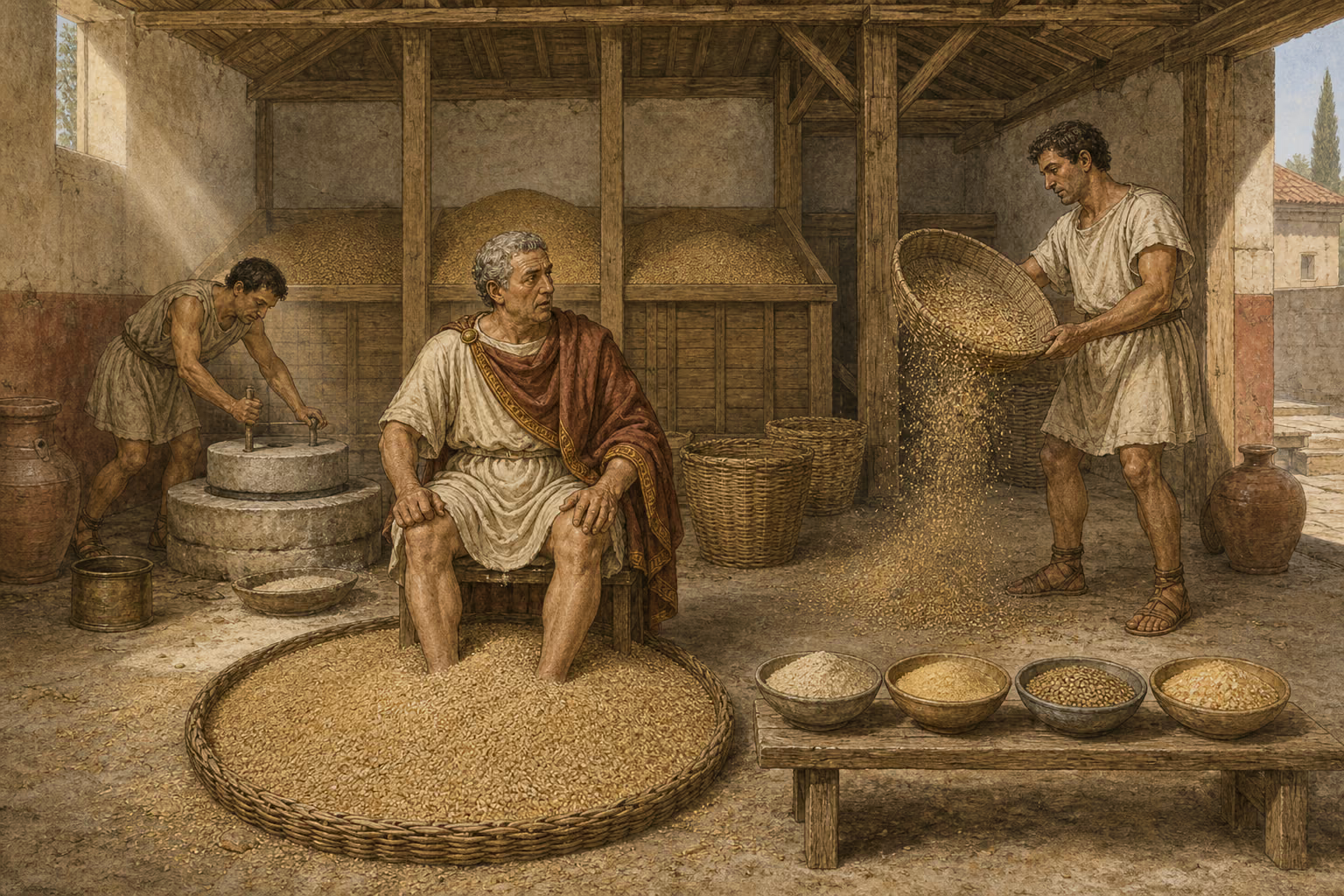
in primis sapientissima animalium esse constat, quae fruge vescantur. siliginis grana combusta et trita in vino Ammineo, oculis inlita epiphoras sedant, tritici vero ferro combusta iis, quae frigus usserit, praesentaneo sunt remedio. farina tritici ex aceto cocta nervorum contractionibus, cum rosaceo vero et fico sicca myxisque decoctis furfures tonsillis faucibusque gargarizatione prosunt. Sex. Pomponius, praetorii viri pater, Hispaniae citerioris princeps, cum horreis suis ventilandis praesideret, correptus dolore podagrae mersit in triticum super genua sese, levatusque siccatis pedibus mirabilem in modum hoc postea remedio usus est. vis tanta est, ut cados plenos siccet. paleam quoque tritici vel hordei calidam inponi ramicum incommodis experti iubent, quaque decoctae sint aqua fovere. est in farre vermiculus teredini similis, quo cavis dentium cera incluso cadere vitiati dicuntur, etiam si fricentur. olyram arincam diximus vocari. hac decocta fit medicamentum, quod Aegyptii atheram vocant, infantibus utilissimum, sed et adultos inlinunt eo.
Farina ex hordeo et cruda et decocta collectiones impetusque discutit, lenit concoquitque. decoquitur alias in mulsa aqua aut fico sicca; at iocineris doloribus, cum pus concoqui opus est, in vino; cum inter coquendum discutiendumque cura est, tune in aceto melius aut in faece aceti aut cotoneis pirisve decoctis; ad multipedae morsus cum melle, ad serpentium in aceto et contra sup5 purantia, ad extrahendas suppurationes ex posca addita resina Gallica; ad concoctiones vero et ulcera vetera cum resina, ad duritias cum fimo columbarum aut fico sicca aut cinere, ad nervorum inflammationes aut intestinorum vel laterum dolores cum papavere aut meliloto, et quotiens ab ossibus caro recedit, ad strumas cum pice et inpubis pueri urina, cum oleo. cum Graeco feno contra praecordiorum tumores vel in febribus cum melle vel adipe vetusto. suppuratis triticea farina multo lenior. nervis cum hyoscyami suco inlinitur, ex aceto et melle lentigini. zeae, ex qua alicam fieri diximus, efficacior etiam hordeacea videtur, trimenstris mollior, ex vino rubro ad scorpionum ictus tepida et sanguinem excreantibus, item arteriae, tussi cum caprino sebo aut butyro. ex feno Graeco, mollissima omnium, ulcera manantia sanat et furfures corporis, stomachi dolores, pedes et mammas cum vino et nitro cocta. aerina magis ceteris purgat ulcera vetera et gangraenas cum raphano et sale, ex aceto lichenas, lepras cum sulpure vivo, et capitis dolores cum adipe anserino inposita fronti. strumas et panos concoquit cum fimo columbino et lini semine decocta in vino.
De polentae generibus in frugum loco satis diximus. medicorum ratione a farina hordei distat eo, quod torretur, ob id stomacho utilis. alvum sistit impetusque rubicundi tumoris; et oculis inlinitur et capitis dolori cum menta aut alia refrigerante herba, item pernionibus et serpentium plagis, item ambustis ex vino, inhibetque pusulas.
Farina in pollinem subacta vim extrahendi umoris habet adeo, ut cruore suffusis in fascias usque sanguinem perducat, efficacius in sapa. inponitur et pedum callo clavisque. nam cum oleo vetere ac pice decocto polline condylomata et alia omnia sedis vitia quam maxime calido mirabilem in modum curantur. pulte corpus augetur. farina, qua chartae glutinantur, sanguinem excreantibus datur tepida sorbenda efficaciter.
Alica res Romana est et non pridem excogitata; alioqui non tisanae potius laudes scripsissent Graeci. nondum arbitror Pompei Magni aetate in usu fuisse, et ideo vix quicquam de ea scriptum ab Asclepiadis schola. esse quidem eximie utilem nemo dubitat, sive eluta detur ex aqua mulsa sive in sorbitione decocta sive in pulte. eadem in alvo sistenda torretur, dein favorum cera coquitur, ut supra diximus. peculiariter tamen longo morbo ad tabitudinem redactis subvenit ternis eius cyathis in sextarium aquae sensim decoctis, donec omnis aqua consumatur, postea sextario lactis ovilli aut caprini addito per continuos dies..., mox adiecto melle. tali genere sorbitionis emendantur syntexis.
Milio sistitur alvus, discutiuntur tormina, in quem usum torretur ante. nervorum doloribus et aliis fervens in sacco inponitur, neque aliud utilius, quoniam levissimum mollissimumque est et caloris capacissimum. itaque talis usus eius est ad omnia, quibus calor profuturus est. farina eius cum pice liquida serpentium et multipedae plagis inponitur.
Panicum Diocles medicus mel frugum appellavit. effectus habet quos milium. in vino potum prodest dysintericis. similiter his, quae vaporanda sunt, excalfactum inponitur. sistit alvum in lacte caprino decoctum et bis die haustum. sic prodest et ad tormina.
Sesima trita in vino sumpta inhibet vomitiones. aurium inflammationi inlinitur et ambustis. eadem efficit et dum in herba est. hoc amplius oculis inponitur decocta in vino. stomacho inutilis in cibis et animae gravitatem facit. stellionum morsibus resistit, item ulceribus, quae cacoëthe vocant, et auribus oleum, quod ex ea fit, prodesse diximus. sesamoides a similitudine nomen ac- cepit, grano amaro, folio minore. nascitur in glareosis. detrahit bilem in aqua potum semen, inlinitur igni sacro, discutit panos. est etiamnum aliud sesamoides, Anticyrae nascens, quod ideo aliqui Anticyricon vocant, cetera simile erigeronti herbae, de qua dicemus suo loco, grano sesamae. datur in vino dulci ad detractiones quantum tribus digitis capitur. miscent ibi et ellebori albi unum et dimidium obolum, purgationem eam adhibentes maxime insaniae melancholicae,comitialibus, podagris. et per se drachmae pondere exinanit.
Hordeum optimum quod candidissimum. sucus decocti in aqua caelesti digeritur in pastillos, ut infundantur exulceratis interaneis et vulvis. cinis eius ambustis inlinitur et carnibus, quae recedunt ab ossibus, et eruptionibus pituitae, muris aranei morsibus. idem adsperso sale ac melle candorem dentibus, suavitatem oris facit. eos, qui pane hordeacio utuntur, morbo pedum temptari negant. novem granis furunculum si quis. circumducat, singulis ter manu sinistra, et omnia in ignem abiciat, confestim sanari aiunt. est et herba phoenice appellata a Graecis, nostris vero hordeum murinum; haec trita e vino pota praeclare ciet menses.
Tisanae, quae ex hordeo fit, laudes uno volumine condidit Hippocrates, quae nunc omnes in alicam transeunt. quanto innocentior alica! Hi p p o c r ates tamen sorbitionis gratia laudavit, quoniam lubrica ex facili hauriretur, quoniam sitim arceret, quoniam in alvo non intumesceret, quoniam facile redderetur et. adsuetis hic cibus solus in febri bis die posset dari, tantum remotus ab istis, qui medicinam fame exercent. sorbitionem tamen dari totam vetuit aliudve quam sucum tisanae; item vetuit, quamdiu pedes frigidi essent, tune quidem nec potionem dandam. fit et ex tritico glutinosior arteriaeque exulceratae utilior.
Amylon hebetat oculos, et gulae inutile, contra quam creditur. item alvum sistit, epiphoras oculorum inhibet et ulcera sanat, item pusulas et fluctiones sanguinis. genas duras emollit. datur cum ovo iis, qui sanguinem reiecerint, in vesicae vero dolore semuncia amyli cum ovo et passi tribus ovis subfervefacta a balineo. quin et avena cea farina decocta in aceto naevos tollit.
Panis hic ipse, quo vivitur, innumeras paene continet medicinas. ex aqua et oleo aut rosaceo mollit collectiones; ex aqua mulsa ad duritias valde mitigandas, ex vino ad discutienda aut quae praestringi opus sit et, si magis etiamnum, ex aceto, adversus acutas pituitae fluctiones, quas Graeci rheumatismos vocant, item ad percussa, luxata, ad omnia autem fermentatus, qui vocatur autopyrus, utilior. inlinitur et paronychiis et callo pedum in aceto. vetus aut nauticus panis tusus atque iterum coctus sistit alvum. vocis studiosis et contra destillationes siccum esse primo cibo utilissimum est. sitanius, hoc est e trimestri, incussa in facie aut desquamata cum melle aptissime curat. candidus aegris aqua calida frigidave madefactus levissimum cibum praebet. oculorum tumori ex vino inponitur; sic et pusulis capitis aut adiecta arida myrto. tremulis panem ex aqua esse ieiunis statim a balineis demonstrant. quin et gravitatem odorum in cubiculis ustus emendat et vini in saccos additus.
Et faba auxiliatur. namque solida fricta fervensque in acre acetum coniecta torminibus medetur. in cibo fresa et cum alio cocta contra deploratas tusses suppurationesque pectorum cotidiano cibo sumitur, et commanducata ieiuno ore et ad furunculos maturandos discutiendosve inponitur, et in vino decocta ad testium tumores, ad genitalia. lomento quoque ex aceto decocto tumores maturat atque aperit, item livoribus, combustis medetur. voci eam prodesse auctor est M. Varro. fabalium etiam siliquarumque cinis ad coxendices, ad nervorum veteres dolores cum adipis suilli vetustate prodest. et per se cortices decocti ad tertias sistunt alvum.
Lens optima quae facillime coquitur et ea, quae maxime aquam absorbet. aciem quidem oculorum obtundit et stomachum inflat, sed alvum sistit in cibo magisque caelesti aqua discocta; eadem solvit minus percocta. pusulas ulcerum rumpit; ea, quae intra os sunt, purgat et adstringit. collectiones omnes inposita sedat maximeque exulceratas et rimosas; oculorum autem epiphoras cum meliloto aut cotoneo. contra suppurantia cum polenta inponitur. decoctae sucus ad oris exulcerationes et genitalium adhibetur, ad sedem cum rosaceo aut cotoneo, in iis, quae acrius remedium exigant, cum putamine punici melle modico adiecto. ad id demum, ne celeriter inarescat, adiciunt et betae folia. inponitur et strumis, panis vel maturis vel maturescentibus ex aceto discocta, rimis ex aqua mulsa et gangraenis cum punici tegmine; item podagris cum polenta et vulvis et renibus, pernionibus, ulceribus difficile cicatricem trahentibus. propter dissolutionem stomachi XXX grana lentis devorantur. in choleris quoque et dysinteria efficacior est in tribus aquis cocta, in quo usu melius semper eam torrere ante et tundere, ut quam tenuissima detur vel per se vel cum cotoneo malo aut piris aut myrto aut intubo erratico aut beta nigra aut plantagine. pulmoniest inutilis et capitis dolori nervosisque omnibus et felli, nec somno facilis, at pusulis utilis ignique sacro et mammis in aqua marina decocta, in aceto autem duritias et strumas discutit. stomachi quidem causa polentae modo potionibus inspergitur. quae sint ambusta, aqua semicocta curant, postea trita et per cribrum effuso furfure, mox procedente curatione addito melle. ex posca coquitur ad guttura. est et palustris lens, per se nascens in aqua non profluenti, refrigeratoriae naturae, propter quod collectionibus inlinitur et maxime podagris et per se et cum polenta. glutinat et interanea procidentia.
Est silvestris elelisphacos dicta a Graecis, aliis sphacos dicta, sativa lente leviore et folio minore atque sicciore et odoratiore. est et alterum genus eius silvestrius, odore gravi; haec mitior folia habet cotonei mali effigie, set minora et candida, quae cum ramis decocuntur. menses ciet et urinas, et pastinacae marinae ictus sanat, torporem autem obducit percusso loco. bibitur cum absinthio et dysinteriae. cum vino eadem commorantes menses trahit, abundantes sistit decocto eius poto. per se inposita herba vulnerum sanguinem cohibet. purgat et serpentium morsus et, si in vino decoquatur, pruritus testium sedat. nostri, qui nunc sunt, herbarii elelisphacum Graece, salviam Latine vocant, mentae similem, canam, odoratam. partus emortuos ea adposita extrahunt, item vermes ulcerum auriumque.
Cicer et silvestre est, foliis simile, odore gravi. si largius sumatur, alvus solvitur et inflatio contrahitur et tormina.tostum salubrius habetur. cicercula etiamnum magis in alvo proficit. farina utriusque ulcera manantia capitis sanat, efficacius silvestris, item comitiales et iocinerum tumores et serpentium ictus. ciet menses et urinas, grano maxime. emendat et lichenas et testium inflammationes, regium morbum, hydropicos. laedunt omnia haec genera exulceratam vesicam et renes. gangraenis utiliora cum melle et his, quae cacoëthe vocantur. verrucarum in omni genere prima luna singulis granis singulas tangunt, eaque grana in linteolo deligata post se abiciunt, ita fugari vitium arbitrantes. nostri praecipiunt arietinum in aqua cum sale discoquere, ex eo bibere cyathos binos in difficultatibus urinae; sic et calculos pelli.morbumque regium. eiusdem foliis sarmentisque decoctis aqua quam maxime calida morbos pedum lenit, et ipsum calidum tritumque inlitum. columbini decocti aqua horrorem tertianae et quartanae minuere creditur. nigrum autem cum gallae dimidio tritum oculorum ulceribus ex passo medetur.
De ervo quaedam in mentione eius diximus, nec potentiam ei minorem veteres quam brassicae tribuere contra serpentium ictus ex aceto, ad crocodilorum hominumque morsum. si quis ervum cotidie ieiunus edit, lienem eius absumi certissimi auctores adfirmant. farina eius varos, sed et maculas cutis toto corpore emendat. serpere ulcera non patitur, in mammis efficacissimum. carbunculos rumpit ex vino. urinae difficultates, inflationem, vitia iocineris, tenesmon et quae cibum non sentiant, atropha appellata, tostum et in nucis abellanae magnitudinem melle collectum devoratumque corrigit; item impetigines ex aceto coctum et quarto die solutum. panos in melle inpositum suppurare prohibet. aqua decocti perniones et pruritus sanat fovendo. quin et universo corpori, si quis cotidie ieiunus biberit, meliorem fieri colorem existumant. cibis idem hominis alienum. vomitiones movet, alvum turbat, capiti et stomacho onerostim; genua quoque degravat. sed madefactum pluribus diebus mitescit, bubus iumentisque utilissimum. siliquae eius virides prius, quam indurescant, cum suo caule foliisque contrit ae capillos nigro colore inficiunt.
Lupini quoque silvestres sunt, omni modo minores praeterquam amaritudine. ex omnibus, quae eduntur, sicco nulli minus ponderis est nec plus utilitatis. mitescunt cinere aut aqua calidis. colorem hominis frequentiores in cibo exhilarant, amari contra aspidas valent. ulcera atra aridi decorticatique triti supposito linteolo ad vivum corpus redigunt. strumas, parotidas in aceto cocti discutiunt. sucus decoctorum cum ruta et pipere vel in febri datur ad ventris animalia pellenda minoribus XXX annorum, pueris vero etiam inpositi in ventrem ieiunis prosunt, et alio genere tosti vel in defruto poti vel ex melle sumpti. iidem aviditatem cibi faciunt, fastidium detrahunt. farina eorum aceto subacta papulas pruritusque in balneis inlita cohibet et per se siccat ulcera. livores emendat, inflammationes cum polenta sedat. silvestrium efficacior vis contra coxendicum et lumborum debilitatem. ex iisdem decocta lentigines et cutem foventium corrigunt, si vero ad mellis crassitudinem decoquantur, vel [sativi] vitiligines nigras et lepras emendant. sativi quoque rumpunt carbunculos inpositi, panos, strumas minuunt aut maturant cocti ex aceto, cicatricibus candidum colorem reddunt; si vero caelesti aqua discoquantur, sucus ille zmegma fit, quo fovere gangraenas, eruptiones pituitae, ulcerum manantia expediat, ad lienem bibere et cum melle haerentibus menstruis. lieni crudi cum fico sicca triti ex aceto inponuntur. radix quoque in aqua decocta urinas pellit. medentur pecori cum chamaeleone herba decocti, aqua in potum colata. sanant et scabiem quadripedum omnium in amurca decocti vel utroque liquore postea mixto. fumus crematorum culices necat.
Irionem inter fruges sesamae similem esse diximus et a Graecis erysimon vocari, Galli velam appellant. est autem fruticosum, foliis erucae, angustioribus paulo, semine nasturtii, utilissimum tussientibus cum melle et in thoracis purulentis excreationibus. datur et regio morbo et lumborum vitiis, pleuriticis, torminibus, coeliacis. inlinitur vero parotidum et carcinomatum malis, testium ardoribus ex aqua, alias cum melle, infantibus quoque utilissimum, item sedis vitiis et articulariis morbis cum melle et fico, contra venena etiam efficax potu. medetur et suspiriosis, item fistulis cum axungia vetere ita, ne intus addatur.
Horminum semine, ut diximus, cumino simile est, cetero porro, dodrantali altitudine, duorum generum: alteri semen nigrius et oblongum—hoc ad venerem stimulandam et ad oculorum'.argema, albugines—, alteri candidius semen et rotundius. utroque tuso extrahuntur aculei ex corpore per se inlitovel ex aqua, folia ex aceto inposita panos per se vel cum melle discutiunt, item furunculos, priusquam capita faciant, omnesque acrimonias.
Quin et ipsae frugum pestes in aliquo sunt usu. infelix dictum est a Vergilio lolium, hoc tamen molitum, ex aceto coctum inpositumque sanat inpetigines celerius, quo saepius mutatum est. medetur et podagrae aliisque doloribus cum oxymelite. ratio haec: aceti sextario uno diluuntur mellis unciae duae. iustum est ita temperatis sextariis tribus decoctae farinae lolii sextarios.... usque ad crassitudinem, calidumque inponi dolentibus membris. eadem farina extrahit ossa fracta.
Miliaria appellatur herba, quae necat milium. haee trita et cornu cum vino infusa podagras iumentorum dicitur sanare.
Bromos semen est spicam ferentis herbae. nascitur inter vitia segetis avenae genere, folio et stipula triticum imitatur; in cacuminibus dependentes parvolas veluti locustas habet. semen utile ad cataplasmata, ad quae hordeum et similia. prodest tussientibus sucus.
Orobanchen appellavimus necantem ervum et legumina; alii cynomorion eam appellant a similitudine canini genitalis. cauliculus est sine foliis, pinguis, rubens. estur et per se et in patinis, cum tenera est, decocta.
Et leguminibus innascuntur bestiolae venenatae, quae manus pungunt et periculum vitae adferunt, solipugarum generis. adversus has omnia eademmedentur, quae contra araneos et phalangia demonstrantur. et frugum quidem haec sunt in usu medico.
Ex iisdem fiunt et potus, zythum in Aegypto, caelia et cerea in Hispania, cervesia et plura genera in Gallia aliisque provinciis, quorum omnium spuma cutem feminarum in facie nutrit. nam quod ad potum ipsum attinet, praestat ad vini transire mentionem atque a vite ordiri medicinas arborum.
English · Bostock & Riley 1855–57
It will be only proper then, to make some mention of these as well. In the first place, however, let us remark that it is a fact universally acknowledged, that it is the most intelligent of the animated beings that derive their subsistence from grain. The grain of siligo highly roasted and pounded in Aminean wine, applied to the eyes, heals defluxions of those organs; and the grain of wheat, parched on a plate of iron, is an instantaneous remedy for frost-bite in various parts of the body. Wheat-meal, boiled in vinegar, is good for contractions of the sinews, and bran, mixed with rose-oil, dried figs, and myxa plums boiled down together, forms an excellent gargle for the tonsillary glands and throat.
Sextus Pomponius, who had a son prætor, and who was himself the first citizen of Nearer Spain, was on one occasion attacked with gout, while superintending the winnowing in his granaries; upon which, he immediately thrust his legs, to above the knees, in a heap of wheat. He found himself relieved, the swelling in the legs subsided in a most surprising degree, and from that time he always employed this remedy: indeed, the action of grain in masses is so extremely powerful as to cause the entire evaporation of the liquor in a cask. Men of experience in these matters recommend warm chaff of wheat or barley, as an application for hernia, and fomentations with the water in which it has been boiled. In the grain known as spelt, there is a small worm found, similar in appearance to the teredo: if this is put with wax into the hollow of carious teeth, they will come out, it is said, or, indeed, if the teeth are only rubbed with it. Another name given to olyra, as already mentioned, is “arinca:” with a decoction of it a medicament is made, known in Egypt as “athera,” and extremely good for infants. For adult persons it is employed in the form of a liniment.
Barley -meal, raw or boiled, disperses, softens, or ripens gatherings and inflammatory tumours; and for other purposes a decoction of it is made in hydromel, or with dried figs. If required for pains in the liver, it must be boiled with oxycrate in wine. When it is a matter of doubt whether an abscess should be made to suppurate or be dispersed, it is a better plan to boil the meal in vinegar, or lees of vinegar, or else with a decoction of quinces or pears. For the bite of the millepede, it is employed with honey, and for the stings of serpents, and to prevent suppurations, with vinegar. To promote suppuration, it should be used with oxycrate, with the addition of Gallic resin. For gatherings, also, that have come to a head, and ulcers of long standing, it must be employed in combination with resin, and for indurations, with pigeons’ dung, dried figs, or ashes. For inflammation of the tendons, or of the intestines and sides, or for pains in the male organs and denudations of the bones, it is used with poppies, or melilote; and for scrofulous sores, it is used with pitch and oil, mixed with the urine of a youth who has not reached the years of puberty. It is employed also with fenugreek for tumours of the thoracic organs, and in fevers, with honey, or stale grease.
For suppurations, however, wheat-meal is much more soothing; it is applied topically also for affections of the sinews, mixed with the juice of henbane, and for the cure of freckles, with vinegar and honey. The meal of zea, from which, as already stated, an alica is made, appears to be more efficacious than that of barley even; but that of the three month kind is the most emollient. It is applied warm, in red wine, to the stings of scorpions, as also for affections of the trachea, and spitting of blood: for coughs, it is employed in combination with goat suet or butter.
The meal of fenugreek, however, is the most soothing of them all: boiled with wine and nitre, it heals running ulcers, eruptions on the body, and diseases of the feet and mamillæ. The meal of æra is more detergent than the other kinds, for inveterate ulcers and gangrenes: in combination with radishes, salt, and vinegar, it heals lichens, and with virgin sulphur, leprosy: for head-ache, it is applied to the forehead with goose-grease. Boiled in wine, with pigeons’ dung and linseed, it ripens inflamed tumours and scrofulous sores.
Of the various kinds of polenta we have already treated sufficiently at length, when speaking of the places where it is made. It differs from barley meal, in being parched, a process which renders it more wholesome for the stomach. It arrests looseness of the bowels, and heals inflammatory eruptions; and it is employed as a liniment for the eyes, and for head-ache, combined with mint or some other refreshing herb. It is used in a similar manner also for chilblains and wounds inflicted by serpents; and with wine, for burns. It has the effect also of checking pustular eruptions.
The flour of bolted meal, kneaded into a paste, has the property of drawing out the humours of the body: hence it is applied to bruises gorged with blood, to extract the corrupt matter, even to soaking the bandages employed: used with boiled must, it is still more efficacious. It is used as an application also for callosities of the feet and corns; boiled with old oil and pitch, and applied as hot as possible, it cures condylomata and all other maladies of the fundament in a most surprising manner. Puls is a very feeding diet. The meal used for pasting the sheets of papyrus is given warm to patients for spitting of blood, and is found to be an effectual cure.
Alica is quite a Roman invention, and not a very ancient one: for otherwise the Greeks would never have written in such high terms of the praises of ptisan in preference. I do not think that it was yet in use in the days of Pompeius Magnus, a circumstance which will explain why hardly any mention has been made of it in the works of the school of Asclepiades. That it is a most excellent preparation no one can have a doubt, whether it is used strained in hydromel, or whether it is boiled and taken in the form of broth or puls. To arrest flux of the bowels, it is first parched and then boiled with honeycomb, as already mentioned: but it is more particularly useful when there is a tendency to phthisis after a long illness, the proper proportions being three cyathi of it to one sextarius of water. This mixture is boiled till all the water has gone off by evaporation, after which one sextarius of sheep’ or goats’ milk is added: it is then taken by the patient daily, and after a time some honey is added. By this kind of nutriment a deep decline may be cured.
Millet arrests looseness of the bowels and dispels gripings of the stomach, for which purposes it is first parched. For pains in the sinews, and of various other descriptions, it is applied hot, in a bag, to the part affected. Indeed, there is no better topical application known, as it is extremely light and emollient, and retains heat for a very long time: hence it is that it is so much employed in all those cases in which the application of heat is necessary. The meal of it, mixed with tar, is applied to wounds inflicted by serpents and millepedes.
Diocles, the physician, has given to panic the name of “honey of corn.” It has the same properties as millet, and, taken in wine, it is good for dysentery. In a similar manner, too, it is applied to such parts of the body as require to be treated with heat. Boiled in goats’-milk, and taken twice a-day, it arrests looseness of the bowels; and, used in a similar manner, it is very good for gripings of the stomach.
Sesame, pounded and taken in wine, arrests vomiting: it is applied also topically to inflammations of the ears, and burns. It has a similar effect even while in the blade; and in that state, a decoction of it in wine is used as a liniment for the eyes. As an aliment it is injurious to the stomach, and imparts a bad odour to the breath. It is an antidote to the bite of the spotted lizard, and heals the cancerous sore known as “cacoethes.” The oil made from it, as already mentioned, is good for the ears.
Sesamoïdes owes its name to its resemblance to sesame; the grain of it, however, is bitter, and the leaf more diminutive: it is found growing in sandy soils. Taken in water, it carries off bile, and, with the seed, a liniment is made for erysipelas: it disperses inflamed swellings also. Besides this, there is another sesamoïdes, which grows at Anticyra, and, for that reason, is known by some as “anticyricon.” In other respects, it is similar to the plant erigeron, of which we shall have to speak on a future occasion; but the seed of it is like that of sesame. It is given in sweet wine as an evacuant, in doses of a pinch in three fingers, mixed with an obolus and a half of white hellebore; this preparation being employed principally as a purgative, in cases of insanity, melancholy, epilepsy, and gout. Taken alone, in doses of one drachma, it purges by stool.
The whitest barley is the best. Boiled in rain-water, the pulp of it is divided into lozenges, which are used in injections for ulcerations of the intestines and the uterus. The ashes of barley are applied to burns, to bones denuded of the flesh, to purulent eruptions, and to the bite of the shrew-mouse: sprinkled with salt and honey they impart whiteness to the teeth, and sweetness to the breath. It is alleged that persons who are in the habit of eating barley-bread are never troubled with gout in the feet: they say, too, that if a person takes nine grains of barley, and traces three times round a boil, with each of them in the left hand, and then throws them all into the fire, he will experience an immediate cure. There is another plant, too, known as “phœnice” by the Greeks, and as “mouse-barley” by us: pounded and taken in wine, it acts remarkably well as an emmenagogue.
To ptisan, which is a preparation of barley, Hippocrates has devoted a whole treatise; praises, however, which at the present day are all transferred to “alica,” being, as it is, a much more wholesome preparation. Hippocrates, however, recommends it as a pottage, for the comparative ease with which, from its lubricous nature, it is swallowed; as also, because it allays thirst, never swells in the stomach, passes easily through the intestines, and is the only food that admits of being given twice a-day in fever, at least to patients who are in the habit of taking two meals—so opposed is his method to that of those physicians who are for famishing their patients. He forbids it to be given, however, without being first strained; for no part, he says, of the ptisan, except the water, should be used. He says, too, that it must never be taken while the feet are cold, and, indeed, that no drink of any kind should be taken then. With wheat a more viscous kind of ptisan is made, which is found to be still more efficacious for ulcerations of the trachea.
Amylum weakens the eyesight, and is bad for the throat, whatever opinions may be held to the contrary. It has the effect also of arresting looseness of the bowels, and curing defluxions and ulcerations of the eyes, as also pustules and congestions of the blood. It mollifies indurations of the eyelids, and is given with egg to persons when they vomit blood. For pains of the bladder, half an ounce of it is prescribed with an egg, and as much raisin wine as three egg-shells will hold, the mixture to be made lukewarm and taken immediately after the bath. Oatmeal, boiled in vinegar, removes moles.
Bread, too, which forms our ordinary nutriment, possesses medicinal properties, almost without number. Applied with water and oil, or else rose-oil, it softens abscesses; and, with hydromel, it is remarkably soothing for indurations. It is prescribed with wine to produce delitescence, or when a defluxion requires to be checked; or, if additional activity is required, with vinegar. It is employed also for the morbid defluxions of rheum, known to the Greeks as “rheumatismi,” and for bruises and sprains. For all these purposes, however, bread made with leaven, and known as “autopyrus,” is the best.
It is applied also to whitlows, in vinegar, and to callosities of the feet. Stale bread, or sailors’-bread, beaten up and baked again, arrests looseness of the bowels. For persons who wish to improve the voice, dry bread is very good, taken fasting; it is useful also as a preservative against catarrhs. The bread called “sitanius,” and which is made of three-month wheat, applied with honey, is a very efficient cure for contusions of the face and scaly eruptions. White bread, steeped in hot or cold water, furnishes a very light and wholesome aliment for patients. Soaked in wine, it is applied as a poultice for swellings of the eyes, and used in a similar manner, or with the addition of dried myrtle, it is good for pustules on the head. Persons troubled with palsy are recommended to take bread soaked in water, fasting, immediately after the bath. Burnt bread modifies the close smell of bedrooms, and, used in the strainers, it neutralizes bad odours in wine.
Beans, too, furnish us with some remedies. Parched whole, and thrown hot into strong vinegar, they are a cure for gripings of the bowels. Bruised, and boiled with garlic, they are taken with the daily food for inveterate coughs, and for suppurations of the chest. Chewed by a person fasting, they are applied topically to ripen boils, or to disperse them; and, boiled in wine, they are employed for swellings of the testes and diseases of the genitals. Bean-meal, boiled in vinegar, ripens tumours and breaks them, and heals contusions and burns. M. Varro assures us that beans are very good for the voice. The ashes of bean stalks and shells, with stale hogs’-lard, are good for sciatica and inveterate pains of the sinews. The husks, too, boiled down, by themselves, to one-third, arrest looseness of the bowels.
Those lentils are the best which boil the most easily, and those in particular which absorb the most water. They injure the eye-sight, no doubt, and inflate the stomach; but taken with the food, they act astringently upon the bowels, more particularly if they are thoroughly boiled in rain-water: if, on the other hand, they are lightly boiled, they are laxative. They break purulent ulcers, and they cleanse and cicatrize ulcerations of the mouth. Applied topically, they allay all kinds of abscesses, when ulcerated and chapped more particularly; with melilote or quinces they are applied to defluxions of the eyes, and with polenta they are employed topically for suppurations. A decoction of them is used for ulcerations of the mouth and genitals, and, with rose-oil or quinces, for diseases of the fundament. For affections which demand a more active remedy, they are used with pomegranate rind, and the addition of a little honey; to prevent the composition from drying too quickly, beet leaves are added. They are applied topically, also, to scrofulous sores, and to tumours, whether ripe or only coming to a head, being thoroughly boiled first in vinegar. Mixed with hydromel they are employed for the cure of chaps, and with pomegranate rind for gangrenes. With polenta they are used for gout, for diseases of the uterus and kidneys, for chilblains, and for ulcerations which cicatrize with difficulty. For a disordered stomach, thirty grains should be eaten.
For cholera, however, and dysentery, it is the best plan to boil the lentils in three waters, in which case they should always be parched first, and then pounded as fine as possible, either by themselves, or else with quinces, pears, myrtle, wild endive, black beet, or plantago. Lentils are bad for the lungs, head-ache, all nervous affections, and bile, and are very apt to cause restlessness at night. They are useful, however, for pustules, erysipelas, and affections of the mamillæ, boiled in sea-water; and, applied with vinegar, they disperse indurations and scrofulous sores. As a stomachic, they are mixed, like polenta, with the drink given to patients. Parboiled in water, and then pounded and bolted through a sieve to disengage the bran, they are good for burns, care being taken to add a little honey as they heal: they are boiled, also, with oxycrate for diseases of the throat.
There is a marsh-lentil also, which grows spontaneously in stagnant waters. It is of a cooling nature, for which reason it is employed topically for abscesses, and for gout in particular, either by itself or with polenta. Its glutinous properties render it a good medicine for intestinal hernia.
The plant called by the Greeks “elelisphacos,” or “sphacos,” is a species of wild lentil, lighter than the cultivated one, and with a leaf, smaller, drier, and more odoriferous. There is also another kind of it, of a wilder nature, and possessed of a powerful smell, the other one being milder. It has leaves the shape of a quince, but white and smaller: they are generally boiled with the branches. This plant acts as an emmenagogue and a diuretic: and it affords a remedy for wounds inflicted by the sting-ray, having the property of benumbing the part affected. It is taken in drink with wormwood for dysentery: employed with wine it accelerates the catamenia when retarded, a decoction of it having the effect of arresting them when in excess: the plant, applied by itself, stanches the blood of wounds. It is a cure, too, for the stings of serpents, and a decoction of it in wine allays prurigo of the testes.
Our herbalists of the present day take for the “elelisphacos” of the Greeks the “salvia” of the Latins, a plant similar in appearance to mint, white and aromatic. Applied externally, it expels the dead fœtus, as also worms which breed in ulcers and in the ears.
There is a wild chickpea also, which resembles in its leaf the cultivated kind, and has a powerful smell. Taken in considerable quantities, it relaxes the bowels, and produces griping pains and flatulency; parched, however, it is looked upon as more wholesome. The chicheling vetch, again, acts more beneficially upon the bowels. The meal of both kinds heals running sores of the head—that of the wild sort being the more efficacious of the two—as also epilepsy, swellings of the liver, and stings inflicted by serpents. It acts as an emmenagogue and a diuretic, used in the grain more particularly, and it is a cure for lichens, inflammations of the testes, jaundice, and dropsy. All these kinds, however, exercise an injurious effect upon ulcerations of the bladder and kidneys: but in combination with honey they are very good for gangrenous sores, and the cancer known as “cacoethes.” The following is a method adopted for the cure of all kinds of warts: on the first day of the moon, each wart must be touched with a single chickpea, after which, the party must tie up the pease in a linen cloth, and throw it behind him; by adopting this plan, it is thought, the warts will be made to disappear.
Our authors recommend the plant known as the “arietinum” to be boiled in water with salt, and two cyathi of the decoction to be taken for strangury. Employed in a similar manner, it expels calculi, and cures jaundice. The water in which the leaves and stalks of this plant have been boiled, applied as a fomentation as hot as possible, allays gout in the feet, an effect equally produced by the plant itself, beaten up and applied warm. A decoction of the columbine chickpea, it is thought, moderates the shivering fits in tertian or quartan fevers; and the black kind, beaten up with half a nut-gall, and applied with raisin wine, is a cure for ulcers of the eyes.
In speaking of the fitch, we have mentioned certain properties belonging to it; and, indeed, the ancients have attributed to it no fewer virtues than they have to the cabbage. For the stings of serpents, it is employed with vinegar; as also for bites inflicted by crocodiles and human beings. If a person eats of it, fasting, every day, according to authors of the very highest authority, the spleen will gradually diminish. The meal of it removes spots on the face and other parts of the body. It prevents ulcers from spreading also, and is extremely efficacious for affections of the mamillæ: mixed with wine, it makes carbuncles break. Parched, and taken with a piece of honey the size of a hazel nut, it cures dysuria, flatulency, affections of the liver, tenesmus, and that state of the body in which no nourishment is derived from the food, generally known as “atrophy.” For cutaneous eruptions, plasters are made of it boiled with honey, being left to remain four days on the part affected. Applied with honey, it prevents inflamed tumours from suppurating. A decoction of it, employed as a fomentation, cures chilblains and prurigo; and it is thought by some, that if it is taken daily, fasting, it will improve the complexion of all parts of the body.
Used as an aliment, this pulse is far from wholesome, being apt to produce vomiting, disorder the bowels, and stuff the head and stomach. It weakens the knees also; but the effects of it may be modified by keeping it in soak for several days, in which case it is remarkably beneficial for oxen and beasts of burden. The pods of it, beaten up green with the stalks and leaves, before they harden, stain the hair black.
There are wild lupines, also, inferior in every respect to the cultivated kinds, except in their bitterness. Of all the alimentary substances, there are none which are less heavy or more useful than dried lupines. Their bitterness is considerably modified by cooking them on hot ashes, or steeping them in hot water. Employed frequently as an article of food, they impart freshness to the colour; the bitter lupine, too, is good for the sting of the asp. Dried lupines, stripped of the husk and pounded, are applied in a linen cloth to black ulcers, in which they make new flesh: boiled in vinegar, they disperse scrofulous sores and imposthumes of the parotid glands. A decoction of them, with rue and pepper, is given in fever even, as an expellent of intestinal worms, to patients under thirty years of age. For children, also, they are applied to the stomach as a vermifuge, the patient fasting in the meantime: and, according to another mode of treatment, they are parched and taken in boiled must or in honey.
Lupines have the effect of stimulating the appetite, and of dispelling nausea. The meal of them, kneaded up with vinegar, and applied in the bath, removes pimples and prurigo; employed alone, it dries up ulcerous sores. It cures bruises also, and, used with polenta, allays inflammations. The wild lupine is found to be the most efficacious for debility of the hips and loins. A decoction of them, used as a fomentation, removes freckles and improves the skin; and lupines, either wild or cultivated, boiled down to the consistency of honey, are a cure for black eruptions and leprosy. An application of cultivated lupines causes carbuncles to break, and reduces inflamed tumours and scrofulous sores, or else brings them to a head: boiled in vinegar, they restore the flesh when cicatrized to its proper colour. Thoroughly boiled in rain-water, the decoction of them furnishes a detersive medicine, of which fomentations are made for gangrenes, purulent eruptions, and running ulcers. This decoction is very good, taken in drink, for affections of the spleen, and with honey, for retardations of the catamenia. Beaten up raw, with dried figs, lupines are applied externally to the spleen. A decoction of the root acts as a diuretic.
The herb chamæleon, also, is boiled with lupines, and the water of it strained off, to be used as a potion for cattle. Lupines boiled in amurca, or a decoction of them mixed with amurca, heals the itch in beasts. The smoke of lupines kills gnats.
When treating of the cereals, we have already stated that the irio, which strongly resembles sesame, is also called “erysimon” by the Greeks: the Gauls give it the name of “vela.” It is a branchy plant, with leaves like those of rocket, but a little narrower, and a seed similar to that of nasturtium. With honey, it is extremely good for cough and purulent expectorations: it is given, also, for jaundice and affections of the loins, pleurisy, gripings of the bowels, and cœliac affections, and is used in liniments for imposthumes of the parotid glands and carcinomatous affections. Employed with water, or with honey, it is useful for inflammations of the testes, and is extremely beneficial for the diseases of infants. Mixed with honey and figs, it is good for affections of the fundament and diseases of the joints; and taken in drink, it is an excellent antidote to poisons. It is used, also, for asthma, and with stale axle-grease for fistulas; but it must not be allowed to touch the interior of them.
Horminum resembles cummin, as already stated, in its seed; but in other respects, it is like the leek. It grows to some nine inches in height, and there are two varieties of it. In one of these the seed is oblong, and darker than that of the other, and the plant itself is in request as an aphrodisiac, and for the cure of argema and albugo in the eyes: of the other kind the seed is whiter, and of a rounder form. Both kinds, pounded and applied with water, are used for the extraction of thorns from the body. The leaves, steeped in vinegar, disperse tumours, either used by themselves, or in combination with honey; they are employed, also, to disperse boils, before they have come to a head, and other collections of acrid humours.
Even more than this—the very plants which are the bane of the corn-field are not without their medicinal uses. Darnel has received from Virgil the epithet of “unhappy;” and yet, ground and boiled with vinegar, it is used as an application for the cure of impetigo, which is the more speedily effected the oftener the application is renewed. It is employed, also, with oxymel, for the cure of gout and other painful diseases. The following is the mode of treatment: for one sextarius of vinegar, two ounces of honey is the right proportion; three sextarii having been thus prepared, two sextarii of darnel meal are boiled down in it to a proper consistency, the mixture being applied warm to the part affected. This meal, too, is used for the extraction of splinters of broken bones.
“Miliaria” is the name given to a plant which kills millet: this plant, it is said, is a cure for gout in beasts of burden, beaten up and administered in wine, with the aid of a horn.
Bromos is the seed also of a plant which bears an ear. It is a kind of oat which grows among corn, to which it is injurious; the leaves and stalk of it resemble those of wheat, and at the extremity it bears seeds, hanging down, something like small locusts in appearance. The seed of this plant is useful for plasters, like barley and other grain of a similar nature. A decoction of it is good for coughs.
We have mentioned orobanche as the name of a plant which kills the fitch and other leguminous plants. Some persons have called it “cynomorion,” from the resemblance which it bears to the genitals of a dog. The stem of it is leafless, thick, and red. It is eaten either raw, or boiled in the saucepan, while young and tender.
There are some venomous insects also, of the solipuga kind, which breed upon leguminous plants, and which, by stinging the hands, endanger life. For these stings all those remedies are efficacious which have been mentioned for the bite of the spider and the phalangium. Such, then, are the medicinal properties for which the cereals are employed.
Different beverages, too, are made from the cereals, zythum in Egypt, cælia and cerea in Spain, cervesia and numerous liquors in Gaul and other provinces. The yeast of all of these is used by women as a cosmetic for the face.—But as we are now speaking of beverages, it will be the best plan to pass on to the various uses of wine, and to make a beginning with the vine of our account of the medicinal properties of the trees.