LIBER XXIII · CAPUT 3
THE LEAVES OF THE OLIVE: TWENTY-THREE REMEDIES
Latine · Mayhoff 1906
Olearum proxima auctoritas intellegitur. folia earum vehementissime adstringunt, purgant, sistunt. itaque commanducata inposita ulceribus medentur et capitis doloribus inlita cum oleo, decoctum eorum cum melle iis, quae medici usserint, gingivarum inflammationibus et paronychiis sordidisque ulceribus et putrescentibus. cum melle sanguinis profluvium e nervosis partibus cohibet. sucus eorum carbunculantibus circa oculos ulceribus et pusulis procidentique pupillae efficax, quapropter in collyria additur. nam et veteres lacrimationes sanat et genarum erosiones. exprimitur autem sucus tunsis adfuso vino et aqua caelesti siccatusque in pastillos digeritur. sistit menses in lana admotus vulvae, utilis et sanie manantibus, item condylomatis, ignibus sacris quaeque serpunt ulcera, epinyctidi.
Eosdem effectus et flos earum habet. uruntur cauliculi efflorescentes, ut cinis spodi vicem praestet, vinoque infuso iterum uritur. suppurationes et panos inlinunt cinere eo vel foliis tusis cum melle, oculos vero cum polenta. sucus fruticis recentis accensi destillans sanat lichenas, furfures, manantia ulcera. nam lacrima, quae ex arbore ipsa destillat, Aethiopicae maxime oleae, mirari satis non est repertos, qui dentium dolores inlinendos censerent, venenum esse praedicantes atque etiam in oleastro quaerendum.e radice oleae quam tenerrimae cortex derasus in mel crebro gustatu medetur sanguinem reicientibus et suppurata extussientibus. ipsius oleae cinis cum axungia tumores sanat extrahitque fistulis vitia et ipsas sanat.
Olivae albae stomacho utiliores, ventri minus. praeclarum habent usum, antequam condiantur, recentes per se cibi modo devoratae. medentur enim harenosae urinae, item dentibus carne mandenda adtritis aut convolsis. nigra oliva stomacho inutilior, ventri facilior; capiti, oculis non convenit. utraque ambustis prodest, trita et inlita illa, sed nigra commanducatur et protinus ex ore inposita pusulas gigni prohibet. colymbades sordida ulcera purgant, inutiles difficultatibus urinae.
De amurca poteramus videri satis dixisse Catonem secuti, sed reddenda medicinae quoque est. gingivis et oris ulceribus, dentium stabilitati efficacissime subvenit, item ignibus sacris infusa et iis, quae serpant. pernionibus nigrae olivae amurca utilior, item infantibus fovendis, albae vero mulierum vulvae in lana admovetur. multo autem omnis amurca decocta efficacior. coquitur in Cyprio vase ad crassitudinem mellis. usus eius cum aceto aut vino vetere aut mulso, ut quaeque causa exigat, in curationem oris, dentium, aurium, ulcerum manantium, genitalium, rhagadum. vulneribus in linteolis inponitur, luxatis in lana. ingens hic usus utique inveterato medicamento; tale enim fistulas sanat. infunditur sedis, genitalium, vulvae exulcerationi, inlinitur vero podagris incipientibus, item articulariis morbis. si vero cum omphacio recoquatur ad mellis crassitudinem, causarios dentes extrahit; item iumentorum scabiem cum decocto lupinorum et chamaeleonte herba mire sanat. cruda amurca podagras foveri utilissimum.
English · Bostock & Riley 1855–57
The next rank, after the vine, clearly belongs to the olive. The leaves of the olive-tree are astringent, detergent, and binding in the highest degree. Chewed and applied to sores, they are of a healing nature; and applied topically with oil, they are good for head-ache. A decoction of them with honey makes a good liniment for such parts of the body as have been subjected to cauterization, as also for inflammations of the gums, whitlows, and foul and putrid ulcers: combined with honey, they arrest discharges of blood from the nervous parts of the a body. The juice of olive leaves is efficacious for carbuncular ulcers and pustules about the eyes, and for procidence of the pupil; hence it is much employed in the composition of eye-salves, having the additional property of healing inveterate runnings of the eyes, and ulcerations of the eyelids.
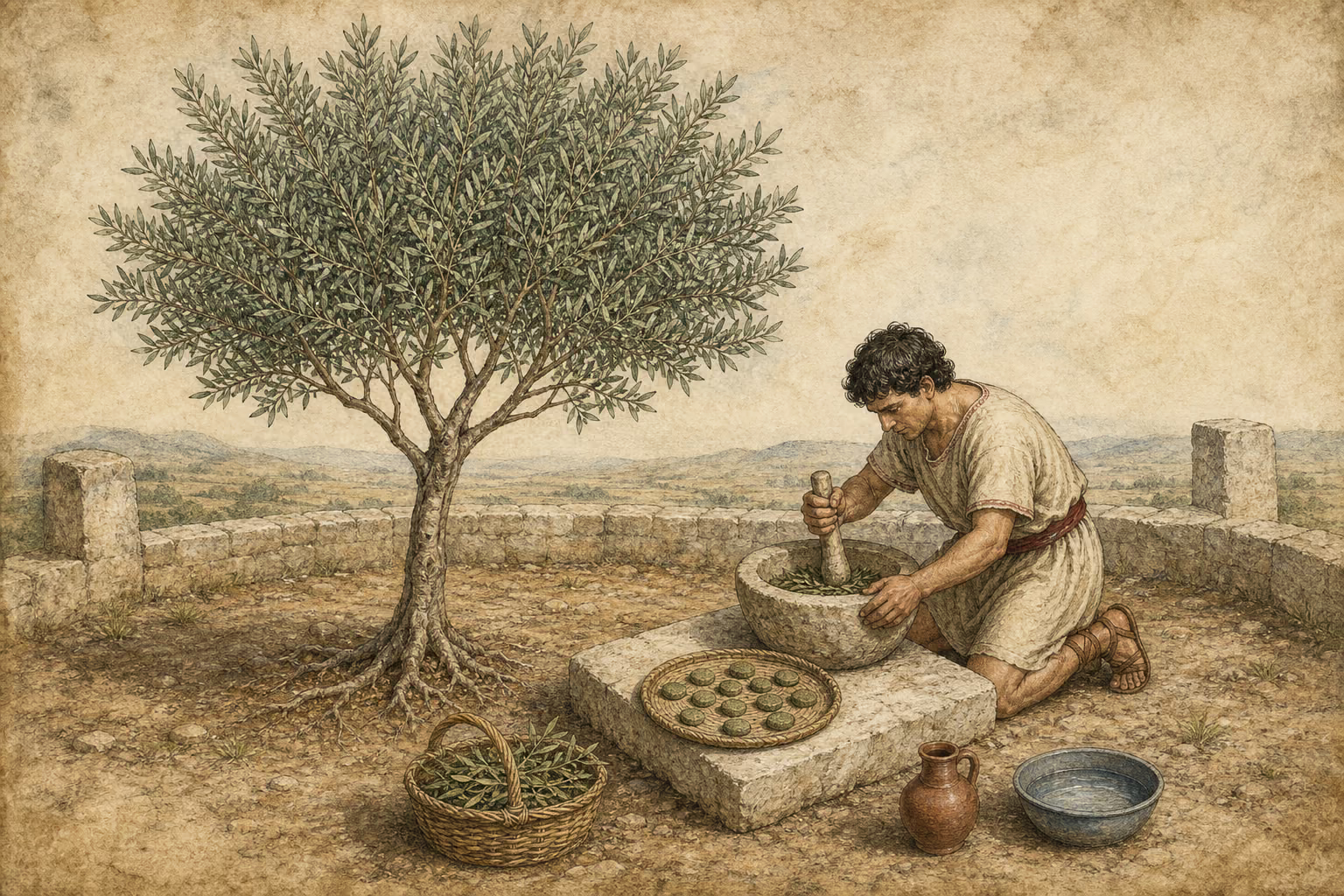
This juice is extracted by pouring wine and rain-water upon the leaves, and then pounding them; after which the pulp is dried and divided into lozenges. Used with wool, as a pessary, this preparation arrests menstruation when in excess, and is very useful for the treatment of purulent sores, condylomata, erysipelas, spreading ulcers, and epinyctis.
The blossom, too, of the olive-tree possesses similar properties. The young branches are burnt when just beginning to blossom, and of the ashes a substitute for spodium is made, upon which wine is poured, and it is then burnt afresh. To suppurations and inflamed tumours these ashes are applied, or else the leaves, beaten up with honey; for the eyes, they are used with polenta. The juice which exudes from the wood, when burnt in a green state, heals lichens, scaly eruptions, and running ulcers.
As to the juice which exudes naturally from the olive-tree, and more particularly that of Æthiopia, we cannot be sufficiently surprised that authors should have been found to recommend it as an application for tooth-ache, and to tell us at the same time that it is a poison, and even that we must have recourse to the wild olive for it. The bark of the roots of the olive, as young and tender a tree as possible being selected, scraped and taken every now and then in honey, is good for patients suffering from spitting of blood and purulent expectorations. The ashes of the tree itself, mixed with axle-grease, are useful for the cure of tumours, and heal fistulas by the extraction of the vicious humours which they contain.
White olives are wholesome for the upper regions of the stomach, but not so good for the bowels. Eaten by themselves, habitually as a diet, quite fresh and before they are preserved, they are remarkably serviceable, having the effect of curing gravel, and of strengthening the teeth when worn or loosened by the use of meat.
Black olives, on the other hand, are not so wholesome for the upper regions of the stomach, but are better for the bowels; they are not good, however, for the head or for the eyes. Both kinds, pounded and applied topically, are good for the cure of burns, but the black olive is sometimes chewed first, and instantly applied to the sore, for the purpose of preventing blisters from forming. Colymbades act as a detergent for foul ulcers, but they are bad for persons suffering from strangury.
As to the amurca of olives, we might appear to have said enough on the subject already, taking Cato as our guide; it remains, however, to speak of the medicinal uses of this substance. It is extremely serviceable as a strengthener of the gums, and for the cure of ulcers of the mouth; it has the effect, also, of strengthening loose teeth in the sockets, and an application of it is good for erysipelas and spreading ulcers. For chilblains, the amurca of the black olive is the best, as also as a fomentation for infants; that of the white olive is used, with wool, as a pessary for affections of the uterus. Of both kinds, however, the amurca is much more serviceable when boiled; this being done in a vessel of Cyprian copper, to the consistency of honey. Thus prepared, it is used, according to the necessities of the case, with either vinegar, old wine, or honied wine, for the treatment of maladies of the mouth, teeth, and ears, and for running ulcers, diseases of the generative organs, and chaps on various parts of the body. It is employed topically, for the cure of wounds, in a linen pledget, and for sprains, in wool: as a medicament, it is of great utility, more particularly when old, as in such case it effects the cure of fistula.
It is used as an injection for ulcerations of the fundament, the generative organs, and the uterus, and is employed topically for incipient gout and diseases of the joints. Boiled down again, with omphacium, to the consistency of honey, it extracts decayed teeth; and, in combination with a decoction of lupines and the plant chamæleon, it is a marvellous cure for itch in beasts of burden. Fomentations of amurca in a raw state are extremely good for gout.