LIBER XXIV · CAPUT 12
THE EGYPTIAN OR ARABIAN THORN: FOUR REMEDIES
Latine · Mayhoff 1906
Spina Arabica—spinae Aegyptiae laudes in odorum loco diximus—et ipsa astringit spissatque destillationes omnes et sanguinis excreationes mensumque abundantiam, etiamnum radice valentior.
Spinae albae semen contra scorpiones auxiliatur. corona ex ea inposita capitis dolores minuit.—Est huic similis quam Graeci acanthion vocant, minoribus multo foliis, aculeatis per extremitates et araneosa lanugine obductis, qua collecta etiam vestes quaedam bombycinis similes fiunt in oriente. ipsa folia vel radices ad remedia opisthotoni bibuntur.
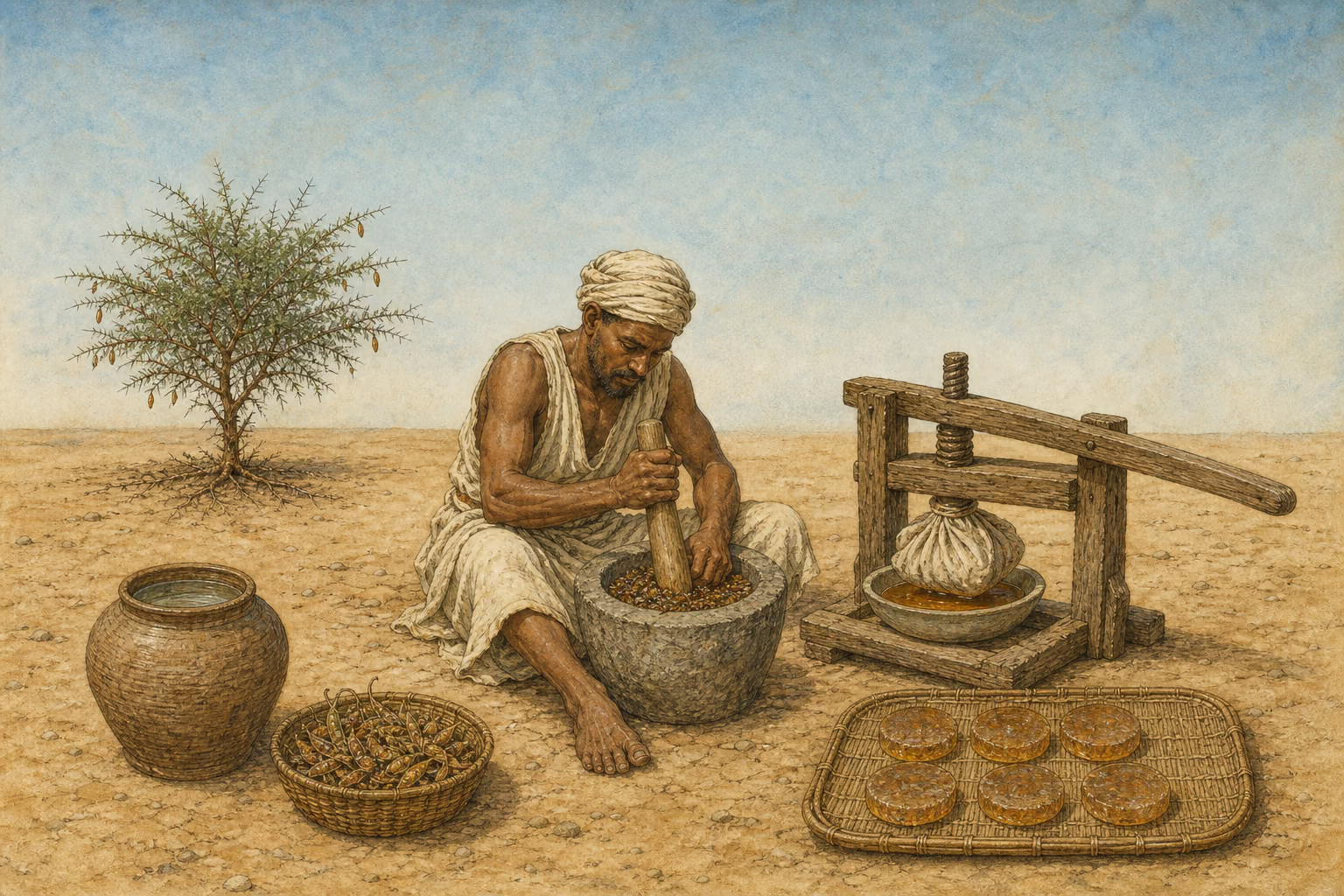
Et acacia e spina fit in Aegypto, alba nigraque arbore, item viridi, sed longe meliore prioribus. fit et in Galatia, deterrima spinosiore arbore. semen omniun lenticulae simile, minore tantum et grano et folliculo. colligitur autumno, ante collectum nimio validius spissat. sucus ex folliculis aqua caelesti perfusis, mox in pila tusis exprimitur organis, tune densatur in sole mortariis in pastillos. fit et foliis minus efficax. ad coria perficienda semine pro galla utuntur. foliorum sucus et Galaticae acaciae nigerrimus inprobatur, item qui valde rufus. purpurea aut leucophaea et quae facillime diluitur—vis summa ad spissandum refrigerandumque est—oculorum medicamentis ante alia utiles. lavantur in eos usus pastilli, ab aliis torrentur, ab aliis peruruntur. capillum tingunt, sanant ignem sacrum, ulcera, quae serpunt, et umida vitia corporis, collectiones, articulos contusos, perniones, pterygia. abundantiam mensum in feminis sistunt vulvamque et sedem procidentes, item oculos, oris ulcera et genitalium.
English · Bostock & Riley 1855–57
When speaking of the perfumes, we have descanted upon the merits of the Egyptian or Arabian thorn. This, too, is of an astringent nature, and acts as a desiccative upon fluxes of all kinds, discharges of blood from the mouth, and excessive menstruation; for all which purposes the root is still more efficacious.
The seed of the white thorn is useful as a remedy for the stings of scorpions, and a chaplet made of it, is good for headache. Similar to this plant is that known to the Greeks as the “acanthion;” though it is much smaller in the leaf, which is pointed at the extremity, and covered with a down like a cobweb in appearance. This downy substance is gathered in the East, and certain textures are made of it similar to those of silk. An infusion of the leaves or root of this plant is taken for the cure of opisthotony.
Gum acacia is produced also from the white and black thorns of Egypt, and from a green thorn as well; the produce, however, of the former trees is by far the best. There is also a similar gum found in Galatia, but of very inferior quality, the produce of a more thorny tree than those last mentioned. The seed of all these trees resembles the lentil in appearance, only that it is smaller, as well as the pod which contains it: it is gathered in autumn, before which period it would be too powerful in its effects. The juice is left to thicken in the pods, which are steeped in rain-water for the purpose, and then pounded in a mortar; after which, the juice is extracted by means of presses. It is then dried in the mortars in the sun, and when dry is divided into tablets. A similar juice is extracted from the leaves, but it is by no means so useful as the other. The seed is used also, as a substitute for nut-galls in curing leather.
The juice extracted from the leaves, as also the extremely black juice of the Galatian acacia, is held in no esteem. The same too with that of a deep red colour. The gum which is of a purple, or of an ashy, grey colour, and which dissolves with the greatest rapidity, possesses the most astringent and cooling qualities of them all, and is more particularly useful as an ingredient in compositions for the eyes. When required for these purposes, the tablets are steeped in water by some, while some again scorch them, and others reduce them to ashes. They are useful for dyeing the hair, and for the cure of erysipelas, serpiginous sores, ulcerations of the humid parts of the body, gatherings, contusions of the joints, chilblains, and hangnails. They are good also for cases of excessive menstruation, procidence of the uterus and rectum, affections of the eyes, and ulcerations of the generative organs and mouth.