LIBER XXIV · CAPUT 13
ASPALATHOS: ONE REMEDY
Latine · Mayhoff 1906
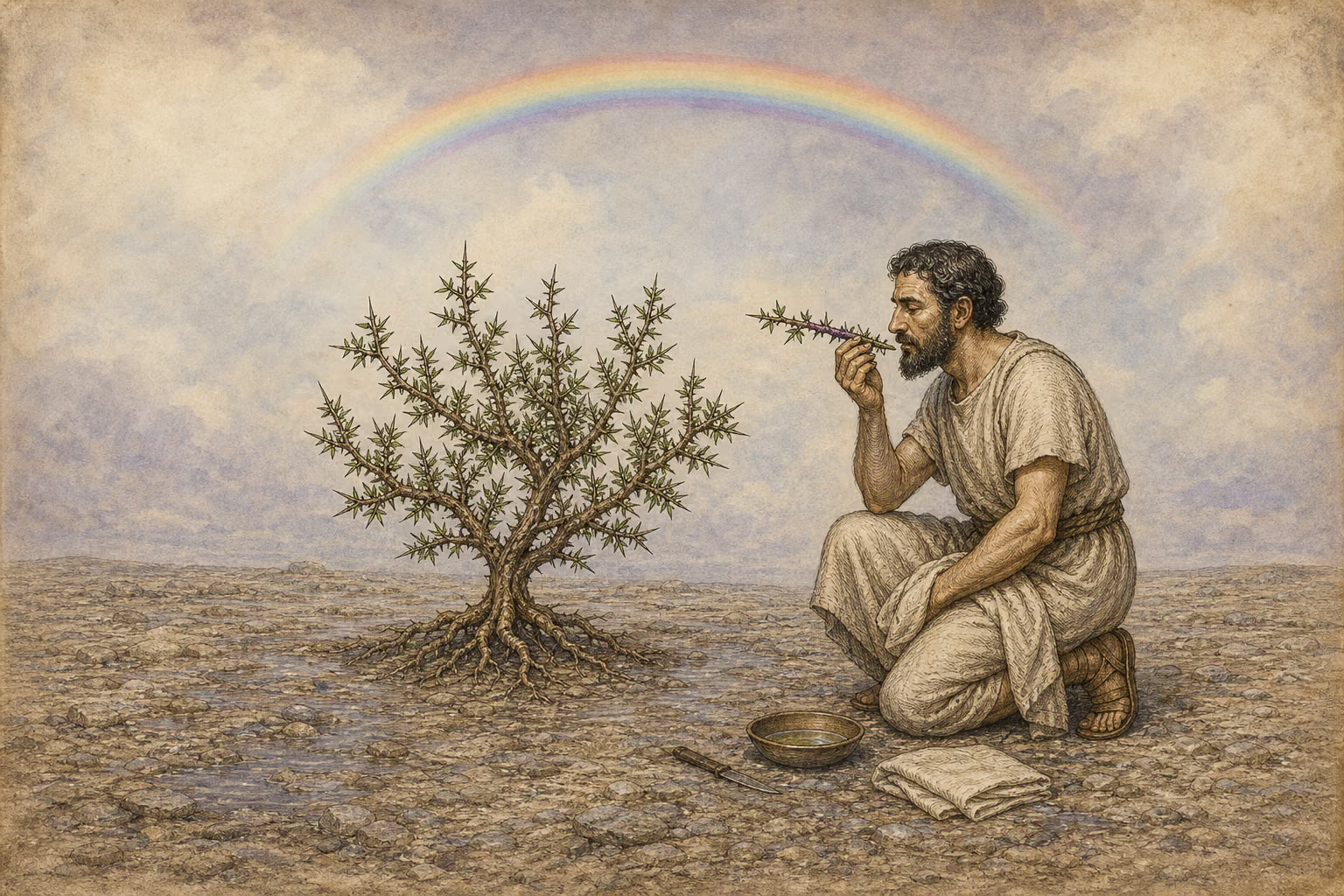
Vulgaris quoque haec spina, ex quaaenae fulloniae inplentur, radicis usus habet. per Hispanias quidem multi et inter odores et ad unguenta utuntur illa, aspalathum vocantes. est sine dubio hoc nomine spina silvestris in oriente, ut diximus, candida, magnitudine arboris iustae, sed et frutex huimilior, aeque spinosus, in Nisyro et Rhodiorum insulis, quem alii erysisceptrum, alii phasganon, Syri diaxylon vocant. optimus qui minime ferulaceus, rubens aut in purpuram vergens detracto cortice. nascitur pluribus locis, sed non ubique odoratus. quam vim haberet caelesti arcu in eum innixo diximus. sanat taetra oris ulcera et ozaenas, genitalia exulcerata aut carbunculantia, item rhagadia, inflationes potu discutit et strangurias. cortex sanguinem reddentibus medetur. decoctum eius alvum sistit. similia praestare silvestrem quoque putant.
Spina et appendix appellata, quoniam bacae puniceo colore in ea appendices vocantur. hae crudae per se et aridae decoctae in vino alvum citam ac tormina conpescunt.—Pyracanthae bacae contra serpentium ictus bibuntur.
Paliurus quoque spinae genus est. semen eius Afri zuram vocant, contra scorpiones efficacissimum, item calculosis et tussi. folia adstrictoriam vim habent. radix discutit panos, collectiones, vomicas, urinas trahit pota. decoctum eius in vino alvum sistit, serpentibus adversatur. radix praecipue datur in vino.
Aquifoliaefolia contusa addito sale articulorum morbis prosunt, bacae purgationi feminarum, coeliacis, dysintericis, cholericis. in vino potae sistunt alvum. radix decocta et inlita extrahit infixa corpori, utilissima et luxatis tumoribusque. aquifolia arbor in domo aut villa sata veneficia arcet. flore eius aquam glaciari Pythagoras tradit; item baculum ex ea factum in quodvis animal emissum, etiamsi citra ceciderit defectu mittentis, ipsum per sese cubito propius adlabi; tam praecipuam naturam inesse arbori.—Taxi arboris fumus necat mures.
Nec rubos ad maleficia tantum genuit natura, ideoque et mora his, hoc est vel hominibus cibos, dedit. vim habent siccandi, adstringendi, gingivis, tonsillis, genitalibus accommodatissimi. adversantur serpentium sceleratissimis, haemorrhoidi et presteri, flos aut mora scorpio- nibus. vulnera sine collectionum periculo iungunt. urinas cient. caules eorum teneri tunduntur exprimiturque sucus, mox sole cogitur in crassitudinem mellis; singulari remedio contra mala oris oculorumque, sanguinem exscreantes, anginas, vulvas, sedes, coeliacos intellegitur potus aut inlitus. oris quidem vitiis etiam folia commanducata prosunt et ulceribus manantibus aut quibuscumque in capite inlinuntur. cardiacis sic vel per se inponuntur a mamma sinistra, item stomacho in doloribus oculisque procidentibus. instillatur sucus eorum et auribus. sanat condylomata cum rosaceo cerato. cauliculorum ex vino decoctum uvae praesentaneum remedium est. iidem per se in cibo sumpti cymae modo aut decocti in vino austero labantes dentes firmant. alvum sistunt et profluvia sanguinis; dysintericis prosunt. siccantur in umbra, ut cinis crematorum uvam reprimat. folia quoque arefacta et contusa iumentorum ulceribus utilia traduntur. mora, quae in iis nascuntur, vel efficaciorem stomaticen praebuerint quam sativa morus. eadem compositione vel cum hypocisthide tantum et melle bibuntur in cholera et a cardiacis et contra araneos. inter medicamenta, quae styptica vocant, nihil efficacius rubi mora ferentis radice decocta in vino ad tertias partes, ut colluantur eo oris ulcera et sedis foveantur, quae tanta vis est, ut spongeae ipsae lapidescant.
Alterum genus rubi, in quo rosa nascitur, gignit pilulam castaneae similem, calculosis praecipuo remedio— alia est cynorrhoda, quam proximo dicemus volumine—;
English · Bostock & Riley 1855–57
The common thorn too, with which the fulling coppers are filled is employed for the same purposes as the radicula. In the provinces of Spain it is commonly employed as an ingredient in perfumes and unguents, under the name of “aspalathos.” There is no doubt, however, that there is also a wild thorn of the same name in the East, as already mentioned, of a white colour, and the size of an ordinary tree.
There is also found in the islands of Nisyros and of Rhodes, a shrub of smaller size, but full as thorny, known by some as the erysisceptrum, by others as the adipsatheon, and by the Syrians as the diaxylon. The best kind is that which is the least ferulaceous in the stem, and which is of a red colour, or inclining to purple, when the bark is removed. It is found growing in many places, but is not everywhere odoriferous. We have already stated, how remarkably sweet the odour of it is, when the rainbow has been extended over it.
This plant cures fetid ulcers of the mouth, polypus of the nose, ulcerations or carbuncles of the generative organs, and chaps; taken in drink it acts as a carminative, and is curative of strangury. The bark is good for patients troubled with discharges of blood, and a decoction of it acts astringently on the bowels. It is generally thought that the wild plant is productive of the same effects.
There is a thorn also known as the appendix; that name being given to the red berries which hang from its branches. These berries eaten by themselves, raw, or else dried and boiled in wine, arrest looseness of the bowels and dispel griping pains in the stomach. The berries of the pyracantha are taken in drink for wounds inflicted by serpents.
The paliurus, too, is a kind of thorn. The seed of it, known by the people of Africa as “zura,” is extremely efficacious for the sting of the scorpion, as also for urinary calculi and cough. The leaves are of an astringent nature, and the root disperses inflamed tumours, gatherings, and abscesses; taken in drink it is diuretic in its effects. A decoction of it in wine arrests diarrhœa, and neutralizes the venom of serpents: the root more particularly is administered in wine.
The agrifolia, pounded, with the addition of salt, is good for diseases of the joints, and the berries are used in cases of excessive menstruation, cœliac affections, dysentery, and cholera; taken in wine, they act astringently upon the bowels. A decoction of the root, applied externally, extracts foreign bodies from the flesh, and is remarkably useful for sprains and tumours.
The tree called “aquifolia,” planted in a town or country-house is a preservative against sorceries and spells. The blossom of it, according to Pythagoras, congeals water, and a staff made of the wood, if, when thrown at any animal, from want of strength in the party throwing it, it falls short of the mark will roll back again towards the thrower, of its own accord—so remarkable are the properties of this tree. The smoke of the yew kills rats and mice.
Nor yet has Nature destined the bramble to be only an annoyance to mankind, for she has bestowed upon it mulberries of its own, or, in other words, a nutritive aliment even for mankind. These berries are of a desiccative, astringent, nature, and are extremely useful for maladies of the gums, tonsillary glands, and generative organs. They neutralize also the venom of those most deadly of serpents, the hæmorrhoïs and the prester; and the flowers or fruit will heal wounds inflicted by scorpions, without any danger of abscesses forming. The shoots of the bramble have a diuretic effect: and the more tender ones are pounded; and the juice extracted and then dried in the sun till it has attained the consistency of honey, being considered a most excellent remedy, taken in drink or applied externally, for maladies of the mouth and eyes, discharges of blood from the mouth, quinzy, affections of the uterus, diseases of the rectum, and cœliac affections. The leaves, chewed, are good for diseases of the mouth, and a topical application is made of them for running ulcers and other maladies of the head. In the cardiac disease they are similarly applied to the left breast by themselves. They are applied topically also for pains in the stomach and for procidence of the eyes. The juice of them is used as an injection for the ears, and, in combination with cerate of roses, it heals condylomata.
A decoction of the young shoots in wine is an instantaneous remedy for diseases of the uvula; and eaten by themselves like cymæ, or boiled in astringent wine, they strengthen loose teeth. They arrest fluxes of the bowels also, and discharges of blood, and are very useful for dysentery. Dried in the shade and then burnt, the ashes of them are curative of procidence of the uvula. The leaves too, dried and pounded, are very useful, it is said, for ulcers upon beasts of burden. The berries produced by this plant would seem to furnish a stomatice superior even to that prepared from the cultivated mulberry. Under this form, or else only with hypocisthis and honey, the berries are administered for cholera, the cardiac disease, and wounds inflicted by spiders.
Among the medicaments known as “styptics,” there is none that is more efficacious than a decoction of the root of the bramble in wine, boiled down to one third. Ulcerations of the mouth and rectum are bathed with it, and fomentations of it are used for a similar purpose; indeed, it is so remarkably powerful in its effects, that the very sponges which are used become as hard as a stone.
There is another kind of bramble also, which bears a rose. It produces a round excrescence, similar to a chesnut in appearance, which is remarkably valuable as a remedy for calculus. This is quite a different production from the “cynorrhoda,” which we shall have occasion to speak of in the succeeding Book.