LIBER XXV · CAPUT 11
REMEDIES FOR DISEASES OF THE HEAD. NYMPHÆA HERACLIA: TWO REMEDIES
Latine · Mayhoff 1906
Verum et generatim membratimque singulis corporum morbis remedia subtexemus orsi a capite. Alopecias emendat nymphaeaeHeracliae radix, sive una.... trita inlinantur. polythrix distat a callitriche, quod iuncos albos habet et folia plura maioraque, frutice quoque maior est. defluentem capillum confirmant et densant. item lingulaca, circa fontes nascens, cuius radix [admixta] combusta teritur cum adipe suis nigrae; id quoque excipitur, ut eius suis, quae numquam pepererit; sol deinde plurimum confert inlitae. similis usus est cyclamini radicis.—Porriginem veratri radix tollit in oleo decocta vel in aqua. —Capitis dolori medetur panacis omnium generum radix in oleo contrita, aristolochia, hiberis adalligata hora vel diutius, si pati possit, comitante balinei usu. medetur et daucum. purgat autem cyclaminos cum melle in nares addita et ulcera capitis sanat inlita. medetur et peristereos.
Cacalia sive leontice vocatur, semen margaritis minutis simile, dependens inter folia grandia, in montibus fere. huius grana xv in oleo macerantur, atque ita adverso capillo caput inungitur.
Fit et ex callitriche sternumentum. folia sunt lenticulae, caules iunci tenuissimi, radice minima. nascitur opacis et umidis, gustatu fervens.
Hysopum in oleo contritum phthiriasi resistit et prurigini in capite. est autem optimum Cilicium e Tauro monte, dein Pamphylium ac Zmyrnaeum. stomacho contrarium, purgat cum fico sumptum per inferna, cum melle vomitionibus. putant et serpentitum ictibus adversari, tritum cum melle et sale et cumino.
Lonchitis non, ut plerique existimaverunt, eadem est quae xiphion aut phasganion, quamquam cuspidi similis semine; habet enim folia porri, rubentia ad radicem et plura quam in caule, capitula personis comicis similia, parvam exserentibus linguam radicibus praelongis. nascitur in sitientibus, e diverso xiphion et phasganion in umidis. cum primum exit, gladii praebet speciem, caule II cubitorum, radice ad nucis abellanae figuram fimbriata, quam effodi ante messes oportet, siccari in umbra. superior pars eius cum ture trita, aequo pondere admixto vino, ossa fracta capite extrahit aut quicquid in corpore suppuret vel si calcata sint ossa serpentis; eadem contra venena efficax. —Caput in dolore veratro in oleo vel rosaceo decocto tritoque ungui convenit, peucedano ex oleo vel rosaceo et aceto. tepidum hoc prodest et doloribus, qui plerumque ex dimidia parte capitis sentiuntur, et vertigini. perungunt et radice eius sudoris causa eliciendi, quoniam caustica vis ei est.
Psyllion alii cynoides, alii crystallion, alii Sice- licon, alii cynomyiam appellant, radice tenui, supervacua, sarmentosum, fabae granis in cacuminibus, foliis canino capiti non dissimilibus, seine autem pulici, unde et no- >men. hoc in bacis, ipsa herba in vineis invenitur. vis ad refrigerandum et discutiendum ingens. semen in usu, fronti inponitur in dolore et temporibus ex aceto et rosaceo aut posca; ad cetera inlinitur. acetabuli mensura sextarium aquae densat ac contrahit; tunc terere oportet et crassitudinem inlinere cuicumque dolori et collection inflammationique.—Vulneribus capitis medetur aristolochia, fracta extrahens ossa et in alia quidem parte corporis, sed maxime capite; similiter plistolochia.—Thryseli num est non dissimile apio; huius radix commanducata purgat capitis pituitas.
English · Bostock & Riley 1855–57
But we shall now proceed to point out the various classes of remedies for the several parts of the body, and the maladies to which those parts are subject, beginning in the first place with the head.
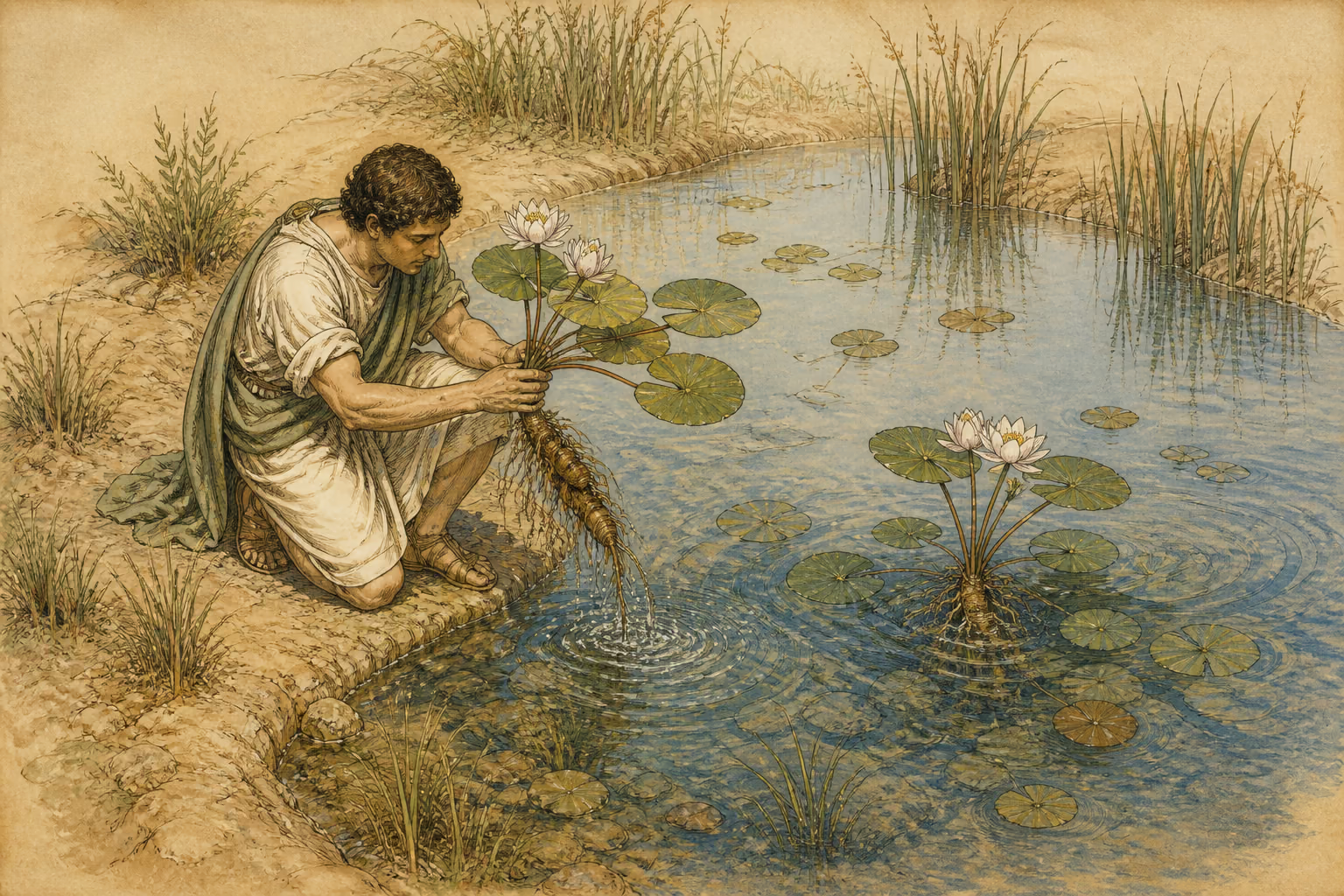
The root of nymphæa heraclia effects the cure of alopecy, if they are beaten up together, and applied. The polythrix differs from the callitrichos in having white, rushlike suckers, larger leaves, and more numerous; the main stem, too, is larger. This plant strengthens the hair, prevents it from falling off, and makes it grow more thickly
The same is the case too with the lingulaca, a plant that grows in the vicinity of springs, and the root of which is reduced to ashes, and beaten up with hog’s lard. Due care must be taken, however, that it is the lard of a female, of a black colour, and one that has never farrowed. The application is rendered additionally efficacious, if the ointment is applied in the sun. Root, too, of cyclaminos is employed in the same manner for a similar purpose. A decoction of root of hellebore in oil or in water is used for the removal of porrigo. For the cure of head-ache, root of all kinds of panaces is used, beaten up in oil; as also aristolochia and iberis, this last being applied to the head for an hour or more, if the patient can bear it so long, care being taken to bathe m the meanwhile. The daucus, too, is curative of head-ache. Cyclaminos, introduced into the nostrils with honey, clears the head; used in the form of a liniment, it heals ulcers of the head. Peristereos, also, is curative of diseases of the head.
The name of “cacalia” or “leontice” is given to a plant with seed resembling small pearls in appearance, and hanging down between large leaves: it is mostly found upon mountains. Fifteen grains of this seed are macerated in oil, and the head is rubbed with the mixture, the contrary way to the hair.
A sternutatory, too, is prepared from the callitrichos. The leaves of this plant are similar to those of the lentil, and the stems resemble fine rushes; the root is very diminutive. It grows in shady, moist localities, and has a burning taste in the mouth.
Hyssop, beaten up in oil, is curative of phthiriasis and prurigo of the head. The best hyssop is that of Mount Taurus in Cilicia, next to which in quality is the produce of Pamphylia and Smyrna. This plant is injurious to the stomach: taken with figs, it produces alvine evacuations, and used in combination with honey, it acts as an emetic. It is generally thought that, beaten up with honey, salt, and cummin, it is curative of the stings of serpents.
The lonchitis is not, as most writers have imagined, the same plant as the xiphion or phasganion, although the seed of it does bear a resemblance to the point of a spear. The lonchitis, in fact, has leaves like those of the leek, of a reddish colour near the root, and more numerous there than on the upper part of the stem. It bears diminutive heads, which are very similar to our masks of comedy, and from which a small tongue protrudes: the roots of it are remarkably long. It grows in thirsty, arid soils.
The xiphion or phasganion, on the other hand, is found growing in humid localities. On first leaving the ground it has the appearance of a sword; the stem of it is two cubits in length, and the root is fringed like a hazel nut.
This root should always be taken up before harvest, and dried in the shade. The upper part of it, pounded with frankincense, and mixed with an equal quantity of wine, extracts fractured bones of the cranium, purulent matter in all parts of the body, and bones of serpents, when accidentally trodden upon; if is very efficacious, too, for poisons. In cases of head-ache, the head should be rubbed with hellebore, boiled and beaten up in olive oil, or oil of roses, or else with peucedanum steeped in olive oil or rose oil, and vinegar. This last plant, made lukewarm, is very good also for hemicrania and vertigo. It being of a heating nature, the body is rubbed with the root as a sudorific.
Psyllion, cynoïdes, crystallion, sicelicon, or cynomyia, has a slender root, of which no use is made, and numerous thin branches, with seeds resembling those of the bean, at the extremities. The leaves of it are not unlike a dog’s head in shape; and the seed, which is enclosed in berries, bears a resemblance to a flea—whence its name “psyllion.” This plant is generally found growing in vineyards, is of a cooling nature, and is extremely efficacious as a dispellent. The seed of it is the part made use of; for head-ache, it is applied to the forehead and temples with rose oil and vinegar, or else with oxycrate; it is used as a liniment for other purposes also. Mixed in the proportion of one acetabulum to one sextarius of water, it is left to coagulate and thicken; after which it is beaten up, and the thick solution is used as a liniment for all kinds of pains, abscesses, and inflammations.
Aristolochia is used as a remedy for wounds in the head; it has the property, too, of extracting fractured bones, not only from other parts of the body, but the cranium in particular. The same, too, with plistolochia.
Thryselinum is a plant not unlike parsley; the root of it, eaten, carries off pituitous humours from the head.