LIBER XXV · CAPUT 3
WHAT DISEASES ARE ATTENDED WITH THE GREATEST PAIN. NAMES OF PERSONS WHO HAVE DISCOVERED FAMOUS PLANTS
Latine · Mayhoff 1906
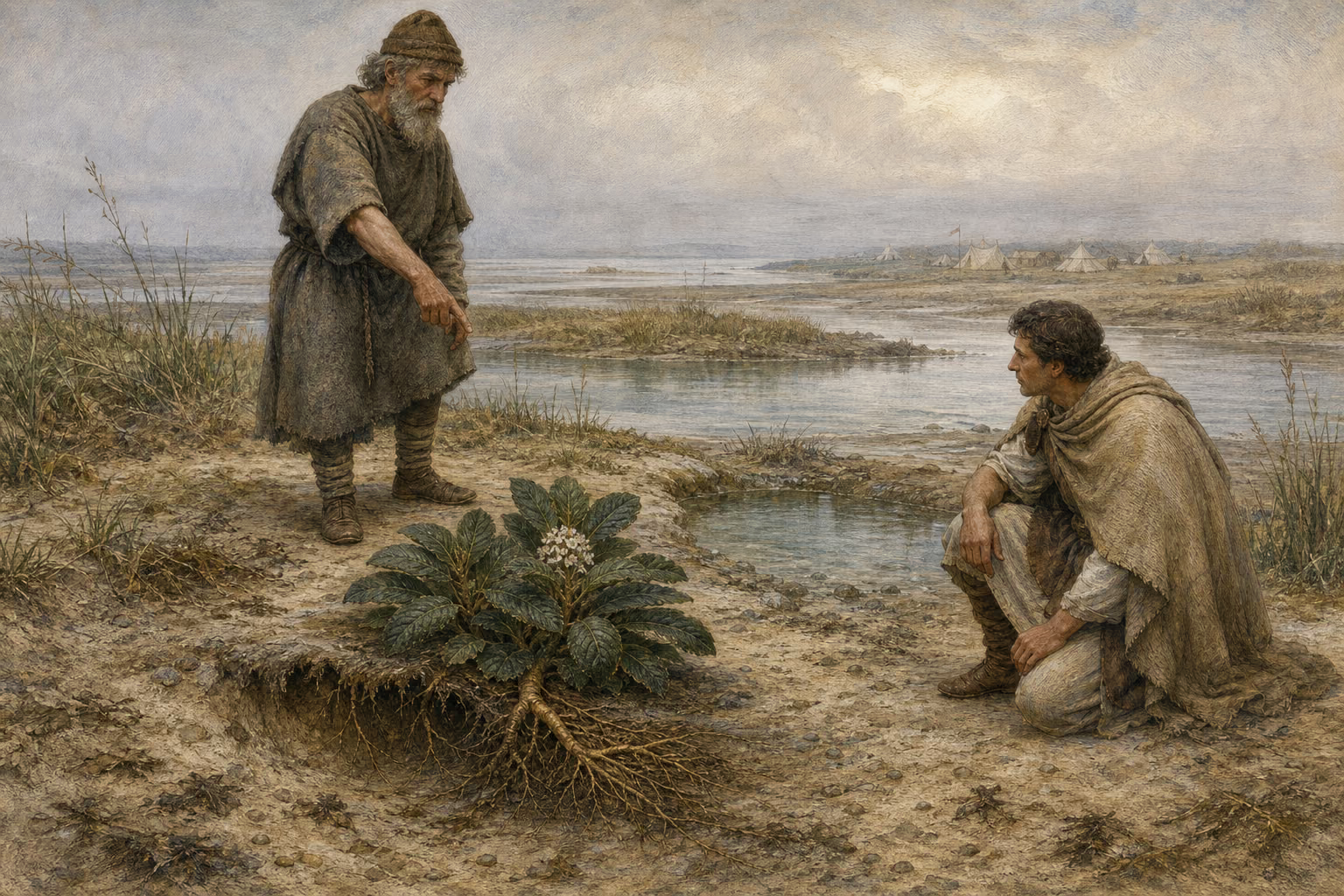
Nec bestiarum solum ad nocendum scelera sunt, sed interim aquarum quoque ac locorum. in Germania trans Rhenum castris a Germanico Caesare promotis maritimo tractu fons erat aquae dulcis solus, qua pota intra biennium dentes deciderent compagesque in genibus solverentur. stomacacen medici vocabant et scelotyrben ea mala. reperta auxilio est herba, quae appellatur Britannica, non nervis modo et oris malis salutaris, sed contra anginas quoque et contra serpentes. folia habet oblonga nigra, radicem nigram. sucus eius exprimitur et e radice. florem vibones vocant, qui collectus, priusquam tonitrum audiatur, et devoratus securos in totum annum a metu anginae praestat. Frisi, gens tum fida in qua castra erant, monstravere illam. mirorque nominis causam, nisi forte confines oceano Britanniae veluti propinquae dicavere. non enim inde appellatam, quoniam ibi plurima nasceretur, certum est etiam tum Britannia libera.
Fuit quidem et hic quondam ambitus nominibus suis eas adoptandi, ut docebimus fecisse reges. tanta res videbatur herbam invenire, vitam iuvare, nunc fortassis aliquis curam hanc nostram frivolam quoque existimaturis; adeo deliciis sordent etiam quae ad salutem pertinent. auctores tamen, quarum inveniuntur, in primis celebrari par est effectu earum digesto in genera morborum. qua quidem in reputatione misereri sortis humanae subit, praeter fortuita casusque et quae nova omnis hora excogitat, milia morborum singulis mortalium timenda. Qui gravissimi ex his sint, discernere stultitiae prope videri possit, cum suus cuique ac praesens quisque atrocissimus videatur. et de hoc tamen iudicavere aevi experimenta, asperrimi cruciatus esse calculorum a stillicidio vesicae, proximum stomachi, tertium eorum, quae in capite doleant, non ob alios fere morte conscita.
A Graecis et noxias herbas demonstratas miror equidem, nec venenorum tantum, quoniam ea condicio vitae est, ut mori plerumque etiam optumis portus sit, tradatque M. Varro, Servium Clodium equitem Romanum magnitudine doloris in podagra coactum veneno crura perunxisse et postea caruisse sensu omni aeque quam dolore in ea parte corporis. sed quae fuit venia monstrandi qua mentes solverentur, partus eliderentur, multaque similia? ego nec abortiva dico ac ne amatoria quidem, memor Lucullum imperatorem clarissimum amatorio perisse, nec alia magica portenta, nisi ubi cavenda sunt aut coarguenda, in primis fide eorum damnata. satis operae fuerit abundeque praestatum vitae salutares dixisse,.... ac postea inventas.
English · Bostock & Riley 1855–57
It is not, however, the animals only that are endowed with certain baneful and noxious properties, but, sometimes, waters even, and localities as well. Upon one occasion, in his German campaign, Germanicus Cæsar had pitched his camp beyond the river Rhenus; the only fresh water to be obtained being that of a single spring in the vicinity of the sea-shore. It was found, however, that within two years the habitual use of this water was productive of loss of the teeth and a total relaxation of the joints of the knees: the names given to these maladies, by medical men, were “stomacace” and “sceloturbe.” A remedy for them was discovered, however, in the plant known as the “britannica,” which is good, not only for diseases of the sinews and mouth, but for quinzy also, and injuries inflicted by serpents. This plant has dark oblong leaves and a swarthy root: the name given to the flower of it is “vibones,” and if it is gathered and eaten before thunder has been heard, it will ensure safety in every respect. The Frisii, a nation then on terms of friendship with us, and within whose territories the Roman army was encamped, pointed out this plant to our soldiers: the name given to it, however, rather surprises me, though possibly it may have been so called because the shores of Britannia are in the vicinity, and only separated by the ocean. At all events, it was not called by this name from the fact of its growing there in any great abundance, that is quite certain, for at the time I am speaking of, Britannia was still independent.
In former times there was a sort of ambition, as it were, of adopting plants, by bestowing upon them one’s name, a thing that has been done before now by kings even, as we shall have occasion to show: so desirable a thing did it appear to have made the discovery of some plant, and thus far to have contributed to the benefit of mankind. At the present day, however, it is far from impossible that there may be some who will look upon these researches of ours as frivolous even, so distasteful to a life of ease and luxury are the very things which so greatly conduce to our welfare.
Still, however, it will be only right to mention in the first place those plants the discoverers of which are known, their various properties being classified according to the several maladies for the treatment of which they are respectively employed: in taking a review of which one cannot do otherwise than bewail the unhappy lot of mankind, subject as it is, in addition to chances and changes, and those new afflictions which every hour is bringing with it, to thousands of diseases which menace the existence of each mortal being. It would seem almost an act of folly to attempt to determine which of these diseases is attended with the most excruciating pain, seeing that every one is of opinion that the malady with which for the moment he himself is afflicted, is the most excruciating and insupportable. The general experience, however, of the present age has come to the conclusion, that the most agonizing torments are those attendant upon strangury, resulting from calculi in the bladder; next to them, those arising from maladies of the stomach; and in the third place, those caused by pains and affections of the head; for it is more generally in these cases, we find, and not in others, that patients are tempted to commit suicide.
For my own part, I am surprised that the Greek authors have gone so far as to give a description of noxious plants even; in using which term, I wish it to be understood that I do not mean the poisonous plants merely; for such is our tenure of life that death is often a port of refuge to even the best of men. We meet too, with one case of a somewhat similar nature, where M. Varro speaks of Servius Clodius, a member of the Equestrian order, being so dreadfully tormented with gout, that he had his legs rubbed all over with poisons, the result of which was, that from that time forward all sensation, equally with all pain, was deadened in those parts of his body. But what excuse, I say, can there be for making the world acquainted with plants, the only result of the use of which is to derange the intellect, to produce abortion, and to cause numerous other effects equally pernicious? So far as I am concerned, I shall describe neither abortives nor philtres, bearing in mind, as I do, that Lucullus, that most celebrated general, died of the effects of a philtre. Nor shall I speak of other ill-omened devices of magic, unless it be to give warning against them, or to expose them, for I most emphatically condemn all faith and belief in them. It will suffice for me, and I shall have abundantly done my duty, if I point out those plants which were made for the benefit of mankind, and the properties of which have been discovered in the lapse of time.