LIBER XXV · CAPUT 5
LINOZOSTIS, PARTHENION, HERMUPOA, OR MERCURIALIS; TWO VARIETIES OF IT: TWENTY-TWO REMEDIES
Latine · Mayhoff 1906
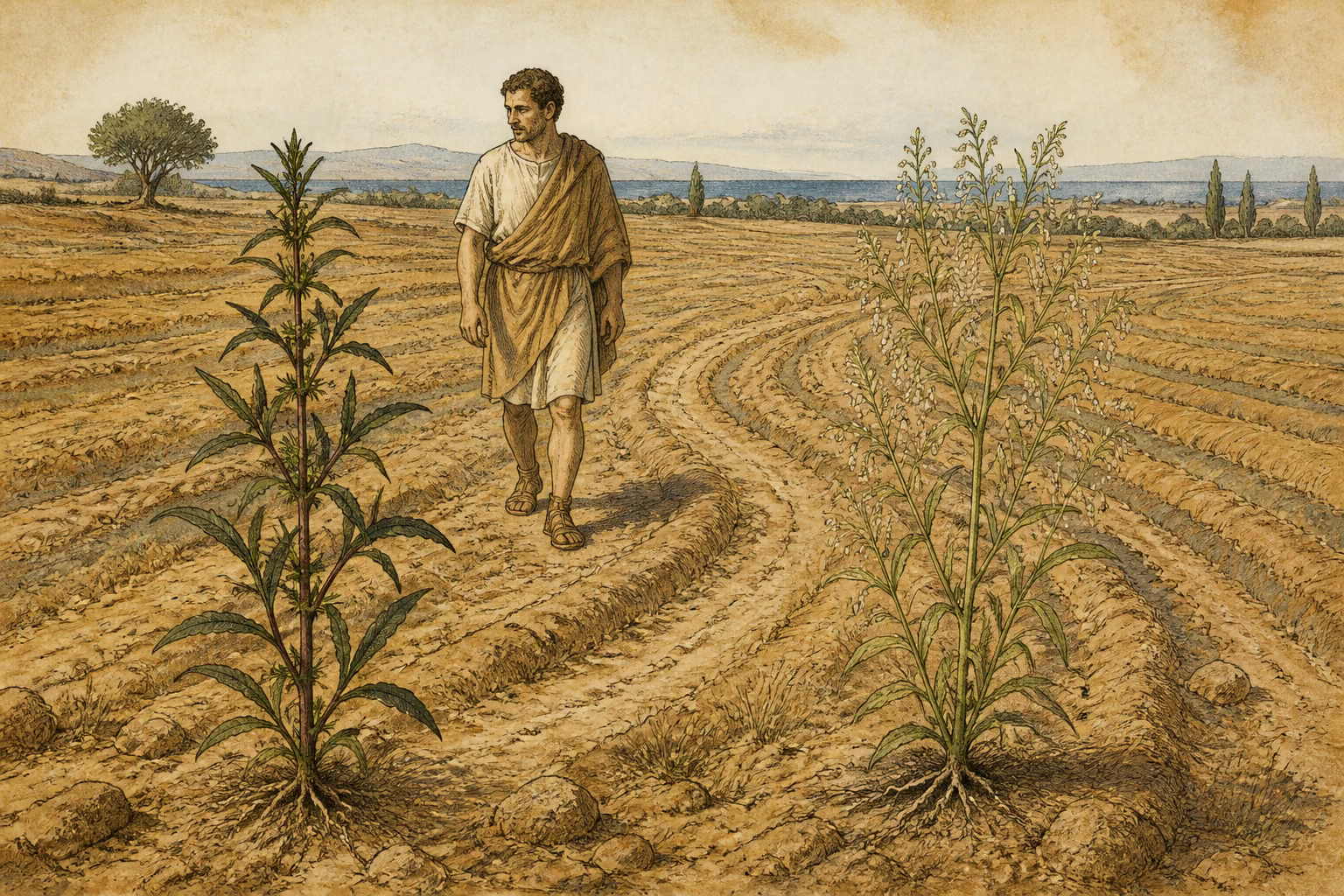
Linozostis sive parthenium Mercuri inventum est. ideo apud Graecos Hermu poan multi vocant eam, apud nos omnes Mercurialem. duo eius genera, masculus et femina, quae efficacior, caule et cubitali, interdum ramoso in cacumine, ocimo angustioribus foliis, geniculis..., densis alarum cavis multis, semine in geniculis dependente, feminae copioso, mari iuxta genicula stanteet rariore ac brevi contortoque, feminae soluto et candido. folia maribus nigriora, feminis candidiora; radix supervacua, praetenuis. nascuntur in campestribus cultis. mirum est quod de utroque eorum genere proditur: ut mares gignantur, hunc facere, ut feminae, illam; hoc contingere, si a conceptu protinus bibatur sucus in passo edanturve folia decocta ex oleo et sale, vel cruda ex aceto. quidam decocunt eam in novo fictili cum heliotropio et II vel III spicis, donec cogatur. decoctum dari iubent et herbam ipsam in cibo altero die purgationis mulieribus per triduum, quarto die a balineo coire eas. Hippocrates miris laudibus in mulierum usum praedicavit has, at hunc modum medicorum nemo novit. ille eas volvae cum melle vel rosaceo vel irino vel lilino admovit, item ad ciendos menses secundasque. idem praestare potu fotuque dixit. instillavit auribus olidis sucum, inunxit cum vino vetere alvo. folia inposuit epiphoris; stranguriae et vesicis decoctum eius dedit cum murra et ture. alvo quidem solvendae vel in febri decoquitur quantum manus capiat in II sextariis aquae ad dimidias; bibitur sale et melle admixto nec non cum ungula suis aut gallinaceo decocta salubrius. purgationis causa putavere aliqui utramque dandam sive cum malva decoctam. thoracem purgant, bilem detrahunt, sed stomachum laedunt. reliquos usus dicemus suis locis.
Invenisse et Achilles discipulus Chironis qua volneribus mederetur —quae ob id Achilleos vocatur— ac sanasse Teleplhum dicitur. alii primum aeruginem invenisse utilissimam emplastris—ideoque pingitur ex cuspide decutiens eam gladio in volnus Telephi —, alii utroque usum medicamento volunt. aliqui et hanc panacem Heracliam, alii sideriten et apud nos milifoliam vocant, cubitali scapo, ramosam, minutioribus quam feniculi foliis vestitan ab imo. alii fatentur quidem illam vulneribus utilem, sed veram Achilleon esse scapo caeruleo pedali, sine ramis, ex omni parte singulis foliis rotundis eleganter vestitam; alii quadrato caule, capitulis marruvii, foliis quercus; hac etiam praecisos nervos glutinari. faciunt alii et sideritim in maceriis nascentem, cum teratur, foedi odoris; etiamnum aliam similem huic, sed candidioribus foliis et pinguioribus, teneriorem cauliculis, in vineis nascentem, aliqui vero binum cubitorum, ramulis exilibus, triangulis, folio felicis pediculo longo, betae semine, ones volneribus praecipuas. nostri eam, quae est latissimo folio, scopas regias vocant. medetur anginis suum.
Invenit et Teucer eadem aetate Teucrion, quam quidam hemionion vocant, spargentem iuncos tenues, folia parva, asperis locis, austero sapore. numquam florem neque semen gignit. medetur lienibus, constatque sic inventam: cum exta super eam proiecta essent, adhaesisse lieni eumque exinanisse. ob id a quibusdam splenion vocatur. narrant sues, qui radicem eius edint, sine splene inveniri. quidam ramis hysopi surculosam, folio fabae, eodem nomine appellant et colligi, cum floreat, iubent —adeo florere non dubitant—maximeque ex Ciliciis et Pisidiae montibus laudant.
Melampodis fama divinationis artibus nota est. ab hoc appellatur unum hellebori genus Melampodion. aliqui pastorem eodem nomine invenisse tradunt, capras purgari pasto illo animadvertentem, datoque lacte earum sanasse Proetidas furentes..... quam ob rem de omnibus eius generibus dici simul convenit.
Prima duo sunt, candidum ac nigrum. hoc radicibus tantum intellegi tradunt plerique, aliiet folia nigri platano similia, sed minora nigrioraque et pluribus divisuris scissa, albi betae incipientis, haec quoque nigriora et canalium dorso rubescentia, utraque caule palmi, ferulaceo, bulborum tunicis convoluto, radice fimbriata ceparum modo. nigro equi, boves, sues necantur, itaque cavent id, cum candido vescantur. tempestivum esse tradunt messibus. plurimum autem nascitur in Oete monte et optimum, uno eius loco circa Pyram. nigrum ubique provenit, sed melius in Helicone, qui mons et aliis laudatur herbis. candidum probatur secundum Oetaeum Ponticum, tertio loco Eleaticum, quod in vitibus nasci ferunt, quarto Parnasium, quod adulteratur Aetolico ex vicino. nigrum ex his Melampodium vocant, quo et domus suffiunt purgantque, spargentes et pecora, cum precatione sollemni. hoc et religiosius colligitur, primum enim gladio circumscribitur, dein qui succisurus est ortum spectat et precatur, ut id liceat sibi concedentibus diis facere observatque aquilae volatus; fere enim secantibus interest, et, si prope advolavit, moriturum illo anno qui succidat augurium est. nec album facile colligitur, caput adgravans maxime, nisi praesumatur alium et subinde vinum sorbeatur celeriterque fodiatur. nigrum alii encymon vocant, alii polyrrhizon. purgat per inferna, candidum autem vomitione causasque morborum extrahit, quondam terribile, postea tam promiscuum, ut plerique studiorum gratia, ad pervidenda acrius quae commentabantur, saepius sumptitaverint. Carneaden responsurum Zenonis libris.... Drusumque apud nos, tribunorum popularium clarissimum, cui ante omnis plebs adstans plausit, optimates vero bellum Marsicum inputavere, constat hoc medicamento liberatum comitiali morbo in Anticyra insula. ibi enim tutissime sumitur, quoniam, ut diximus, sesamoides admiscent. Italia veratrum vocat.
Farina eorum per se et mixta radiculae, qua lanas diximus lavari, sternumentum facit, amboque somnum. leguntur autem tenuissimae radices brevesque ac velut decurtatae et imae. nam summa, quae est crassissima, cepis similis, canibus tantum datur purgationis causa. antiqui radicem cortice quam carnosissimo seligebant, quo tenuior eximeretur medulla; hanc umidis spongeis opertam turgescentemque acu in longitudinem findebant, dein fila in umbra siccabant his utentes. nunc ramulos ipsos ab radice quam crassissimi corticis ita dant. optimum quod acre gustu fervensque in frangendo pulverem emittit. durare vim xxx annis ferunt.
Nigrum medetur paralyticis, insanientibus, hydropicis, dum citra febrim, podagris veteribus, articulariis morbis. trahit ex alvo bilem, pituitas, aquas. datur ad leniter molliendam alvum plurimum drachma una, modice IIII obolis. miscuere aliqui et scamonium, sed tutius salem. in dulcibus datum copiosius periculum infert. oculorum caliginem fotu discutit; ob id quidam et inunxere trito. strumas, suppurata, duritias concoquit et purgat, item fistulas tertio die exemptum. verrucas tollit cum squama aeris et sandaraca. hydropicorum ventri inponitur cum farina hordeacia et vino. pecorum et iumentorum pituitas sanat surculo per aurem traiecto et postero die eadem hora exempto, scabiem quadripedum cum ture, cera ac pice vel cum pisselaeo.
Album optimum, quod celerrime movet sternumenta, sed multum terribilius nigro, praecipue si quis apparatum poturorum apud antiquos legat contra horrores, strangulatus, intempestivas somni vires, singultus infinitos aut sternumenta, stomachi dissolutiones, tardiores vomitus aut longiores, exiguos aut nimios. quippe alia dare soliti, quae concitarent vomitiones, ipsumque helleborum extrahere medicamentis aut clysteribus, saepius etiam sanguine venis emisso. iam vero et cum prospere cedat, terribilius variis coloribus vomitionum et post vomitiones observatione alvi, balinearum dispensatione, totius corporis cura, antecedente omnia haec magno terrore famae, namque tradunt absumi carnes, si coquatur una. sed antiquorum vitium erat quod propter hos metus parcius dabant, cum celerius erumpat, quo largius sumitur. Themison binas, non amplius, drachmas datavit; sequentes et quaternas dedere claro Herophili praeconio, qui helleborum fortissimi ducis similitudini aequabat; concitatis enim intus omnibus ipsum in primis exire. praeterea mirum inventum est, quod incisum forficulis, ut diximus, cribrant: cortex remanet, hoc inaniunt; medulla cadit, haec in nimia purgatione data vomitiones sistit.
Cavendum est felici quoque cura, ne nubilo die detur, inpetibiles quippe cruciatus existunt. nam aestate potius quam hieme dandum non est in dubio. corpus VII diebus ante praeparandum cibis acribus, abstinentia vini, quarto et tertio die vomitionibus, pridie cenae abstinentia. album et in dulci datur, aptissime vero in lente aut pulte. nuper invenere dissectis raphanis inserere helleborum rursusque conprimere raphanos, ut transeat vis, atque lenimento dare. reddi post IIII fere horas incipit; totuml opus septenis peragitur horis. medetur ita morbis comitialibus, ut diximus, vertigini, melancholicis, insanientibus, lymphatis, elephantiasi albae, lepris, tetano, tremulis, podagricis, hydropicis incipientibusque tympanicis, stomachicis, spasticis cynicis, ischiadicis, quartanis, quae aliter non desinant, tussi veteri, inflationibus, torminibus redeuntibus.
Vetant dari senibus, pueris, item mollis ac feminei corporis animive, exilibus aut teneris, et feminis minus quam viris, item timidis aut si exulcerata sint praecordia vel tumeant, minime sanguinem excreantibus causariisve latere. faucibus medetur extra corpori inpositum,eruptionibus pituitae cum axungia salsa inlitum, item suppurationi veteri. mures polentae admixtum necat. Galli sagittas in venatu helleboro tingunt circumcisoque vulnere teneriorem sentiri carnem adfirmant. muscae quoque necantur albo trito et cum lacte sparso. eodem et phthiriasis emendatur.
English · Bostock & Riley 1855–57
Linozostis or parthenion is a discovery attributed to Mercury: hence it is that among the Greeks it is known as “hermupoa” by many, while among us it is universally known as “mercurialis.” There are two varieties of this plant, the male and the female, the last possessing more decided properties than the other, and having a stem a cubit in height, and sometimes branchy at the summit, with leaves somewhat narrower than those of ocimum. The joints of the stem lie close together, and the axils are numerous: the seed hangs downwards, having the joints for its basis. In the female plant the seed is very abundant, but in the male it is less so, lies closer to the joints, and is short and wreathed. In the female plant the seed hangs more loosely, and is of a white colour. The leaves of the male plant are swarthy, while those of the female are whiter: the root, which is made no use of, is very diminutive.
Both of these plants grow in cultivated champaign localities. A marvellous property is mentioned as belonging to them: the male plant, they say, ensures the conception of male children, the female plant of females; a result which is ensured by drinking the juice in raisin wine, the moment after conception, or by eating the leaves, boiled with oil and salt, or raw with vinegar. Some persons, again, boil the plant in a new earthen vessel with heliotropium and two or three ears of corn, till it is thoroughly done; and say that the decoction should be taken in drink by the female, and the plant eaten for three days successively, the regimen being commenced the second day of menstruation. This done, on the fourth day she must take a bath, immediately after which the sexual congress must take place.
Hippocrates has lavished marvellous encomiums upon these plants for the maladies of females, while at the present day no physician recognizes their utility for such purpose. It was his practice to employ them for affections of the uterus, in the form of a pessary, in combination with honey, rose-oil, oil of iris, or oil of lilies. He employed them also as an emmenagogue, and for the purpose of bringing away the after-birth; effects which are equally produced, according to him, by taking them in drink, or using them in the form of a fomentation. It was his practice also, to inject the juice of these plants in cases of fetid odours of the ears, and then to wash the ear with old wine. The leaves also were used by him as a cataplasm for the abdomen, defluxions of the eyes, strangury, and affections of the bladder; a decoction too, of the plants is prescribed by him, with frankincense and myrrh.
For the purpose of relaxing the bowels, or in cases of fever, a handful of this plant is boiled down to one half, in two sextarii of water, the decoction being taken with salt and honey: if a pig’s foot or a cock is boiled with it, it will be all the more beneficial. Some persons have been of opinion, that as a purgative the two kinds of mercurialis ought to be used together, or else that a decoction should be made of the plant in combination with mallows. These plants act as a detergent upon the chest, and carry off the bilious secretions, but they are apt to be injurious to the stomach. We shall have to speak further of their properties on the appropriate occasions.
Achilles too, the pupil of Chiron, discovered a plant which heals wounds, and which, as being his discovery, is known as the “achilleos.” It was by the aid of this plant, they say, that he cured Telephus. Other authorities, however, assert that he was the first to discover that verdigris is an extremely useful ingredient in plasters; and hence it is that he is sometimes represented in pictures as scraping with his sword the rust from off a spear into the wound of Telephus. Some again, are of opinion that he made use of both remedies.
By some persons this plant is called “panaces heracleon,” by others, “sideritis,” and by the people of our country, “millefolium:” the stalk of it, they say, is a cubit in length, branchy, and covered from the bottom with leaves somewhat smaller than those of fennel. Other authorities, however, while admitting that this last plant is good for wounds, affirm that the genuine achilleos has a bluish stem a foot in length, destitute of branches, and elegantly clothed all over with isolated leaves of a round form. Others again, maintain that it has a squared stem, that the heads of it are small and like those of horehound, and that the leaves are similar to those of the quercus—they say too, that this last has the property of uniting the sinews when cut asunder. Another statement is, that the sideritis is a plant that grows on garden walls, and that it emits, when bruised, a fetid smell; that there is also another plant, very similar to it, but with a whiter and more unctuous leaf, a more delicate stem, and mostly found growing in vineyards.
They speak also of another sideritis, with a stem two cubits in length, and diminutive branches of a triangular shape: the leaf, they say, resembles that of fern, and has a long footstalk, the seed being similar to that of beet. All these plants, it is said, are remarkably good for the treatment of wounds. The one with the largest leaf is known among us by the name of “scopæ regiæ,” and is used for the cure of quinzy in swine.
At the same period also, Teucer discovered the teucrion, a plant known to some as the “hemionion.” It throws out thin rush-like stems, with diminutive leaves, and grows in rugged, uncultivated spots: the taste of it is rough, and it never blossoms or produces seed. It is used for the cure of affections of the spleen, and it is generally understood that its properties were discovered in the following manner:—The entrails of a victim having been placed upon this plant, it attached itself to the milt, and entirely consumed it; a property to which it is indebted for the name of “splenion,” given to it by some. It is said too, that swine which have fed upon the root of this plant are found to have no milt.
Some authors give this name also to a ligneous plant, with branches like those of hyssop, and a leaf resembling that of the bean; they say too, that it should be gathered while in blossom, from which we may conclude that they entertain no doubt that it does blossom. That which grows on the mountains of Cilicia and Pisidia is more particularly praised by them.
The repute of Melampus, as being highly skilled in the arts of divination, is universally known. This personage has given a name to one species of hellebore, known as the “melampodion.” Some persons, however, attribute the discovery of this plant to a shepherd of that name, who remarked that his she-goats were violently purged after browsing upon it, and afterwards cured the daughters of Prœtus of madness, by giving them the milk of these goats. It will be the best plan, therefore, to take this opportunity of treating of the several varieties of hellebore. The two principal kinds are the white and the black; though, according to most authorities, this difference exists in the root only. There are some authors, however, who assure us that the leaves of the black hellebore are similar to those of the plane-tree, only darker, more diminutive, and more jagged at the edges: and who say, that the white hellebore has leaves like those of beet when first shooting, though at the same time of a more swarthy colour, with reddish veins on the under side. The stem, in both kinds, is ferulaceous, a palm in height, and covered with coats like those of the bulbs, the root, too, being fibrous like that of the onion.
The black hellebore kills horses, oxen, and swine; hence it is that those animals avoid it, while they eat the white kind. The proper time, they say, for gathering this last, is harvest. It grows upon Mount Œta in great abundance; and the best of all is that found upon one spot on that mountain, in the vicinity of Pyra. The black hellebore is found growing everywhere, but the best is that of Mount Helicon; which is also equally celebrated for the qualities of its other plants. The white hellebore of Mount Œta is the most highly esteemed, that of Pontus occupying the second place, and the produce of Elea the third; which last, it is generally said, grows in the vineyards there. The fourth rank is held by the white hellebore of Mount Parnassus, though it is often, adulterated with that of the neighbouring districts of Ætolia.
Of these kinds it is the black hellebore that is known as the “melampodium:” it is used in fumigations, and for the purpose of purifying houses; cattle, too, are sprinkled with it, a certain form of prayer being repeated. This last plant, too, is gathered with more numerous ceremonies than the other: a circle is first traced around it with a sword, after which, the person about to cut it turns towards the East, and offers up a prayer, entreating permission of the gods to do so. At the same time he observes whether an eagle is in sight—for mostly while the plant is being gathered that bird is near at hand—and if one should chance to fly close at hand, it is looked upon as a presage that he will die within the year. The white hellebore, too, is gathered not without difficulty, as it is very oppressive to the head; more particularly if the precaution has not been used of eating garlic first, and of drinking wine every now and then, care being taken to dig up the plant as speedily as possible.
Some persons call the black hellebore “ectomon,” and others “polyrrhizon:” it purges by stool, while the white hellebore acts as an emetic, and so carries off what might otherwise have given rise to disease. In former days hellebore was regarded with horror, but more recently the use of it has become so familiar, that numbers of studious men are in the habit of taking it for the purpose of sharpening the intellectual powers required by their literary investigations. Carneades, for instance, made use of hellebore when about to answer the treatises of Zeno; Drusus too, among us, the most famous of all the tribunes of the people, and whom in particular the public, rising from their seats, greeted with loud applause—to whom also the patricians imputed the Marsic war—is well known to have been cured of epilepsy in the island of Anticyra; a place at which it is taken with more safety than elsewhere, from the fact of sesamoïdes being combined with it, as already stated. In Italy the name given to it is “veratrum.”
These kinds of hellebore, reduced to powder and taken alone, or else in combination with radicula, a plant used, as already mentioned, for washing wool, act as a sternutatory, and are both of them productive of narcotic effects. The thinnest and shortest roots are selected, and among them the lower parts in particular, which have all the appearance of having been cut short; for, as to the upper part, which is the thickest, and bears a resemblance to an onion, it is given to dogs only, as a purgative. The ancients used to select those roots the rind of which was the most fleshy, from an idea that the pith extracted therefrom was of a more refined nature. This substance they covered with wet sponges, and, when it began to swell, used to split it longitudinally with a needle; which done, the filaments were dried in the shade, for future use. At the present day, however, the fibres of the root with the thickest rind are selected, and given to the patient just as they are. The best hellebore is that which has an acrid, burning taste, and when broken, emits a sort of dust. It retains its efficacy, they say, so long as thirty years.
Black hellebore is administered for the cure of paralysis, insanity, dropsy—provided there is no fever—chronic gout, and diseases of the joints: it has the effect too, of carrying off the bilious secretions and morbid humours by stool. It is given also in water as a gentle aperient, the proportion being one drachma at the very utmost, and four oboli for a moderate dose. Some authorities have recommended mixing scammony with it, but salt is looked upon as more safe. If given in any considerable quantity in combination with a sweet substance, it is highly dangerous: used in the form of a fomentation, it disperses films upon the eyes; and hence it is that some medical men have pounded it and used it for an eye-salve. It ripens and acts detergently upon scrofulous sores, suppurations, and indurated tumours, as also upon fistulas, but in this latter case it must be removed at the end of a couple of days. In combination with copper filings and sandarach, it removes warts; and it is applied to the abdominal regions, with barley-meal and wine, in cases of dropsy.
This plant is employed for the cure of pituitous defluxions in cattle and beasts of burden, a slip of it being passed through the ear, and removed at the same hour on the following day. With frankincense also, wax, and pitch, or else pisselæon, it is used for the cure of itch in quadrupeds.
The best white hellebore is that which acts most speedily as a sternutatory; but it would seem to be a much more formidable plant than the black kind; more particularly if we read in the ancient authors the precautions used by those about to take it, against cold shiverings, suffocation, unnatural drowsiness, continuous hiccup or sneezing, derangements of the stomach, and vomitings, either retarded or prolonged, too sparing or in excess. Indeed, it was generally the practice to administer other substances to promote vomiting, and to carry off the hellebore by the aid of purgatives or clysters, while bleeding even was frequently had recourse to. In addition to all this, however successful the results may prove, the symptoms by which it is attended are really most alarming, by reason of the various colours which the matter vomited presents: besides which, after the vomiting has subsided, the physician has to pay the greatest attention to the nature of the alvine evacuations, the due and proper use of the bath, and the general regimen adopted by the patient; all of them inconveniences in themselves, and preceded by the terrors naturally inspired by the character of the drug; for one story is, that it has the property of consuming flesh, if boiled with it.
The great error, however, on the part of the ancients was, that in consequence of these fears, they used to give it too sparingly, the fact being, that the larger the dose, the more speedily it passes through the body. Themison used to give no more than two drachmæ, but at a later period as much as four drachmæ was administered; in conformity with the celebrated eulogium passed upon it by Herophilus, who was in the habit of comparing hellebore to a valiant general, and saying, that after it has set in motion all within, it is the first to sally forth and show the way. In addition to these particulars, there has been a singular discovery made: the hellebore which, as we have already stated, has been cut with a small pair of scissors, is passed through a sieve, upon which the pith makes its way through, while the outer coat remains behind. The latter acts as a purgative, while the former is used for the purpose of arresting vomiting when that evacuation is in excess.
In order to secure a beneficial result, due precautions must be taken not to administer hellebore in cloudy weather; for if given at such a time, it is sure to be productive of excruciating agonies. Indeed there is no doubt that summer is a better time for giving it than winter: the body too, by an abstinence from wine, must be prepared for it seven days previously, emetics being taken on the fourth and third days before, and the patient going without his evening meal the previous day. White hellebore, too, is administered in a sweet medium, though lentils or pottage are found to be the best for the purpose. There has been a plan also, lately discovered, of splitting a radish, and inserting the hellebore in it, after which the sections are pressed together; the object being that the strength of the hellebore may be incorporated with the radish, and modified thereby.
At the end of about four hours it generally begins to be brought up again; and within seven it has operated to the full extent. Administered in this manner, it is good for epilepsy, as already stated, vertigo, melancholy, insanity, delirium, white elephantiasis, leprosy, tetanus, palsy, gout, dropsy, incipient tympanitis, stomachic affections, cynic spasms, sciatica, quartan fevers which defy all other treatment, chronic coughs, flatulency, and recurrent gripings in the bowels.
It is universally recommended not to give hellebore to aged people or children, to persons of a soft and effeminate habit of body or mind, or of a delicate or tender constitution. It is given less frequently too to females than to males; and persons of a timorous disposition are recommended not to take it: the same also, in cases where the viscera are ulcerated or tumefied, and more particularly when the patient is afflicted with spitting of blood, or with maladies of the side or fauces. Hellebore is applied, too, externally, with salted axle-grease, to morbid eruptions of the body and suppurations of long standing: mixed with polenta, it destroys rats and mice. The people of Gaul, when hunting, tip their arrows with hellebore, taking care to cut away the parts about the wound in the animal so slain: the flesh, they say, is all the more tender for it. Flies are destroyed with white hellebore, bruised and sprinkled about a place with milk: phthiriasis is also cured by the use of this mixture.