LIBER XXV · CAPUT 6
THE MITHRIDATIA
Latine · Mayhoff 1906
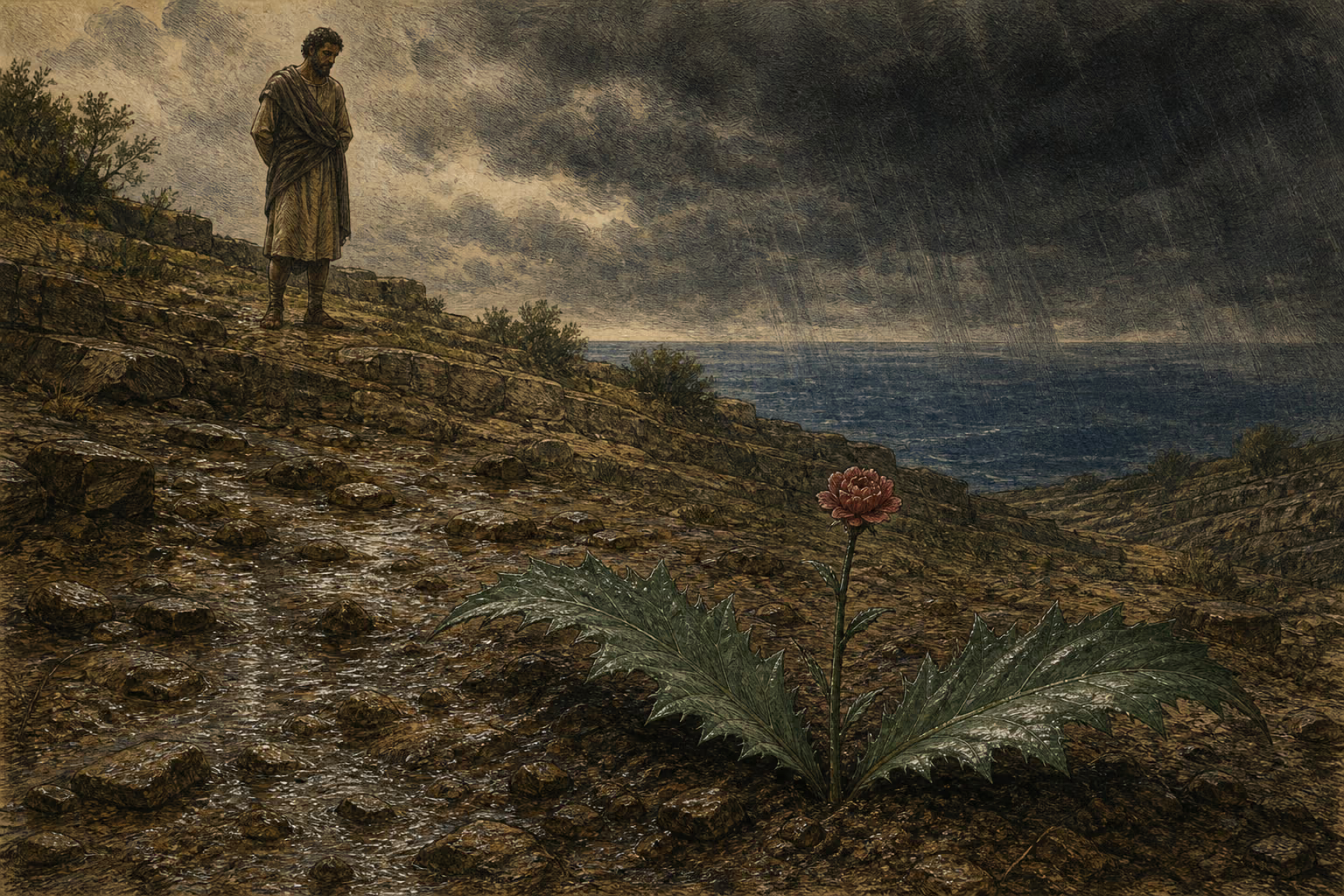
Ipsi Mithridati Crateuas adscripsit unam, Mithridatiam vocatam. huic folia II a radice, acantho similia, caulis inter utraque sustinens roseum florem. alteram Lenaeus, scordotim sive scordion, ipsius manu adscriptam, magnitudine cubitali, quadriangulo caule, ramosam, querna similitudine foliis lanuginosis. reperitur in Ponto campis pinguibus umidisque, gustus amari. est et alterius generis, latioribus foliis, mentastro similis, plurimosque utraque ad suss per se et inter alia in antidotis.
Polemoniam alii Philetaeriam a certamine regum inventionis appellant, Cappadoces autem chiliodynamiam. radice crassa, exilibus ramis, quibus in summis corymbi dependent nigro semine, cetero rutae similis, nascitur in montosis.
Eupatoria quoque regiam auctoritatem habet, caulis lignosi, nigricantis, hirsuti, cubitalis et aliquando amplioris, foliis per intervalla quinquefolii aut cannabis, per extremita tes incisis quinquepertito, nigris et ipsis plumosisque, radice supervacua. semen dysintericis in vino potum auxiliatur unice.
Centaurio curatus dicitur Chiron, cum Herculis excepti hospitio pertractanti arma sagitta excidisset in pedem, quare aliqui Chironion vocant. folia sunt lata et oblonga, serrato ambitu, densi ab radice caules ternum cubitorum, geniculati—in his capita ceu papaverum—, radix vasta, rubescens, tenera fragilisque, ad bina cubita, madida suco, amara cum quadam dulcedine. nascitur in collibus pingui solo, laudatissima in Arcadia, Elide, Messenia, Pholoe, Lycaeo, et in Alpibus vero plurimisque aliis locis. in Lycia quidem et ex ea Lycium faciunt. vis in vulneribus tanta est, ut cohaerescere etiam carnes tradant, si coquatur simul. in usu radix, tantum II drachmis bibenda quibus dicetur, si febris sit, in aqua trita, ceteris in vino. medetur et febrium morbis decoctae sucus.
Est alterum centaurium cognomine lepton, minutis foliis, quod aliqui libadion vocant, quoniam secundum fontes nascitur, origano simile, angustioribus et longioribus foliis, anguloso caule, palmum alto, fruticosum, flore lychnidis, radice tenui et supervacua, suco efficax. ipsa herba autumno legitur, sucus e fronde. quidam caules concisos madefaciunt diebus XVIII atque ita exprimunt. hoc centaurium nostri fel terrae vocant propter amaritudinem summam, Galli exacum, quoniam omnia mala medicamenta potum e corpore exigat per alvum.
Tertia est centauris cognomine triorchis. qui eam secat, rarum est ut non vulneret sese. haec sucum sanguineum emittit. Theophrastus defendi eam inpugnarique colligentes tradit a triorche accipitrum genere, unde et nomen accepit. inperiti confundunt haec omnia et primo generi adsignant.
English · Bostock & Riley 1855–57
Crateuas ascribes the discovery of one plant to Mithridates himself, the name of which is “mithridatia.” Near the root it has two leaves resembling those of the acanthus, between which it puts forth a stem supporting a flower at the extremity, like a rose.
Lenæus attributes to Mithridates the discovery of another plant, the scordotis or scordion, which has been described, he tells us, by the hand even of that prince. This plant, he says, is a cubit in height, and has a square stem, branchy, covered with downy leaves, and resembling the quercus in appearance: it is found growing in Pontus, in rich, humid soils, and has a bitter taste.
There is another variety also of this plant, with a larger leaf, and resembling wild mint in appearance. They are both of them used for numerous purposes, both individually and in combination with other ingredients, as antidotes.
The polemonia is known as the “philetæria” by some, in consequence of the contest which has arisen between certain kings for the honour of its discovery. The people of Cappadocia also give it the name of “chiliodynamus.” The root of it is substantial, and it has slender branches, with umbels hanging from the extremities, and a black seed. In other respects, it bears a resemblance to rue, and is found growing in mountainous localities.
The eupatoria also is a plant under royal patronage. The stem of it is ligneous, hairy, and swarthy, and a cubit or more in length. The leaves, arranged at regular intervals, resemble those of cinquefoil or hemp; they have five indentations at the edge, and are swarthy like the stem, and downy. The root is never used. The seed, taken in wine, is a sovereign remedy for dysentery.
Centaury, it is said, effected a cure for Chiron, on the occasion when, while handling the arms of Hercules, his guest, he let one of the arrows fall upon his foot: hence it is that by some it is called “chironion.” The leaves of it are large and oblong, serrated at the edge, and growing in thick tufts from the root upwards. The stems, some three cubits in height and jointed, bear heads resembling those of the poppy. The root is large and spreading, of a reddish colour, tender and brittle, a couple of cubits in length, and full of a bitter juice, somewhat inclining to sweet.
This plant grows in rich soils upon declivities; the best in quality being that of Arcadia, Elis, Messenia, Mount Pholoë, and Mount Lycæus: it grows also upon the Alps, and in numerous other localities, and in Lycia they prepare a lycium from it. So remarkable are its properties for closing wounds, that pieces of meat even, it is said, are soldered together, when boiled with it. The root is the only part in use, being administered in doses of two drachmæ in the several cases hereafter mentioned. If, however, the patient is suffering from fever, it should be bruised and taken in water, wine being used in other cases. A decoction of the root is equally useful for all the same purposes.
There is another centaury also, with diminutive leaves, known by the additional name of “lepton.” By some persons it is called “libadion,” from the circumstance that it grows upon the borders of fountains. It is similar to origanum in appearance, except that the leaves are narrower and longer. The stem is angular, branchy, and a palm in height; the flower is like that of the lychnis, and the root is thin, and never used. It is in the juice that its medicinal properties are centred: it being gathered in the autumn, and the juice extracted from the leaves. Some persons cut up the stalks, and steep them for some eighteen days in water, and then extract the juice.
In Italy this kind of centaury is known as “gall of the earth,” from its extreme bitterness. The Gauls give it the name of “exacum;” from the circumstance that, taken in drink, it purges off all noxious substances by alvine evacuation.
There is a third kind of centaury also, known as the “centauris triorchis.” It is but rarely that a person cuts it without wounding himself. The juice emitted is just the colour of blood. Theophrastus relates that this plant is under the protection of the triorchis, a kind of hawk, which attacks those who gather it; a circumstance to which it owes its name. Ignorant persons are in the habit of confounding all these characteristics, and attributing them to the centaury first named.