LIBER XXVI · CAPUT 12
REMEDIES FOR SPRAINS
Latine · Mayhoff 1906
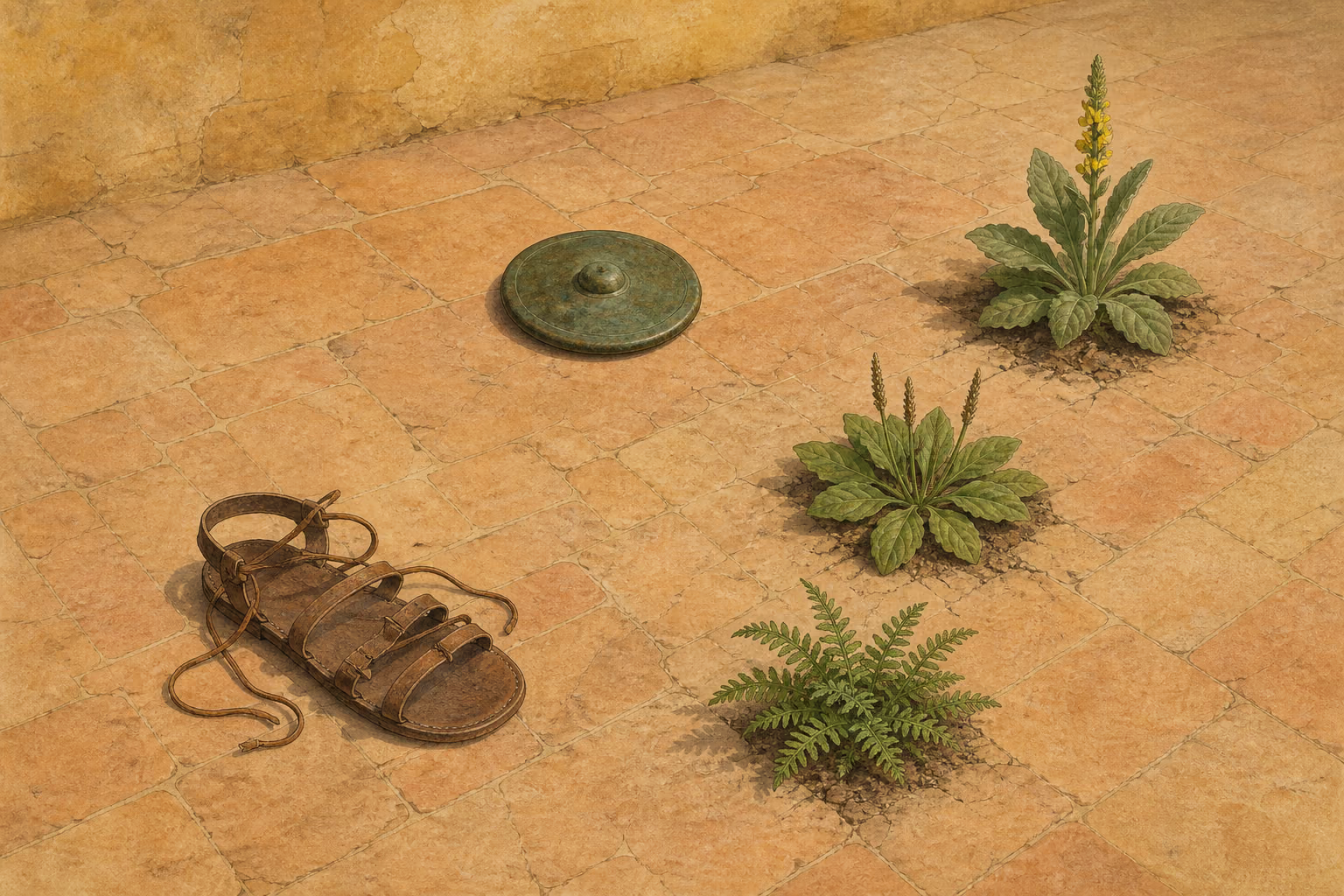
Radix polypodi inlita luxatis medetur, doloremque et tumores tollunt semen psyllii, folia plantaginis trita, sale modice addito, verbasci semen ex vino decoctum contritum, cicuta cum axungia. folia ephemeri tuberibus tumoribusque inlinuntur, quae etiamtum discuti possunt.
Morbum regium in oculis praecipue mirari est, tenuitatem etiam densitatemque tunicularum felle subeunte. Hippocrates a septimo die in febri mortiferum signum esse dicit. nos scimus vixisse aliquos etiam ab hac desperatione. fit vero et citra febres expugnaturque centaurio maiore ut diximus poto, Vettonica, agarici obolis III ex vini veteris cyatho, item verbenacae folia obolis III ex vini calidi hemina quadriduo. sed celerrime quinquefolii sucus medetur III cyathis potus. cyclamini radix drachmis III bibitur in loco calido et a perfrictionibus tuto—sudores enim felleos movet—, folia tussilaginis ex aqua, semen linozostis utriusque inspersum potioni vel cum absinthio aut cicere decoctum, hysopi bacae cum aqua potae, lichen herba, si, cum sumitur, cetero olere abstineatur, polythrix in vino data, struthion in mulso.
Passim et in quacumque parte, sed maxime incommoda nascuntur qui furunculi vocantur, mortiferum aliquando malum consectis corporibus. remedio sunt pycnocomi folia trita cum polenta, si nondum caput fecerint. discutiunt et folia ephedri inlita.
Fistulae quoque in omni parte serpunt medicorum vitio male sectis corporibus. auxilio est centaurium minus collyriis cum melle decocto additis, plantaginis sucus infusus, quinquefolium cum sale et melle, ladanum cum castoreo, cotyledon cum medulla cervina calefacta et inposita; verbasci radicis medulla collyrii tenuitate in fistulam additur vel aristolochiae radix vel sucus tithymalli.
Collectiones inflammationesque sanant argemoniae folia inlita, duritias et collectiones omnes verbenaca vel quinquefolium decoctum in aceto, verbasci folia vel radix, hysopum e vino inpositum, acori radix decocto eius foventibus, aizoum, item quae contusa sint duritiasque et sinus corporis illecebra. omnia infixa corpori extrahunt folia tussilaginis, daucum, semen leontopodii tritum in aqua cum polenta. suppurationibus inponuntur pycnocomi folia trita cum polenta vel semen, item orchis. vitia, quae sint in ossibus, satyrii radice inposita efficacissime sanari dicuntur, nomae et collectiones omnes fuco maris, priusquam inarescat. et alcimae radix collectiones discutit.
Ambusta sanantur plantagine, arctio ita ut cicatrix fallat —folia eius in aqua decocta contrita inlinuntur—, radice cyclamini, aizoo, herba ipsa hyperici, quod corissum appellavimus.
Nervis et articulis convenit plantago trita cum sale, argemonia tusa ex melle. peucedani suco perunguntur spastici, tetanici, nervorum duritiae aegilopis suco; doloribus erigeron ex aceto inlinitur, epithymum. spasticis et opisthotonicis perungui semine hyperici, quod caros vocatur, idemque bibere prodest. phrynion dicitur etiam abscisos sanare nervos, si confestim inponatur trita vel mansa. spasticis, tremulis, opisthotonicis alcimae radix bibitur ex aqua mulsa. sic et rigores excalfacit.
Sanguinis profluvia sistit herbae Paeoniae semen rubrum —eadem et in radice vis—, clymenus vero, sive ore sanguis reiciatur sive naribus sive alvo fluat sive feminarum utero, item Lysimachia pota vel inlita vel naribus indita, item plantaginis semen, quinquefolium potum et inlitum, cicutae semen in nares, si inde fluat, tritum ex aqua inditum, aizoum, astragali radix. sistit et ischaemon et Achillia.
English · Bostock & Riley 1855–57
For the cure of sprains, root of polypodion is used, in the form, of a liniment: the pain and swelling are modified also by using seed of psyllion; leaves of plantago beaten up with a little salt; seed of verbascum, boiled in wine and pounded; or hemlock with axle-grease. Leaves of ephemeron are applied topically to tumours and tuberosities, so long as they are capable of being dispersed.
It is upon the eyes in particular that jaundice is productive of so remarkable an effect; the bile penetrating between the membranes, so extremely delicate as they are and so closely united. Hippocrates tells us that the appearance of jaundice on or after the seventh day in fevers is a fatal symptom; but I am acquainted with some instances in which, the patients survived after having been reduced to this apparently hopeless state. We may remark also, that jaundice sometimes comes on without fever supervening. It is combated by taking the greater centaury, as already mentioned, in drink; agaric, in doses of three oboli in old wine; or leaves of vervain, in doses of three oboli, taken for four consecutive days in one hemina of mulled wine. But the most speedy cure of all is effected by using juice of cinquefoil, in doses of three cyathi, with salt and honey. Root of cyclaminos is also taken in drink in doses of three drachmæ, the patient sitting in a warm room free from all cold and draughts, the infusion expelling the bile by its action as a sudorific.
Leaves of tussilago are also used in water for this purpose; the seed of either kind of linozostis, sprinkled in the drink, or made into a decoction with chick-pease or wormwood: hyssop berries taken in water; the plant lichen, all other vegetables being carefully abstained from while it is being used; polythrix, taken in wine; and struthion, in honied wine.
There are boils also, known as “furunculi,” which make their appearance indiscriminately on all parts of the body, and are productive of the greatest inconvenience: sometimes indeed, when the constitution is exhausted, they are fatal in their effects. For their cure, leaves of pycnocomon are employed, beaten up with polenta, if the boil has not come to a head. They are dispersed also by an application of leaves of ephedron.
Fistulas, too, insidiously attack all parts of the body, owing to unskilfulness on the part of medical men in the use of the knife. The smaller centaury is used for their cure, with the addition of lotions and boiled honey: juice of plantago is also employed, as an injection; cinquefoil, mixed with salt and honey; ladanum, combined with castoreum; cotyledon, applied hot with stag’s marrow; pith of the root of verbascum reduced to a liquid state in the shape of a lotion, and injected; root of aristolochia; or juice of tithymalos.
Abscesses and inflammations are cured by an application of leaves of argemonia. For indurations and gatherings of all descriptions a decoction of vervain or cinquefoil in vinegar is used; leaves or root of verbascum; a liniment made of wine and hyssop; root of acoron, a decoction of it being used as a fomentation; or else aizoüm. Contusions also, hard tumours, and fistulous abscesses are treated with, illecebra.
All kinds of foreign substances which have pierced the flesh are extracted by using leaves of tussilago, daueus, or seed of leontopodium pounded in water with polenta. To suppurations, leaves of pycnocomon are applied, beaten up with polenta, or else the seed of that plant, or orchis. An application of root of satyrion is said to be a most efficacious remedy for deep-seated diseases of the bones. Corrosive ulcers and all kinds of gatherings are treated with sea-weed, used before it has dried. Root, too, of alcima disperses gatherings.
Burns are cured by the agency of plantago, or of arction, so effectually indeed as to leave no scar. The leaves of this last plant are boiled in water, beaten up, and applied to the sore. Boots of cyclaminos are used, in combination with aizoüm; the kind of hypericon also, which we have mentioned as being called “corissum.”
For diseases of the sinews and joints, plantago, beaten up with salt, is a very useful remedy, or else argemonia, pounded with honey. Patients affected with spasms or tetanus are rubbed with juice of peucedanum. For indurations of the sinews, juice of ægilops is employed, and for pains in those parts of the body erigeron or epithymum, used as a liniment, with vinegar. In cases of spasms and opisthotony, it is an excellent plan to rub the part affected with seed of the hypericon known as “caros,” and to take the seed in drink. Phrynion, it is said, will effect a cure even when the sinews have been severed, if applied instantaneously, bruised or chewed. For spasmodic affections, fits of trembling, and opisthotony, root of alcima is administered in hydromel; used in this manner, if has a warming effect when the limbs are benumbed with cold.
The red seed of the plant called “pæonia” arrests hæmorrhage; the root also is possessed of similar properties. But it is clymenus that should be employed, when there are discharges of blood at the mouth or nostrils, from the bowels, or from the uterus. In such cases, lysimachia also is taken in drink, applied topically, or introduced into the nostrils; or else seed of plantago, or cinquefoil, is taken in drink, or employed in the form of a liniment. Hemlock seed is introduced into the nostrils, for discharges of blood there, or else it is pounded and applied in water; aizoüm. also, and root of astragalus. Ischæmon and achillea likewise arrest hæmorrhage.